
From Apr. 2 to May 23, the Korean Cultural Center in Tokyo hosted K-food Festa, an event highlighting Korean dining culture. While the center has hosted a variety of exhibitions and events promoting Korean culture throughout Japan, this was the first time it presented temple food, traditional alcohol and traditional table settings at one time. With its unique approach to K-food and smorgasbord of associated programs, the festival sought to not only serve up some tasty delights but also shed light on Korea’s dining culture and the emotions it genders.
The Center consulted with expert organizations including the Korea Agro-Fisheries & Food Trade Corporation and the Cultural Corps of Korean Buddhism to ensure accuracy while producing an event to be experienced, and not just seen. The traditional table setting program illustrated the elaborate arrangement of dishes served at important occasions in an individual’s life. The festival also featured a temple food tasting, a traditional spirits cocktail show and an exhibition of Hanbok, as Korea’s traditional attire is called.
As shown at the Center, temple cuisine is not merely vegetarian fare or health food. Rather, it’s a unique aspect of Korean culture inspired by a philosophy of harmony with nature and respect for life. The exhibition about temple cuisine included models of dishes made with seasonal vegetables and dishes developed by six monastic masters of temple cuisine. There was also a webtoon called “Gongyang,” a term for the sacred food served at Buddhist temples in Korea.
Korea,
Now Part of Your Everyday Life
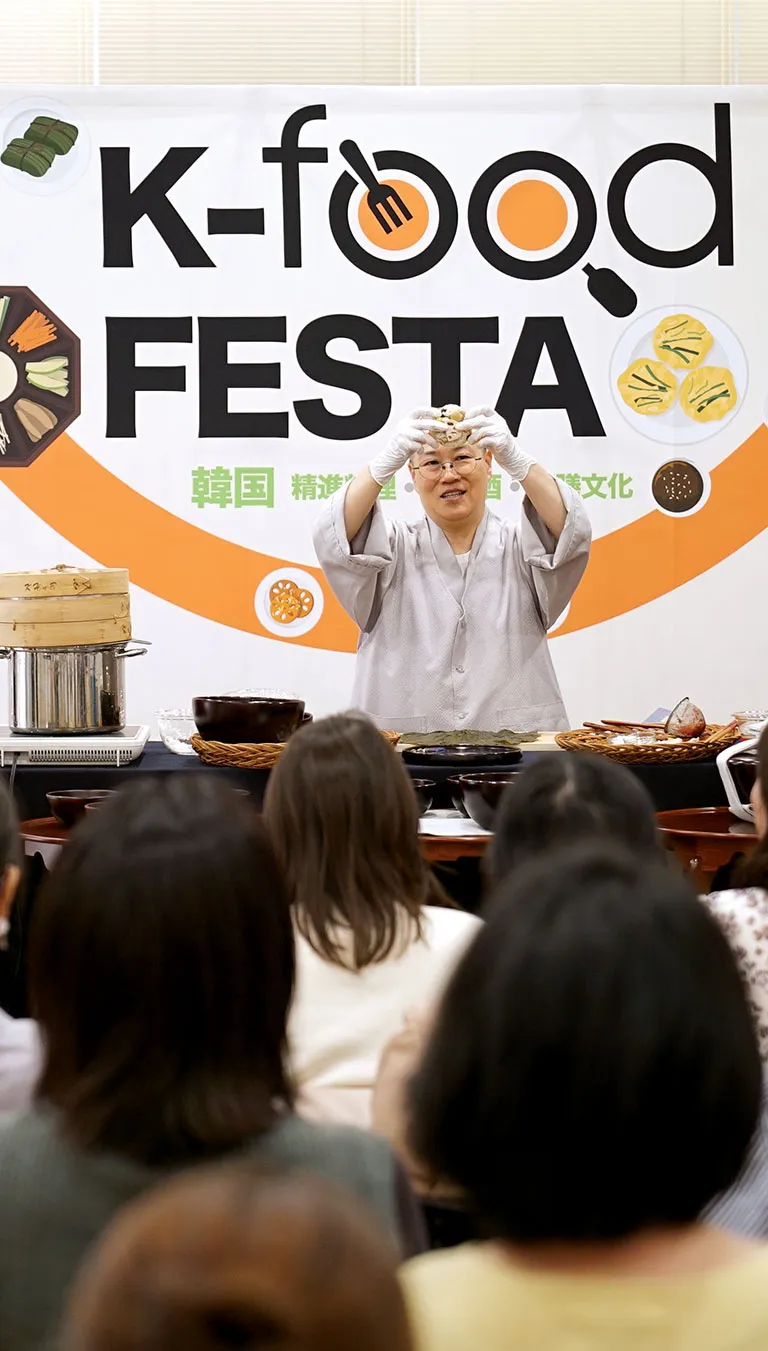
These days, anything Korea-related has a good shot at going viral on social media. And since a national cuisine is linked to its living conditions, history and cultural context, many are fascinated not only with Korean food per se, but also with the Koreanness it represents. Keeping with those trends, the Korean Cultural Center in Tokyo is highlighting the Korean temple foods and traditional spirits that have given Korean cuisine so much of its present appeal. This was precisely the focus of K-food Festa, held at the Korean Cultural Center in Tokyo.

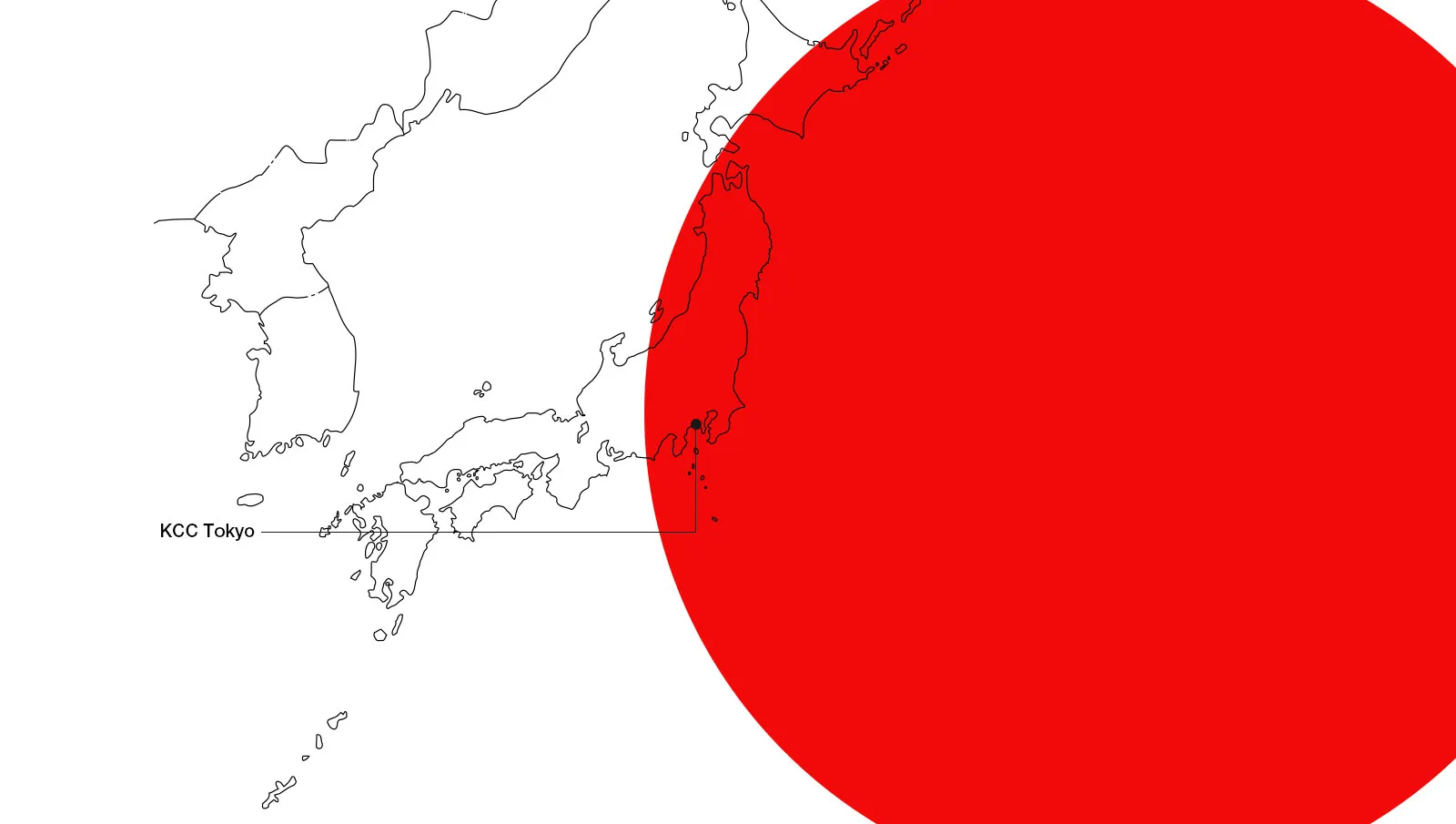
KCC Tokyo
+81-3-3357-5970
postmaster@koreanculture.jp
To help visitors feel the charm of temple food for themselves, the Center recruited Ven. Hyebeom, an active practitioner of temple food, to lead a hands-on program. Over the two days, Ven. Hyebeom treated 100 visitors to a range of temple dishes, such as rice steamed in lotus leaves, tomato kimchi in a chilled broth, noodles seasoned with ganjang (soy sauce) and tricolor lotus root pancakes. Fascinated visitors watched as the dishes were prepared before their very eyes. Along with experiencing unfamiliar culinary techniques, they also got to sample the simple, natural flavors that are characteristic of the temple tradition. This must have been a memorable experience; while Korean food is fairly easy to find in Tokyo (where the festival was held), there are fewer opportunities to try genuine temple food, with its prohibition on osinchae (the five pungent spices, including onion and garlic).
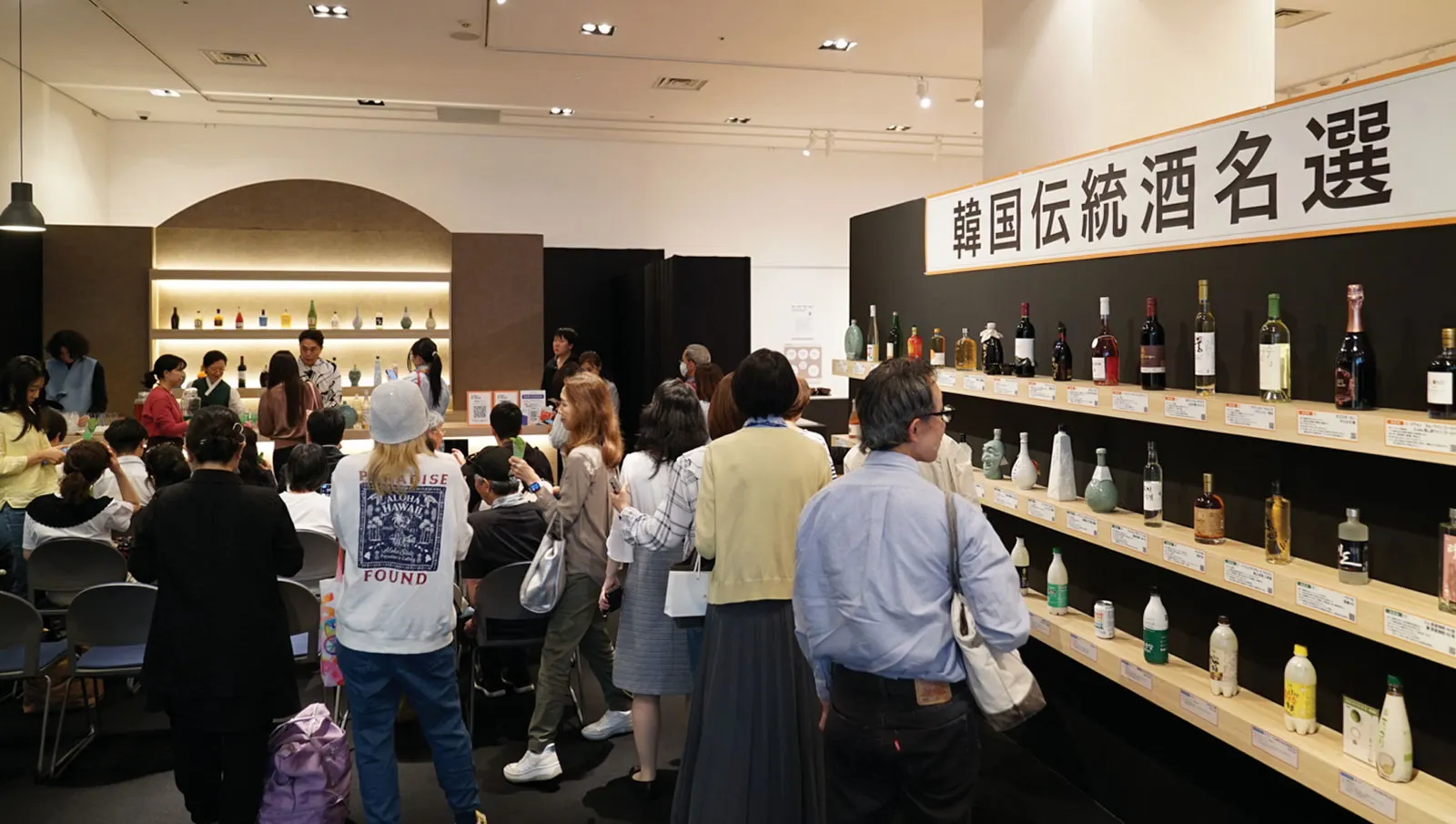
For the traditional alcohol program, the venue was outfitted as a modern bar stocked with 36 kinds of traditional alcohol from Korea as well as all the Korean alcoholic beverages currently for sale in Japan, with samples available for all visitors. Traditional intoxicants are an essential part of Korean food culture. Each region’s drinks have distinctive qualities that derive from their respective histories and ingredients. So for those seeking a broader understanding of Korean culture, traditional spirits are worth a taste. To better convey that cultural knowledge, the Center organized a cocktail show and tasting session on May 10 in conjunction with the festival. Korean bartenders put on a 25-minute cocktail show starring traditional intoxicants, after which an expert in the area oversaw a 30-minute tasting followed by a Q&A session. The cocktail show featured highballs prepared with Andong soju, a distilled spirit from the city of Andong, Gyeongsangbuk-do Province; Solsongju yakju, a refined rice wine from Hamyang-gun County, Gyeongsangnam-do Province; and Chusa 40, an apple brandy from Yesan-gun County, Chungcheongnam-do Province. The tasting session surveyed 24 kinds of traditional spirits such as yakju (traditional liquor made with medicinal herbs), gwasilju (fruit wines), takju (cloudy rice wine) and distilled spirits.
In the Q&A session following these back-to-back events, there was a buzz of excitement in the air. Mingling with the crowd were local F&B practitioners and experts who demonstrated a keen interest in Korean dining culture.
This festival is just one of a wide range of culinary events organized by the Center. Hanbang Week 2026, held in May, put the spotlight on traditional Korean medicine with tea classes that taught visitors how to prepare and enjoy Korean herbal teas. The Center hosts Korean cooking classes and organizes hands-on activities covering cuisine and other aspects of Korean culture in parts of Japan that are far from the nearest Korean cultural center. Readers who live in Japan or are planning to visit soon are encouraged to check the Center’s bulletin board to see what’s in store.
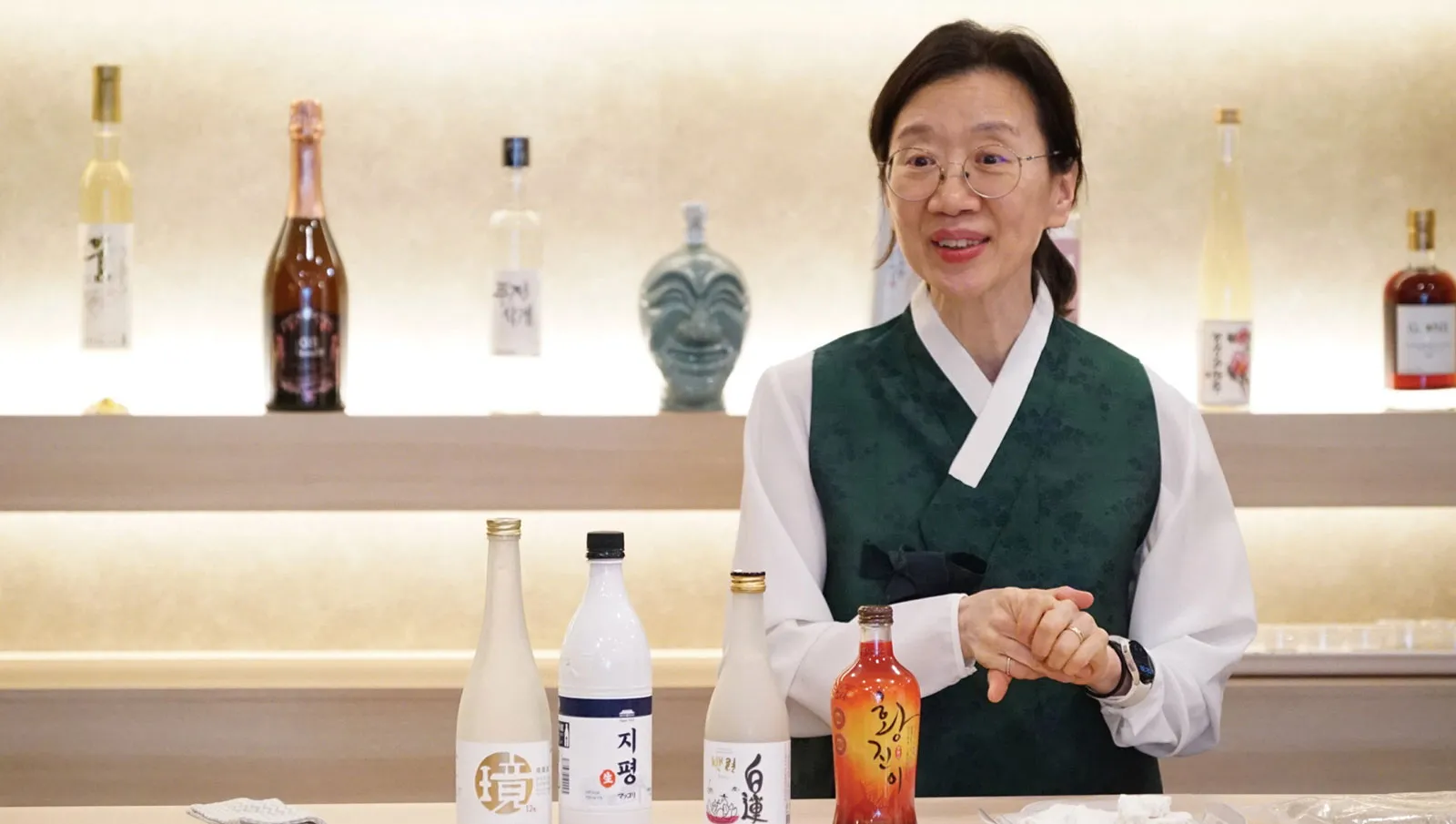
Mini Interview
Ha Sung Hwan
Q — What’s the main message you hoped to convey to visitors through this festival?
The main message we wanted to convey is that K-food is not just food—it’s a cultural legacy and a philosophy of life that’s taken shape over the decades and centuries. This festival was organized around three main themes: the table settings that once graced both ritual occasions and everyday routines; temple food, which reflects harmony between nature and human beings; and traditional alcohol, with its seasonal and regional characteristics. These three themes, while representing distinct cultural domains, have something in common: they all embody the Korean spirit of respecting nature’s bounty and generously sharing that with others.
Our primary hope was that the festival would enable visitors to discover something new about the act of eating and feel both amazement and affinity for the depth and diversity of Korea’s culinary culture. With K-food in the global spotlight, we planned this festival with the hope that visitors would recognize its roots in culture and its centuries-old wisdom.
Q — Did anything memorable happen during the festival?
One Japanese audience member at the cocktail show was very interested in Korea’s traditional alcohol. During the tasting, he expressed his affection for Korean makgeolli (milky rice wine) and mentioned his plan to visit Korea for the 2026 Korea Makgeolli Expo.
We held a total of six cocktail shows and tasting sessions of traditional alcohol, with three taking place each day. During each session, the room was crowded with visitors who had loads of questions, indicating their keen interest in Korea’s traditional spirits.
Samples of traditional alcohol were available at the vendors’ counters throughout the festival. Since the various spirits were described at length during the tasting sessions, visitors came away with a deeper knowledge of Korea’s traditional alcohol. Even after the sessions were over, visitors could be seen browsing around the exhibits, apparently reluctant to leave.
Yusuke Nomura, a Japanese man who attended the temple food demonstration and tasting session, made a big impression because he owns Daigo, a one-Michelin-starred restaurant specializing in Japanese temple food. Despite not being a Buddhist, Nomura said he got into temple cuisine because he was drawn to the philosophy behind it. He had a engaging conversation with Ven. Hyebeom, who put on the culinary demonstration. Seeing the restaurateur and monk overcoming linguistic and religious barriers to connect through the common denominator of sharing their hearts through food was the most memorable part of the festival.
Q — Can you share some events or exhibitions planned for the second half of the year?
From June 4 to Aug. 8, we will be holding an exhibition about the traditional craft of mother-of-pearl lacquer-ware titled “Atelier of the Mother-of-Pearl Master Crafts-man.”
Mother-of-pearl lacquerware, known as najeonchilgi in Korean, is one of Korea’s best-known traditional crafts. Slivers of abalone or sea-snail shell are cut and pasted to a decorative surface and then varnished with repeated layers of lacquer to create the finished product. While this craft is also practiced in Japan, there’s a fascinating aesthetic difference between the techniques that developed in the two countries. Japanese artisans sprinkled mother-and-pearl with gold or silver dust, while Koreans carved it into intricate shapes to be applied before lacquering the furniture. The upcoming exhibition will take a look at pieces by artisans who led the modernization of mother-of-pearl lacquerware along with their designs. There will also be lectures on the craft as practiced in Korea as well as demonstrations by artisans.
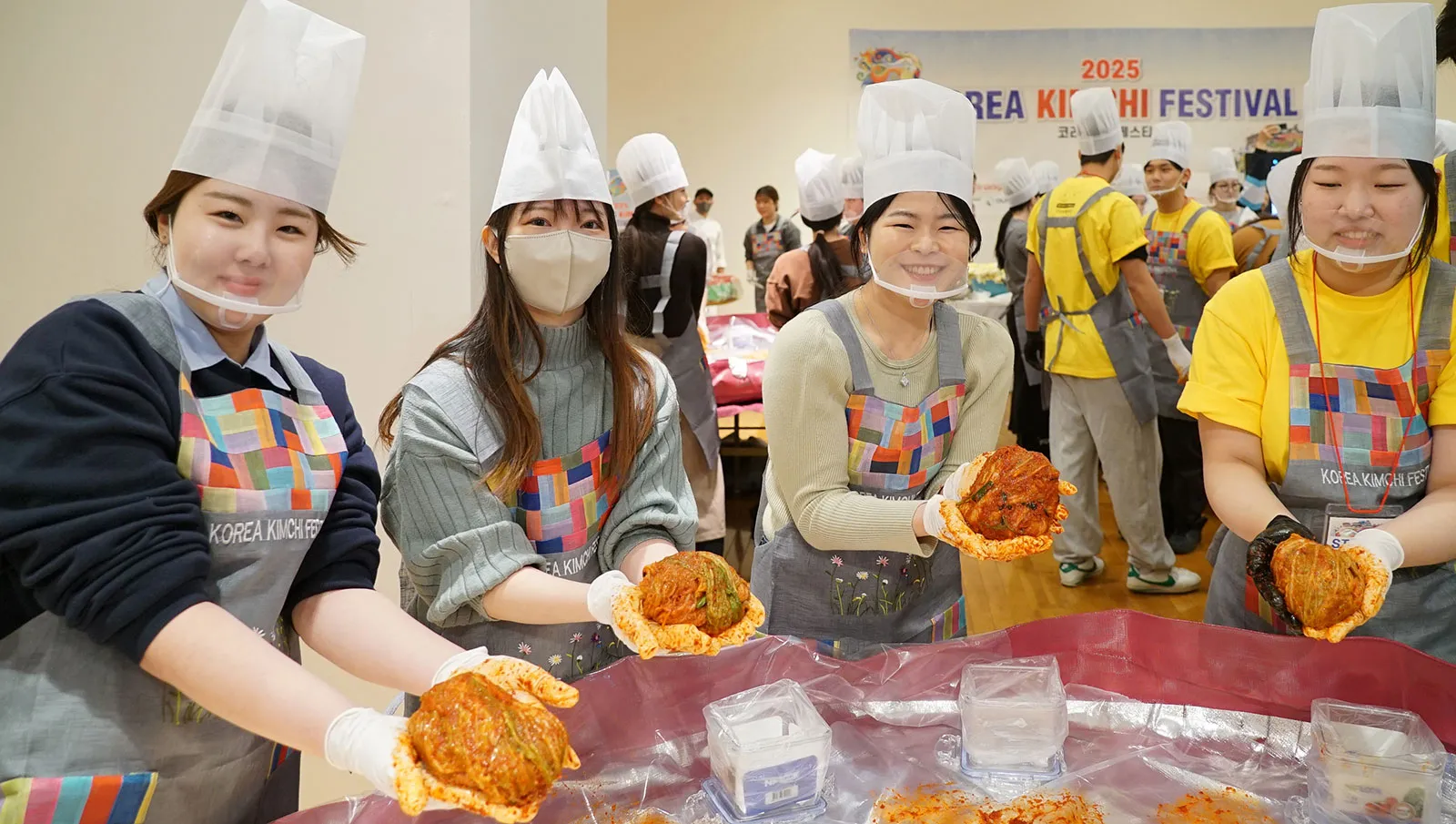
We’re also planning a program focused on kimjang, the custom of making kimchi for the winter months. The quintessentially Korean cultural practice of kimjang was inscribed on UNESCO’s intangible cultural heritage list in 2013. As Nov. 22 is Kimchi Day, a day for remembering the value of kimjang culture, the Center plans to hold events for preparing, sharing, and savoring Korea’s signature dish during kimchi-making season this November.
This recognizable dish may be easily purchased at the store, but it’s not so easy to make. We had more than 1,300 people apply for a hundred spots for last year’s kimchi event. The lucky winners got to spend a special day making kimchi by hand and enjoying the fruits of their labor. We expect that this year’s program will also attract a great deal of interest.
Upcoming
Events
- 1 KOREA FES 2026
A wide-ranging cultural event for university students featuring lectures, performances and hands-on activities spanning many facets of Korean culture
Date | June 27 - 2 K-BOOK IN TOKYO
A celebration of Korean literature featuring meet-and-greet sessions with Korean uthors—including Kim Ho-yeon and Hwang Bo-reum—alongside a curated exhibition of Korean books
Date | July 3-23 - 3 K-POP DANCE WORKSHOP
A workshop in which professional Korean choreographers teach K-pop routines directly to K-pop clubs active in Japan
Date | Planned for the first week of August - 4 MINHWA: JOSEON’S POP ART
An exhibition reinterpreting Joseon-era minhwa (folk paintings) through a contemporary lens
Date | Nov. 28-29
Date | Aug. 26–Oct. 31 - 5 KOREAN CINEMA WEEK
A film festival screening the latest Korean films—including titles not yet released in Japan—rounded out by a guest program featuring directors, actors and others from the industry
Date | Planned for mid-October