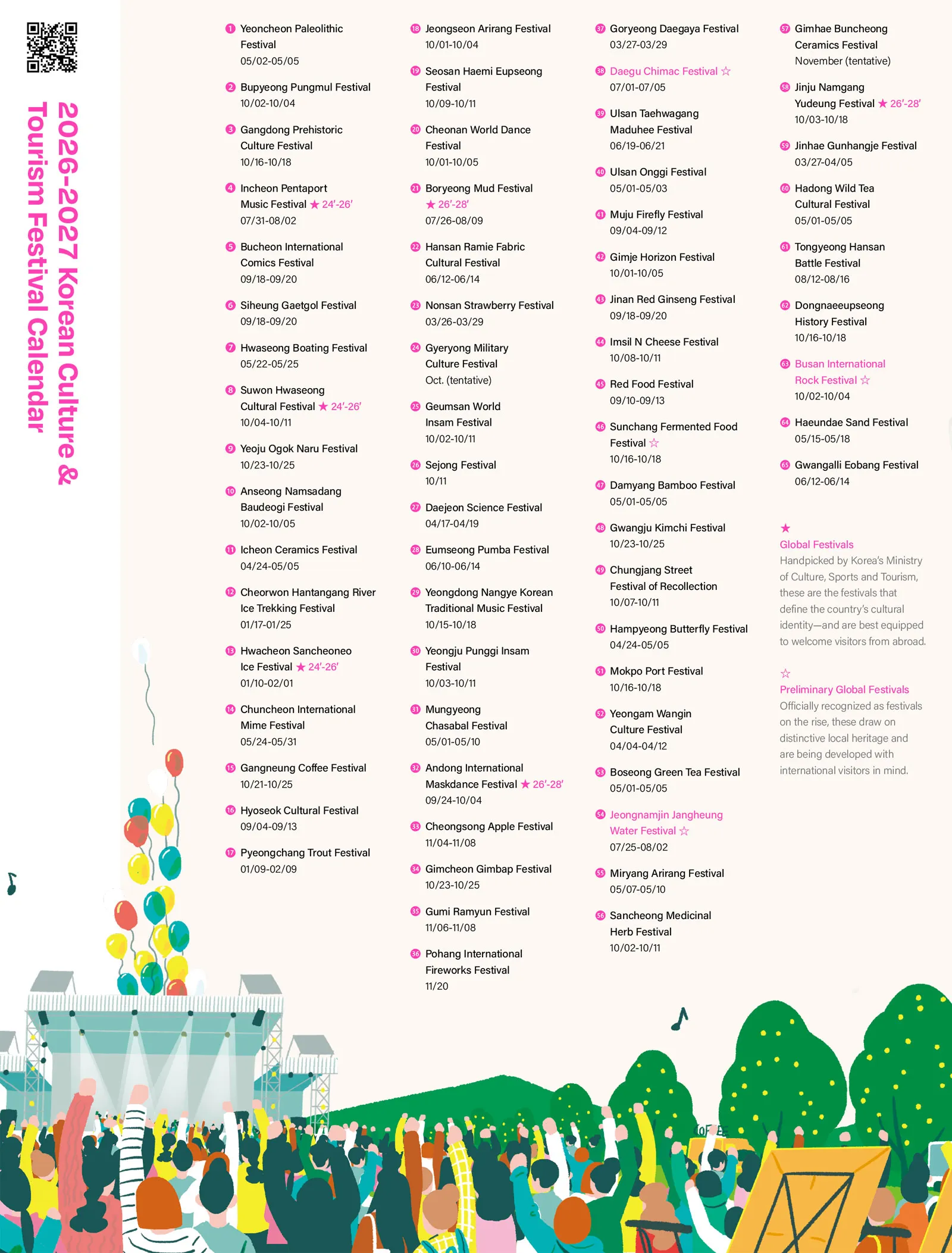
Most international visitors to Korea still concentrate on major cities like Seoul and Busan, or well-known destinations like Jeju Island. While effective for a rapid impression of Korea, this kind of travel has its limits when it comes to understanding the depth of Korean society and culture.
For those who want a fuller, more layered understanding of Korea and its culture, a different kind of travel is called for. This is where festivals come in: they blend local life and culture, serving as the key gateway to genuine local travel.
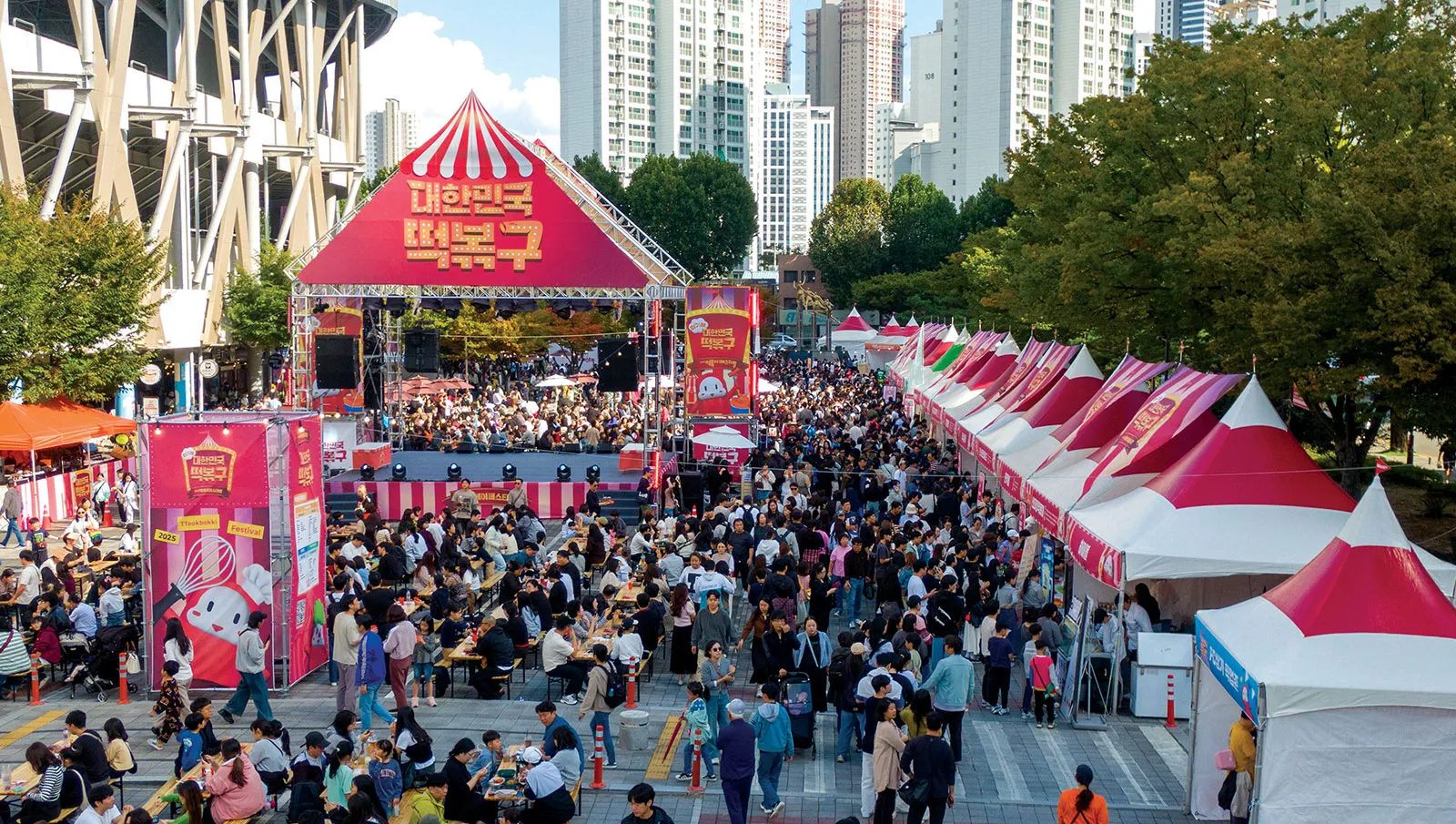
Korean festivals trace their roots to regional folk culture and the traditional seasonal customs of the lunar calendar. Over the past three decades, government policy has nurtured them into one of the country’s most distinctive cultural draws. Today, more than 1,200 festivals take place across the country, each serving as symbolic expressions of local history, industries and ways of life.
Since the COVID-19 pandemic, the meaning of festivals within Korean society has shifted considerably. As local experiences and lifestyles have converged, festivals—particularly among the young generation—are now seen as cool cultural experiences. This reflects a broader move away from checking off famous tourist sites toward a style of travel centered on staying in a specific place and experiencing its everyday life.
Within this landscape, festivals have established themselves as rich, multi-layered local experiences that combine food, performance, hands-on activities, wellness, markets and extended stays—all increasingly enhanced by digital technology. At the same time, the Korean government is leveraging this momentum to pursue the globalization of local travel through festival policy, and the results are showing: international visitor numbers at major festivals have grown significantly.
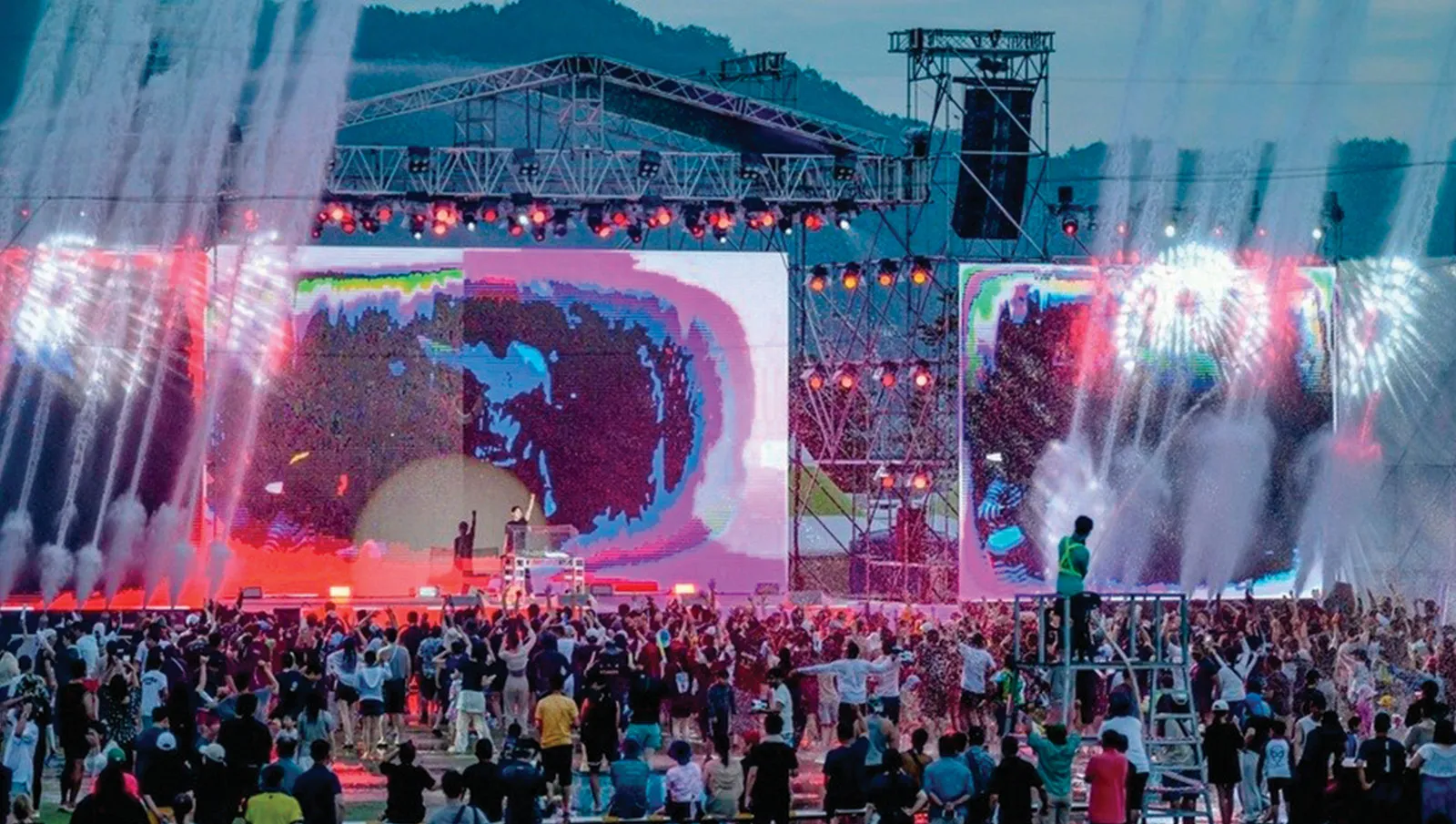
According to the Korea Tourism Organization’s 2025 report on global festival performance management, international visitor attendance at the Incheon Pentaport Music Festival rose 65.1%, while the Suwon Hwaseong Cultural Festival saw a 145.7% increase. The Hwacheon Sancheoneo Ice Festival surpassed 110,000 international visitors, cementing its status as one of Korea’s flagship global festivals. Korean festivals are no longer simply an add-on to a broader itinerary—they are becoming destinations in their own right.
Korean Lifestyle,
Spread Through Festivals
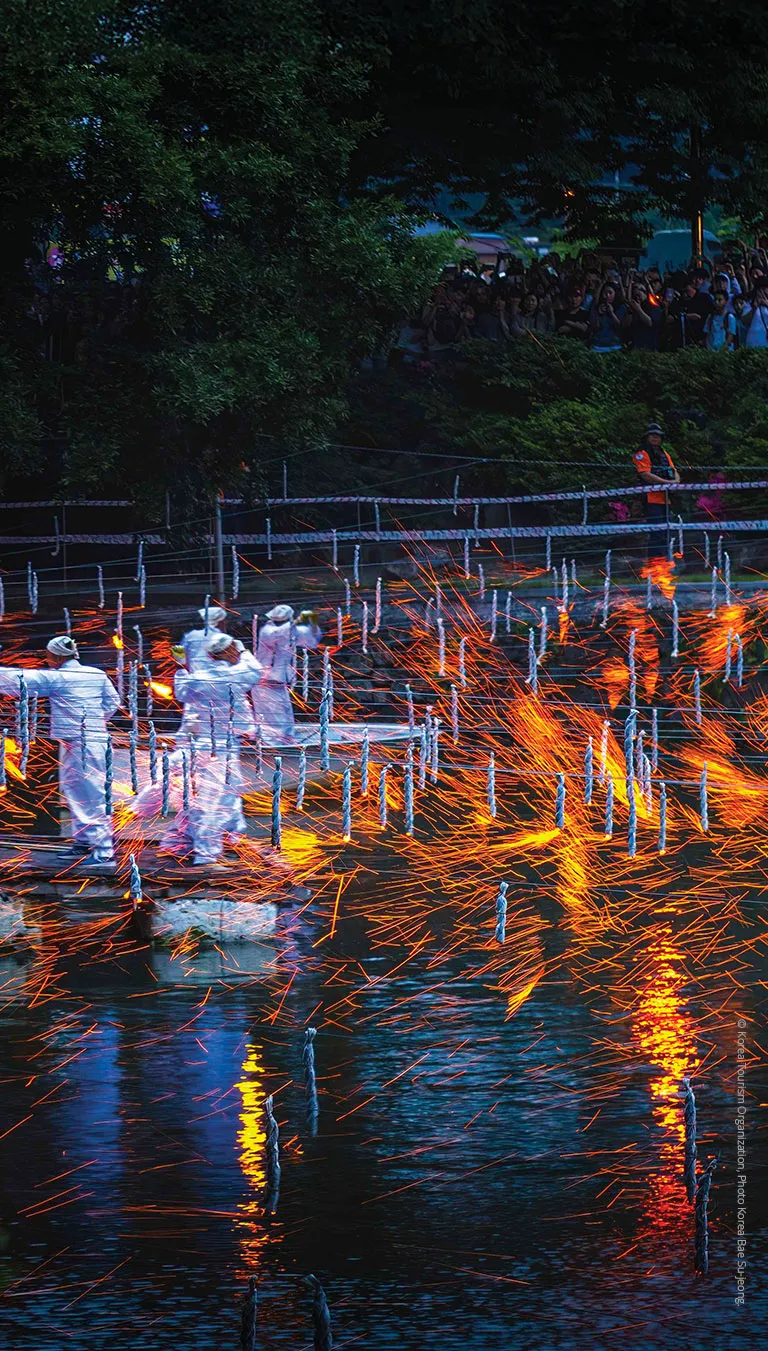
The K-culture phenomenon that has captivated the world is expanding beyond music and screen content into the texture of everyday Korean life. Within this broader shift, Korean festivals are emerging as a way to experience that life firsthand. Rooted in the history and daily rhythms of more than 240 communities across the country, these festivals take shape through participation alongside local residents, offering the most vivid window into local identity and culture. Festivals have become both a new way to understand Korea through travel and a form of cultural content that connects Korea to the world.
The Korea You Haven’t Seen

What Makes Korean Festivals Different
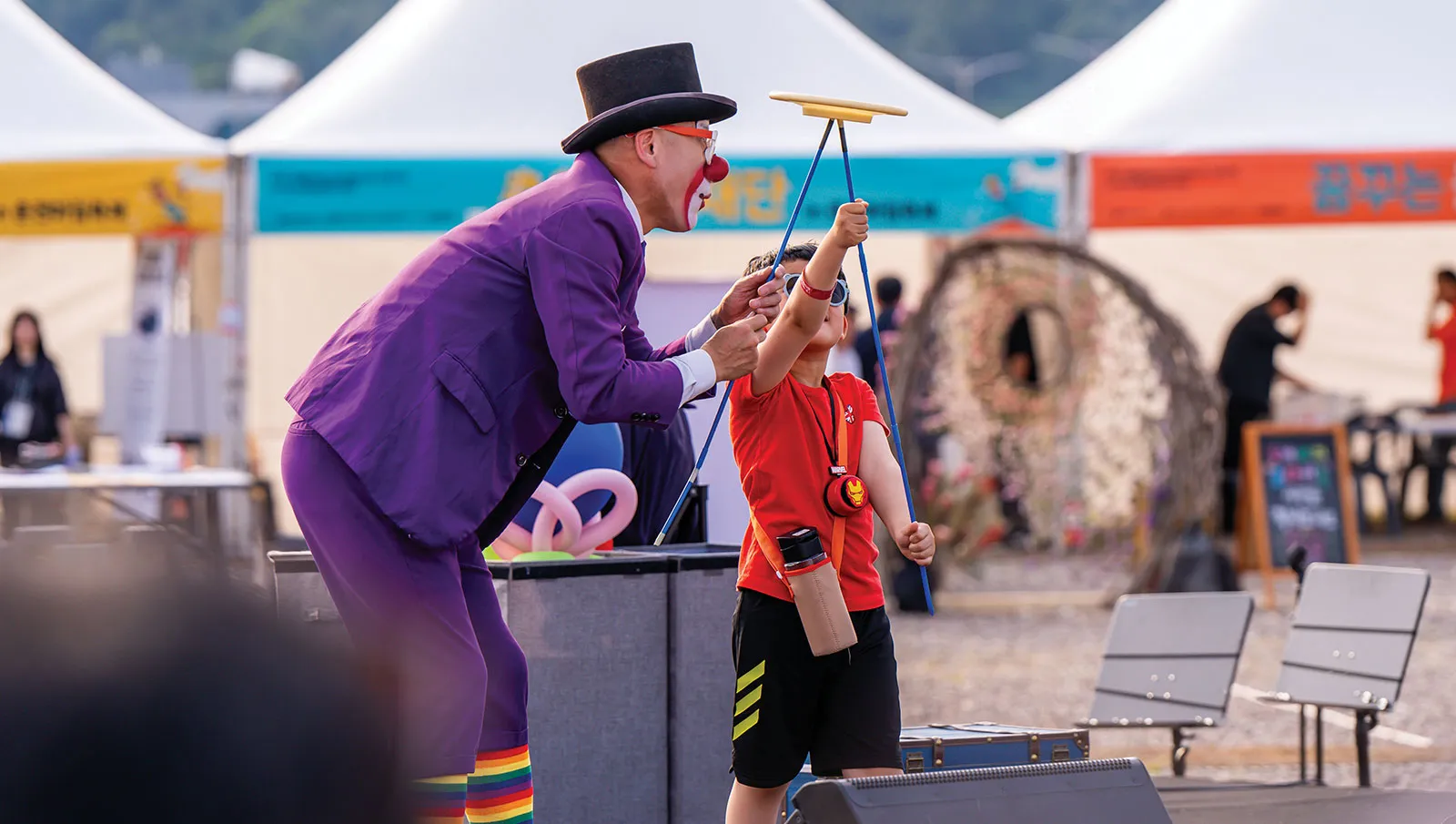
What sets Korean festivals apart is not the variety or scale of their programming, but how they work. While some festivals focus on a single genre, Korea’s signature celebrations are built around a structure of experiential content—locally rooted material drawn from history, regional products, everyday culture and notable figures—layered together with the rhythms of local life.
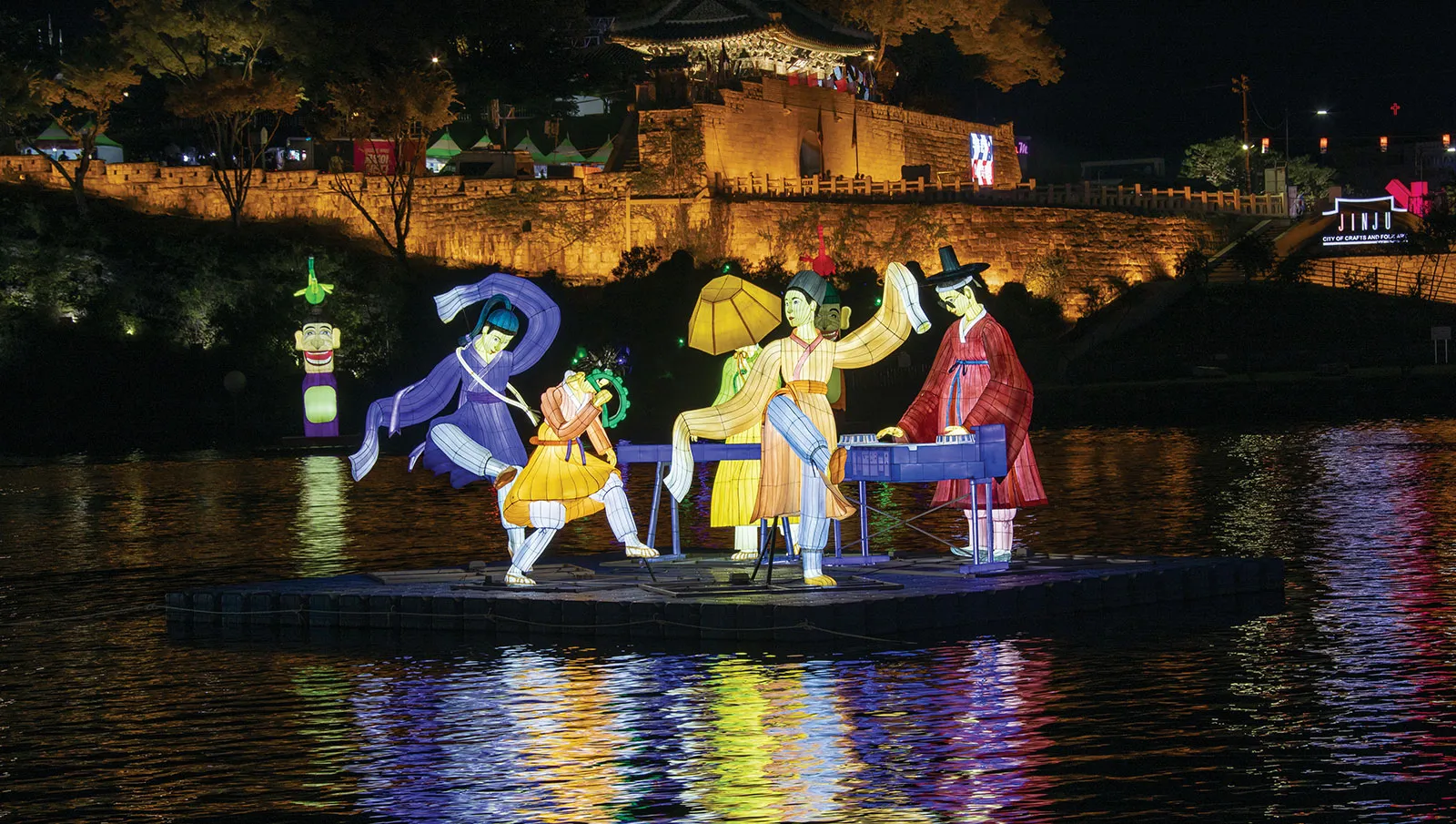
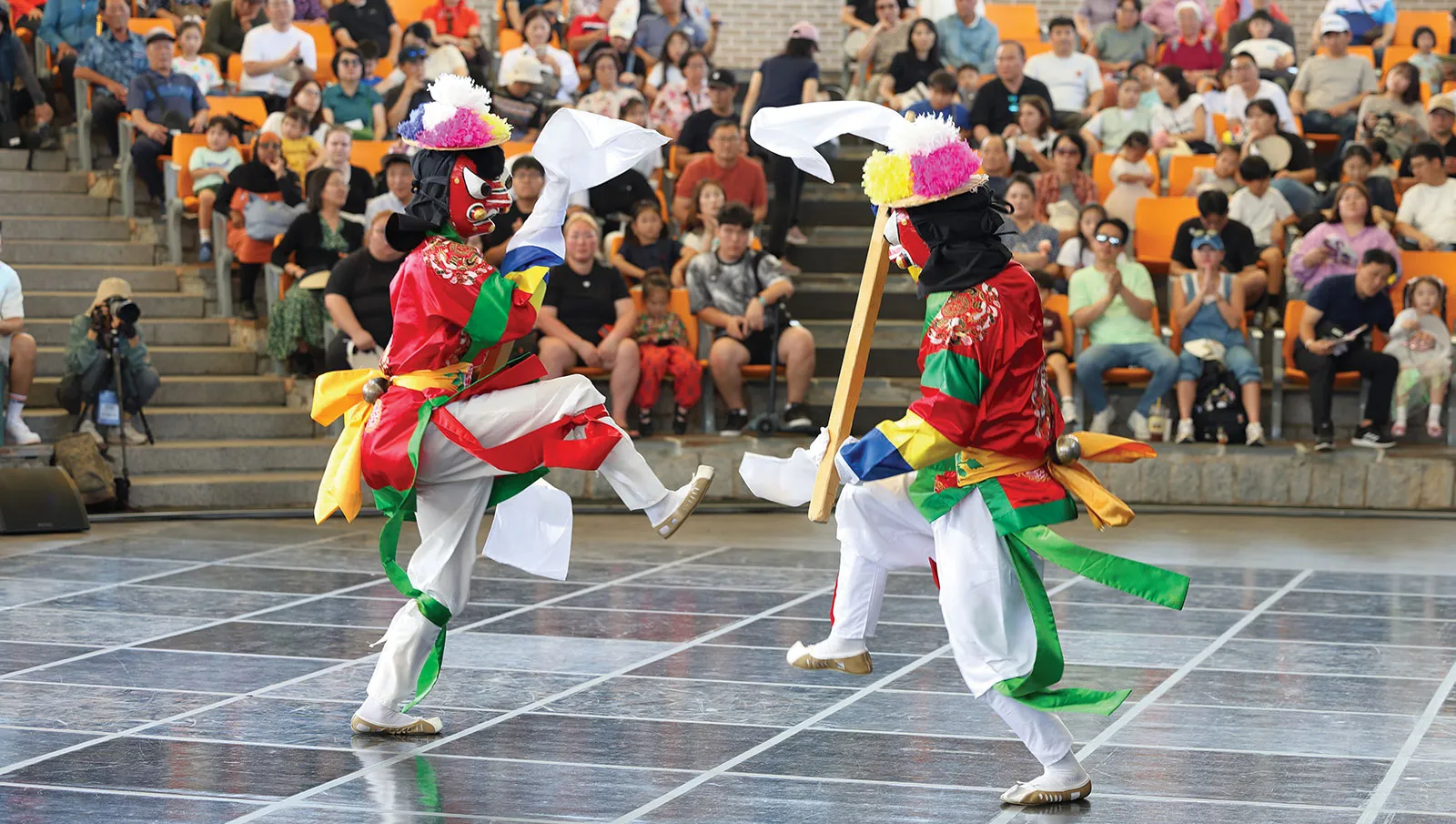
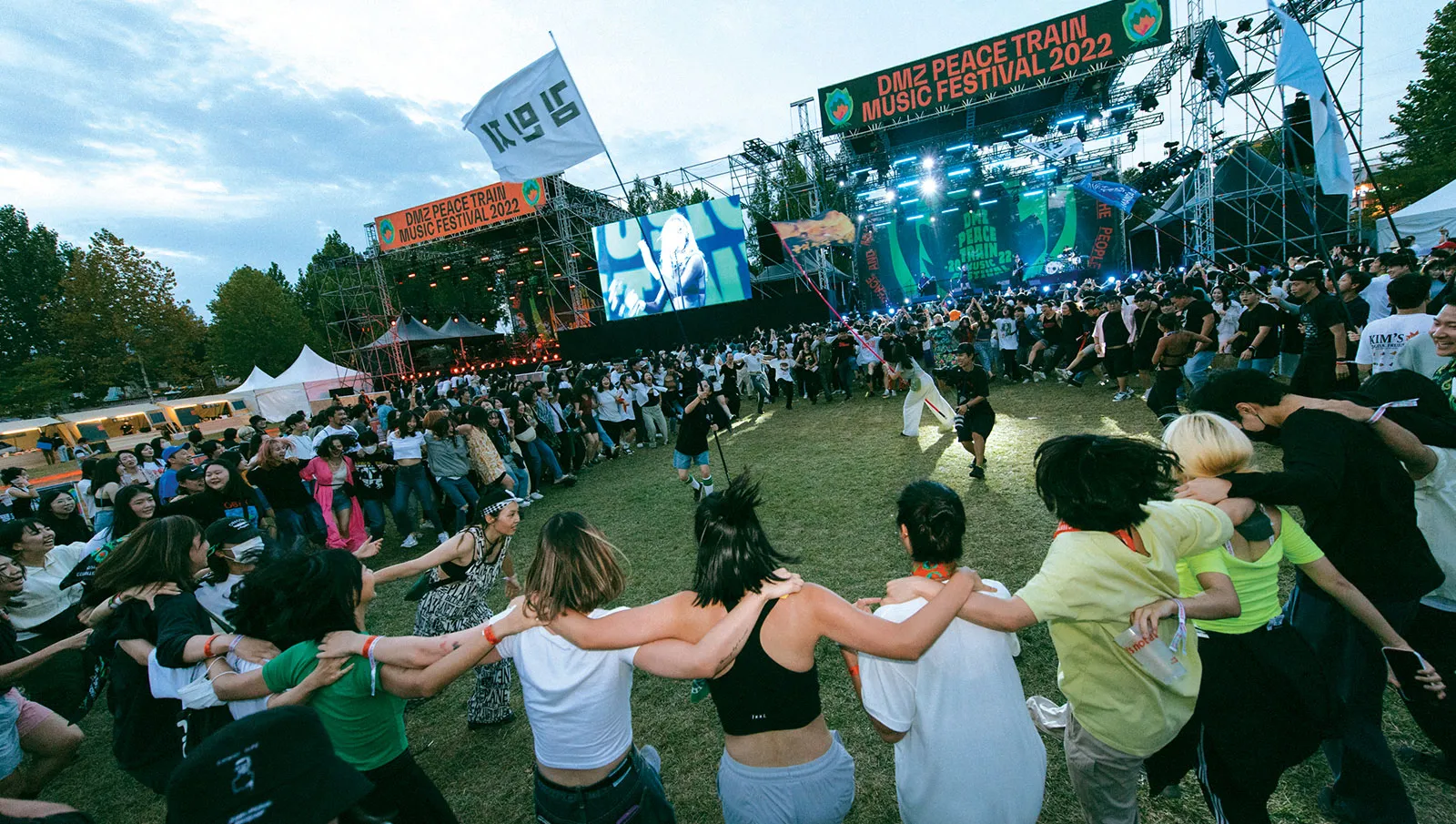
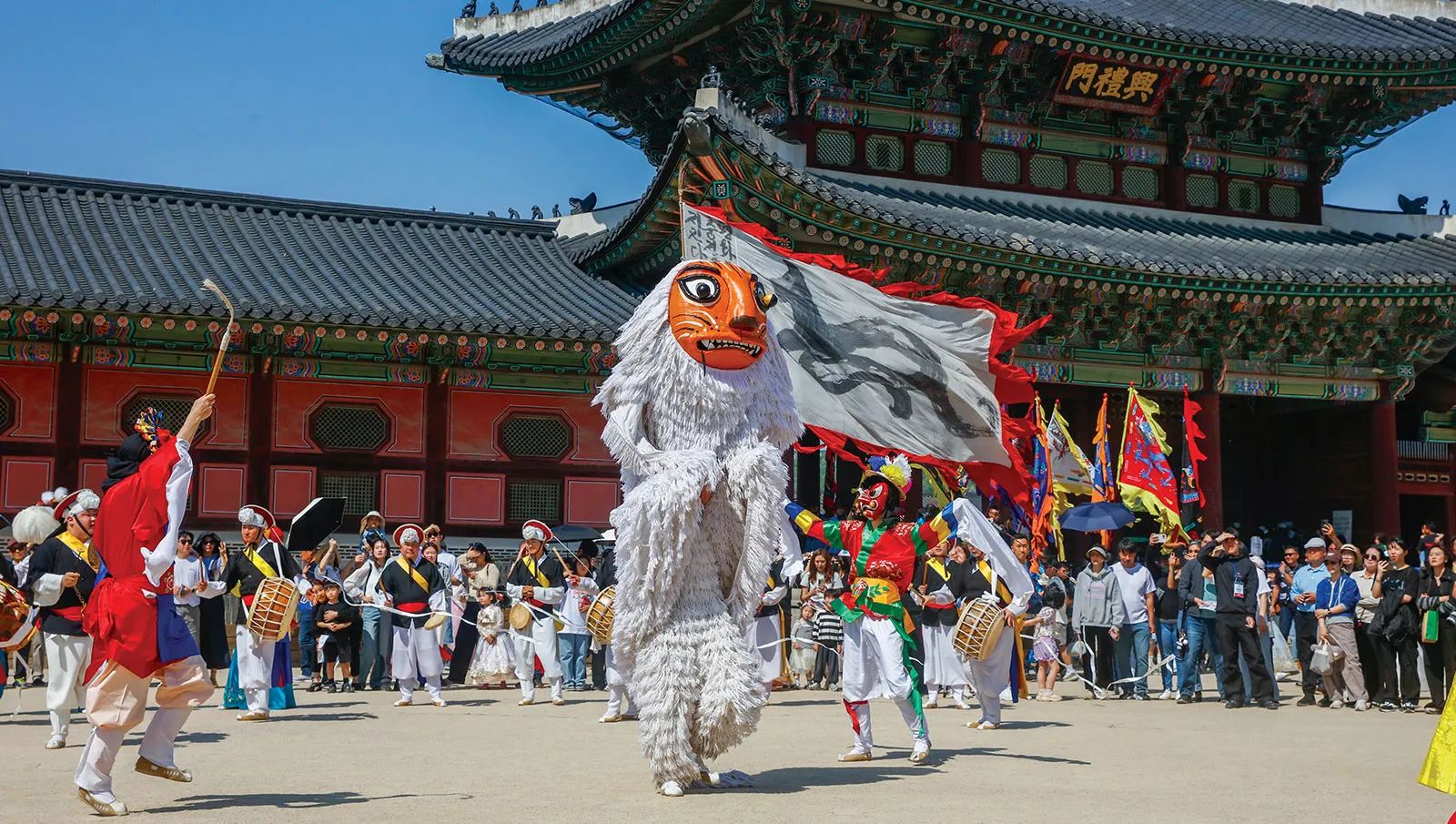
Instead of just inviting visitors to choose from a curated lineup of entertainment, these festivals are about joining in—stepping into an extraordinary experience set against the backdrop of ordinary local life, together with the people who live it. This quality is most visible in traditional festivals. For more than a thousand years, the Gangneung Danoje Festival has kept the Dano tradition alive, offering a unique window into the history and culture of the local community. The Andong International Maskdance Festival, meanwhile, blurs the boundary between spectator and participant through the wit and satire woven into Korea’s traditional maskdance tradition. Finally, the Jinju Namgang Yudeung Festival traces its origins to the historical use of lanterns to relay military signals across rivers, reinterpreting that history as a contemporary night-time cultural experience.
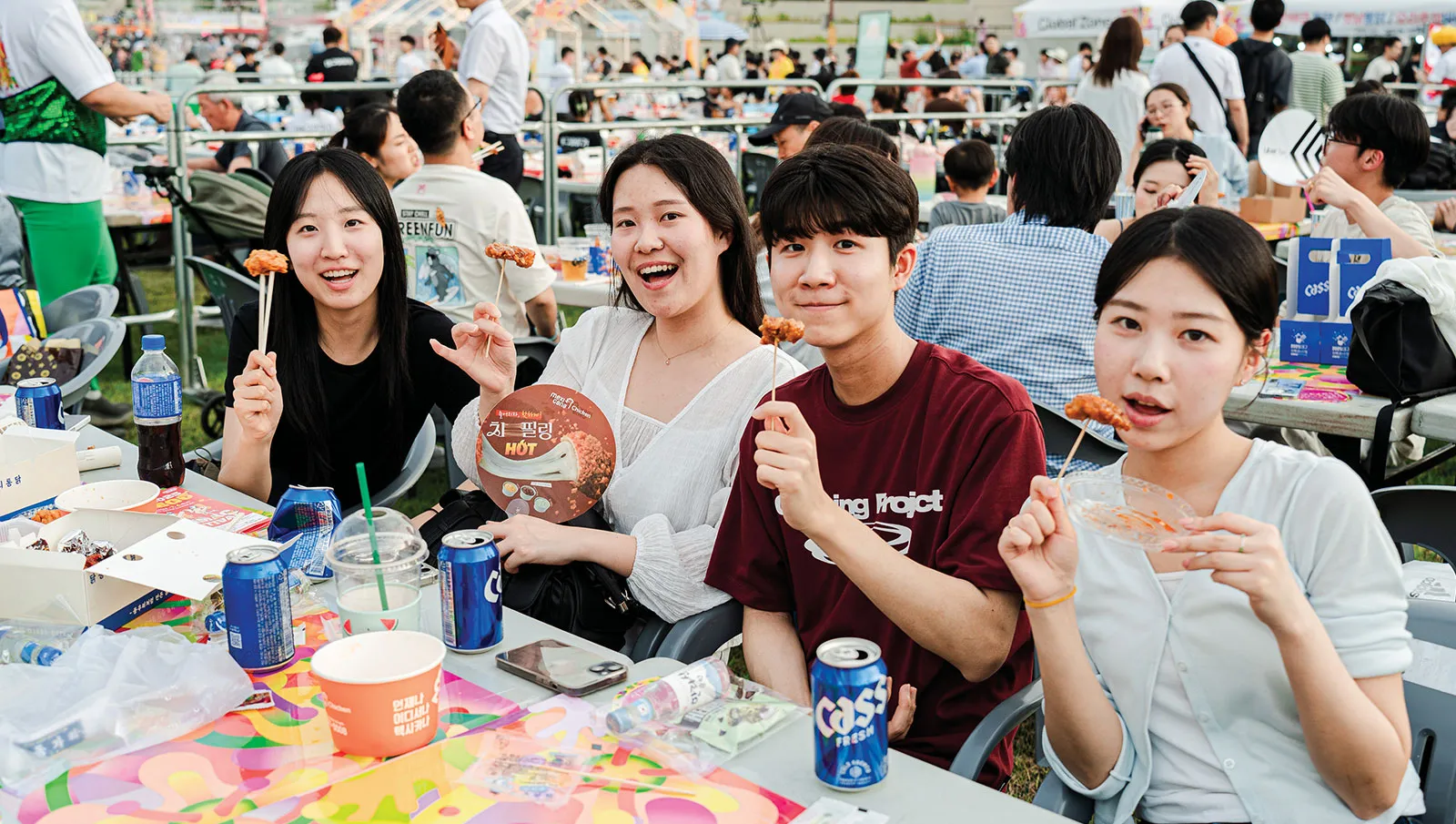
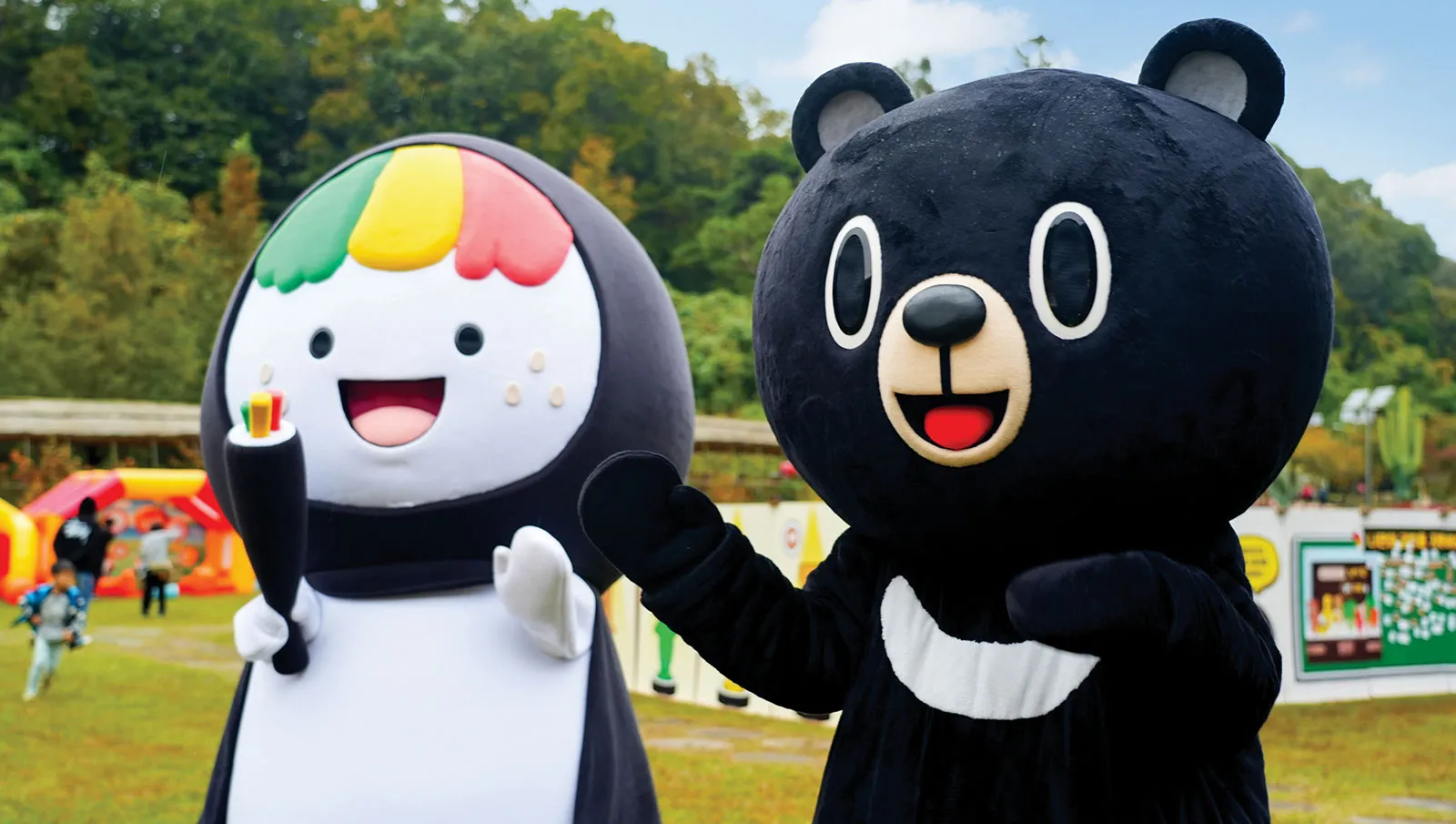
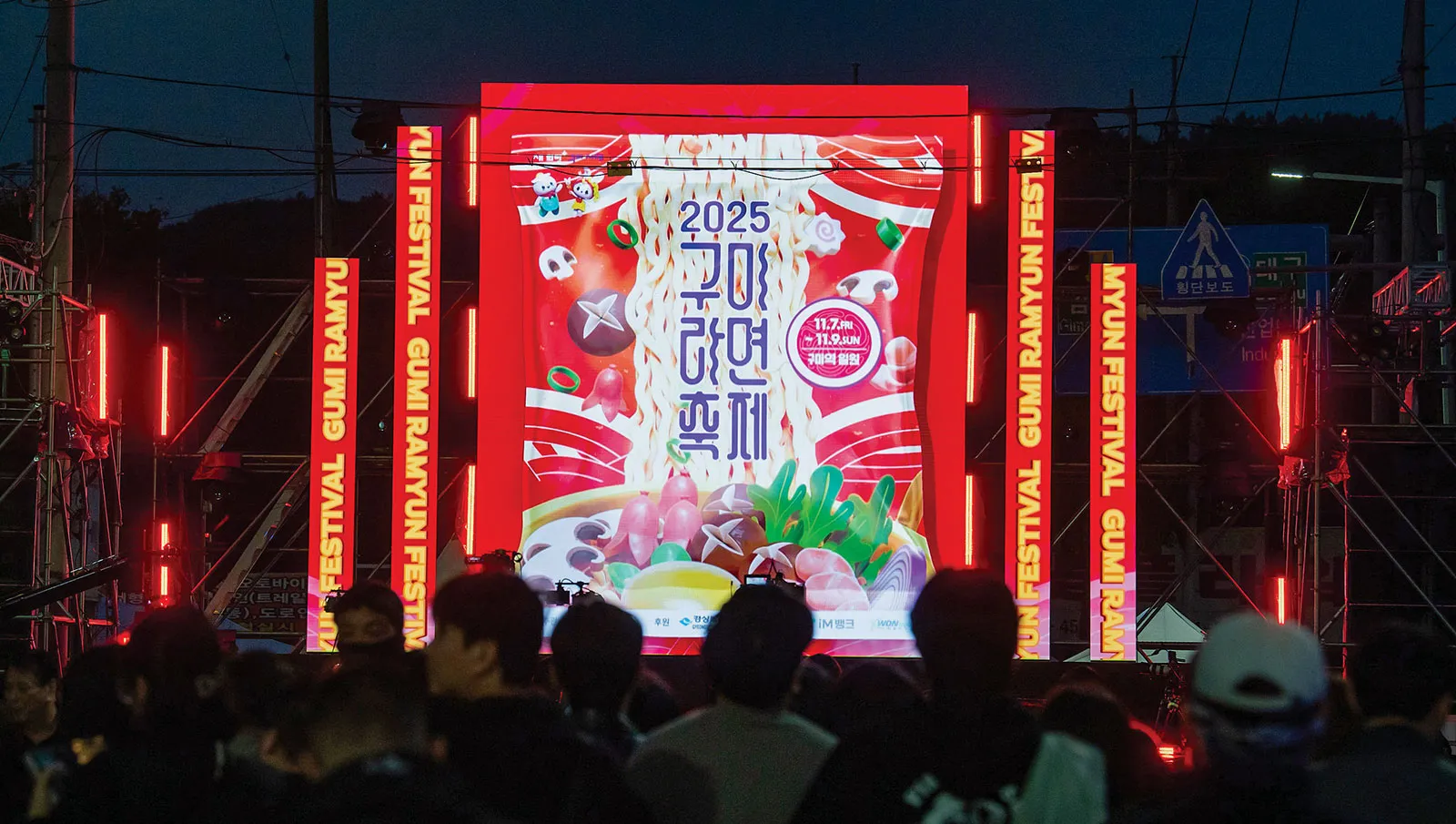
Contemporary festivals take the same approach with everyday life, industry and local culture, transforming them into creative content. The Gimcheon Gimbap Festival plays on the sonic resemblance between the city’s name and the word gimbap (seaweed rice roll), building a picnic-themed celebration around one of Korea’s most well-known foods. The Gumi Ramyun Festival celebrates the city’s claim to fame: it’s home to the largest production facility for Shin Ramyun, Korea’s most iconic ramyeon (instant noodles), and the festival leans into that identity with a signature stunt—the world’s longest ramyeon restaurant. The Gangneung Coffee Festival, meanwhile, grew out of the city’s port vending machine coffee culture, expanding that heritage into a festival that has helped brand Gangneung as Korea’s coffee capital.
Korean festivals are, at their core, about experience—encountering a place’s way of life and forming real connections with the people who live it. This identity can’t be observed from a distance; it only comes alive through participation. This is what sets Korean festivals apart, and what is driving their evolution from local cultural events into something more distinctive: a Korean model of the global festival, one rooted in place, shaped by community, and increasingly recognized as an engine of regional growth.
Why Experience a Korean Festival?
Korean festivals are experiences in which five thousand years of K-culture-infused history meets the lifestyle of today. Within a structure where tradition and modernity operate not as opposites but as partners, festivals go beyond offering an understanding of the past—they become a way of experiencing the Korea that exists right now.
Festivals built around local symbols and co-created with locals offer the most direct path to understanding Korea. Visitors come not as spectators but as participants, experiencing the stories, culture and daily life of a community alongside the people who actually live it. This is a quality that conventional tourist destinations simply cannot replicate—it is what makes Korean festivals uniquely valuable.
This kind of festival experience also plays an important role beyond personal enrichment: it sustains and amplifies the culture and identity of the communities involved. Through the process of transforming local stories into content and connecting them to the outside world, festivals serve as a meeting point between the local and the global.
Korean festivals are also opening new possibilities in the global market. For international companies, Korea functions not merely as a consumer market but as an experimental space connected to K-culture and a base for content diffusion. Participating in festivals gives brands and content the opportunity to be reinterpreted and amplified within the current of Korean culture.
Korean culture—with its rich narratives and imagination rooted in the fusion of tradition and modernity—continues to generate diverse possibilities, and that potential is stored in local communities across the entire country. Korean festivals are evolving into a content platform that unearths these stories, amplifies them, and connects them to the world.
Festivals have established themselves as the most effective way to understand and experience Korea, and as a vital bridge between local communities and the wider world. Thanks to this momentum, Korean festivals are expanding into a new frontier driving global cultural trends—ushering in the era of the K-festival. Choosing to experience a Korean festival now is more than a travel decision. It is a chance to be at the very front of a new cultural wave as it forms.
Writer. Shin Hyun-sik
Shin Hyun-sik is a festival strategy consultant specializing in research, advisory and evaluation across culture, tourism and public leisure. He has served as general director of numerous cultural tourism festivals and is an adjunct professor in the Dankook University’s Graduate School.