
When planning begins, I take stock of local arts organizations and human infrastructure. From there, I identify what makes the festival unique and design the program around that. Once I’ve mapped out citizen programs and performance categories, I build the budget. After that, it’s an endless string of tasks: setting up the operational structure and consulting with staff to secure funding.
What a Modern Festival
Should Look Like
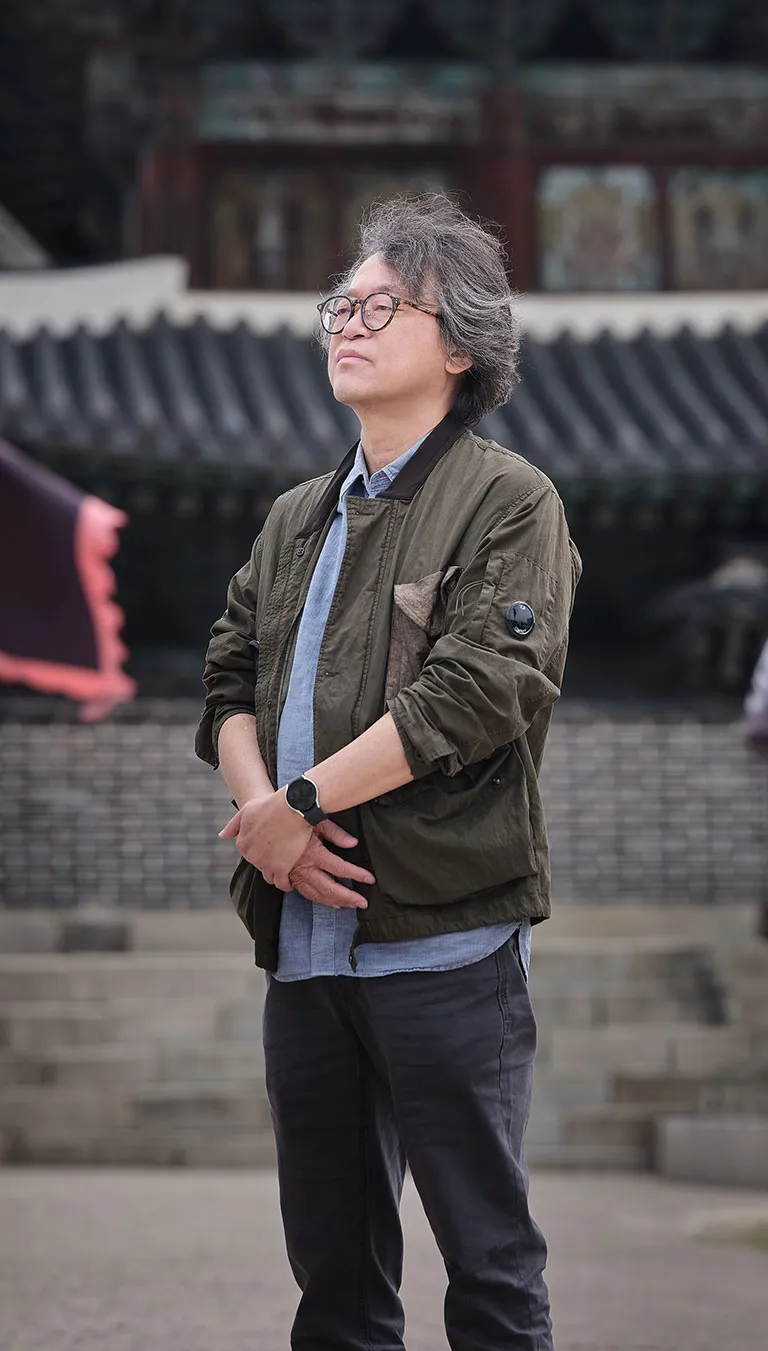
Jo Hyeong-je
General Director of Suwon Hwaseong Cultural Festival
Cover Story 2
Writer
Sung Ji Yeon
King Jeongjo, the 22nd king of the Joseon Dynasty (1392-1910), envisioned and built Suwon Hwaseong Fortress more than two centuries ago. Now, it has become a UNESCO World Heritage site and the setting for one of Korea’s most celebrated festivals. The eight days King Jeongjo spent at Hwaseong Fortress two centuries ago are reborn each autumn as a celebration. Selected in 2024 as one of Korea’s influential “global festivals,” the Suwon Hwaseong Cultural Festival has grown larger with each edition, sharpened its identity, and become a festival made by and for its citizens. At the center of that transformation is General Director Jo Hyeong-je, whose innovative approach has challenged conventional ideas of what a festival can be. As preparations for this year’s September festival were well underway, we met with Director Jo to discover a leader guided by unwavering principles and a remarkably clear creative vision.
Q.
What does a festival director do?
Q.
Can you walk us through the signature programs?
After being designated a global festival, we rethought the setup to bring in more visitors; three days felt like a ceiling. The blueprint for the Suwon Hwaseong Cultural Festival was already drawn up by King Jeongjo himself in 1795, so we decided to follow the eight-day historical record. The festival opens with King Jeongjo’s royal procession, followed by a night military drill, a special civil service examination and a royal banquet—all locked in as the main programs every year.
Last year we introduced Seonyumong, a nighttime performance held at Banghwasuryujeong Pavilion, and we’re bringing it back. Inspired by King Jeongjo’s words—“Our enemies fear the beauty of the way we live”—we built a dreamlike performance where he gazes upon a beautiful landscape and drifts into sleep. Beyond that, we’ve put together about 50 programs, including fortress wall tours. One, “The Great Architecture of Citizens,” invites everyone to construct a 70%-scale replica of one of Hwaseong Fortress’s iconic gates. Last year we built Paldalmun Gate; the response was so strong that this year we’re tackling Hwahongmun Gate.
Q.
What’s changing this year?
We’re creating an immersive performance designed to express the essence of Korean sensibility universally—without dialogue, just visual elements and media art, so international visitors are drawn in intuitively. We’re also preparing a tal (mask)-making program and a masquerade. On top of that, we’re hosting a national art competition, with prizes including a Minister of Culture, Sports and Tourism award.
Q.
What did you set out to accomplish over your three years leading the festival?
I wanted to build a festival that could run on its own, without a general director. If you trace festivals back to their origins, citizens are supposed to run them. It’s not enough to have an audience; people need to participate as active agents. That’s how a festival develops staying power and survives long-term. Since taking on the Hwaseong Cultural Festival, I’ve been building that citizen-driven ecosystem step by step. Turnout was low in the first year—but now, citizens seek out roles for themselves. Of the 200 performers in this year’s main performance, 100 are ordinary citizens. The sense of ownership and engagement has genuinely transformed.
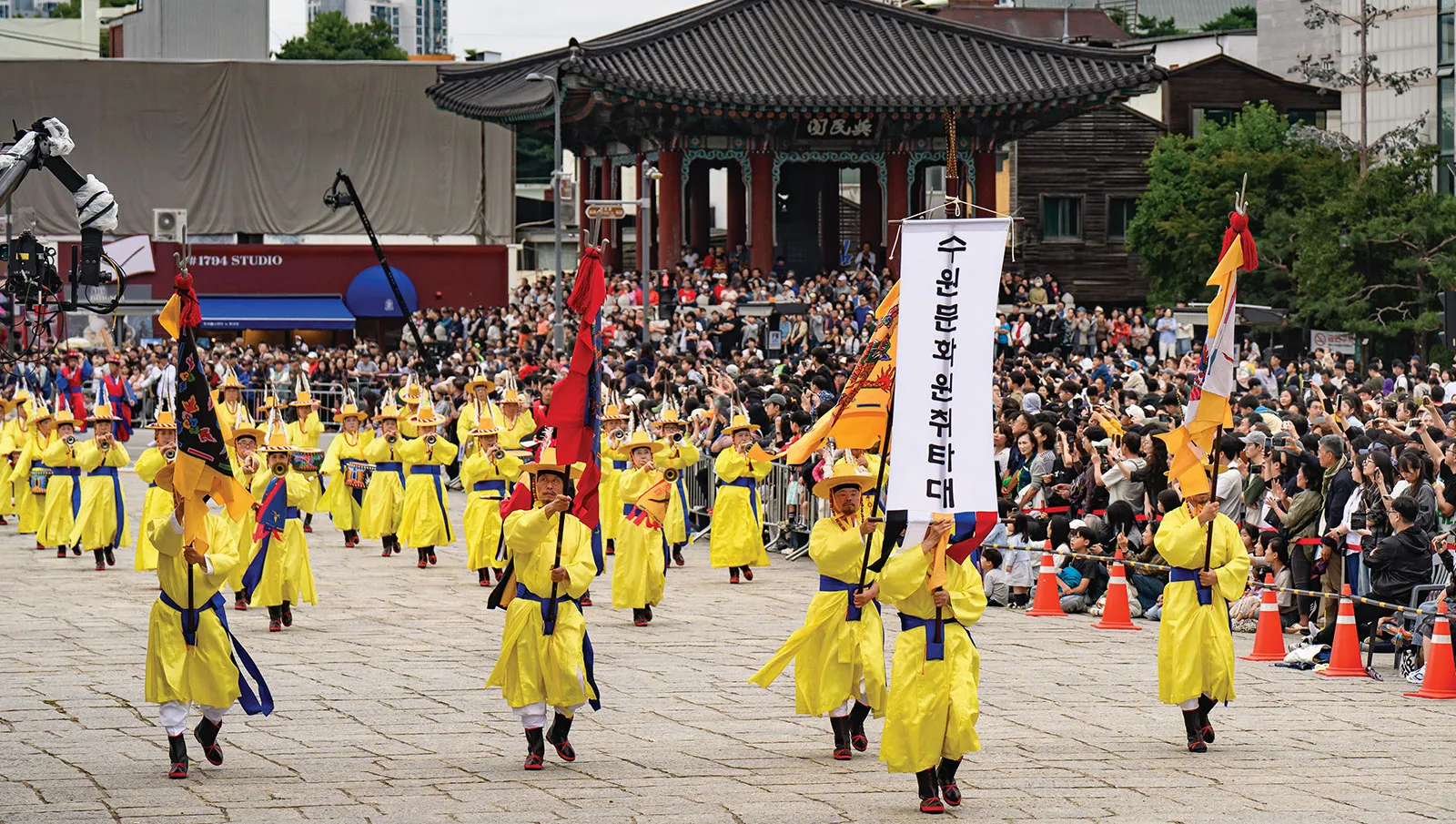
© Suwon Special City.
Q.
You work with tradition-centered festivals. What do you think about tradition itself?
Tradition can preserve its essence only through innovation and openness. The wave of “K-” fusion happening lately is exciting, but it sometimes comes at the cost of losing “our way of doing things.” A festival should be something outsiders come to watch because they want to see us having fun. Like the great festivals of the world, we need to protect what’s worth protecting and find joy within that.
Q.
What draws you to festivals as a form?
Liberation from everyday life—a break from routine. People feel something special when they build an enormous paper structure together in the city and lift it into the air, or when roads normally choked with traffic are closed and a royal procession passes freely. I try to build that sense of fantasy into every program. What matters is that participants leave with one indelible scene burned into their memory—because that one powerful image can last a lifetime and become the reason they come back.

Take a look at the official website of the Suwon Hwaseong Cultural Festival.
A Stage Without Limits
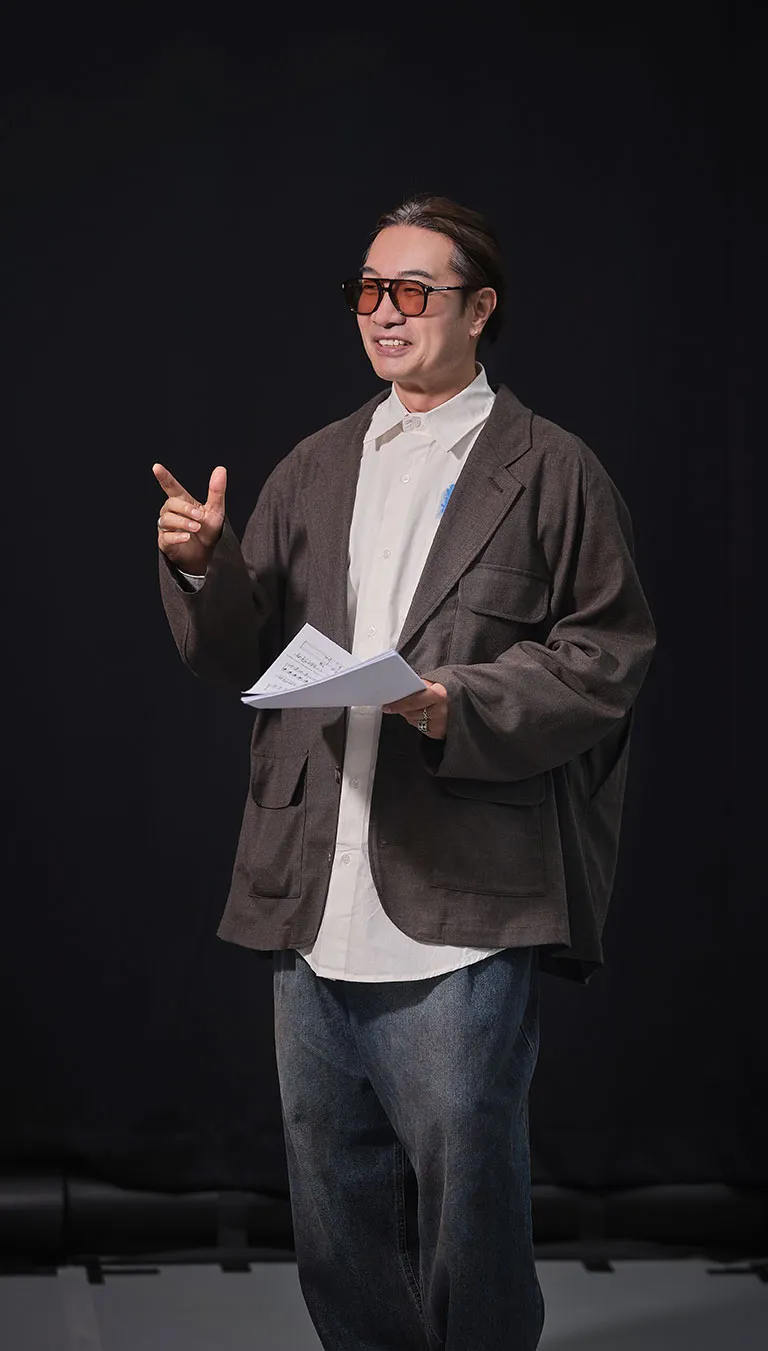
Yang Jeong-ung
Art Director of the K-Royal Culture Festival
Cover Story 2
Writer
Sung Ji Yeon
This past spring, Seoul’s five grand royal palaces came alive through the K-Royal Culture Festival, a celebration that brings Korea’s cultural heritage into conversation with the present. Among the many moments that connected the past and present this year, one stood out in particular. It was the opening ceremony, “Palace, Awakening the Arts,” which transformed these historic spaces into a stage for boundless creative expression. The ancient and dignified grounds became, by turns, a dazzling Hanbok (Korean traditional clothing) fashion runway refracted through an artist’s eye, and a dynamic festival space where media art collided with EDM. The truth that emerged from that astonishing spectacle was singular: “where art takes root, tradition has no limits.” The man who delivered such a sensory revelation of traditional aesthetics is Art Director Yang Jeong-ung.
Q.
What roles have you held in the festival world?
I served as chief director of the Pyeongchang 2018 Winter Olympic Games opening ceremony, general director of the opening and closing ceremonies for the Gangwon 2024 Winter Youth Olympic Games, and art director of the gala dinner performance for the 2025 APEC Summit. This year I took on the role of art director for the K-Royal Culture Festival. My job is to paint the big picture while generating ideas alongside the directors in each area and driving those ideas forward.
Q.
You started out as a theater director. What led you to larger stages like festivals?
For me, an indoor performance and a festival stage were never really different things. The directors I studied and admired often worked outdoors, and in my twenties I did plenty of theater in the mountains and along rivers. So I never made a conscious decision to move into festivals—it felt natural.
Q.
Moving from theater director to festival director is a different trajectory than coming up through the festival industry itself. What do you bring that's distinctly yours?
The way I see it, I'm doing what I want to do. And I have a deep hunger for things that haven't been done before—for the genuinely new. Layered on top of that is a commitment to visual precision and musical distinctiveness. Together, I think those things add up to a stage that is unmistakably mine.
Q.
This spring's K-Royal Culture Festival was set against the backdrop of the palaces. What was the central idea you kept returning to?
I focused on something I'd seen before and found beautiful: tourists in Hanbok wandering the grounds. There's something wonderful about a space saturated with centuries of Korean character, filled with people from every corner of the world. I wanted to bring that beautiful image—foreigners playing freely inside the palace—onto the stage. At the same time, I kept asking how to make international visitors feel fully included in the festival.
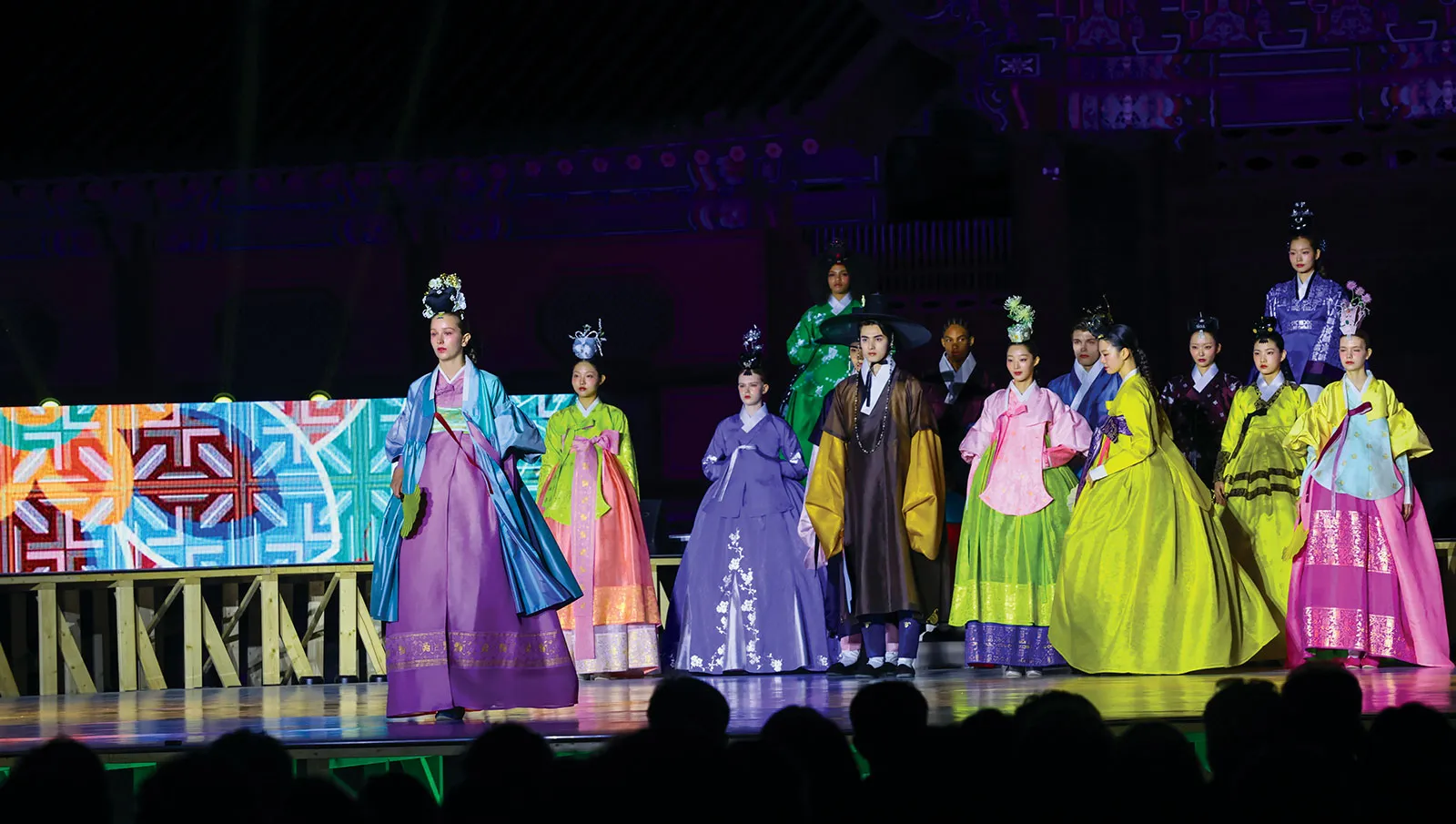
© Korea Heritage Agency.
Q.
How do you think about tradition, and how did you weave that into this festival?
I think of tradition as something that never stops moving. Preservation matters, but what I chose to emphasize is that tradition can be mixed with anything.
That perspective is embedded in this year's Hyper Palace stage. Since Heungnyemun Gate was historically reserved for the king, a circular stage was built at the center facing it. Our team proposed a circular stage rather than a rectangular one to create an effect of eras bleeding into each other, expressing what I'd call the "transcendence of space and culture."
On that circular stage, Korean and international models walked together in Hanbok, EDM pulsed, media art wrapped around them, and ganggangsullae (circle dance) unfolded—past, present and future converging against the backdrop of Heungnyemun Gate, as if a spacecraft were landing. That was the image.
Preserving and honoring tradition—that's vital work. But there are many people who do it extraordinarily well. My job is to show what tradition becomes when it's been transformed. To take tradition and modulate it. And through that, to speak to the present—even to the future.
Q.
How do you define a festival stage?
A stage is wherever the performers and the audience enjoy the space together. When I was doing theater, I traveled the world and dreamed of an art that collided with other cultures head-on. The festival stages I've worked on are an extension of that dream. To me, art is something that swallows everyone whole, the makers and the audience alike.
Q.
Is there a stage you still want to make?
One thing I've always wanted to try: holding a festival in the metaverse. Gathering everyone in a virtual space and meeting people from all over the world there. I'd also love to get involved in the gaming world—directing a festival where a game is the center of it all. Games seem to contain everything our field has to offer: theater, film, narrative, all of it—theatrical in some ways.

Discover the opening ceremony stage of the K-Royal Culture Festival, directed by Yang.