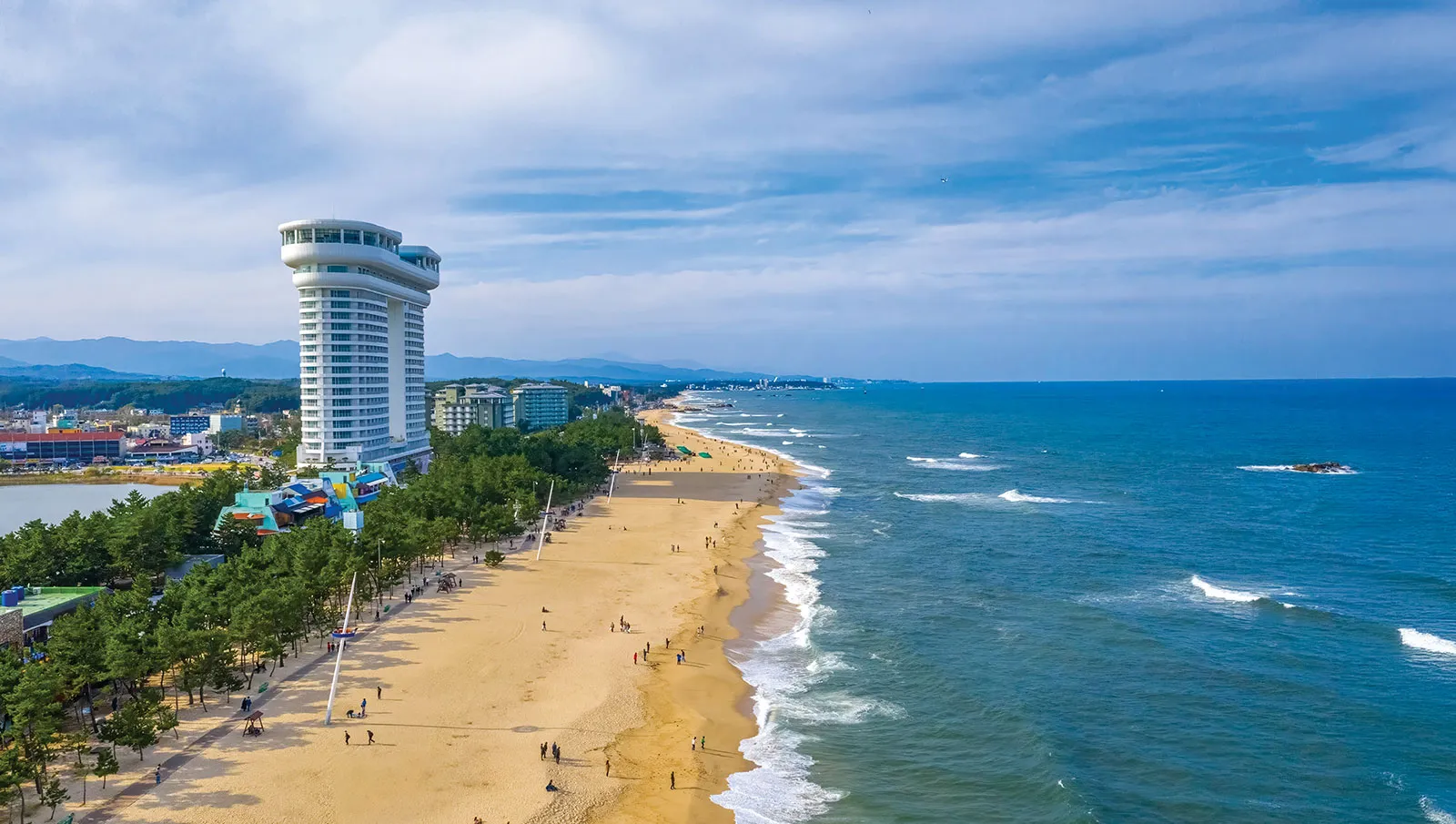
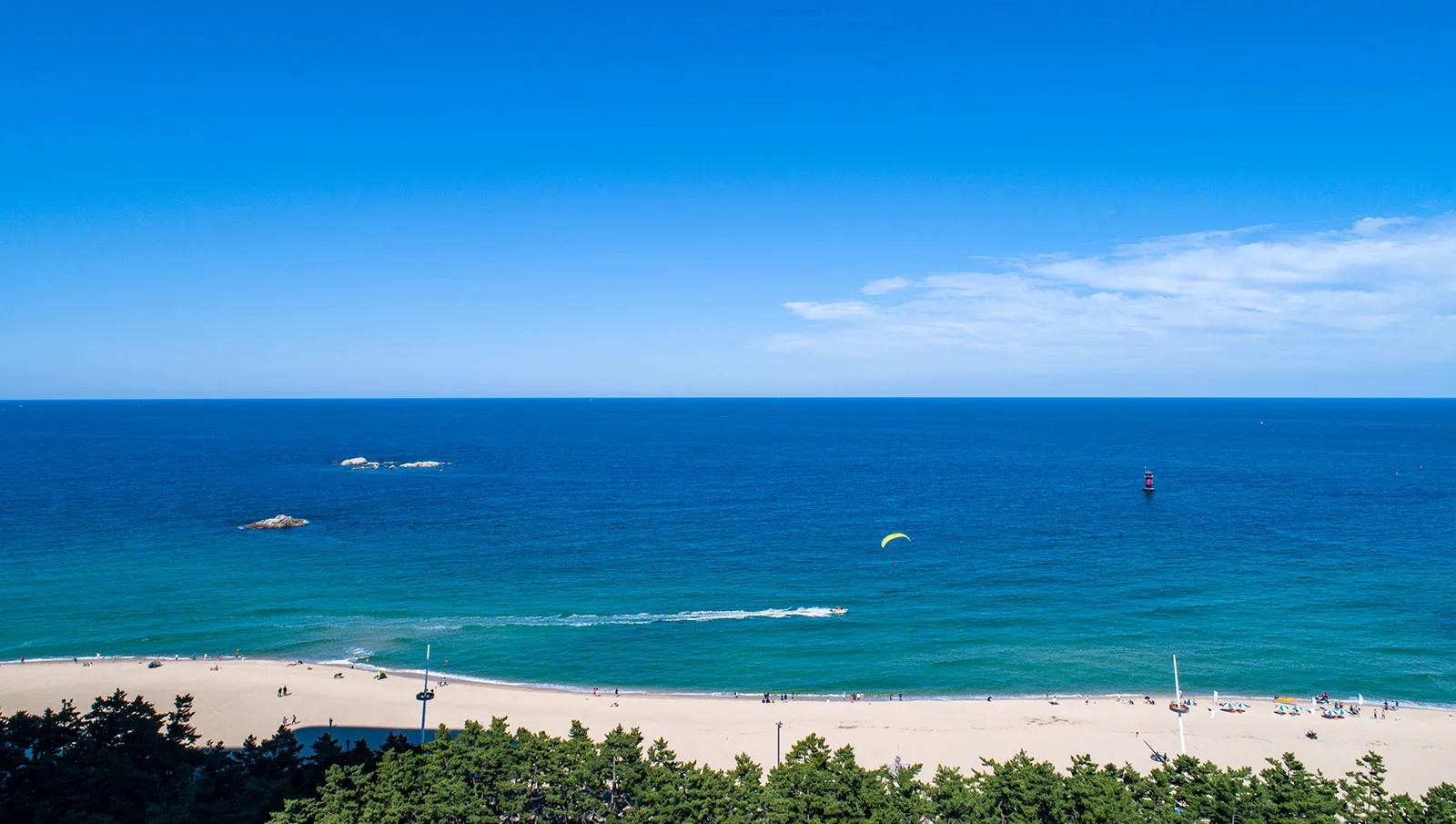
Early in the morning, a bus leaves Seoul heading straight for the Gangneung coast. Over several mountains and across several rivers, the journey ends at a pine-lined beach. Behind lies a great lake; ahead stretches Gyeongpo Beach, its sea wide enough to lose the horizon. The sand, catching the light, is strikingly white. The water is impossibly blue, the sky above the waterline impossibly high. Waves roll in, trailing delicate white foam—exactly the kind of scene to open a trip with.
The beach has a pleasant hum of activity—people in bright clothes playing against the backdrop of the sea—but this city has more to offer than its most familiar face. Gangneung runs along the coast for its entire length, and the same shoreline holds places that could hardly look more different from one another.
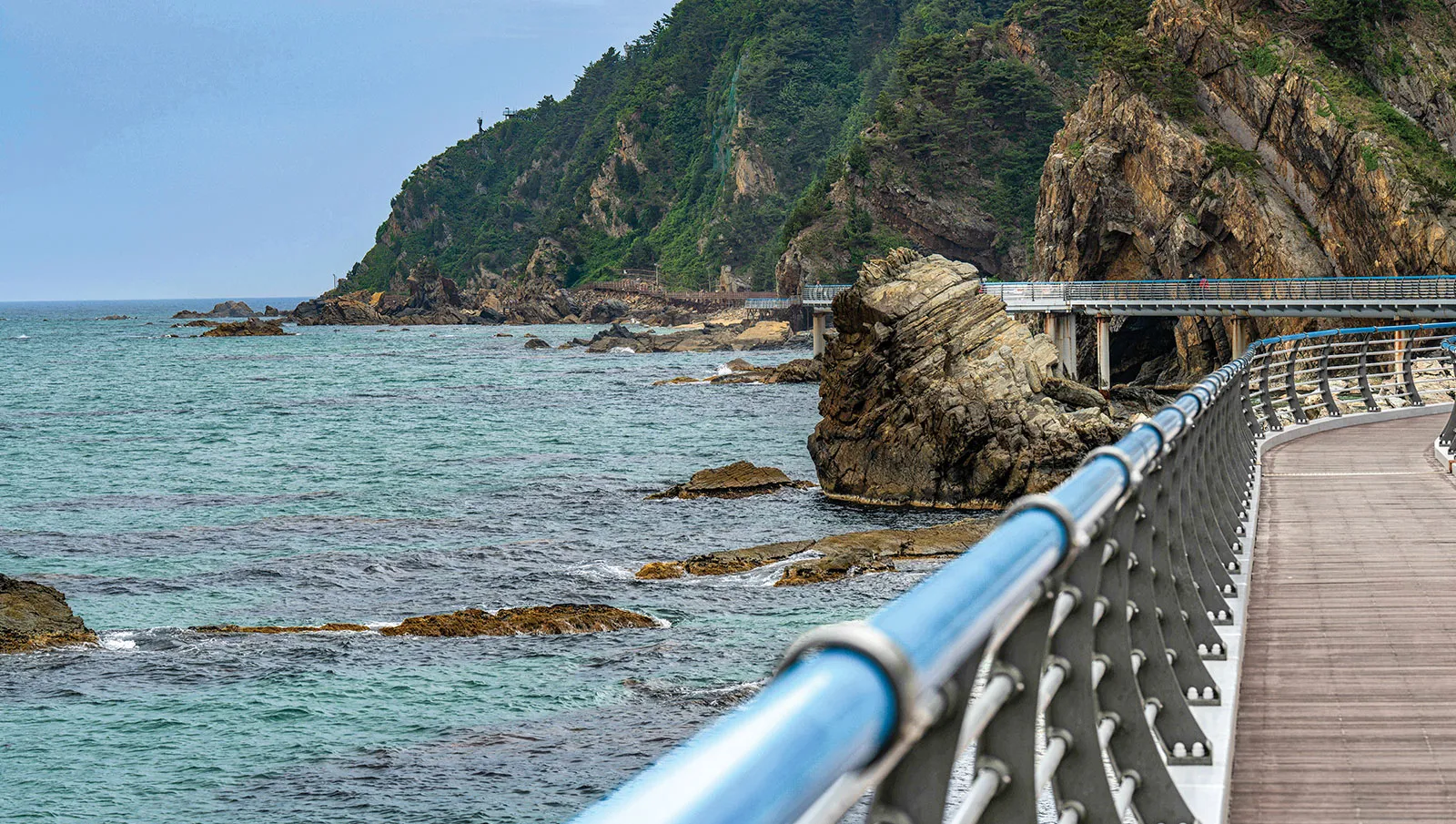
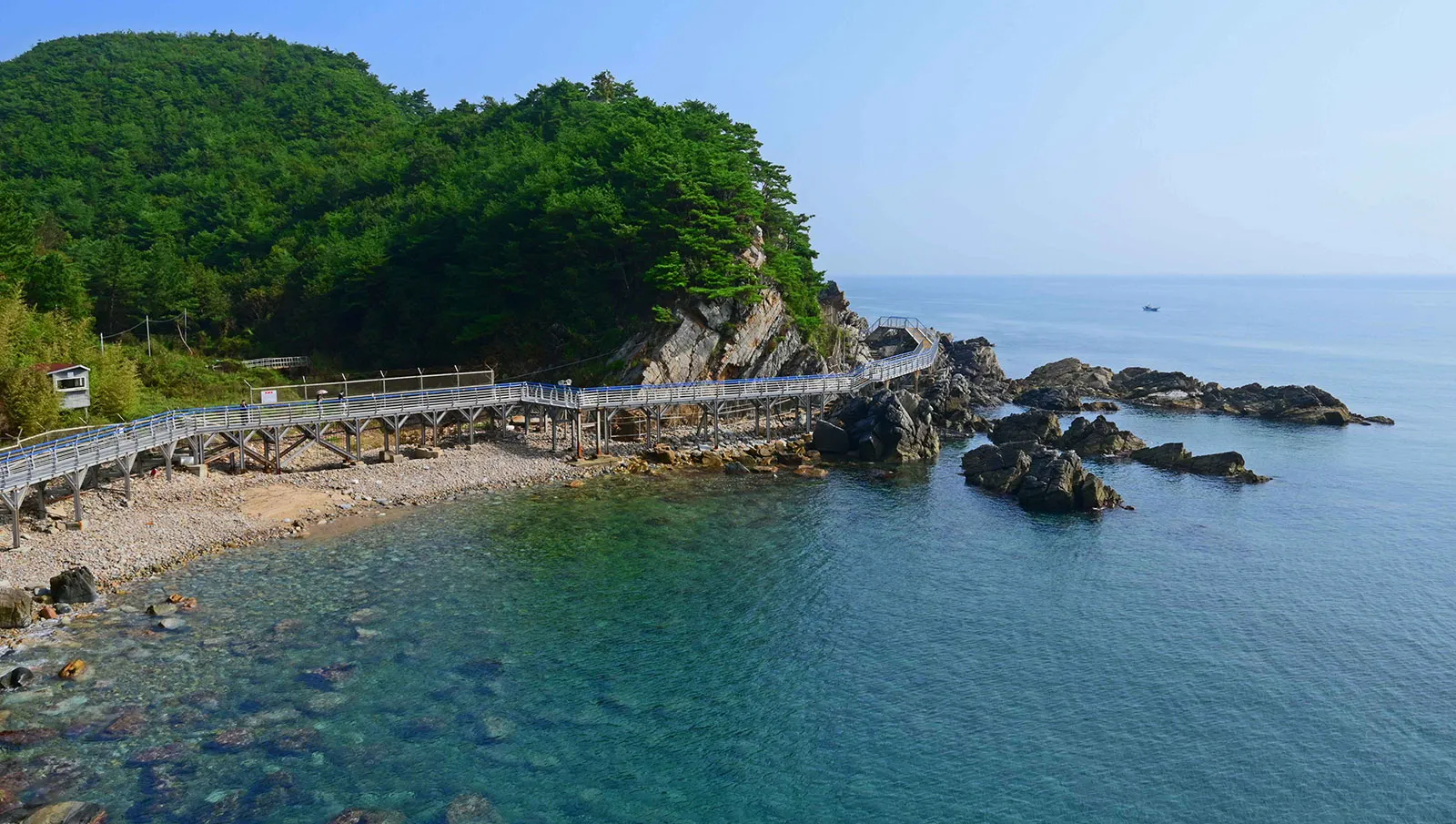
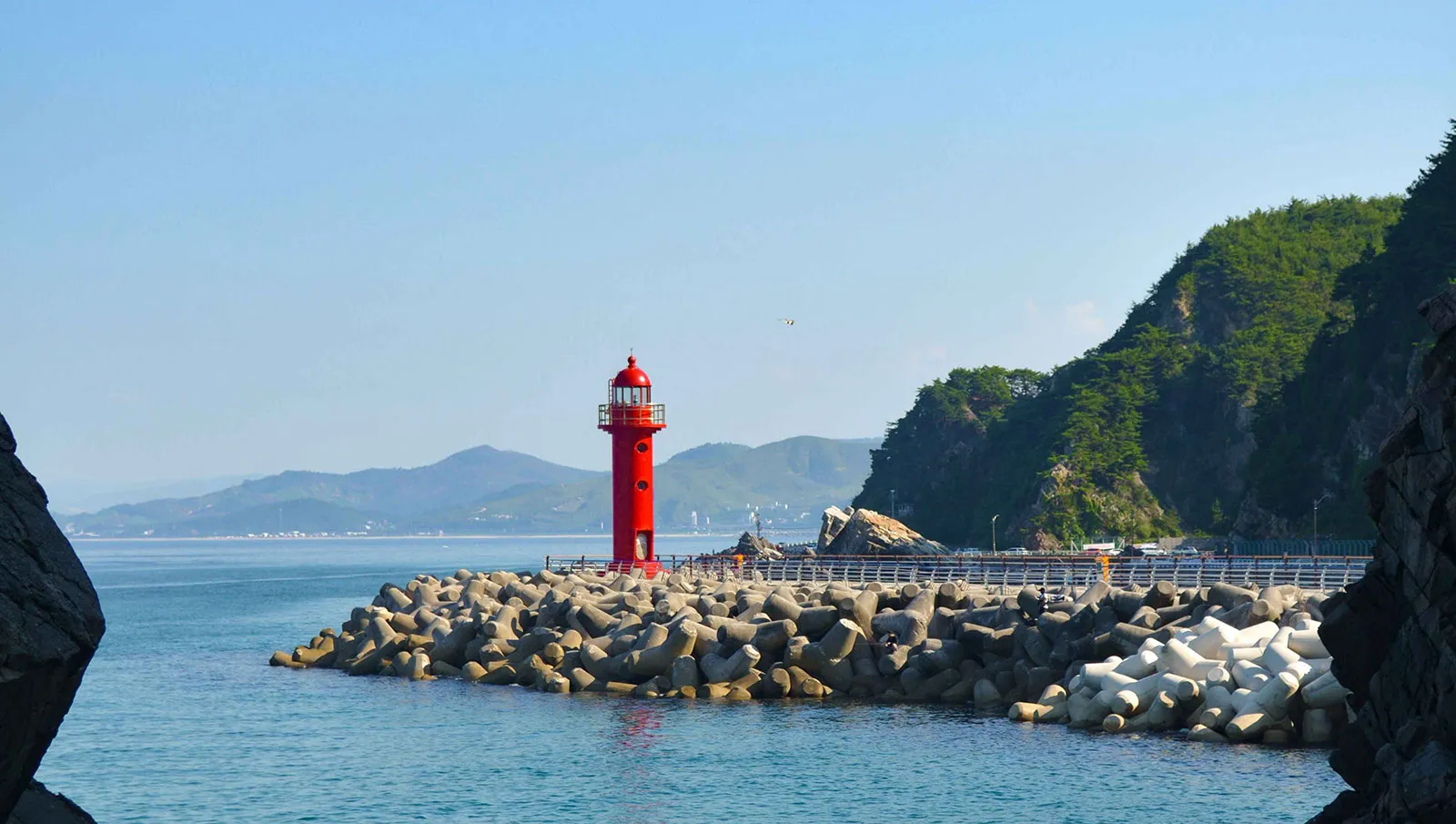
Following the coast brings you to a stretch that was closed to visitors for decades: Jeongdongsimgok Badabuchae Trail, named for the way the terrain fans out like a buchae (open folding fan). Emerald water, jagged rocks jutting from the sea, a wooden boardwalk threading between them. The moment you step onto it, you’ve crossed into a different space entirely—quieter, more solitary, cut off from the Gangneung you just left.
The rocks reward close attention. Two to two-and-a-half million years of coastal formation are still legible in every surface. The cliffs rise in wild, individual shapes, no two alike, with mugwort and rugosa rose swaying in the wind along the top. A fresh sea breeze comes off the water; the sound of distant waves fills the air. If nature has ever produced a masterpiece, surely this is one. At each new view the breath catches—and whatever had been weighing on the mind quietly dissolves.
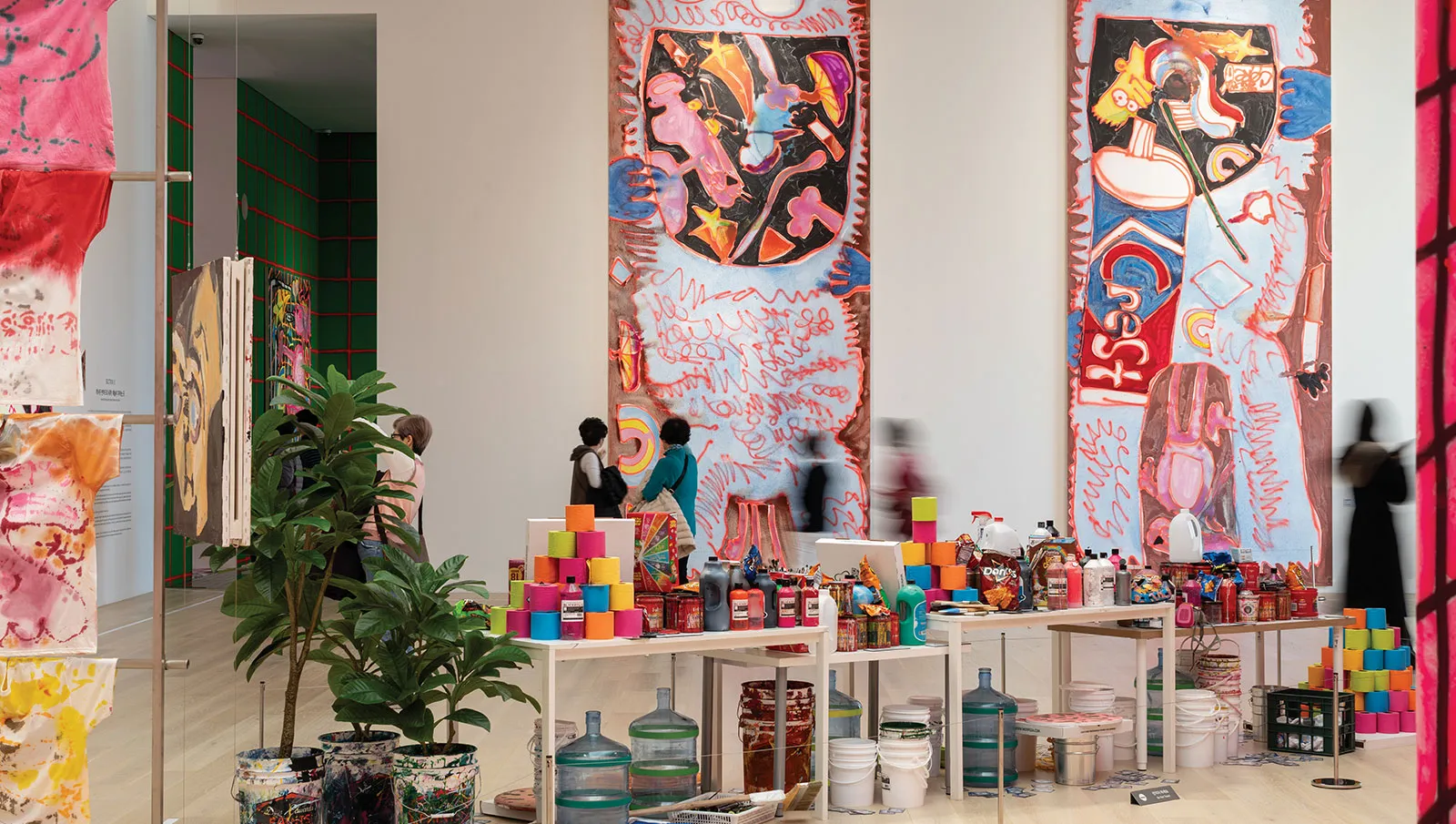
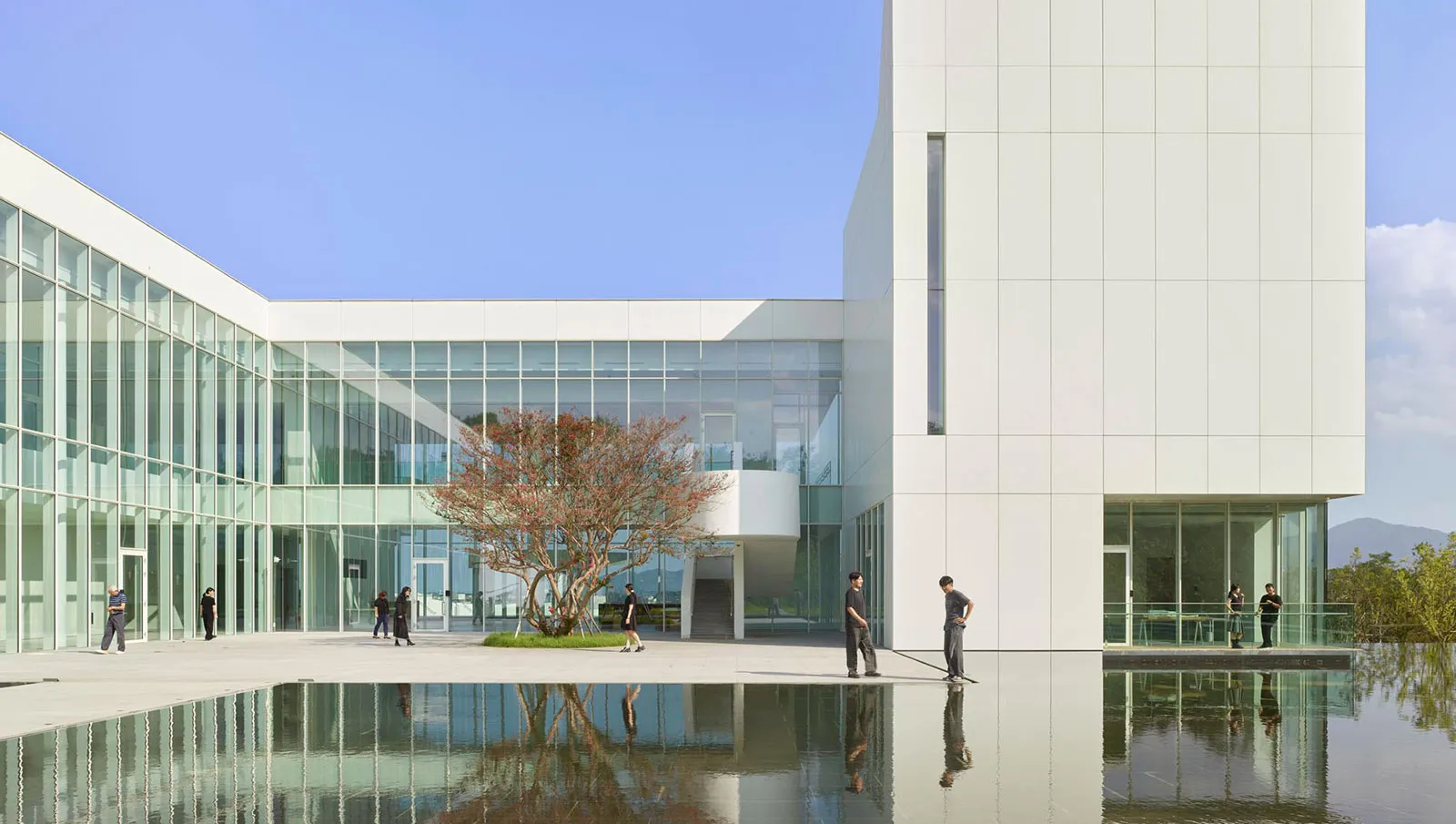
Back in the city, the Sorol Art Museum awaits. The clean white building is satisfying even before you step inside. There’s a beauty here entirely different from what nature offers. Inside, an exhibition of Chang Ucchin—a major figure in Korean modern art—is on view: “Chang Ucchin: A Life in Dialogue.” Even after achieving renown, he retreated to remote places and turned his attention to the ordinary: houses, trees, people, courtyards, sky. His canvases read as an intimate self-record—how he lived, what he held dear. Visitors can be seen turning inward in front of the works, prompted to ask themselves whether they’ve ever thought this carefully or honestly about who they are. His gaze invites something like a conversation with yourself, and the exhibition is one you leave grateful for.
Leaving the Noise Behind
Gangneung

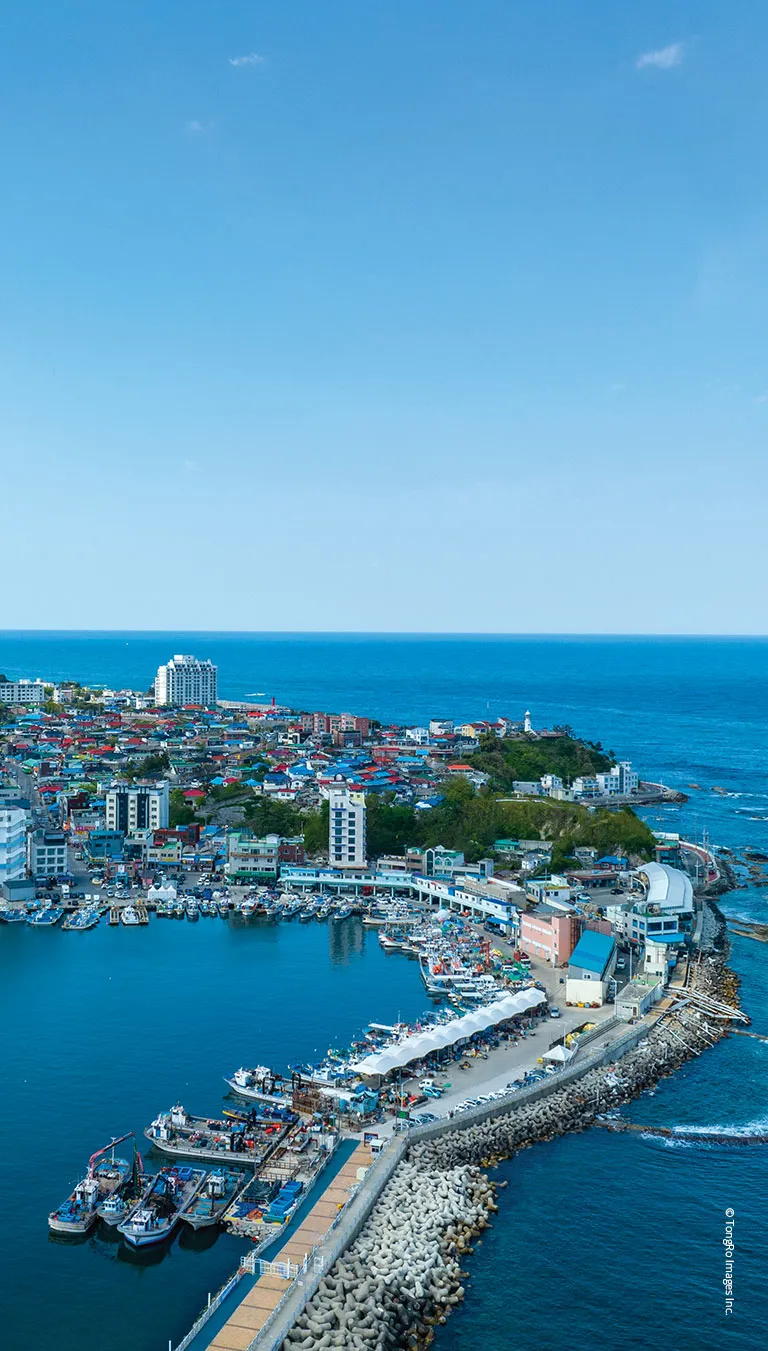
June arrives with its gentle but persistent warmth, stirring a longing for open skies and expansive views. You consider your options: a quiet escape to the countryside or the ease and convenience of urban life. Seeking respite from the feeling of being confined by routine, you find yourself drawn eastward, toward Gangneung. Framed by mountains and the sea, Gangneung offers a rare balance of nature and city life, without asking you to choose between the two. Here, comfort and tranquility coexist. It is a place to wander, breathe deeply and reconnect with the simple pleasures that everyday life often leaves behind.
Before Magnificent Scenery, Before Works of Art
In the Embrace of Old Things
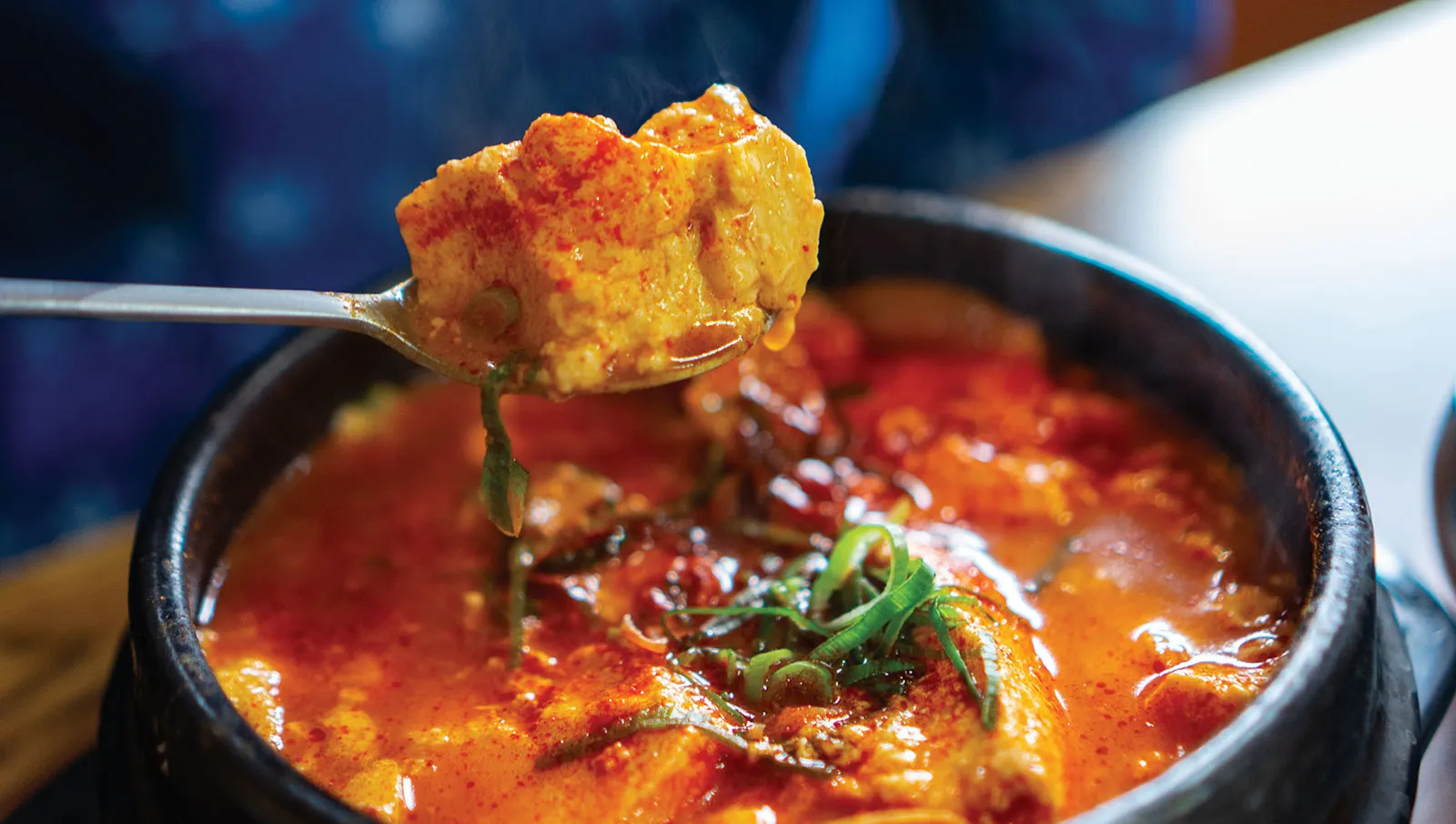
When Gangneung comes to mind, the first food that follows is almost always sundubujjigae—soft bean curd stew. The Chodang-dong has been known for its sundubu (soft bean curd) since the distant past.
The story goes that a high official who took “Chodang” as his pen name began making sundubu here using fresh seawater in place of the usual brine. Sundubu’s flavor depends not just on the beans but on the coagulant used to set them, and Gangneung’s seawater version produces something distinctly its own. The name Chodang sundubu carries its own guarantee of quality.
The village is dense with sundubu restaurants, all competing for your attention. There are white sundubu and red sundubu, sundubu with a jjamppong (spicy noodle soup with seafood- or pork-based broth) kick, and dessert shops selling sundubu ice cream and sundubu cake. It’s hard to walk past without stopping.
Every restaurant seems full regardless. The jjamppong sundubu is worth ordering: a deep red broth with smooth, trembling curds of sundubu floating on top, local seafood and clams adding to the richness. The heat of the broth is softened and rounded by the gentle sundubu, and mixed into the white rice that comes alongside, the bowl is empty before long.
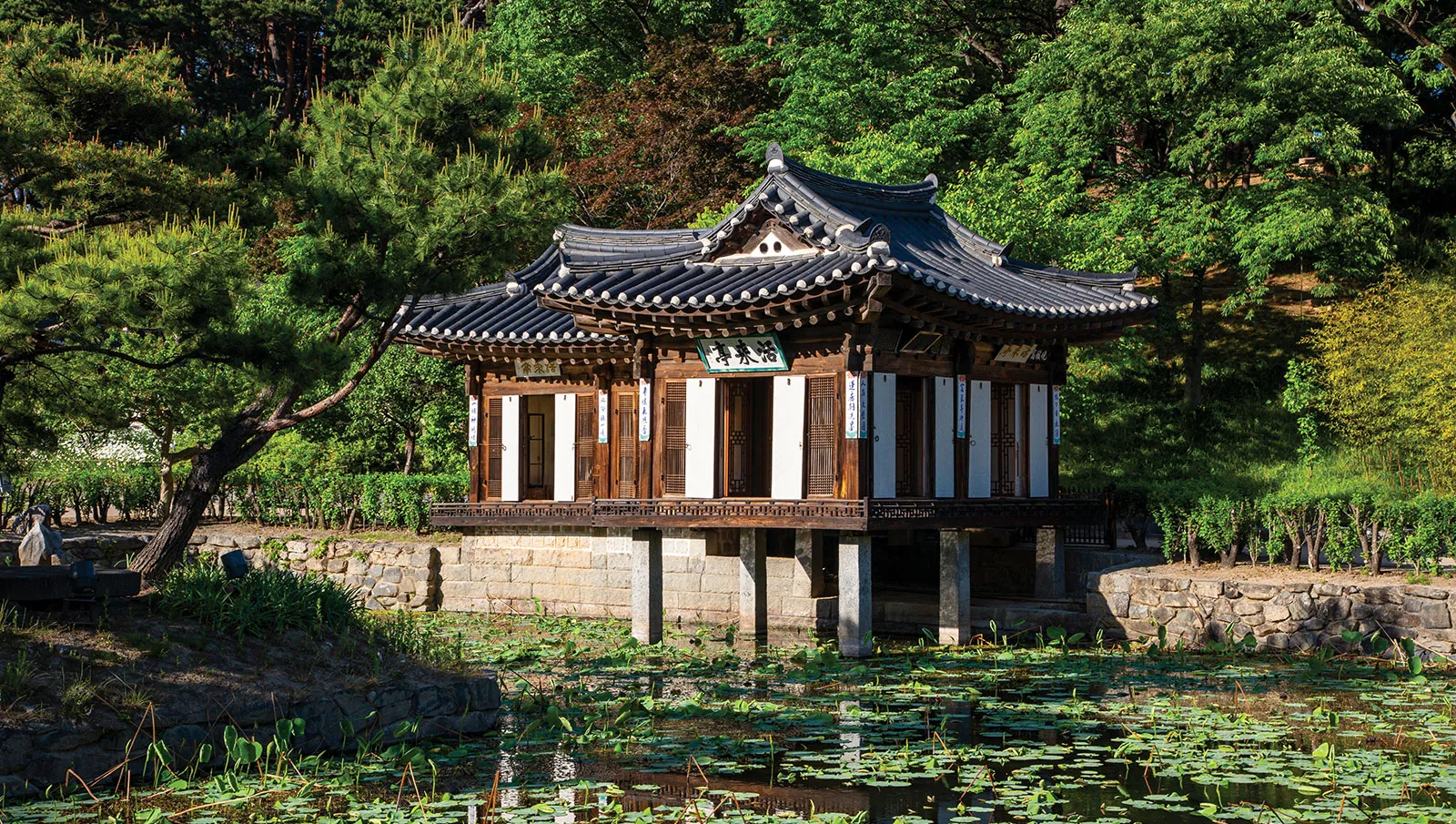
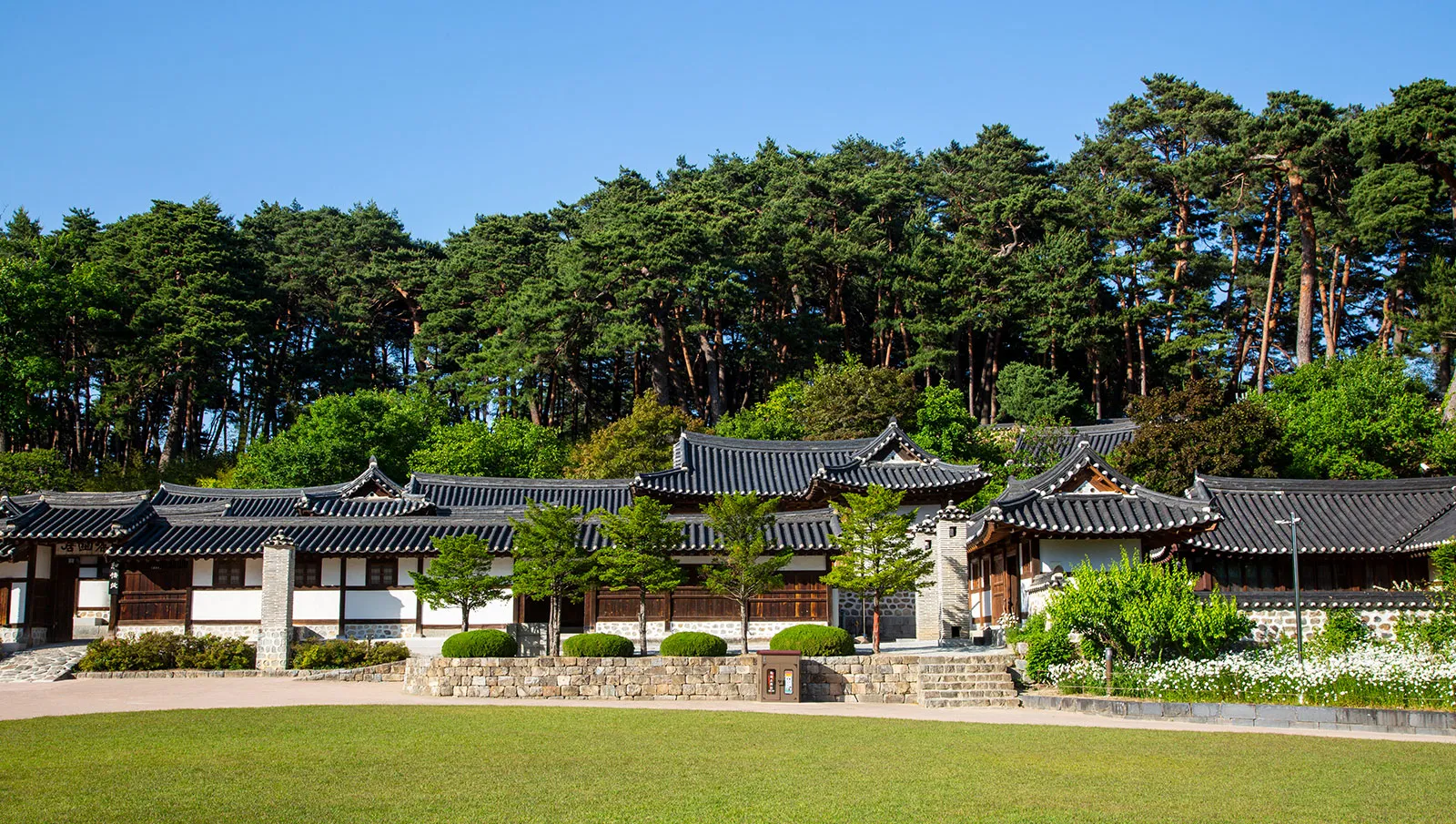
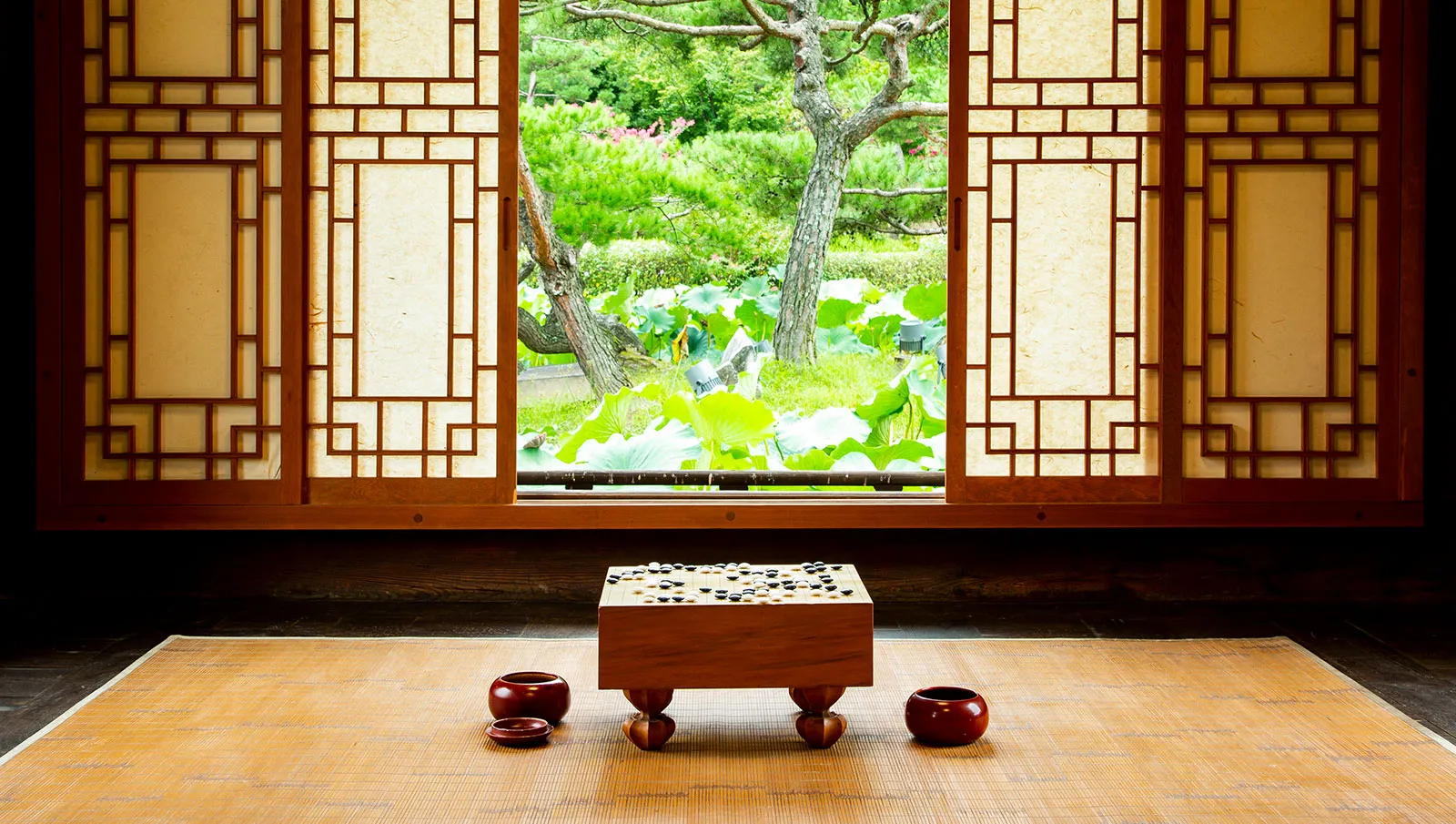
As the sky turns orange over Chodang-dong, Seongyojang is the natural next stop. Built in the 1600s, this is one of the best-preserved traditional estates in the country. Expanded and restored across ten generations, the complex now spans nine buildings. The particular beauty of Hanok (traditional Korean houses) architecture announces itself immediately: the wide open courtyard, the warmth of aged wood, the crisp rooflines, the delicately carved flower-lattice doors, the broad ornamental pond with its pine trees standing in the middle and, beyond all of it, the surrounding hills—every detail holds the eye.
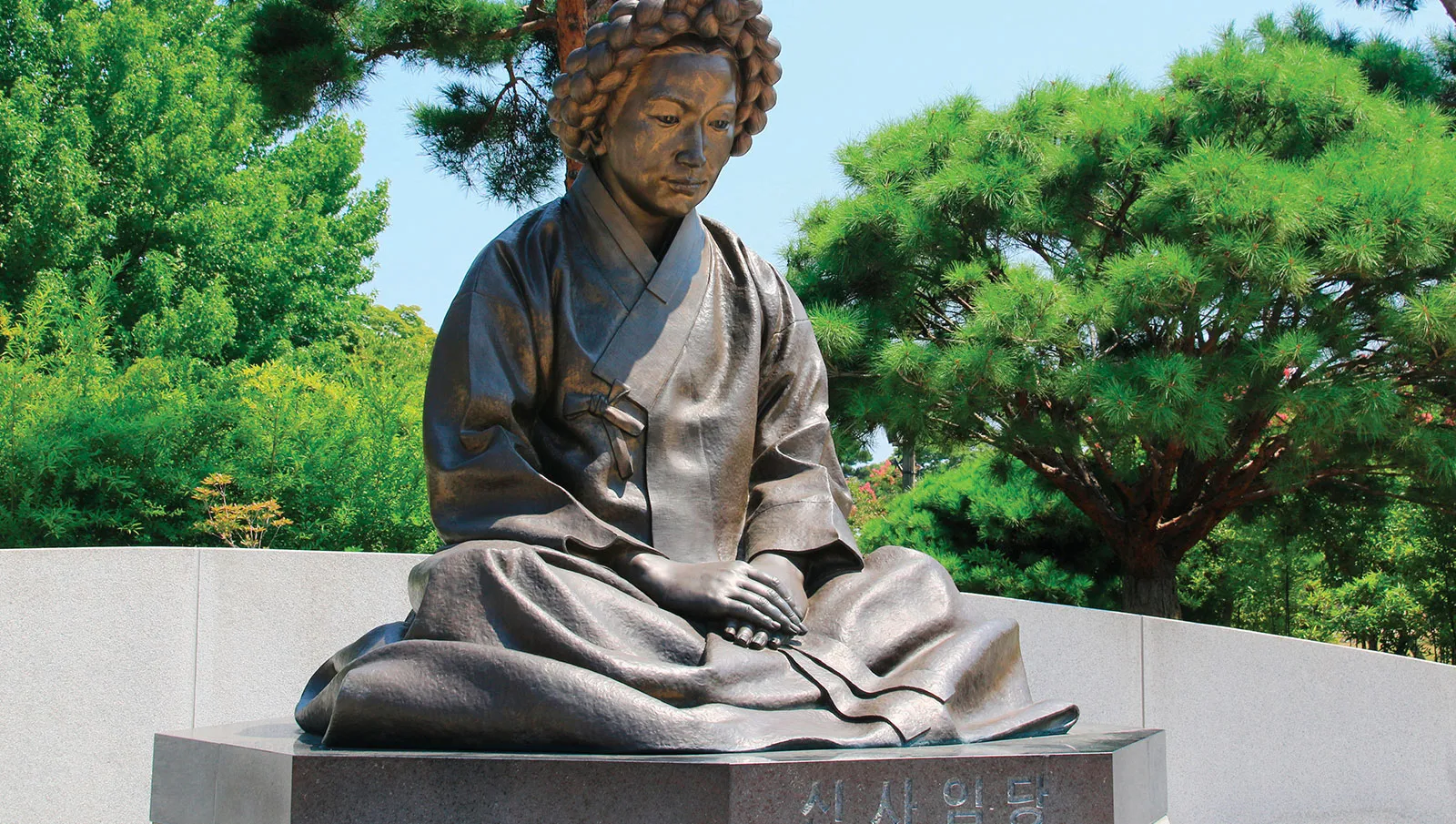
Ojukheon House comes next. This is the birth-place of Shin Saimdang (1504-1551), the foremost female artist of the Joseon Dynasty, and of her son Yi I (pen-name Yulgok), one of the era’s greatest scholars—the faces on the Korean 50,000-won and 5,000-won banknotes, for those who need the introduction.
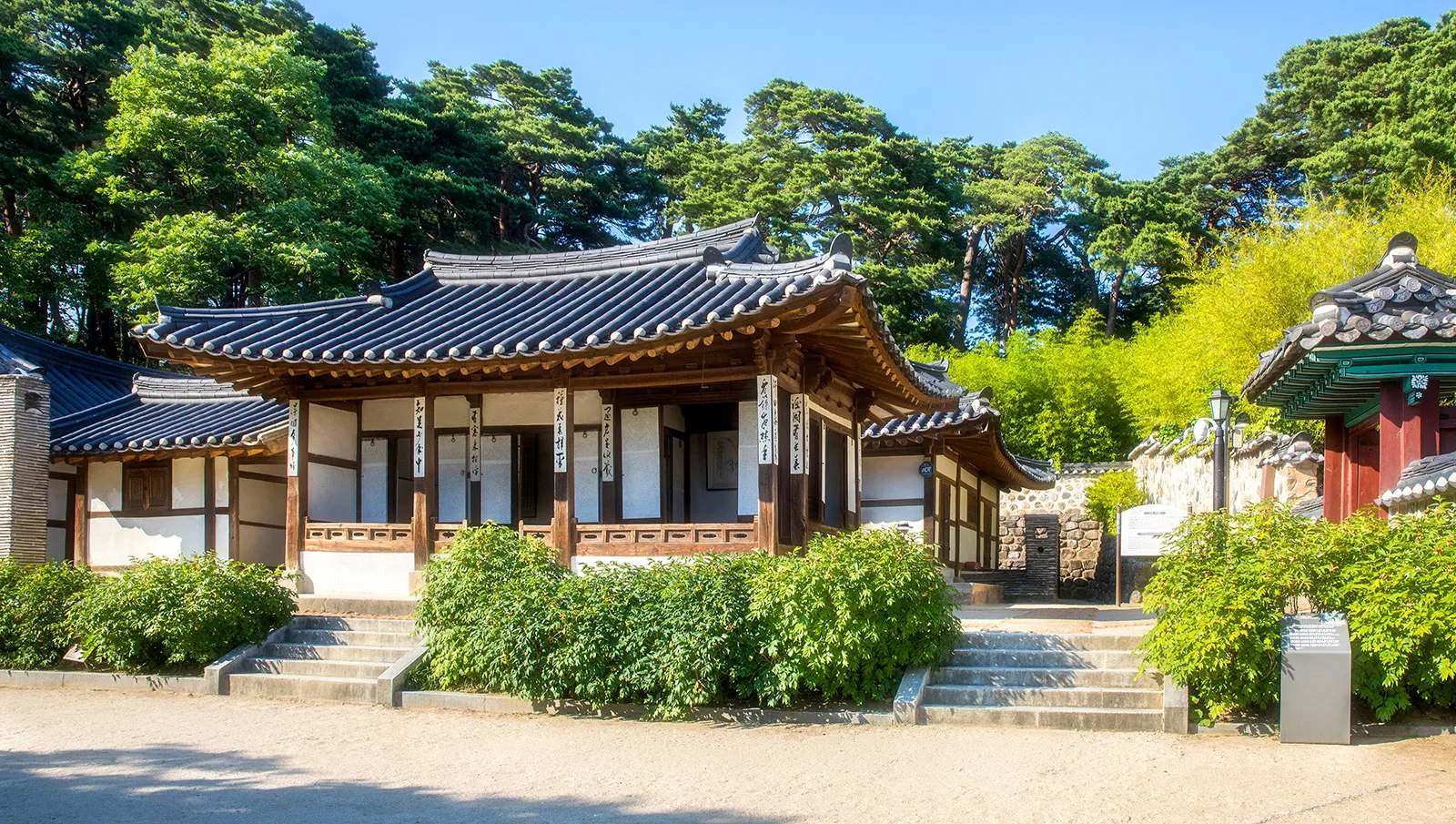
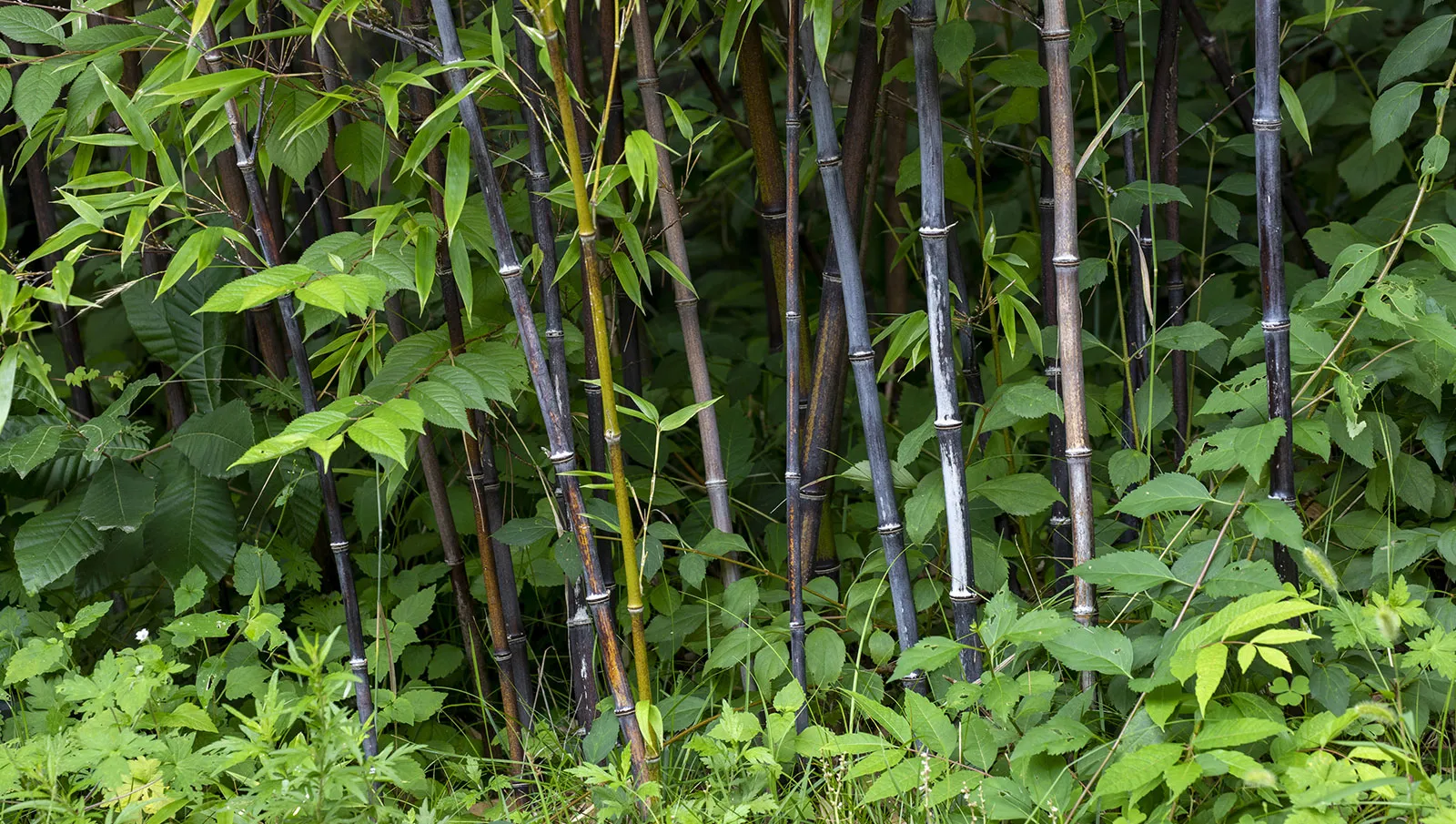
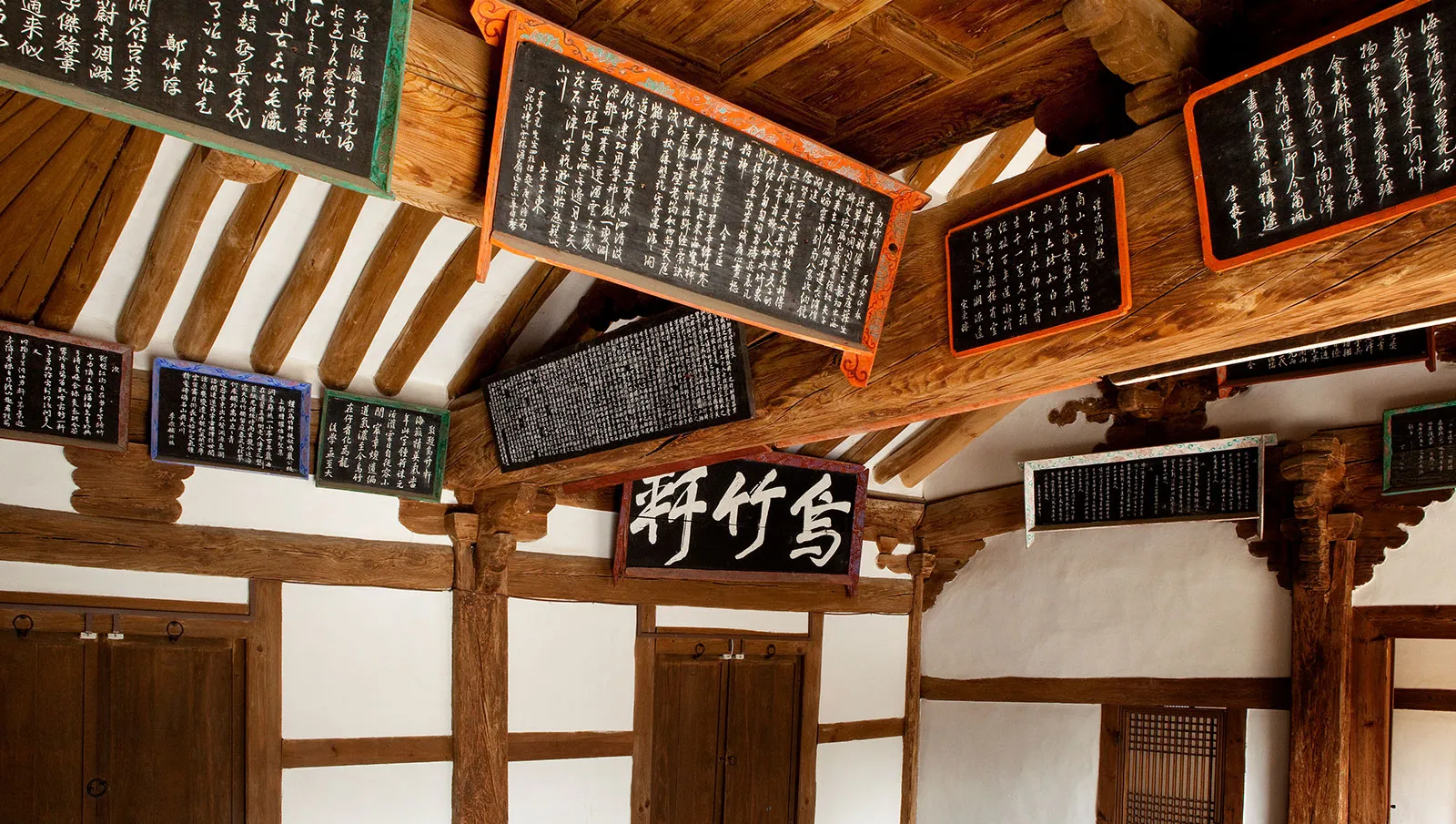
The building has a different character from Seongyojang—modest in scale but dignified, with plaques and documents marking the rooms where the two figures were born. Around it grows something unusual: black bamboo, its leaves green but its stalks dark. The name Ojukheon, parsed out, means “the house of crow-black bamboo,” and that bamboo is exactly where the name comes from. Since Ojukheon House is just one building within a broader family compound, it sits among ancestral halls and residential quarters that complete the picture.
Sitting somewhere in the village and letting the day settle, the fullness of it becomes clear—from a coastline shaped by millions of years of geology, to art and spaces that carry entire human lives within them. History can be encountered through media, other people’s lives observed from a distance, but being present in these places carries a different weight. Standing in the middle of so much accumulated time has a way of making things feel less stuck—like the fog that arrived with you has, without your noticing, already begun to lift.

Festival
Gangneung Danoje Festival
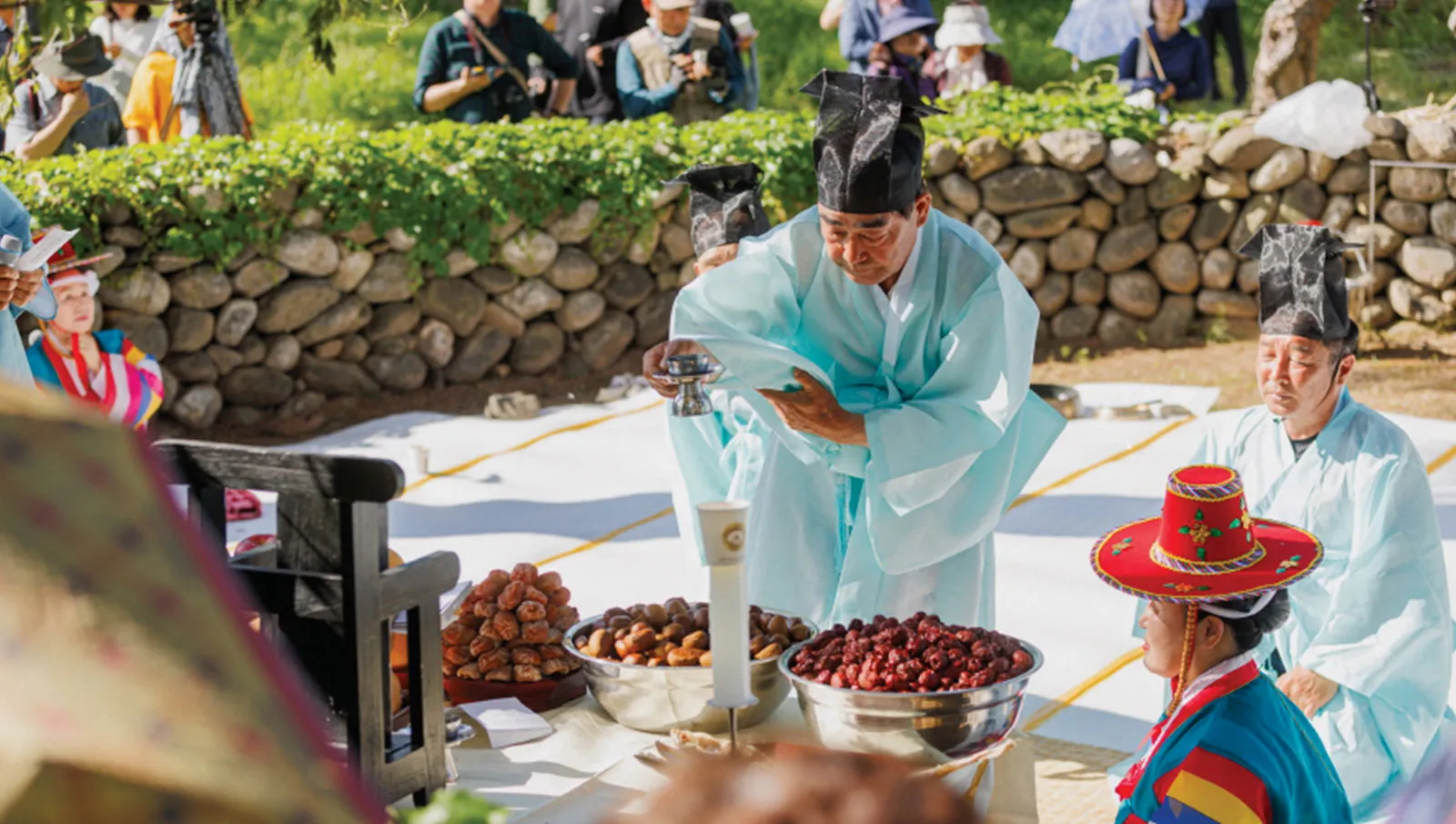
Korea’s Danoje Festival—a UNESCO Intangible Cultural Heritage of Humanity—returns to Gangneung from June 15 to 22. Dano falls on the fifth day of the fifth lunar month, a holiday traditionally observed after the rice transplanting season with prayers for a good harvest. To welcome the summer in health, people would wash their hair in water boiled with iris leaves and roots, thought to ward off misfortune, and make tteok (rice cakes) from surichui, an herb prized for its medicinal properties. Rites were also performed to pray for health and abundance in the year ahead.
This year’s festival brings together traditional reenactment programs and contemporary performances and activities. Designated cultural heritage events—the ritual brewing of sinju (ceremonial rice wine), shamanistic gut rituals and various traditional rites—form the core of the program, alongside performances of designated National Intangible Heritage and a demonstration of traditional Korean wedding ceremony. Invited international performers and a Korean traditional music competition round out the lineup.
The traditional games that communities once played together return as well: a ssireum (traditional wrestling) competition, a tuho (arrow-throwing) contest, a tug-of-war and a swing competition, among others. There are also dedicated activities for children: tasting surichui tteok, washing hair with iris water, and trying on Hanbok and traditional fans. Families visiting the Danoje Festival should find something for everyone—and plenty of reasons to linger.

- June 15–22, 2026
- Gangneung Danoje Training Center and surrounding area