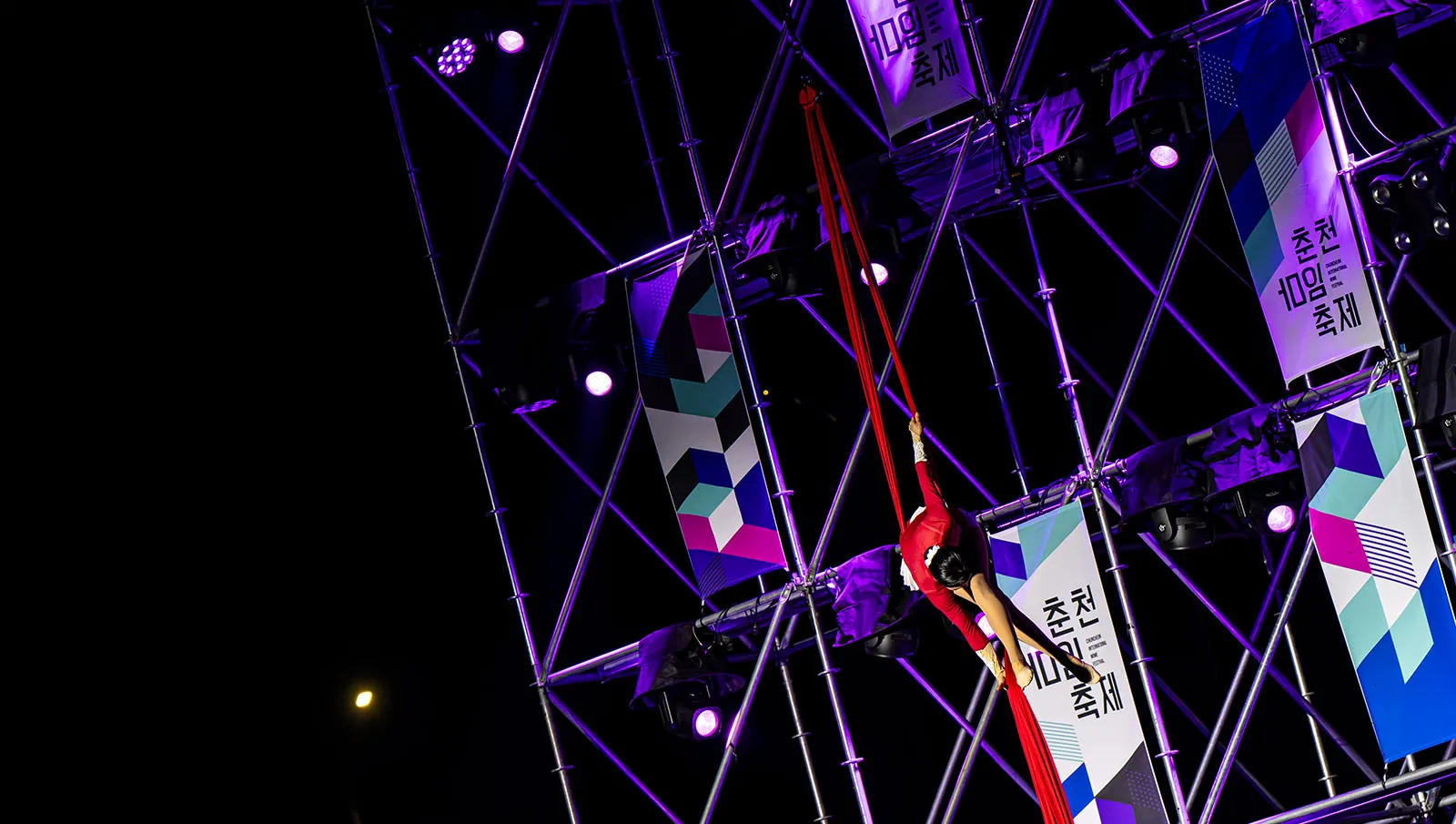
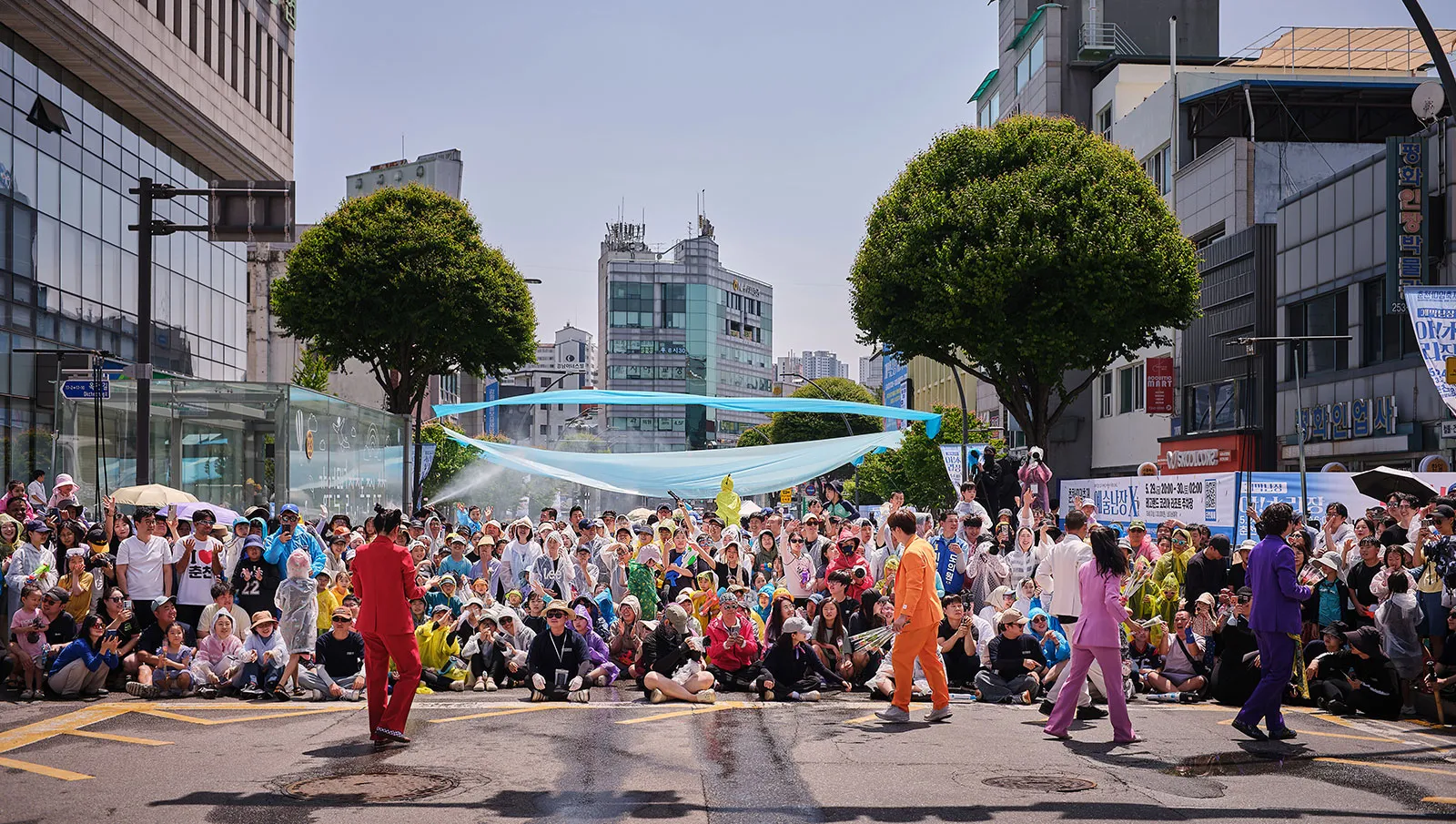
The Chuncheon International Mime Festival began on the streets. At the heart of the city, the entirety of Jungang-ro becomes a stage. “Ah! Surajang” is a participatory opening program that transforms Chuncheon’s Jungang-ro every May into a raucous playground overflowing with water, movement and laughter. Launched in 2006 as Korea’s first water festival, it has grown with each passing year into one of Chuncheon’s defining summer spectacles—a joyful collision of local residents and artists from across Korea and around the world.
Friends, families and couples pour onto Jungang-ro in rain ponchos, water guns in hand. Lengths of blue fabric hang overhead, and the asphalt is already soaked. A child refills their water gun from a large barrel; a traveler darts through the crowd with a camera; artists in bold, imaginative costumes hold court in the middle of the street. On this day, there is no line between audience and performer. Spain’s Mr. Copini, Korean acts Mime Citizen and Jiksee and aerial performance group Project Luminary all move naturally through the crowds, indistinguishable from everyone else.
Water guns fire, laughter ripples outward, and a stranger’s gesture spreads through the crowd; before long, the entire city center has become one living, breathing performance. This is how summer begins in Chuncheon—with a festival.
When the Whole City
Becomes a Stage
Chuncheon International Mime Festival
Every May, Chuncheon—a small city of 300,000—comes alive. Tents line the streets, music fills the air, and strangers soak each other with water guns to kick off the Chuncheon International Mime Festival. Launched in 1989, the event has grown into something far beyond a performing arts showcase. The whole city becomes a stage, and at some point, every visitor becomes part of the cast.
13:00
The Grand Splash Begins
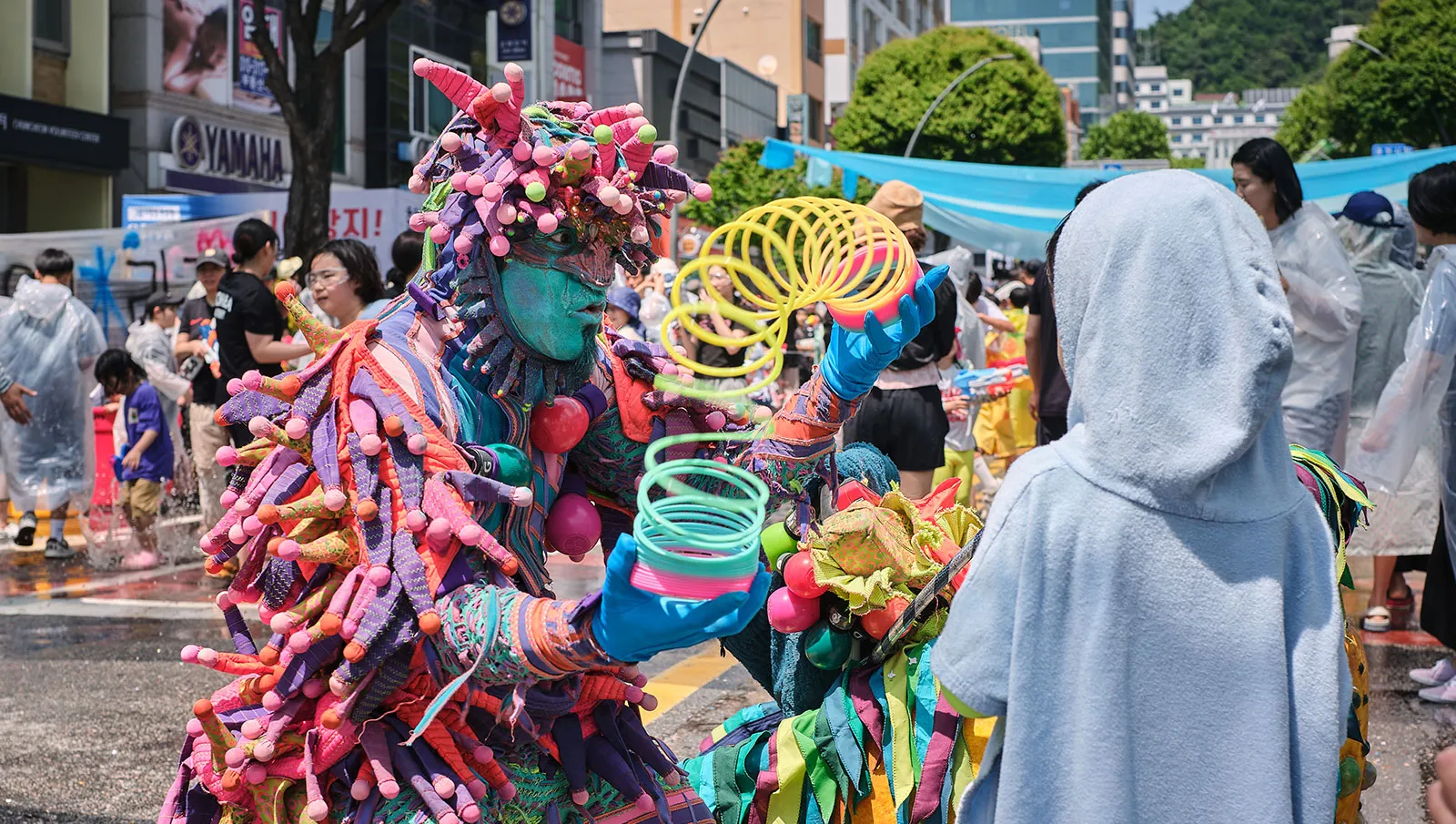
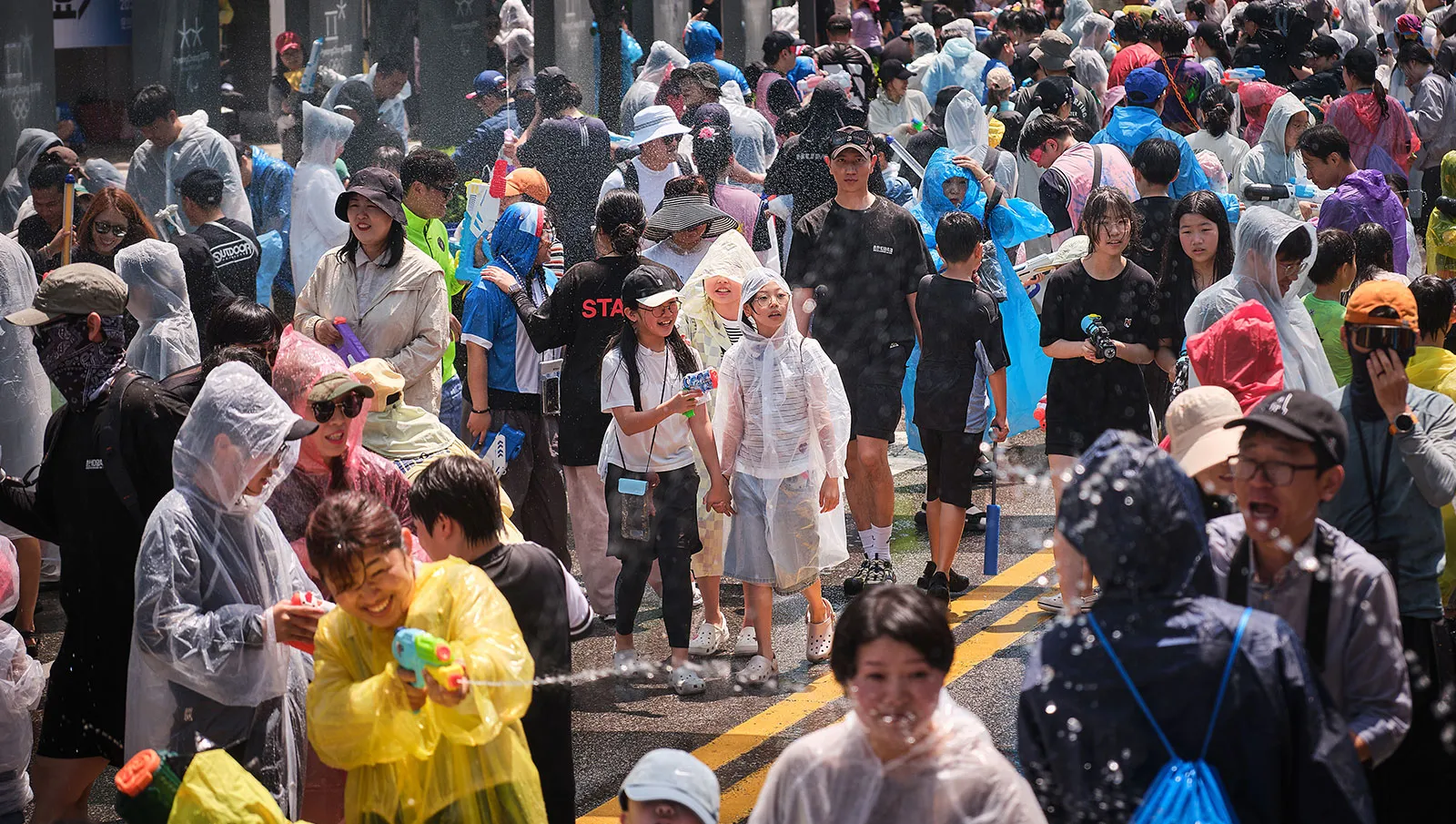
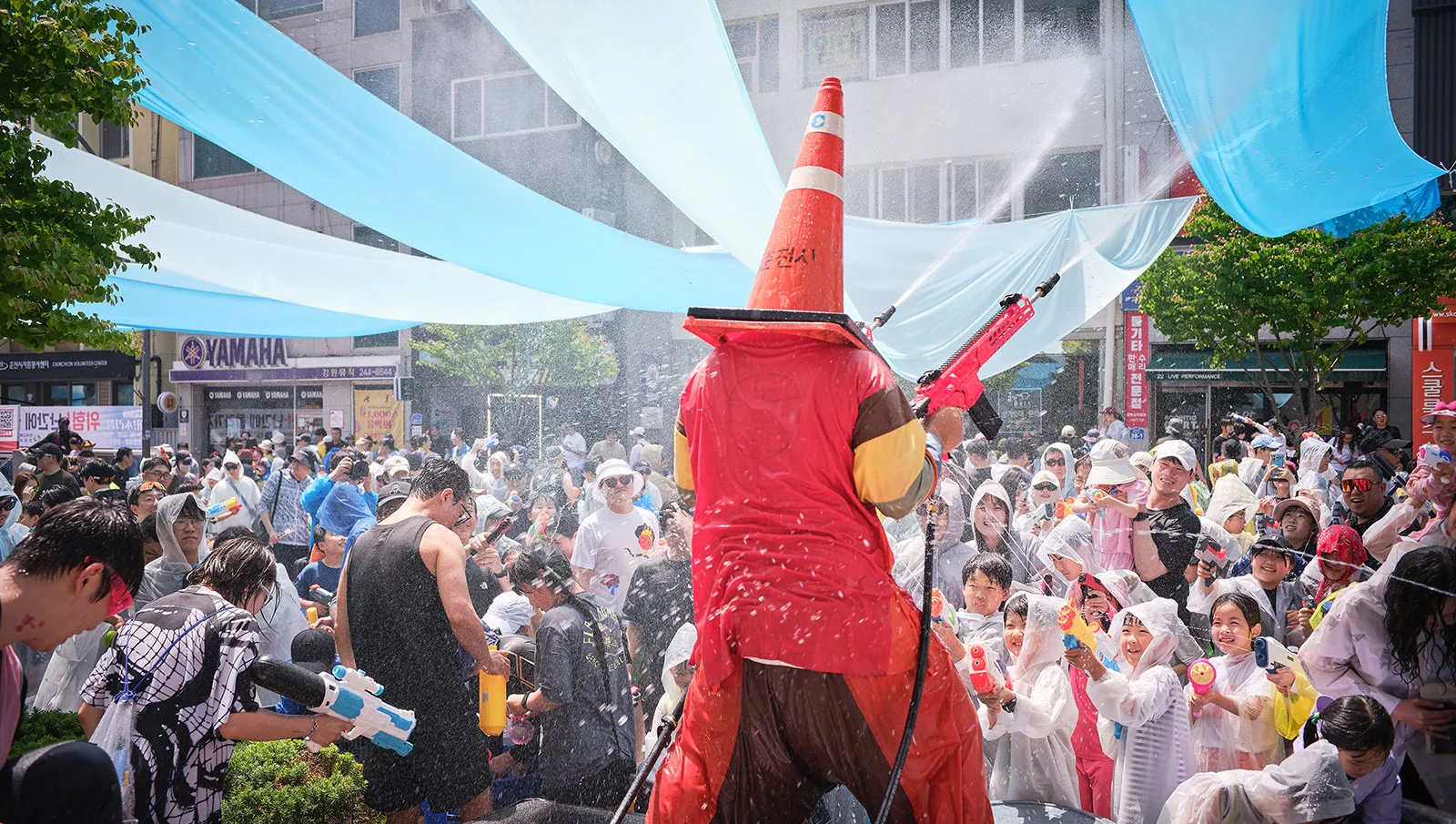
15:00
The Dish That Defines Chuncheon
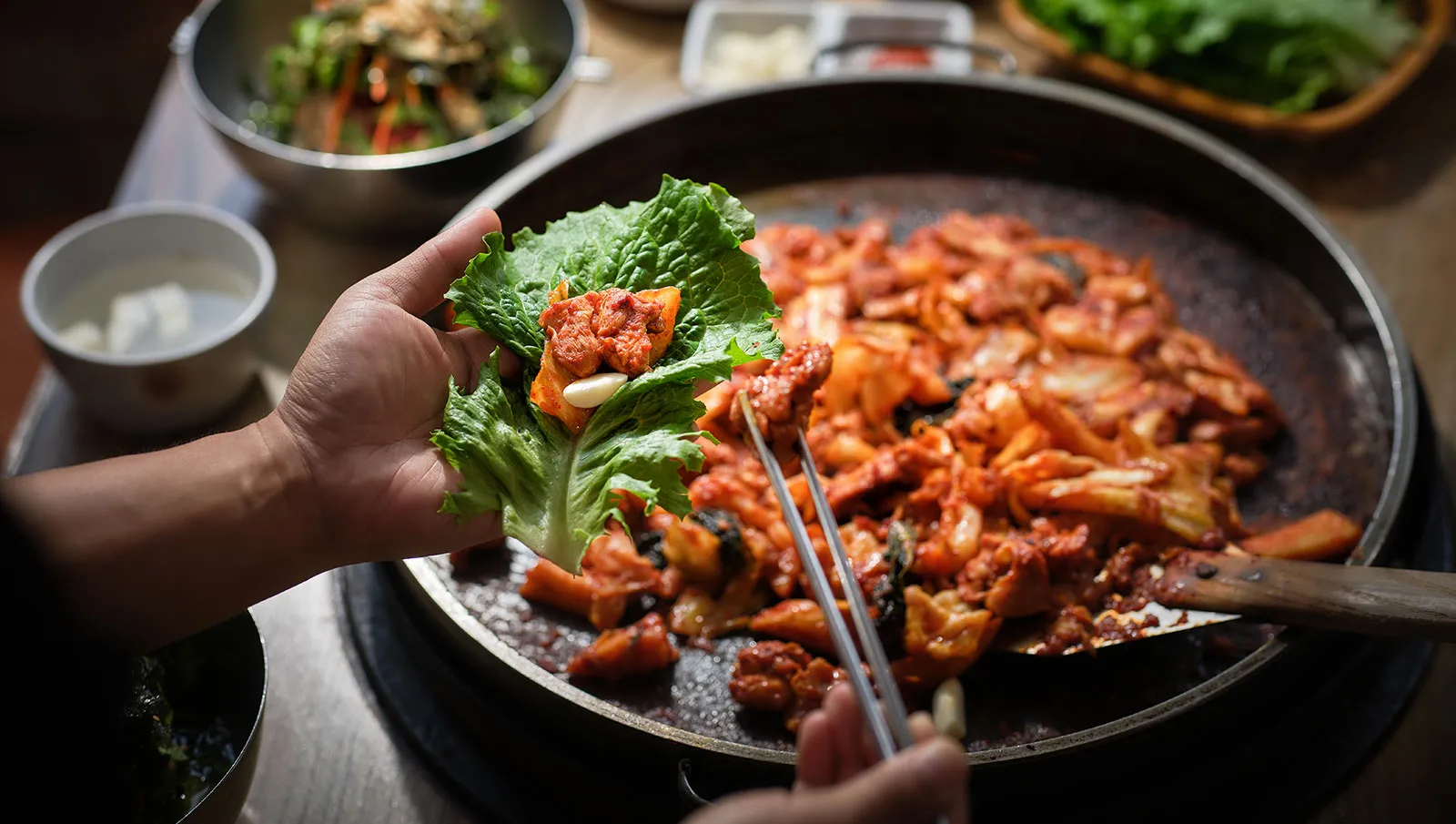
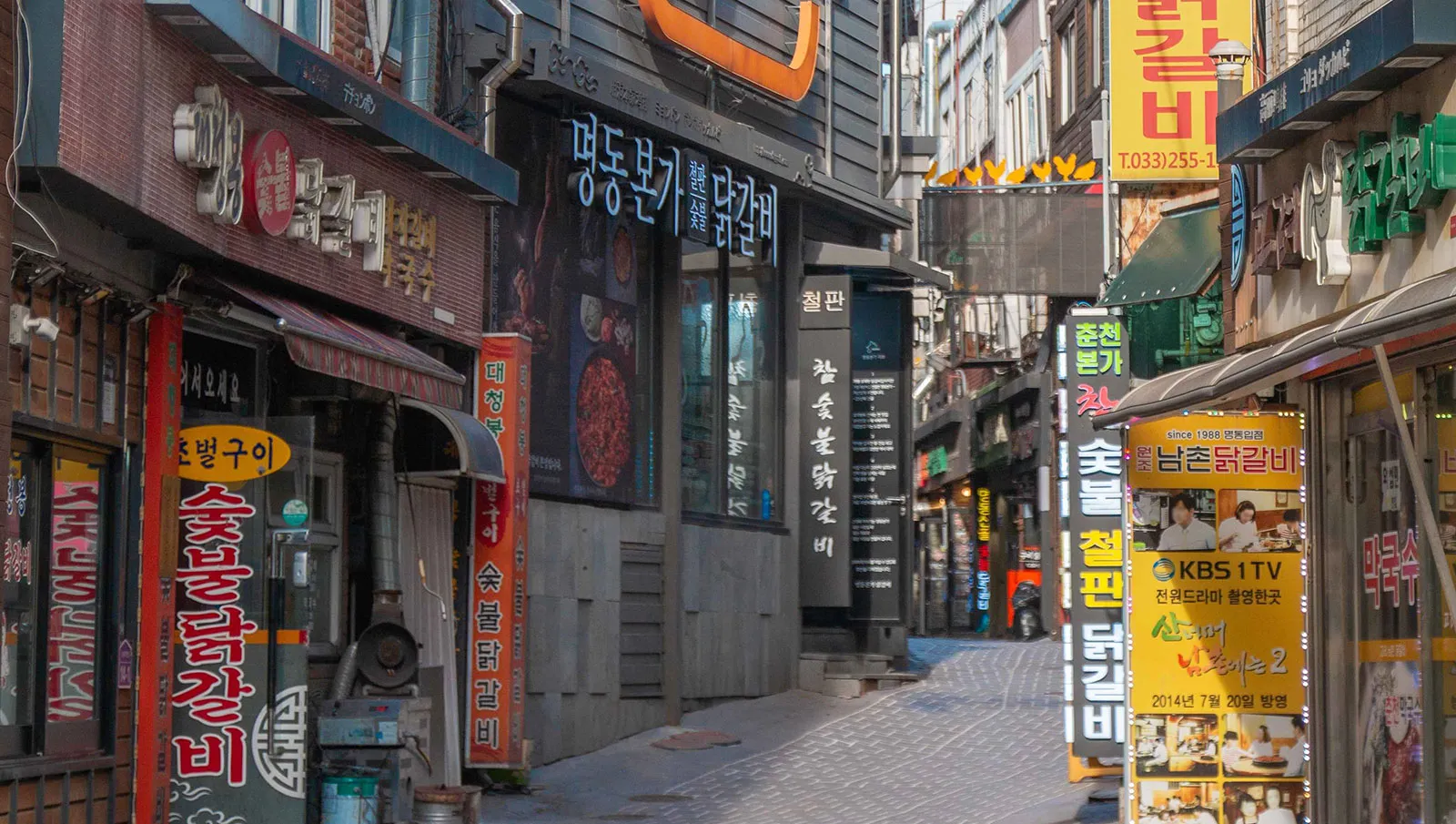
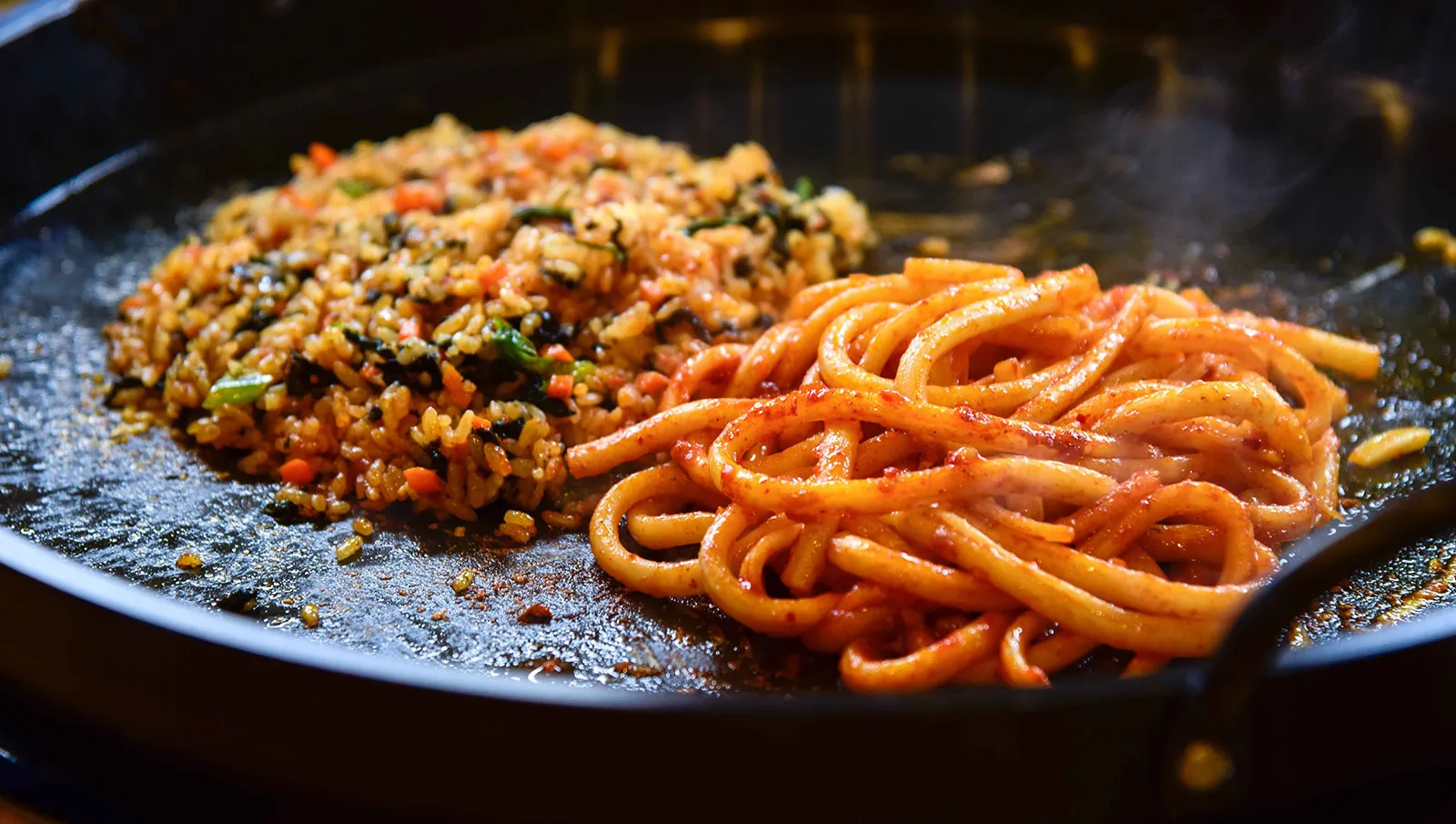
After working up an appetite in the thick of the water gun chaos, hunger came calling. In Chuncheon, dakgalbi (spicy stir-fried chicken) isn’t really a choice—it’s just what comes next. The dakgalbi alley right off Jungang-ro traces its roots to the early 1960s, when a pork shortage led vendors to marinate cheap chicken and grill it over charcoal. It caught on quickly with soldiers and university students, and the rest is history. Among the rows of competing signs, we sought out one of the older spots drawn in by the round iron griddle. Open-flame grilling has become common these days, but the original Chuncheon dakgalbi is a stir-fry: cabbage, sweet potato, green onion and tteok (rice cake) tossed together with seasoned chicken on a flat iron pan.
The meal begins the moment you sit down in front of the heat and catch the first wave of smell. You stir and eat as you go, and by the end a layer of caramelized marinade has built up on the pan—that’s when you add rice and mix it all together for a proper finish. A side of naengmemilguksu (cold buckwheat noodles), served either cold and dressed or in broth, rounds things out nicely. The whole thing is straightforward, generous and deeply satisfying.
There’s another cluster of dakgalbi restaurants near Namchuncheon Station, making it an easy stop before or after the festival. But wherever you end up in Chuncheon, dakgalbi is never far away—and it may well be the taste you associate with this city long after you’ve left.
17:00
When Silence Speaks
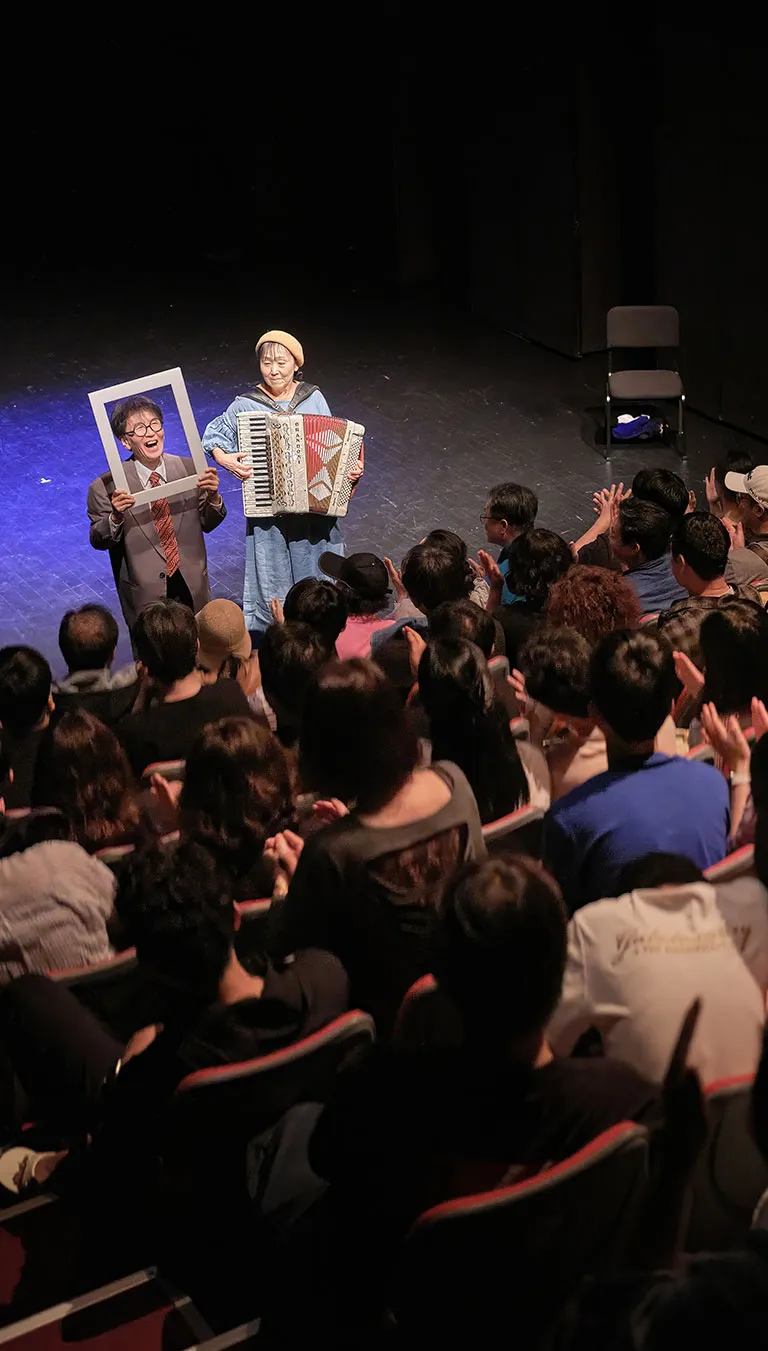
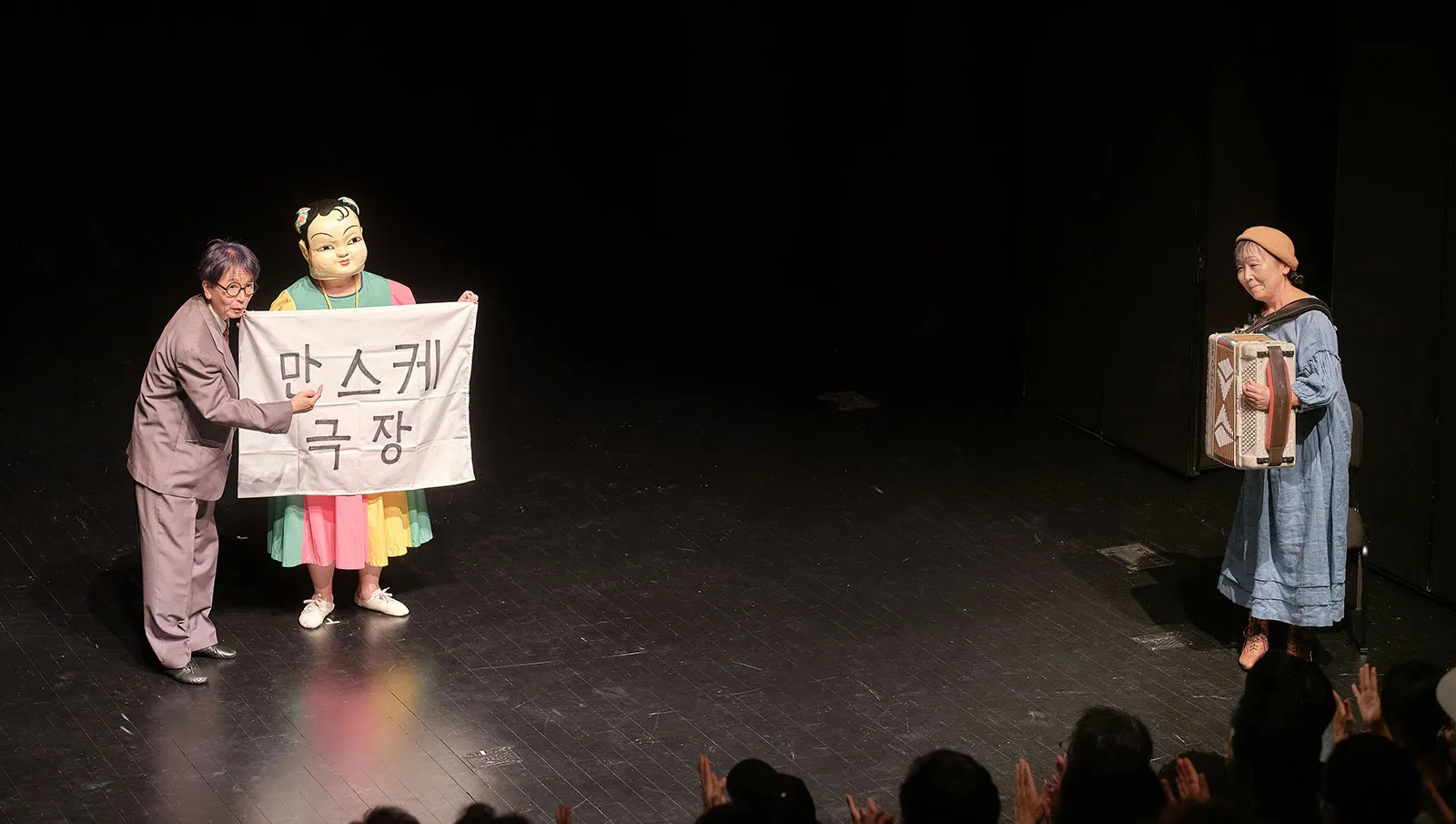
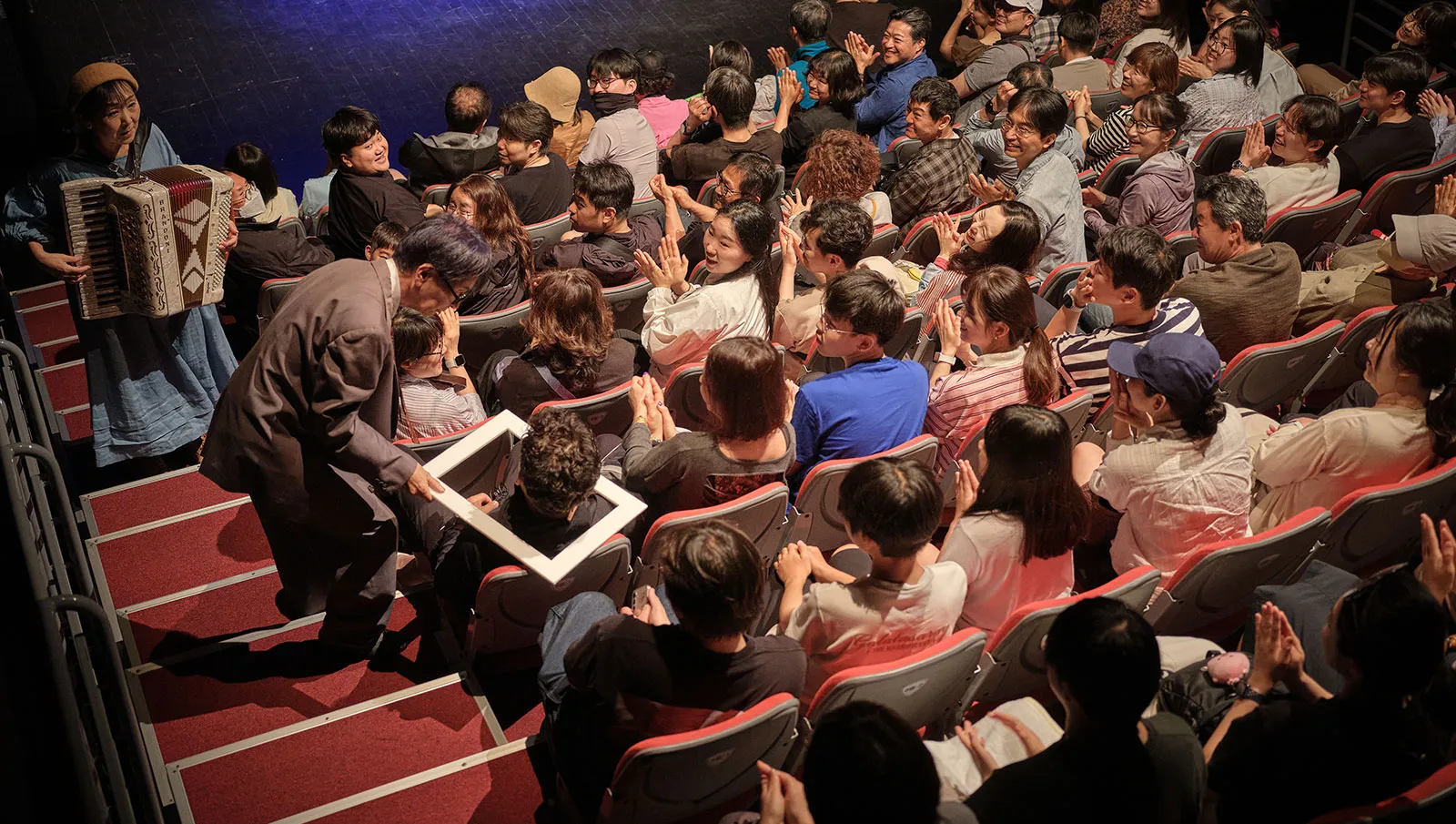
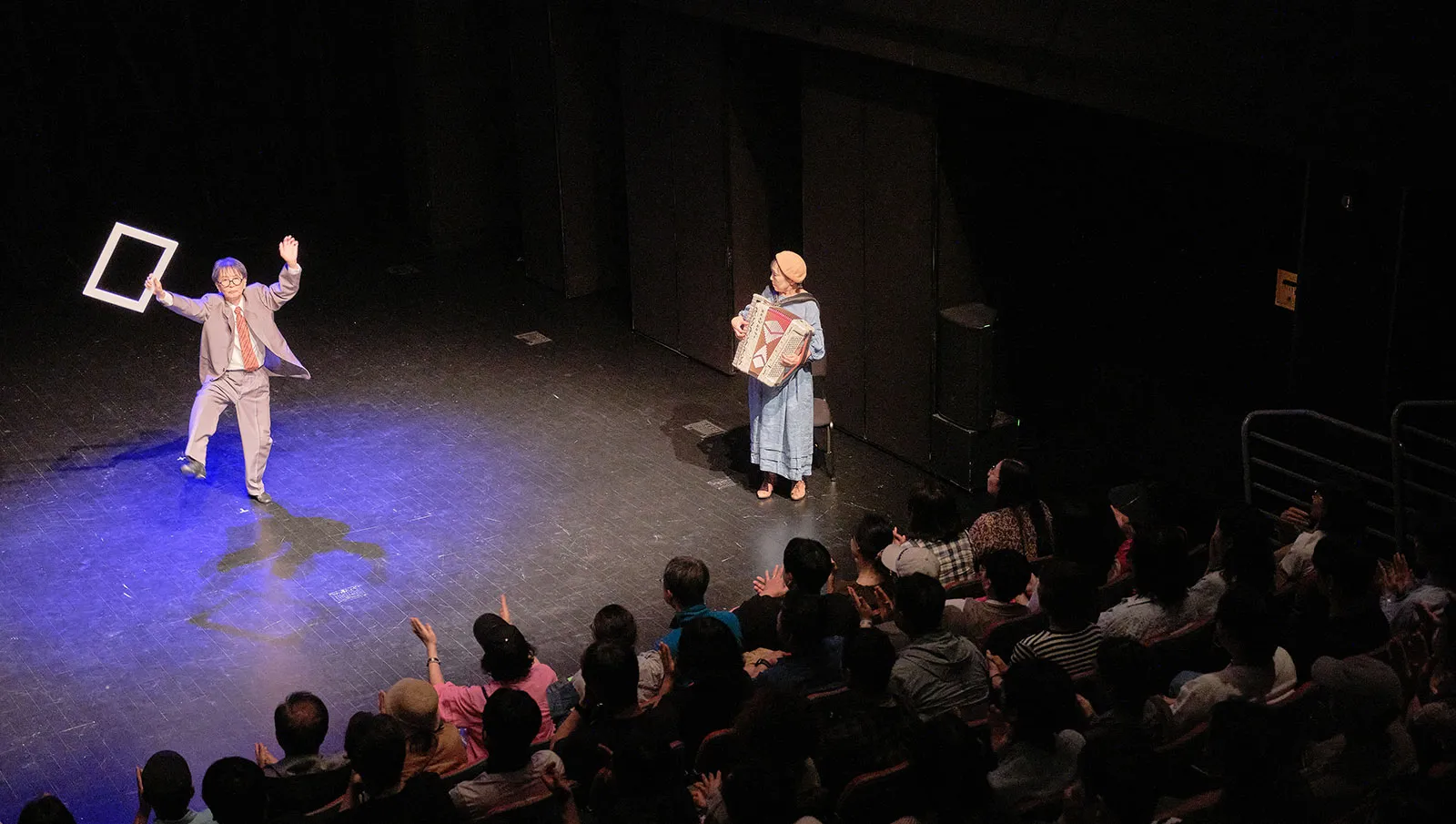
There’s a place where the outside noise falls away. Festival Theater MIME serves as the festival’s main indoor venue, hosting Korean and international mime artists each year. The first performance of the day was Kojimaya Mansuke Theatre—a signature series by Kojimaya Mansuke, a master of Japanese mime. Three short episodes drawn from the daily life of an office worker, told without a single word. A man waiting for the bus as the air slowly drains out of him; a pointless quarrel over a missing slipper. Performed to accordion melodies, his precise, fluid movement carries a sharp undercurrent of pathos beneath the laughter. Mansuke moves freely between stage and audience, drawing in even first-time viewers almost immediately. After his first visit to Korea in 1992, he has returned to Chuncheon every year since—a familiar and beloved presence at this festival.
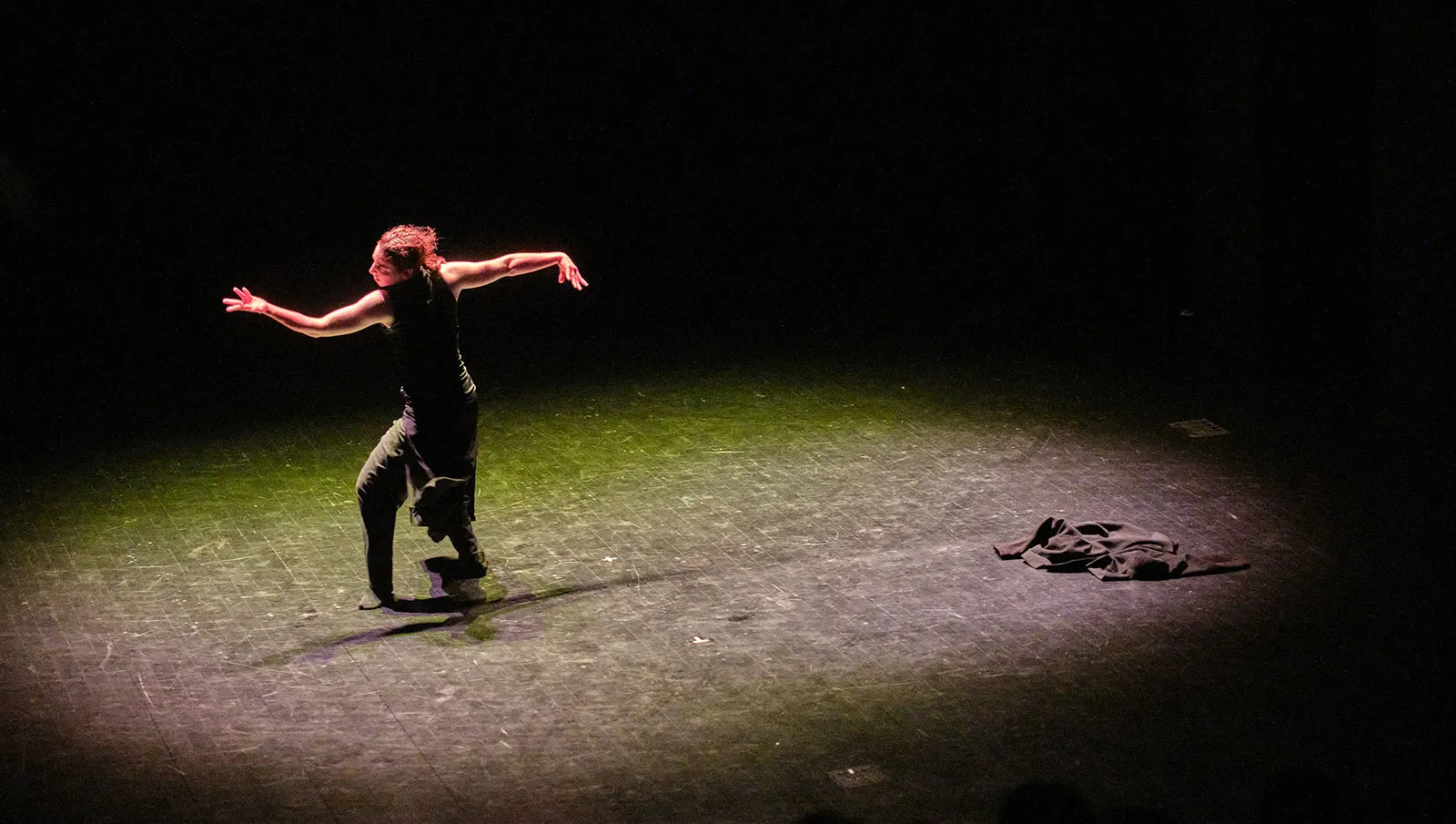
The second work, Panopticon, strikes a very different tone. Created by Greek choreographer Vasiliki Papapostolou, this physical theater piece examines how surveillance and control shape the human body. A lone performer stands in darkness, lit only by a narrow path of light. Red hands—starkly vivid against a white face—rise slowly and repeatedly into view, touching, manipulating and surveying the body to conjure an image of control made flesh. The performer oscillates between machine-like precision and the verge of collapse, keeping the audience unsettled and on edge for the full thirty minutes. No words, no shared language—and none needed. The body says enough.
19:30
Fire, Brass and Free Beer
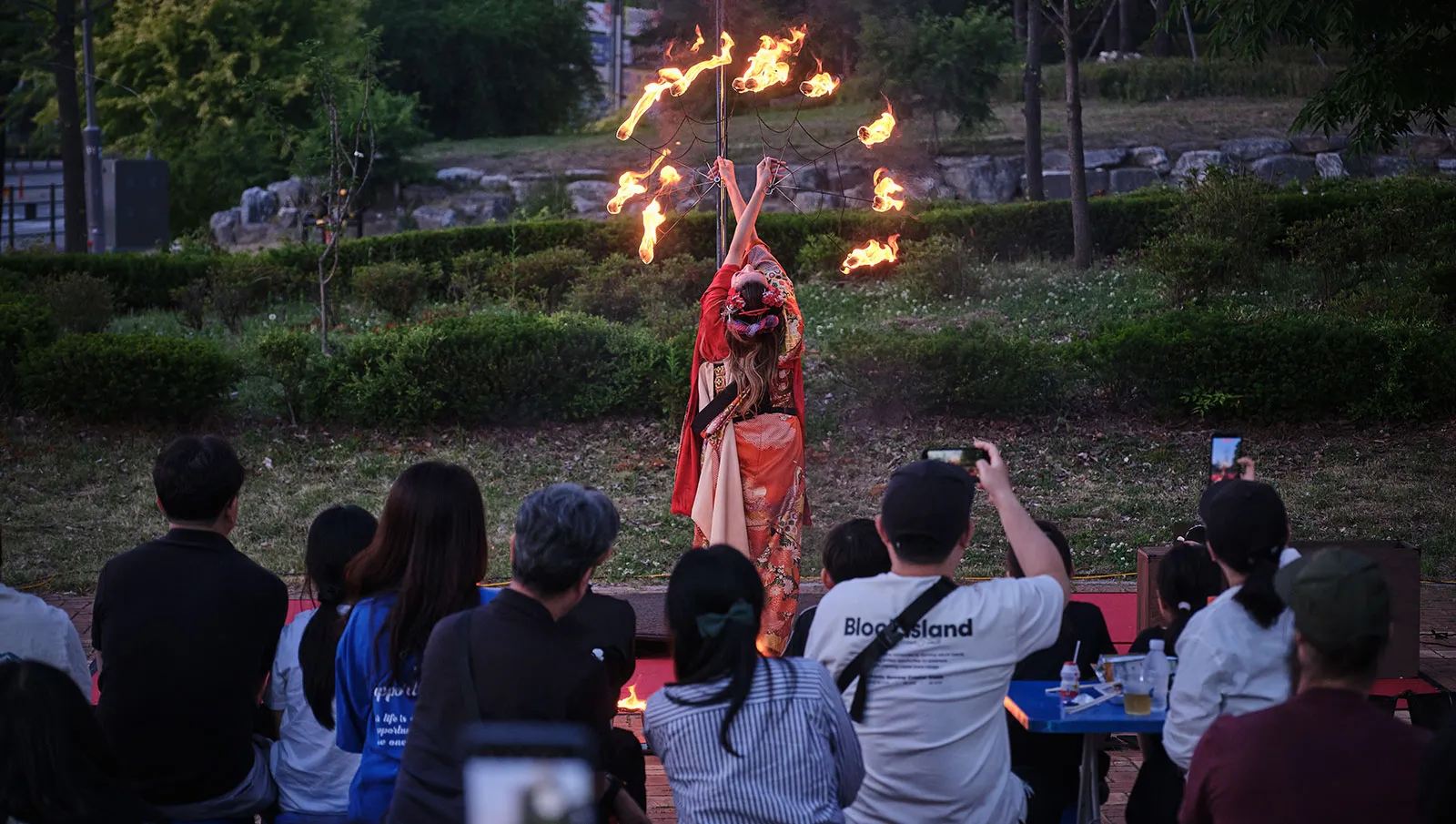
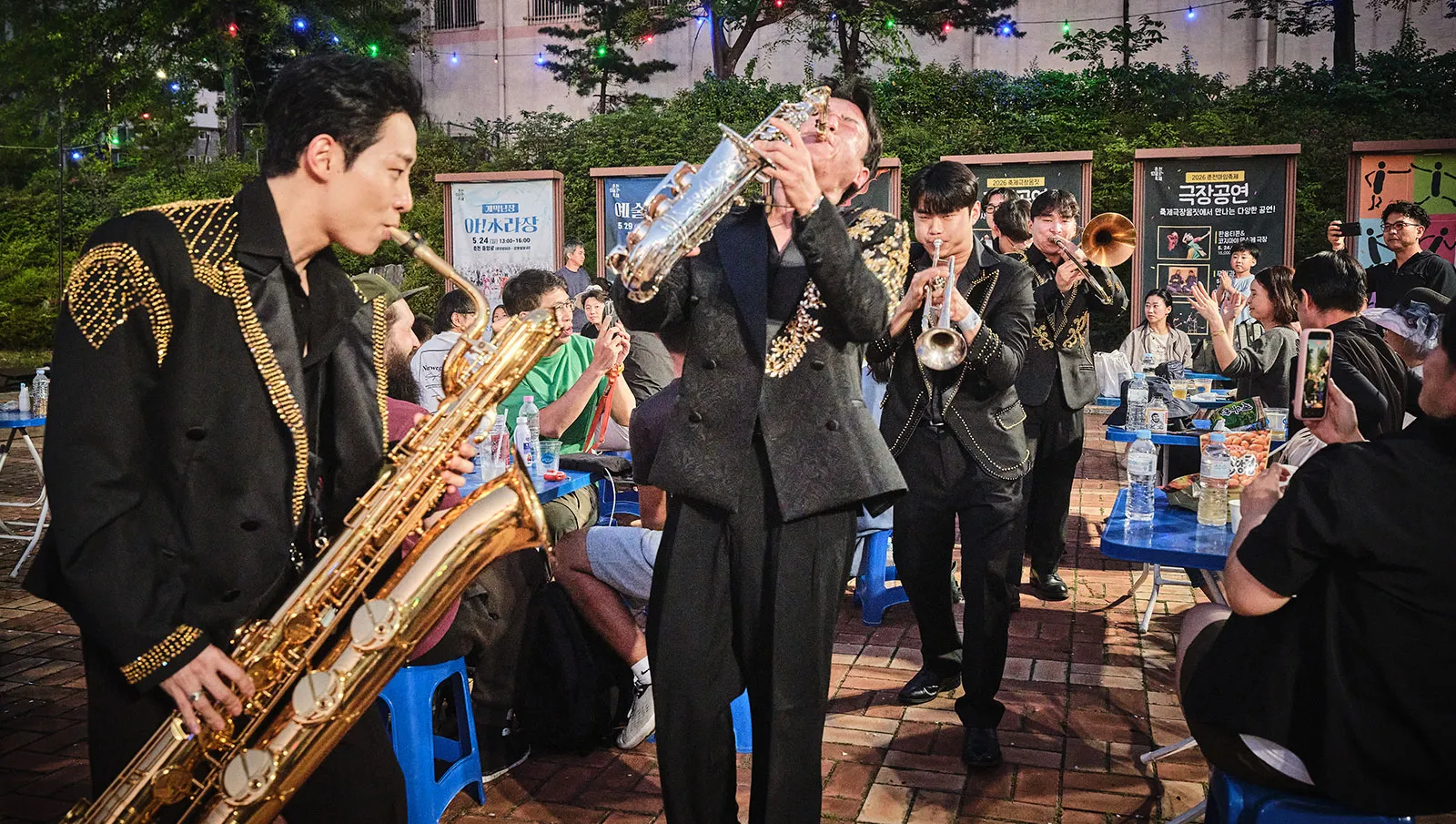
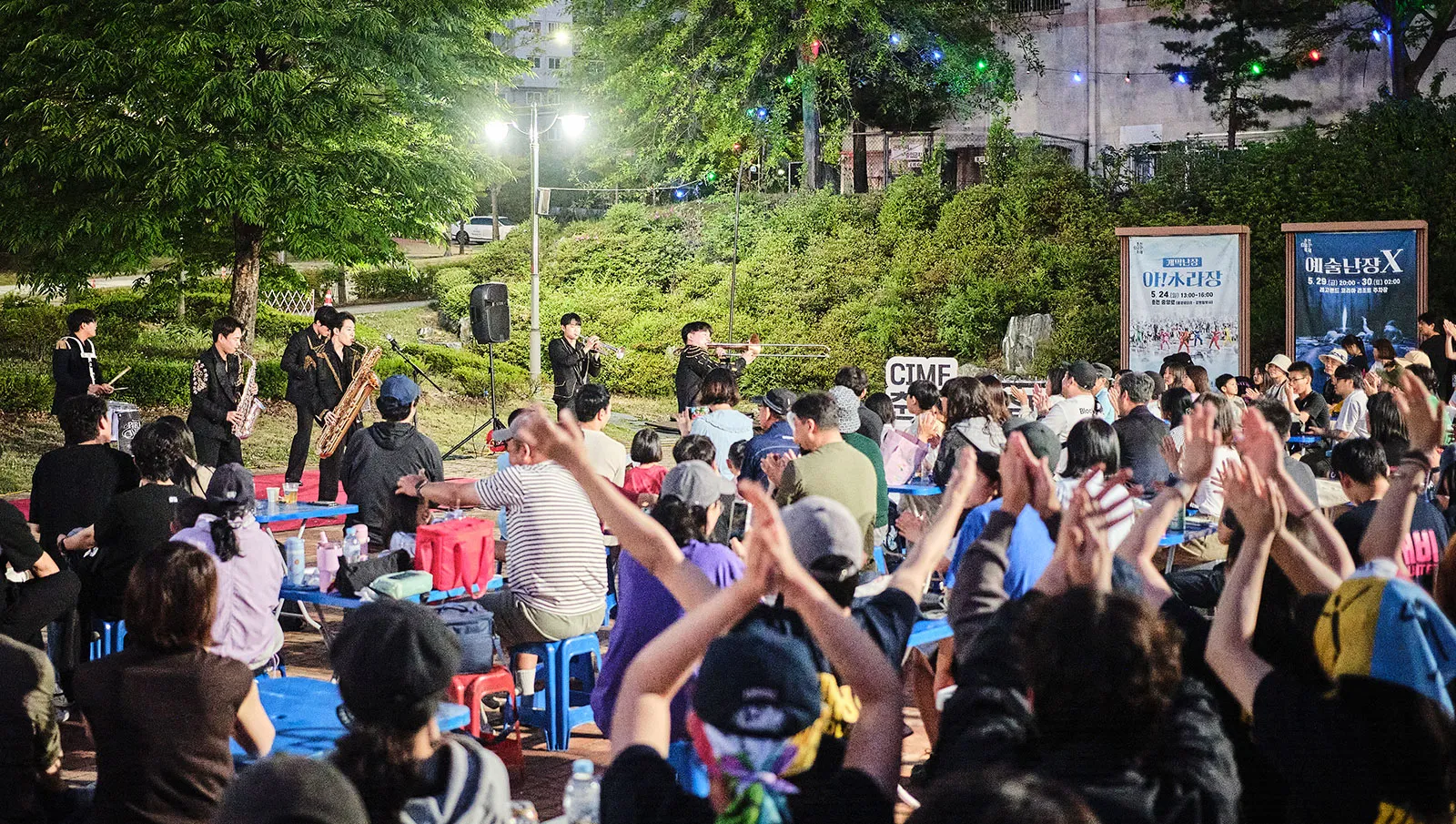
Stepping out of the dark theater, a completely different kind of night had already begun outside. At the outdoor plaza of Festival Theater MIME, every blue table had been set with complimentary potato beer and makgeolli (unrefined rice wine). “Festival Salon SOME” is a program for eating, drinking and watching—and into that easy, unhurried atmosphere, two performances took turns taking the stage.
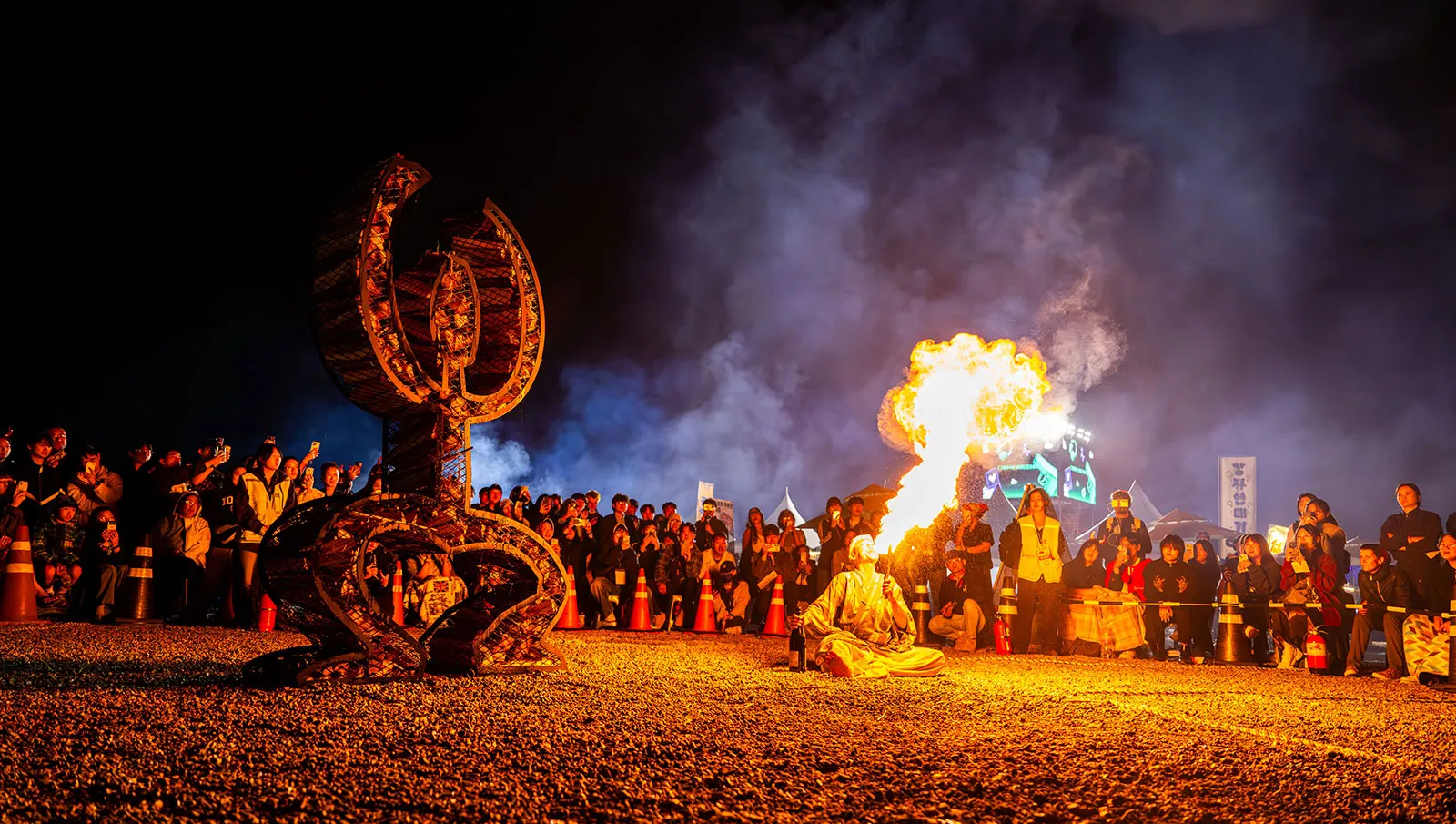
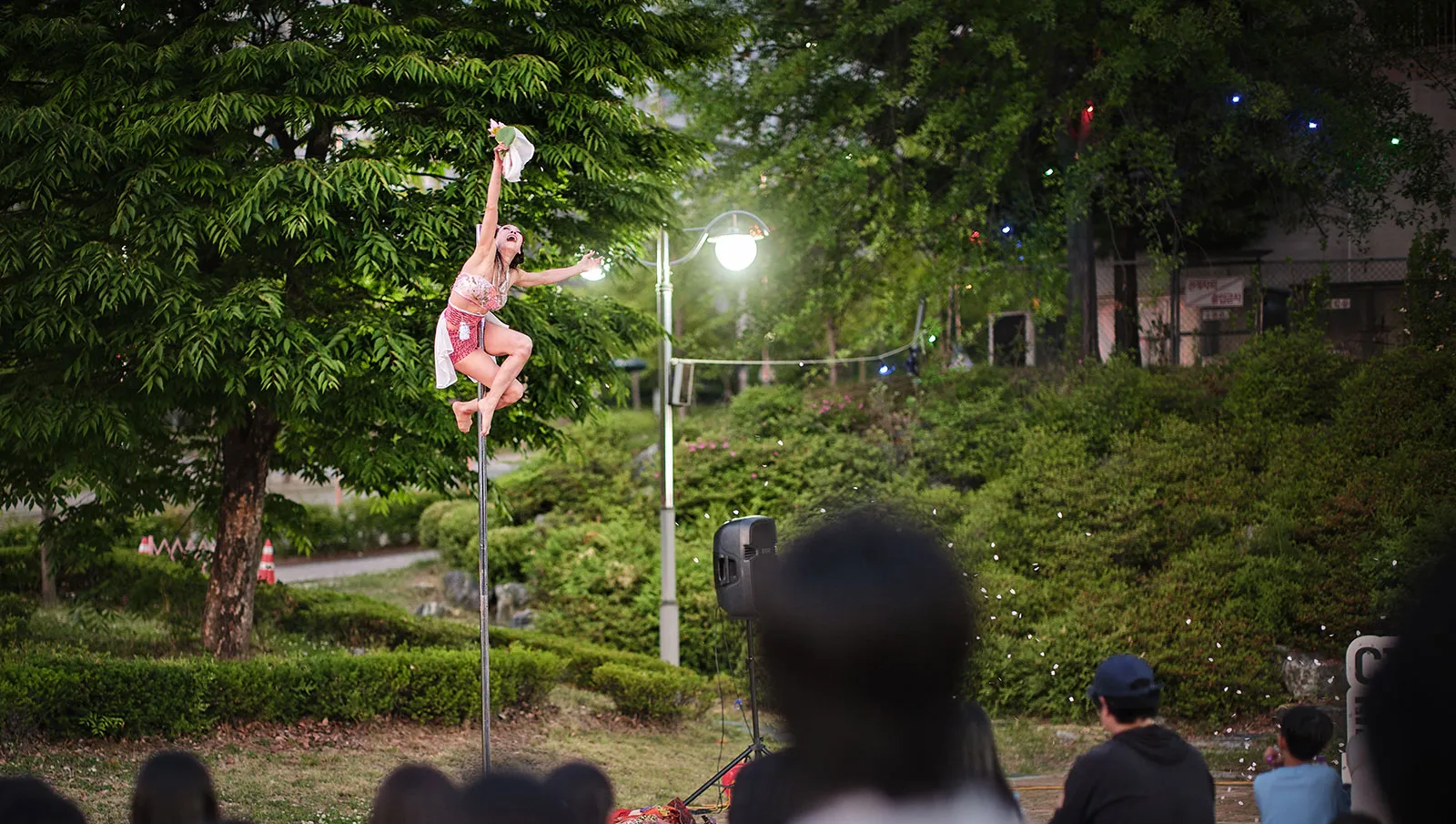
First up was Meriko’s “Yaoyo Oshichi (Greengrocer Oshichi)”—a fire performance rooted in Japanese classical literature, telling the story of Oshichi, a girl who sets fire to her neighborhood in order to see the one she loves. The piece weaves pole acrobatics and open flame to bring her story to life. When Meriko raised fire from the top of the pole, everything around her lit up. Flames flickered across the ground and the crowd lifted their phones as one. The performance ran twenty-five minutes, but felt far too short.
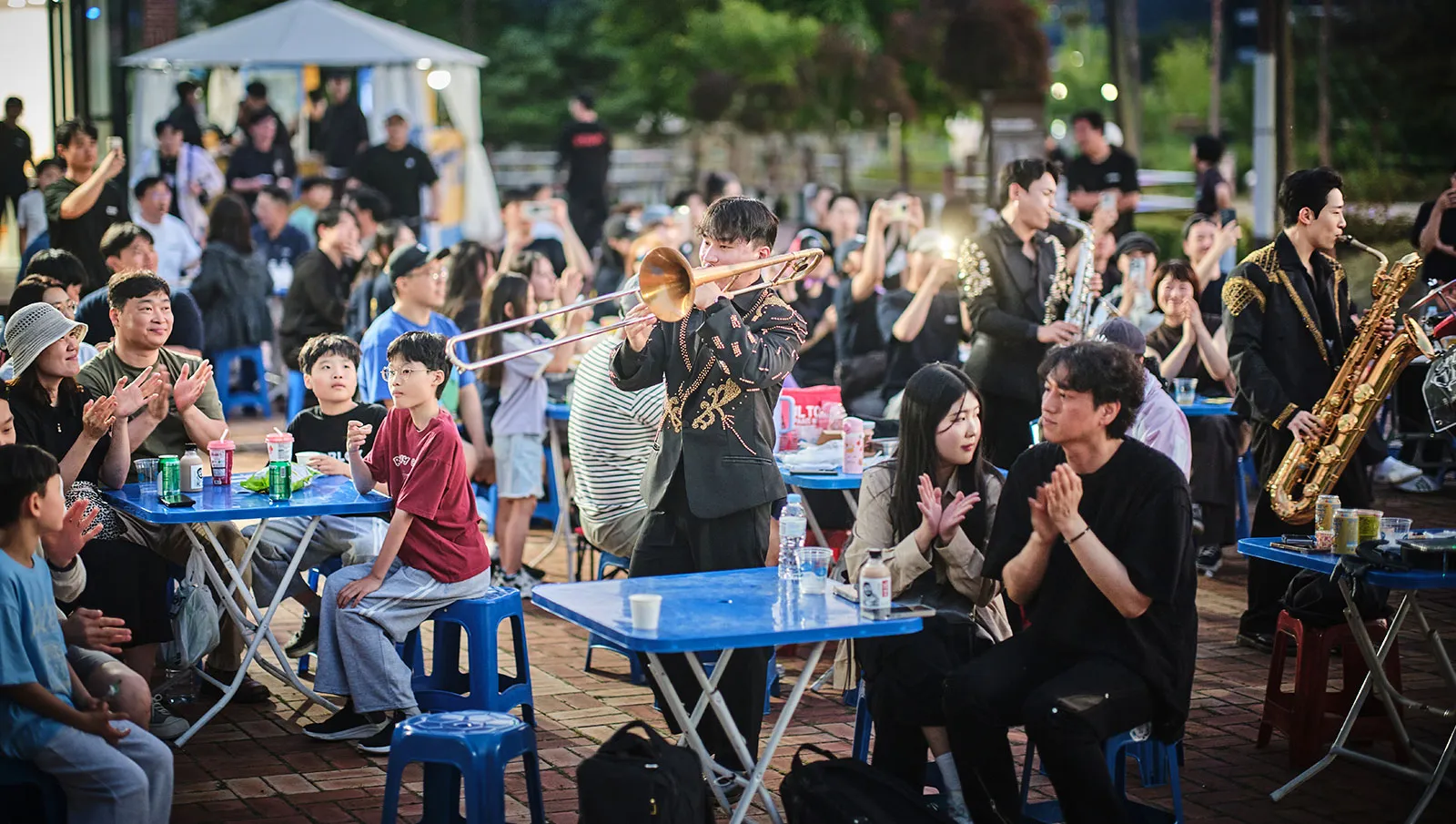
Then came PuraVida, a street marching jazz band that dissolved whatever remained of the line between stage and audience. Six musicians with saxophone, trombone, trumpet and snare drum wove between the tables as they played. People who had been quietly drinking turned their heads, broke into applause, and started moving. Pura Vida is Costa Rican Spanish for “life is good”—and it showed. There’s a particular warmth that belongs not to massive festivals but to ones like this, where a few hundred people gather in the same place at the same time and something unplanned happens between them. Leaving that night, it felt like maybe an ordinary day could be filled the same way.
22:00
The Festival That Never Ends
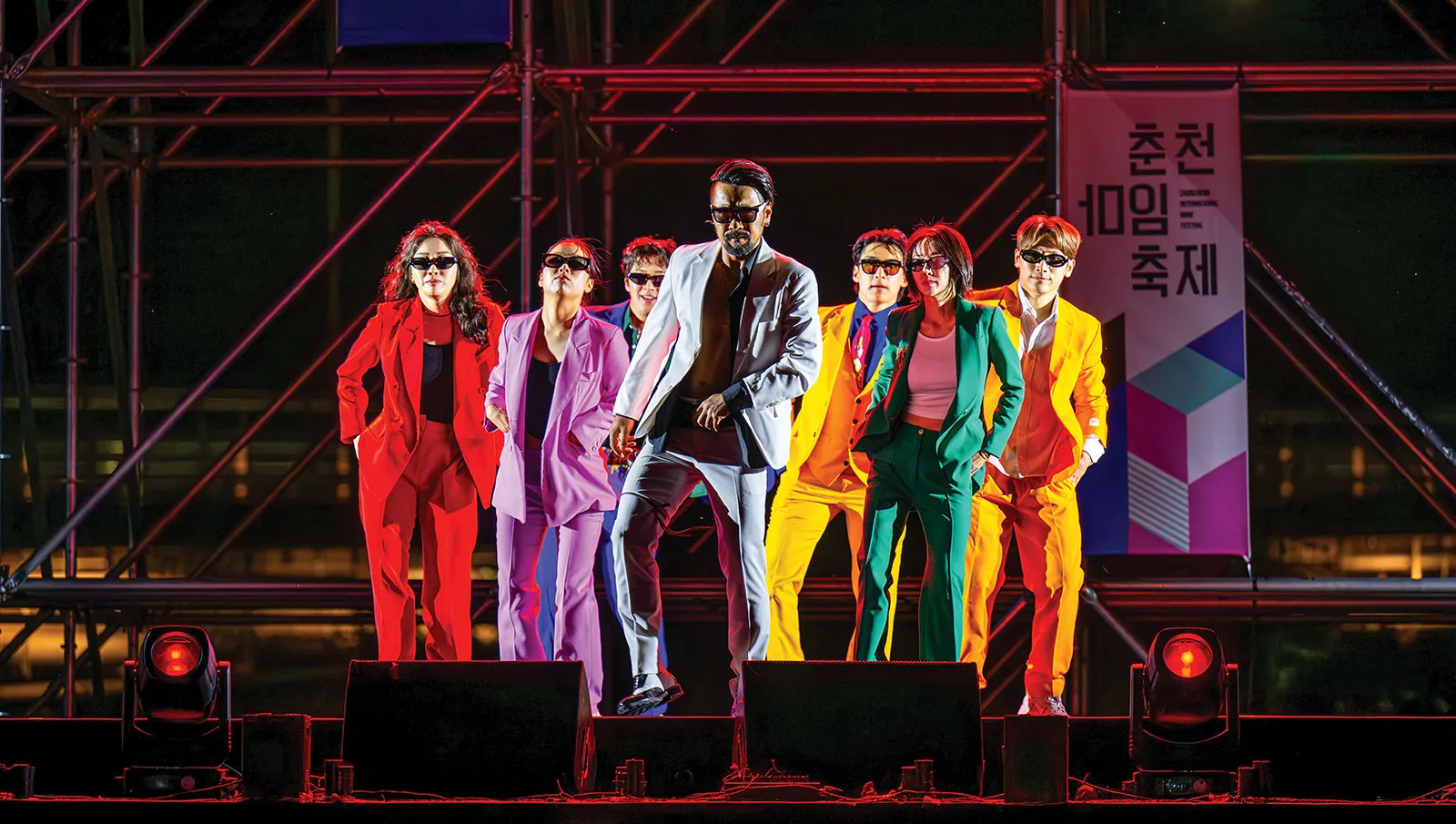
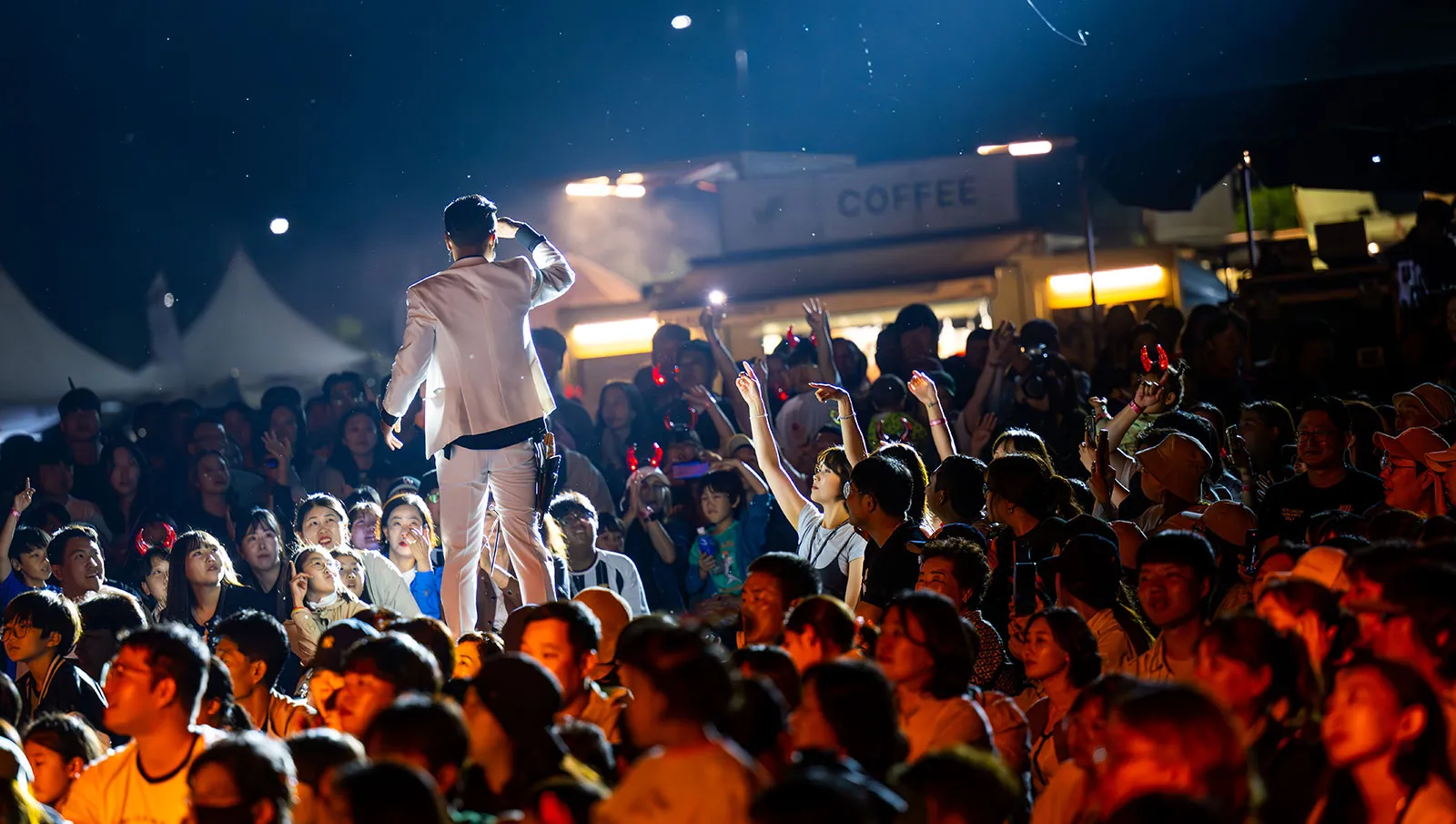
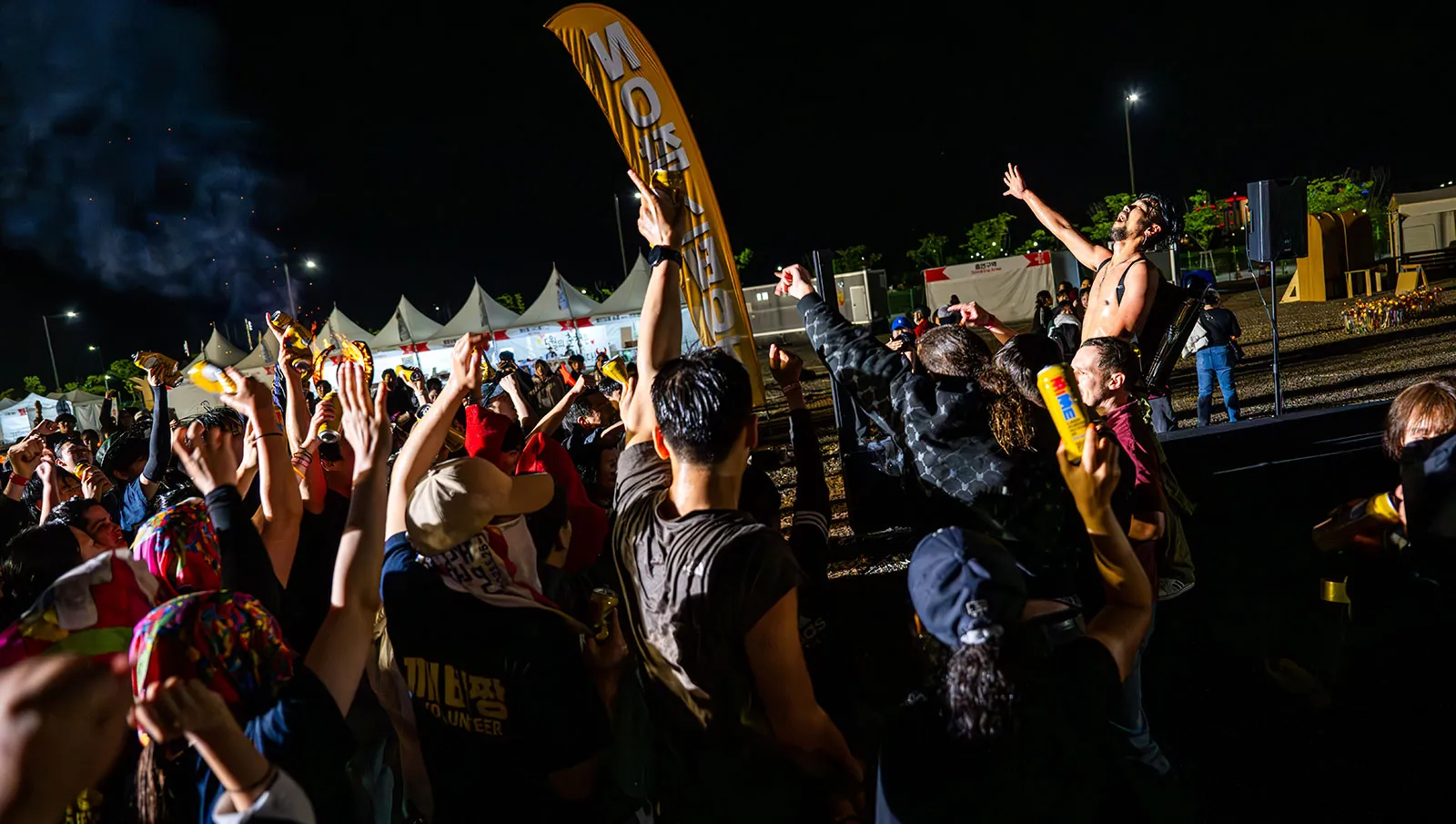
The Chuncheon International Mime Festival lived up to its reputation until the very end. International visitors consistently singled out one program above all others: “Dokkaebi Nanjang.” Held over two nights on May 30 and 31, this after-dark event served as the festival’s ultimate climax—with fire, music, mime and circus all unleashed at once. It became clear why so many international visitors had planned their trips specifically around these dates; “Dokkaebi Nanjang” delivered an experience that traveled across language and culture without losing anything in transit. The potato beer and festival makgeolli from the earlier outdoor plaza made a return appearance here, joined by a full spread of food trucks filling the square. It was a night where performance, food and people blurred together—both a continuation of everything that came before and the start of something else entirely.
Throughout the rest of the festival, there was plenty more to engage with. Pantomime seminars, artist talks and salon-style conversations with performers ran steadily across the week. For those who experienced it, giving Chuncheon just one day almost certainly left them wishing they had given it one more.