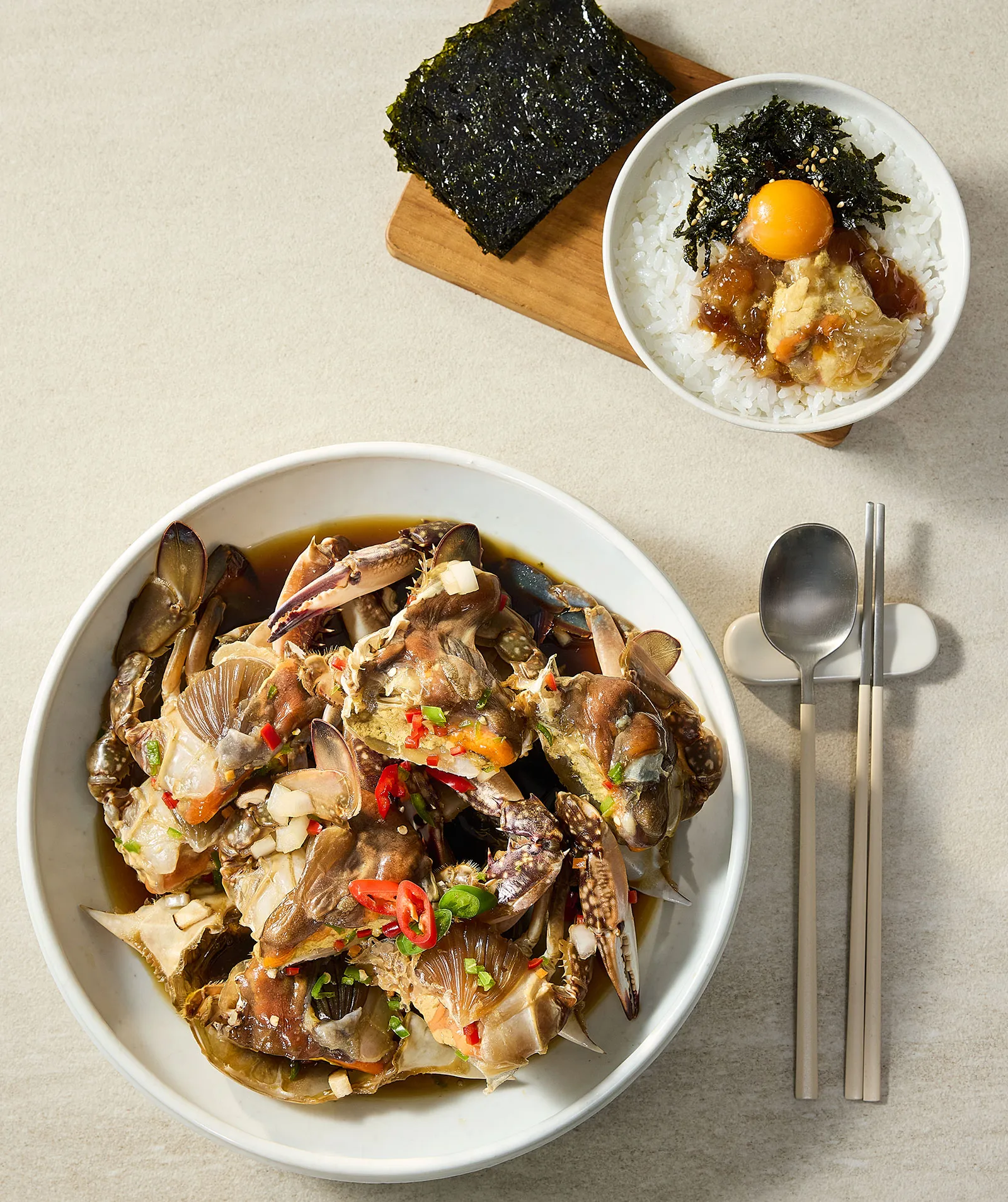
“K-foodie meets J-foodie” is a popular Netflix variety show featuring Korean singer Sung Si-kyung introducing Japanese actors to Korean food—and vice versa. Seasons 1 through 4 paired him with Japanese actor Matsushige Yutaka, exploring a range of Korean and Japanese dishes together. The newly released Season 5 sees him travel the food world with Japanese model and actress Miyoshi Ayaka. What sets this season apart is a fun twist: instead of recommending food from their own country, each cast member recommends dishes from the other’s. The ganjanggejang episode—Season 5, Episode 10—follows this format perfectly: Miyoshi takes Sung to a restaurant she frequented on past visits to Korea and introduces ganjanggejang as her all-time favorite Korean dish.
Ganjanggejang is one of the most beloved foods in Korea. It’s made by submerging crabs in ganjang (soy sauce) that has been slowly simmered down with vegetables and aromatics, then leaving them to cure. The result is a harmony of the crab’s natural sweetness, the rich depth of its roe and innards and the saltiness and distinctive aroma of the ganjang—utterly irresistible. The concentrated umami makes it nearly impossible to stop eating, and it pairs so perfectly with steamed white rice that Koreans call it “bap-doduk”—literally “rice thief,” for the way it makes a bowl of rice vanish in the blink of an eye. Miyoshi clearly agrees: after her first bite on the show, she was at a loss for words. “I have nothing to say,” she told Sung. “It’s just too good.”
Crab is eaten across the world, and the food cultures of Korea, China and Japan share many similarities when it comes to seafood. But gejang (marinated crab) is something different. Curing crab in ganjang is a practice developed and refined uniquely in Korea, and it has deep roots. Culinary texts from the 17th and 18th centuries—such as the “Jeungbosallimgyeongje”—document ganjanggejang in detail, along with multiple methods for preparing it. Its recorded history stretches back at least to the 1600s.
So why did this combination of crab and ganjang develop uniquely in Korea, and when both ingredients exist around the world? The answer starts with the crab itself. The species used for gejang are found in particular abundance along the Korean coast—and they’re not the imposing king crabs most people picture when they think of crab. Korea’s West Coast, shaped by dramatic tidal shifts, is home to vast tidal flats where small, palm-sized crabs with exceptional flavor are caught in large numbers. Their compact size belies their rich taste, and their sheer abundance made them a natural candidate for fermentation. To this day, Korean gejang tradition calls for egg-filled female crabs in April through June and plump male crabs from October through November.
A Gift from the Sea
Ganjanggejang

Netflix’s popular food variety show “K-foodie meets J-foodie” is packed with dishes that make your mouth water just by looking at them. Among them, the dish a Japanese guest on Season 5 named as “the best Korean food” was none other than ganjanggejang—soy sauce marinated raw crab. This beloved Korean staple has earned deep admiration far beyond Korea’s borders. Watching the two cast members rave about it, viewers can’t help but wonder: what does it actually taste like?
The second factor is the character of Korean ganjang. Korean ganjang tends to be saltier than gejang from other countries—a quality that matters when you’re trying to cure something with a thick shell. For gejang, the ganjang is repeatedly boiled down to concentrate both its salinity and its umami, creating the intense brine needed to penetrate the crab’s exterior. It’s this combination—an abundant local supply of the right crab species and a highly developed tradition of gejang fermentation and cooking—that allowed gejang to take root and flourish as a distinctly Korean dish.
For those unfamiliar with gejang, it can be a bit of a puzzle. How do you actually eat it? There are two main approaches.
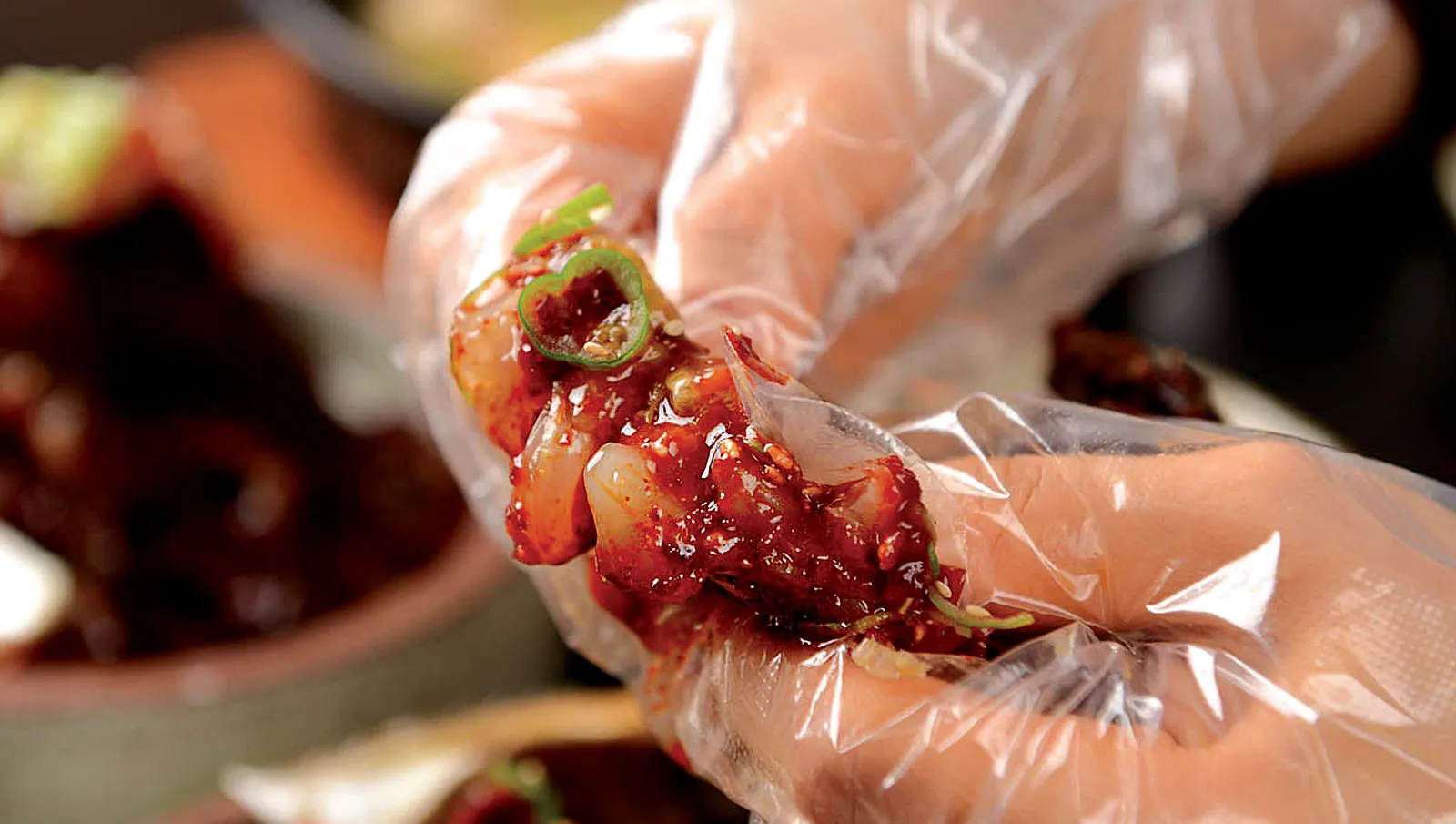
The easiest, as shown on the show, is to put on a plastic glove, pick up a piece of claw, and simply suck the meat from the body section. If it doesn’t come out easily, gently biting the shell will push the meat and roe out along with the soy marinade.
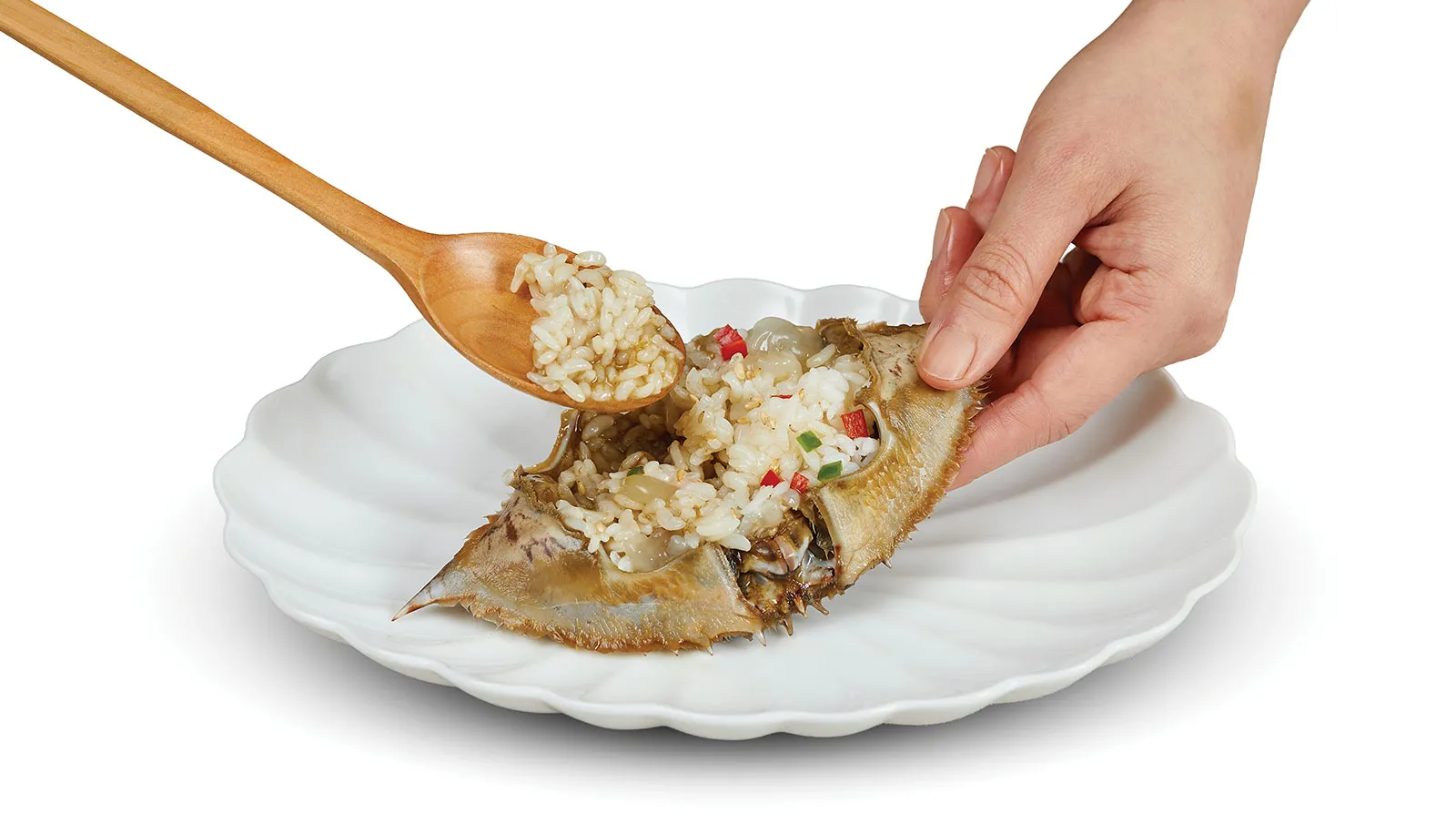
The second method uses the crab’s back shell as a bowl. Much like a bisque, the sauce that forms from the shell and innards has a deep, nutty richness—and this method brings that flavor out best. Open the shell, pile in rice and dried seaweed, mix it all together, and eat it by the spoonful or wrapped in a sheet of dried seaweed. The nuttiness is extraordinary.
On “K-foodie meets J-foodie,” the two cast members work their way through a full spread of ganjanggejang, smiling and nodding with every bite. And honestly, that’s exactly what ganjanggejang is like. If you’ve already tried the Korean foods that have gone global—gimbap (seaweed rice roll), tteokbokki (stir-fried rice cake), bibimbap (spicy mixed rice with meat and vegetables)—and you’re ready to go deeper into Korea’s real culinary treasures, ganjanggejang is the place to start.
Ganjanggejang
- Rinse the crabs thoroughly under running water.
- Pour about half a cup of cheongju or soju over the crabs and let them sit briefly.
- Slice the ginger, onion, green onion, red chili peppers and lemon.
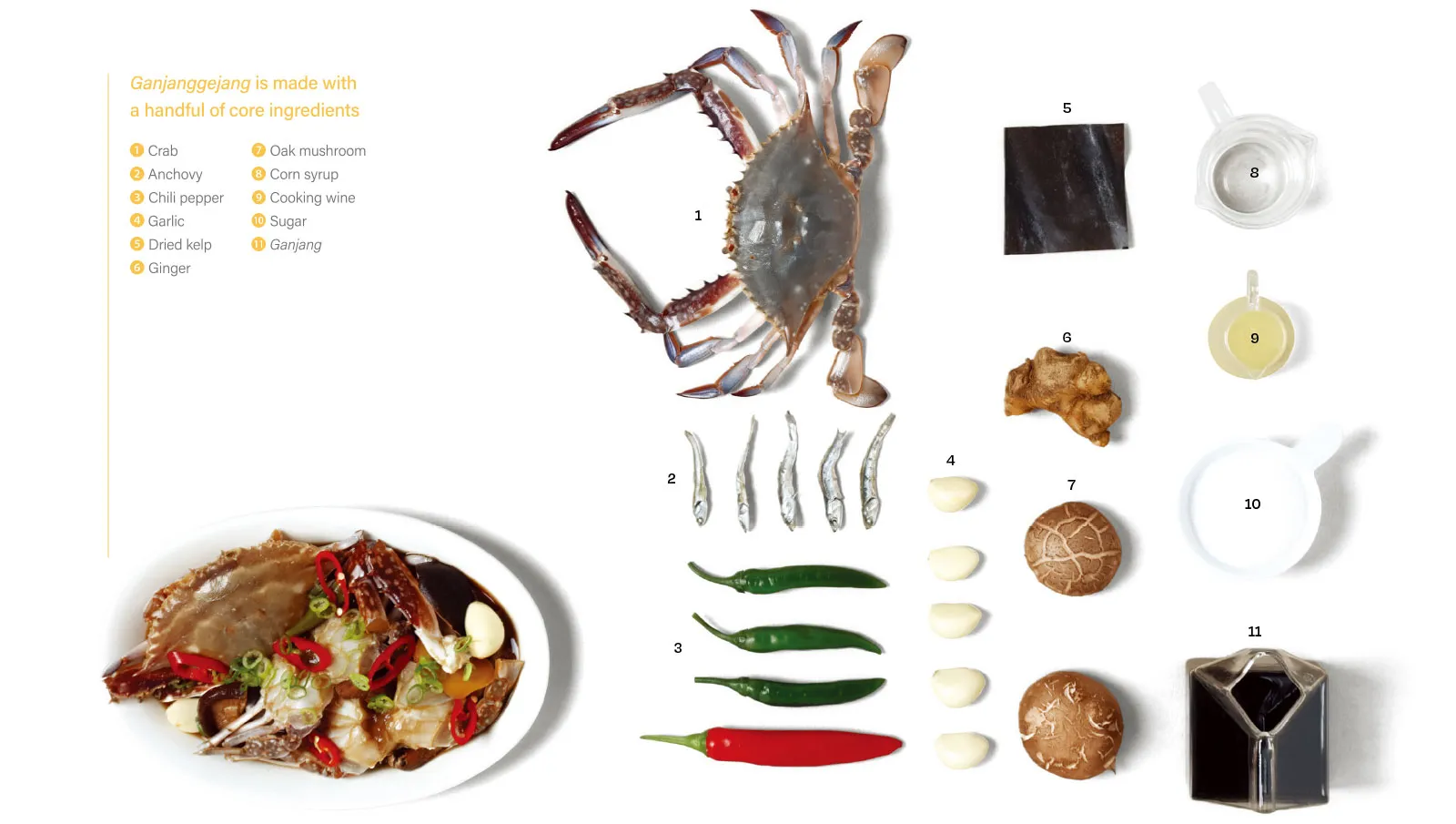
- Combine the water, ganjang, cooking wine, cheongju or soju, corn syrup, ginger, garlic, onion, green onion, red chili peppers and dried kelp in a pot. Bring to a rolling boil, then remove from heat and let cool completely.
- Place the crabs belly-side up in a container, lay the lemon slices on top, and pour the cooled marinade over them. Refrigerate for at least one day before serving.

- This dish cannot be made with large crabs like king crab. Look for palm-sized crabs at Korean or Asian grocery stores, or use blue crabs.
- Frozen crabs work fine.
- When pouring the marinade over the crabs, make sure they are belly-side up.
- Wear gloves and suck the meat directly from the claw sections, or squeeze it out and mix with steamed white rice, crushed dried seaweed, sesame oil and egg yolk.
- Always use the freshest crabs available to ensure both quality and safety.
- Because the crabs are cured raw without heat or cooking, this dish must be kept refrigerated at all times and consumed within 2 to 3 days of preparation.