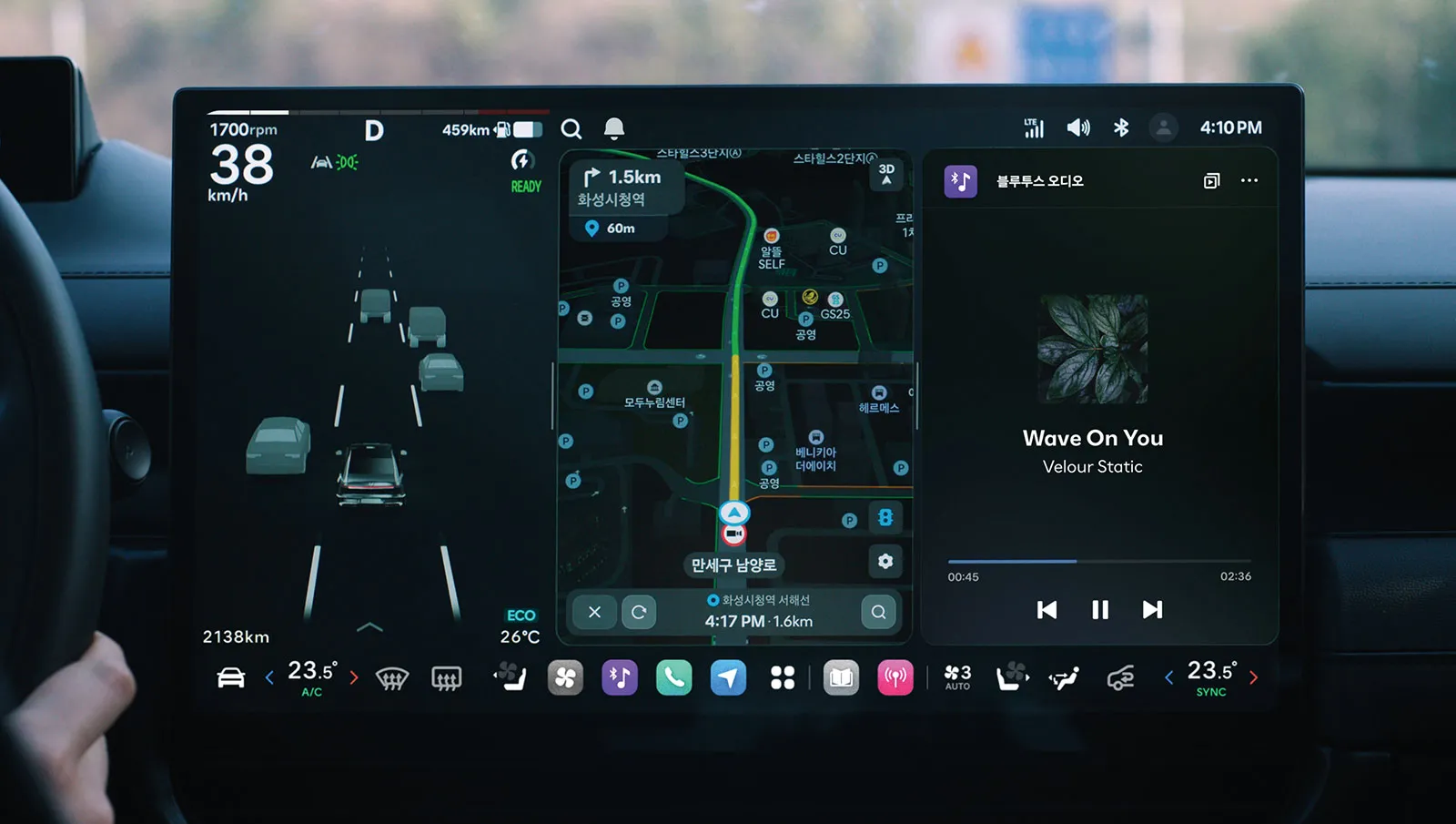
Underlying these achievements is a distinctly Korean model. A proactive government vision and substantial infrastructure investment—most visibly the nationwide rollout of ultra-high-speed communications networks—have provided the foundation for mobility innovation.
Korea became the world’s first country to commercialize 5G in 2019, and by 2025 its 5G coverage rate in major public venues (such as shopping malls, airports and subway stations) had exceeded 98%. That nationwide network is expected to serve as critical infrastructure for V2X (vehicle-to-everything) communication—the backbone of autonomous driving—accelerating the pace of mobility innovation.
Korean consumers’ high receptivity to new technology has also been a significant asset. A culture that embraces and internalizes emerging technologies quickly, combined with an efficiency-oriented mindset, has made Korea an ideal global testing ground for mobility innovations. In December 2019, Korea established the world’s first safety standards for Level 3 autonomous vehicles, which allow conditional hands-free driving. This pioneering move directly contributed to the formation of global norms. Korea was also the first in the world to deploy a 5G-based V2X service. Operating via a next-generation Cooperative Intelligent Transport Systems (C-ITS) across major roads nationwide, this service transmits pedestrian proximity and accident risk data to vehicles within 0.1 seconds.
This mature demonstration infrastructure has drawn in major global players: autonomous driving firm Pony.ai, chip company NVIDIA and LiDAR (Light Detection and Ranging) companies have all chosen Korea as a testing venue. Korea’s complex urban environments, advanced communications infrastructure and track record of early regulatory adoption make it an increasingly attractive stage for global mobility companies to validate new technologies.
Korea’s manufacturing base is another core asset. The country holds world-class competitive strength across batteries, internal combustion engines and automotive electronics. In batteries, three of the global top ten companies—LG Energy Solution, SK On and Samsung SDI—are Korean, and Korean batteries secure a commanding presence in the global market. Korea’s internal combustion engine industry has gradually improved its image beyond “value-for-money” positioning and continues to rank among Korea’s leading export industries. In automotive electronics, Korean companies have built highly competitive capabilities in automotive MLCCs, camera modules and several other key components, reinforcing Korea’s role as an important supplier in the global automotive electronics supply chain.
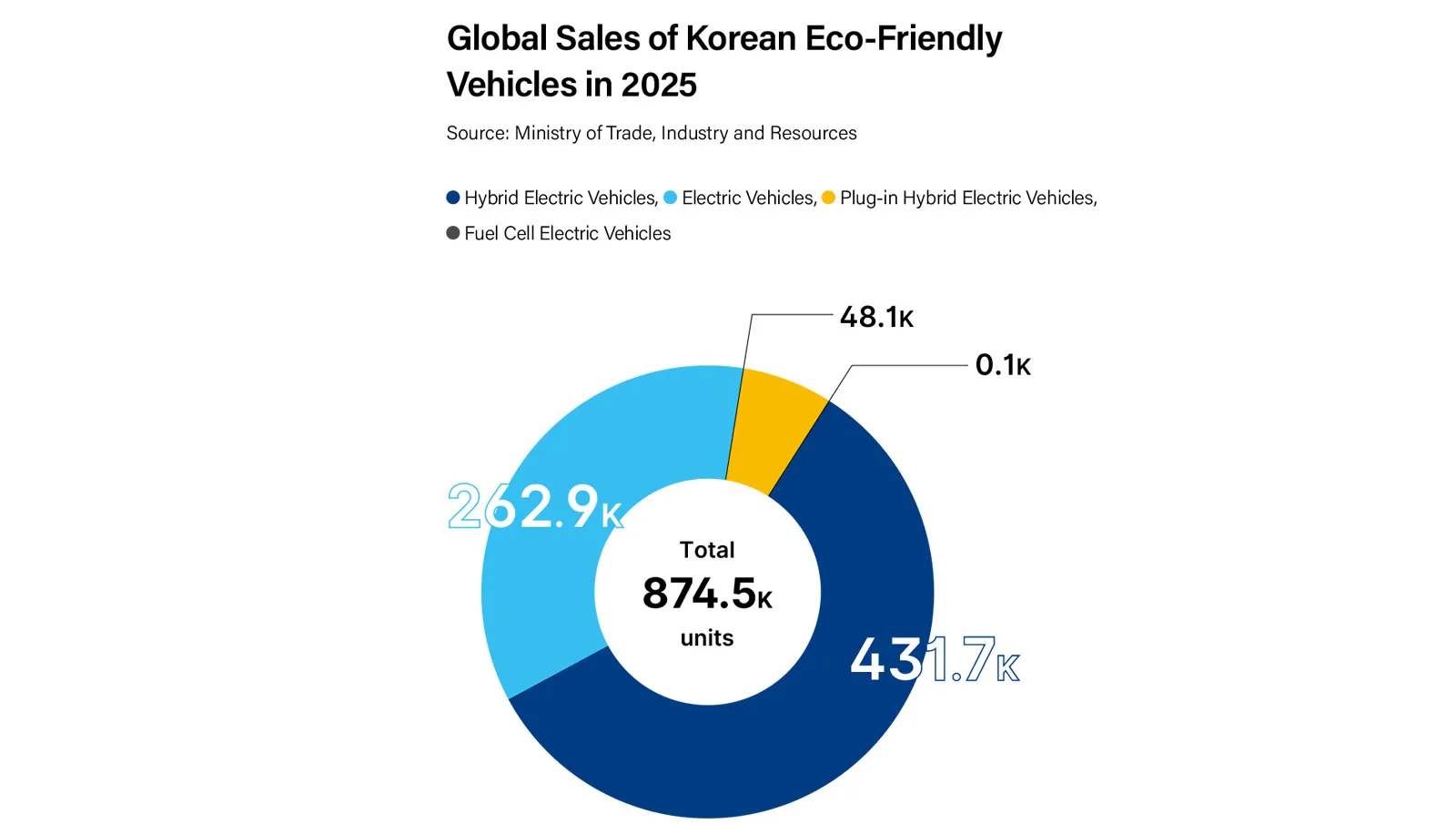
The export performance of eco-friendly vehicles (including hybrid, electric and plug-in hybrid models) is particularly striking. Export figures surged 17.7% compared to 2024, representing a remarkable growth trajectory for the industry.
Korea’s distinctive industrial structure—combining batteries, semiconductors and IT infrastructure—also serves as a powerful foundation for the transition to AI-centered mobility. Unlike many advanced economies, Korea’s mobility value chain, from materials and batteries through communications, electronics components and manufacturing, operates within a closely interconnected ecosystem rather than a fragmented one. This integration positions Korea well to make a rapid shift toward an AI-driven mobility paradigm.