
President Lee traveled to Europe from June 9 to 15, holding summits with leaders and signing a number of MOUs. He then attended the G7 Summit in Évian, France, from June 16 to 17 as the leader of an invited nation, where discussions covered global issues and future challenges.
On June 9, President Lee arrived in Brussels, Belgium and on the 10th held a summit with Belgian Prime Minister Bart De Wever. The two sides agreed to expand inter-company investment and cooperation centered on battery materials and the energy sector, with support for extending that cooperation into strategic industries such as semiconductors.
Also on the 10th, he visited the EU Council headquarters in Brussels for summits with European Council President António Costa and European Commission President Ursula von der Leyen, where Korea and the EU pledged to expand cooperation in security and the economy.
On the 11th and 12th, he visited Italy, meeting President Sergio Mattarella and Prime Minister Giorgia Meloni and signing new MOUs in the fields of SMEs, science and technology and AI, social solidarity economy and development cooperation—covering areas including ICT cooperation and support for small and medium-sized enterprises.
On the 13th, he visited for meetings with Eugenio Giani, the President of Tuscany, and Sara Funaro, the Mayor of Florence.
On the 14th, he attended a special Mass at the Basilica of Saint Paul Outside the Walls in Rome, and on the 15th he held a private meeting with Pope Leo XIV at the Vatican. They exchanged views on the situation on the Korean Peninsula and international affairs. President Lee also extended an invitation for the Pope to visit Korea on the occasion of World Youth Day in Seoul in 2027.
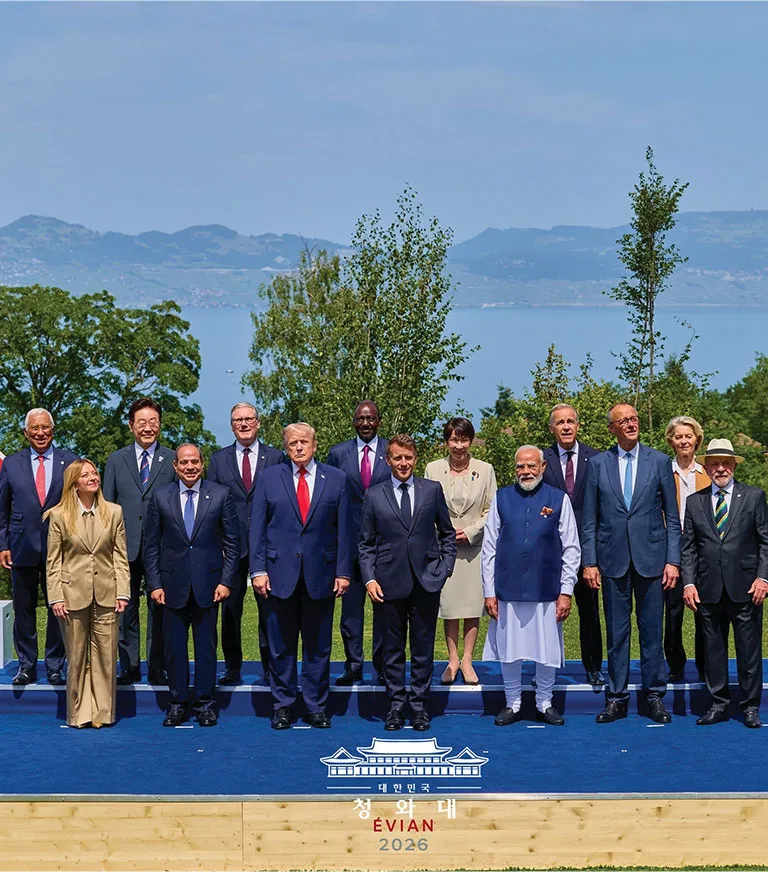
The G7 summit that followed in France on the 16th and 17th was convened to discuss ways to strengthen development cooperation amid a shifting landscape of reduced international development aid. Attendees included the G7 member nations—France, the United States, Japan, the United Kingdom, Germany, Canada, Italy—as well as the European Union, along with the leaders of five invited nations including Korea, India, Brazil, Kenya and Egypt, as well as the heads of international organizations such as the World Bank and the African Development Bank.
At the plenary session, President Lee discussed responses to the global polycrisis and voiced Korea’s positions on defining issues of the era, such as AI governance and energy security, pledging that Korea would play a leading role.
He stressed that “it is of paramount importance to share the fruits of AI’s technological advancement with all nations of the world and grow together.” He further remarked that “while the AI revolution presents humanity with new challenges and opportunities for growth, many developing countries are unable to access these opportunities adequately,” and called for support to recipient nations “so that the technology gap between countries does not translate into a growth gap.”
As chair, France adopted three documents: the “Leaders’ Declaration on Mutually Beneficial International Partnerships,” the “Leaders’ Call on the Fight Against Cancer” and the “Leaders’ Call for a Coordinated Response to the Bundibugyo Ebola Outbreak.”
President Lee’s Visit to Europe
and the G7 Summit
Current Korea
Writer
Sung Ji Yeon
Photos courtesy of
Cheong Wa Dae
President Lee Jae Myung has returned from his European visit, during which he joined with Belgium, the European Union, Italy, the Holy See, the G7 host nation France, and participating countries to reflect together on the challenges each faces and the path forward.
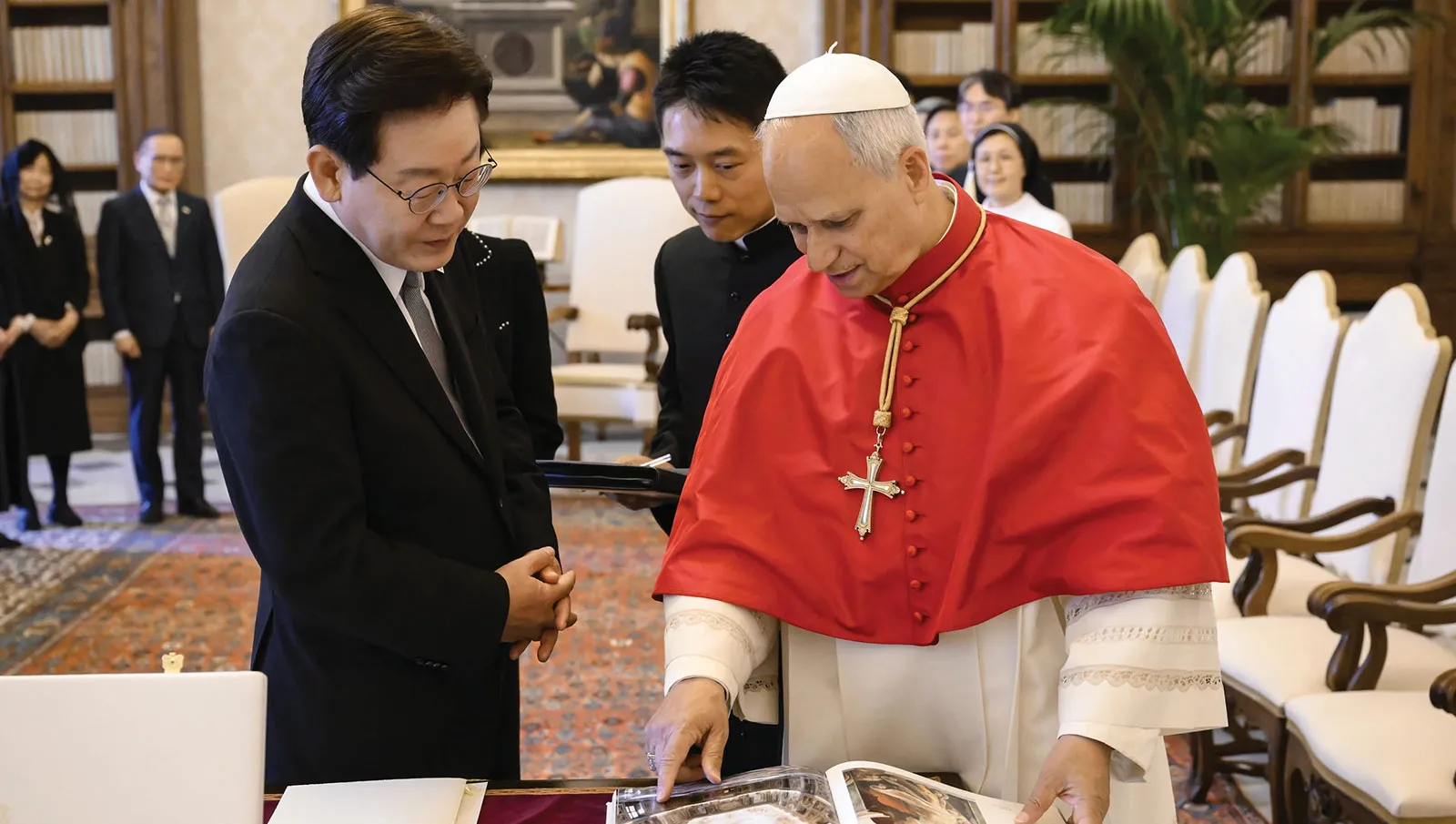
President Lee and Pope Leo XIV © Vatican Media.
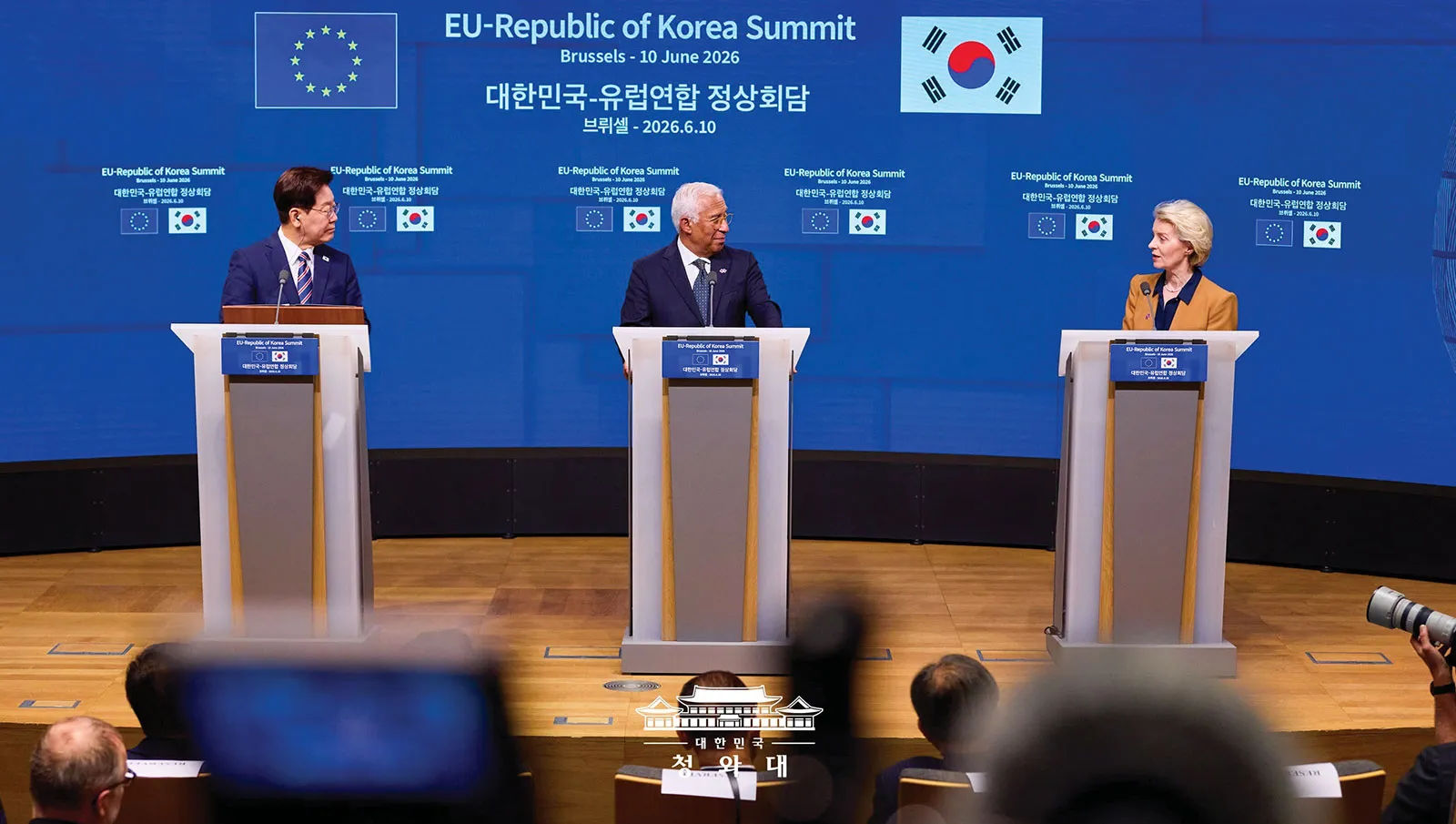
President Lee and European Council President António Costa and European Commission President Ursula von der Leyen