
Pure accident. We’d ordered something else entirely and received 5 kg of gosari by mistake. Not wanting to waste it, we started experimenting. Once we really dug in, we realized the texture is surprisingly similar to meat, and it absorbs oil beautifully—which means when you pair it with the right sauces, it develops a remarkably deep umami. The more cooking methods we tried, the more its character came through. That’s when we knew: this is it.
Cool Places,
Cooler Food
Kim Je-eun
CEO of Bad Carrot and Gosari Express
Cover Story 2
Writer
Sung Ji Yeon
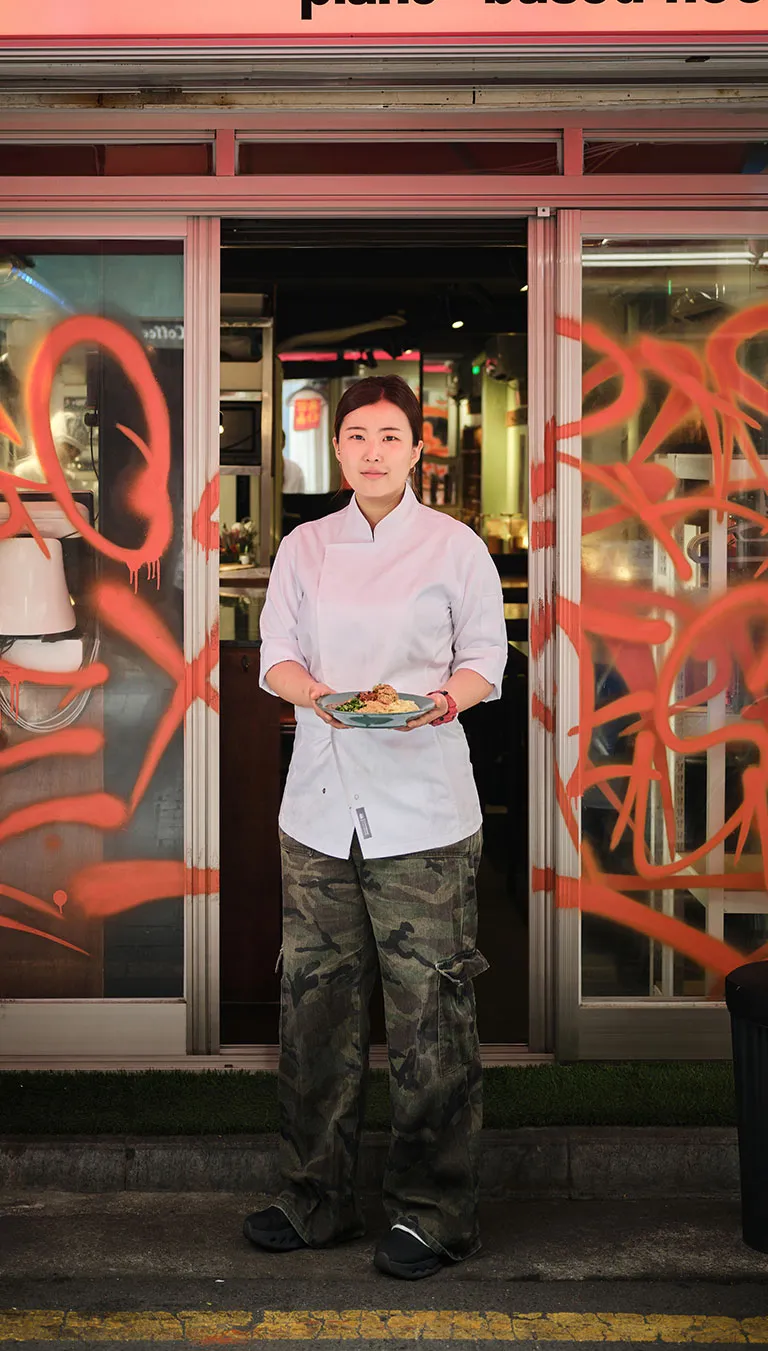
Gosari Express—a vegan noodle shop inside Seoul Jungang Market built around gosari (bracken fern), and the flagship space of plant-based brand Bad Carrot. A double Michelin honoree in the 2026 guide, it carries one simple conviction: that plant-based food should stop being a special choice for special people and start being something everyone eats simply because it tastes good. But here’s the twist: this hip noodle shop sits in a back alley of an old traditional market famous for its meat. And not a single piece of meat goes into the food. Declaring the infinite potential of vegetables from the heart of a market overflowing with animal byproducts—that’s a boldness bordering on audacious. CEO Kim Je-eun’s mission to shatter preconceptions and bring vegan food into everyday life is, in itself, nothing short of revolutionary.
Q.
How did gosari become your signature?
Q.
What’s your standard for flavor here?
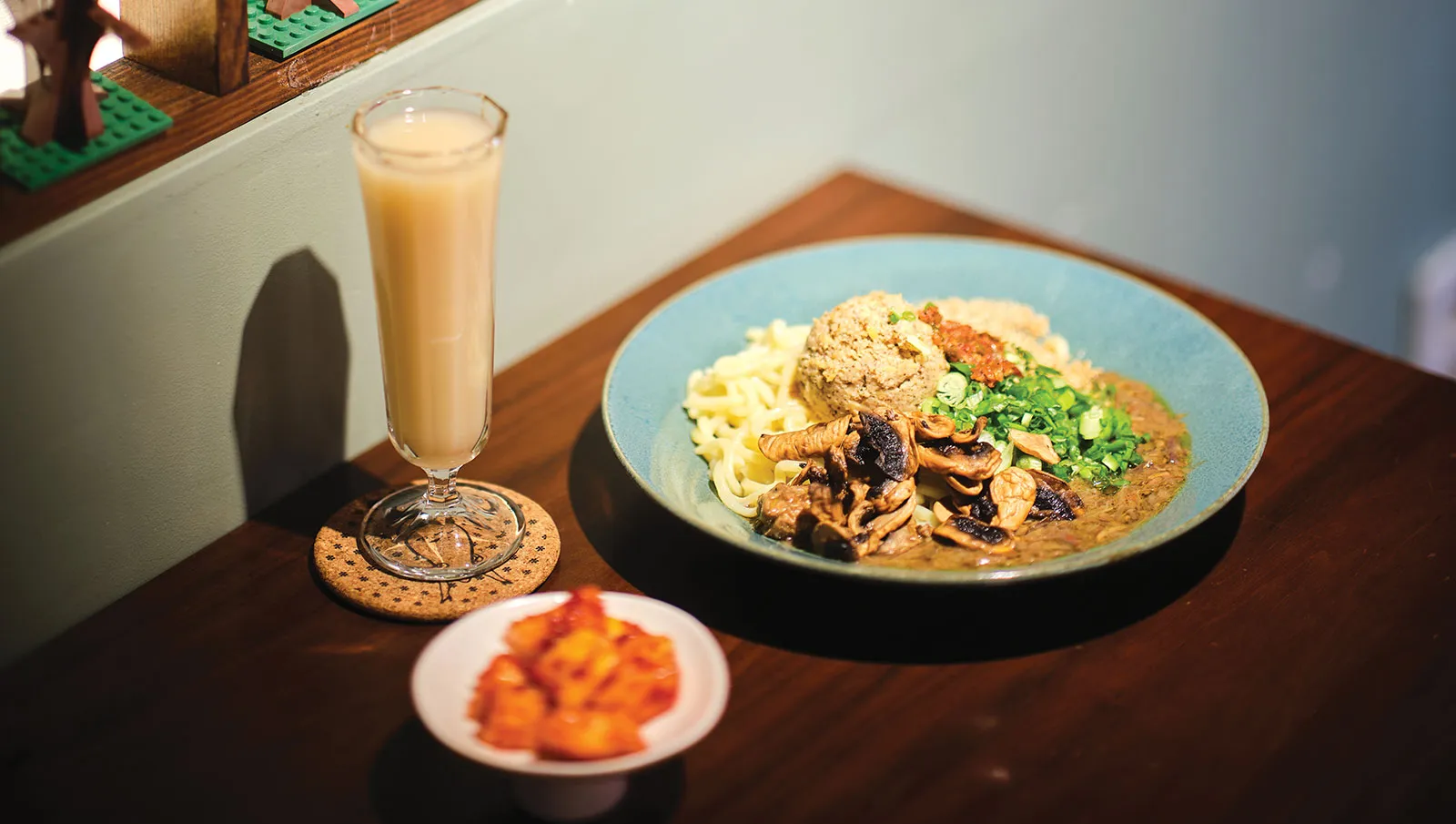
One standard: not “it’s good considering there’s no meat,” but “it’s good—wait, there’s no meat?” People should be able to eat it without registering that it’s vegan.
Q.
You’ve earned both the Bib Gourmand—Michelin’s recognition for exceptional value—and the Green Star for sustainable gastronomy. How do you read that?
Honestly, I couldn’t believe it. When people think Michelin, they picture fine dining. We have a short menu and a modest interior. The fact that we were selected feels like Michelin saying, “Yes, places like this count too”—and that makes it mean even more. I think what worked in our favor was honesty. We don’t pretend to use expensive ingredients or make things more complicated than they are. We take gosari—an ordinary ingredient—treat it properly, and serve it at a fair price.
Q.
Why choose a traditional market over somewhere trendier?
We want to make plant-based eating mainstream—something people who’ve never thought about veganism just wander into naturally. A traditional market is everyone’s space: vendors, office workers, tourists, local residents. Where else could we find a better fit for that goal? There’s also the ingredient access. We can source whatever’s in season right away and move quickly when we want to test new ideas.
Q.
What has the market taught you?
Gosari Express started from a concept: a grandmother’s old noodle shop, reimagined by her granddaughter. The graffiti on the exterior was our way of expressing that—a visual language for how we’re redefining plant-based food, with all its freedom and defiance. The day the artists came to paint it, some of the older residents in the neighborhood came out worried, asking why we were drawing on the walls.
But this place works because things that shouldn’t go together somehow do. Seoul Jungang Market is one of the three major pork byproduct markets in the area. When we opened, people around us were understandably puzzled. We’ve worked through that, though, and built real memories with the people here. A grandmother who tasted our vegetable broth and kept coming back. An elderly man who saved up his allowance to bring friends for multiple visits. A market vendor who tried our basil makgeolli and rosemary makgeolli from a local brewery and liked it so much he quietly started sharing it around.
Every time something like that happens, I’m reminded of why this work matters. Watching people who shouldn’t overlap—vegan and non-vegan, young and old, vendors and tourists—come together naturally over a bowl of food. The idea that food can connect anyone across any divide: that’s what keeps me going.
Q.
What’s your ultimate personal ambition?
I’ve come to think what I’m actually doing is less about the food itself and more about connecting people. Before anything else, I want to be a good person—build a good team, and let that team make good food together. The bigger dream? To show the world what Korean vegetables are capable of. I want the day to come when Korean ingredients feel familiar and beloved everywhere. And I want our brand to be the one that gets them there.

Get the latest updates from Kim’s brand.
Timeless Legacy
Kim Hyang-soon
1st Owner of Pungnyeon Gireumjip
Lee Tae-young
2nd Owner of Pungnyeon Gireumjip
Cover Story 2
Writer
Sung Ji Yeon
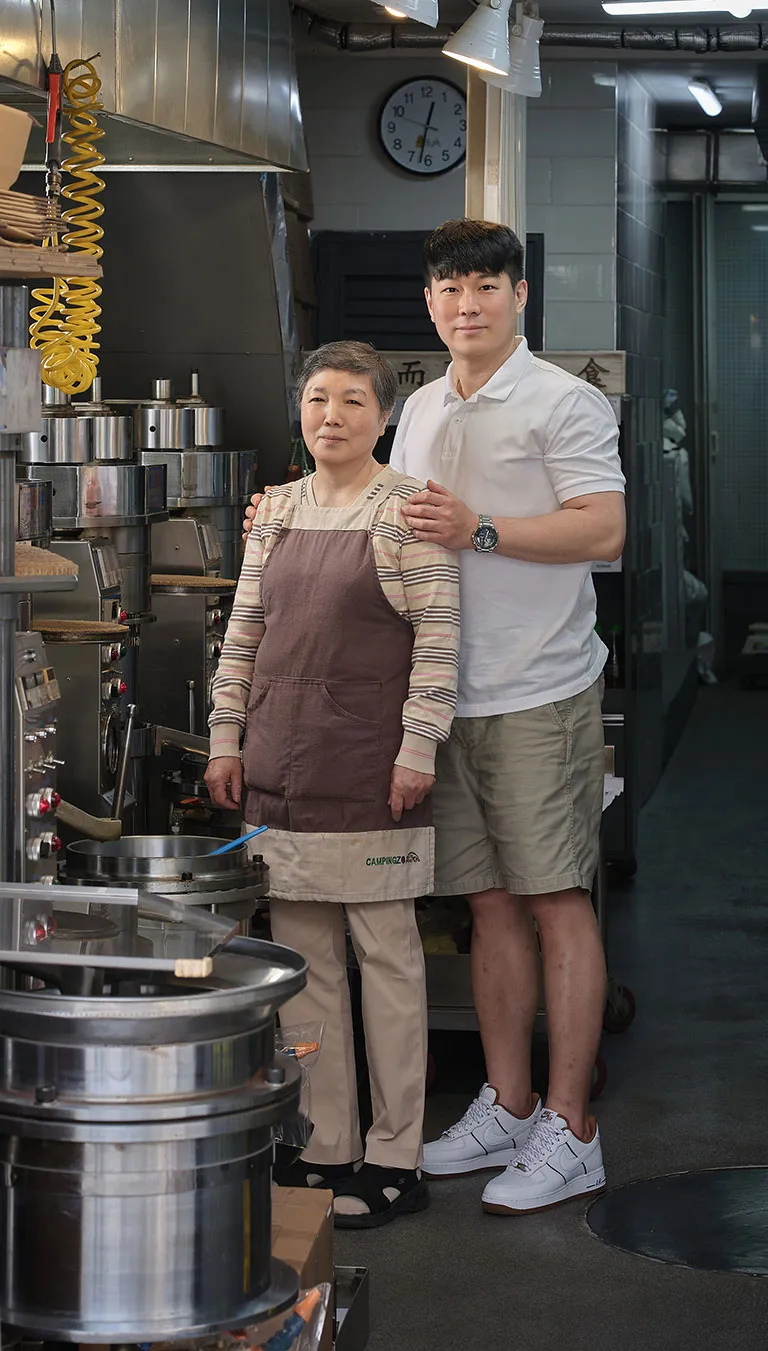
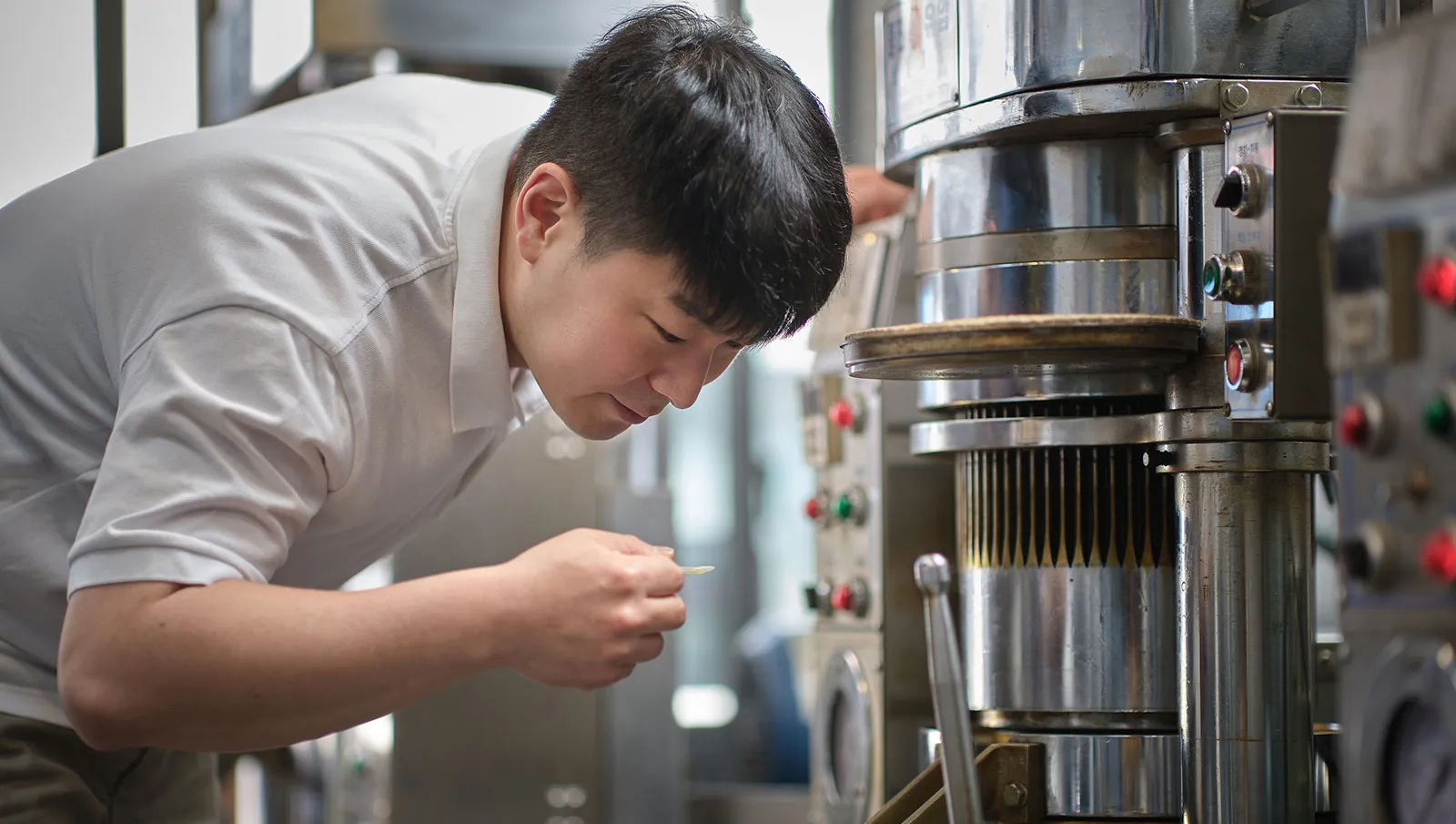
Step into the alleyways of Jungang Market, Seoul, and something reaches you before anything else—the warm, almost sweet scent of freshly roasted sesame. It’s the smell of Pungnyeon Gireumjip, a shop that has occupied this same corner since 1986. “Don’t take my word for it. Try it yourself,” says owner Lee Tae-young, extending a small spoon with a drop of oil. In that single drop lies 40 years of his parents’ dedication and a decade of his own hard-won reinvention. The delivery model changed. So did the process and the service. But the taste and the trust—those he never touched. That is how this oil shop preserves its past while moving steadily into the future.
Q.
You recently received certification—and renewal—as a Baeknyeon-gage, a government-recognized shop with a long history. Could you tell me the story behind that?
When I took over, I faced a real dilemma: scale up and go into mass production, or dig deeper into the crafts-manship my parents had built. I chose the long game. The bar is high—no administrative violations, ever, and a minimum of 30 years in business. The review was rigorous: an hour and a half of interviews and an on-site inspection. What they really wanted to know was how we planned to carry the tradition forward. That question still drives everything we do.
Q.
Did you always plan to take over the family business?
Burnout brought me here. Severe stress from my previous job landed me in the hospital—and the company didn’t care. That was the turning point. My parents were getting older and struggling, so the timing aligned. I always knew I’d run a business someday, and this was always one of the options. Growing up watching them, I had a clear sense of what good oil should taste like. Even so, replicating their flavor exactly took five years. Customers come for the original. Coasting on that reputation was never an option—I had to own the craft myself. The moment that foundation slips, everything else goes with it.
Q.
What was the first thing you changed after taking over?
First came the systems. We used to do local deliveries by motorcycle, but every hour on the road was an hour not spent making oil—and it wasn’t safe either. We worried about losing existing accounts if we stopped. Then COVID-19 hit, and the shift to contactless gave us our opening. We offered free shipping to bring customers over and talked our restaurant clients into making the switch.
Q.
Oil tasting isn’t something you see at other shops. How did that start?
A longtime regular once told me she’d bought oil on a friend’s recommendation, but it didn’t suit her taste—and she felt too guilty to throw it away. That got me thinking: what if customers could taste before they buy? Our motto is “a hundred words are worth less than one taste.” Like a wine tasting, I walk customers through the ingredients and roasting methods before they try each oil. The look on their faces when it clicks—“Wait, what is this?”—makes everything worth it.
Q.
You digitalized your parents’ methods. Was there any pushback?
My parents worked by feel. But feel can’t be passed down or taught. So I standardized the process. The key shift was moving to a real-time digital temperature gauge for roasting. One degree makes all the difference with sesame—one degree too low and you get a raw, off note; one degree too high and the clean finish disappears. There was friction with my father over the investment—new machines aren’t cheap. I told him I’d recoup the cost within six months and proved it. After that, he was fully on board.
Q.
Any memorable visitors?
This year, a fan flew in from Taiwan after seeing content featuring chef Yoon Nam-no, known from Netflix’s “Culinary Class Wars.” After a tasting, she left with a suitcase full of oil. That felt like real payoff.
Q.
What’s next?
I plan to open a proper facility outside the city with automated systems. But I won’t chase volume. Good raw ingredients are finite, and I’ll only produce as much as quality allows. Even after the new facility opens, this space will become a kind of museum—a living record of where the brand came from.

Discover the latest from Lee’s brand.