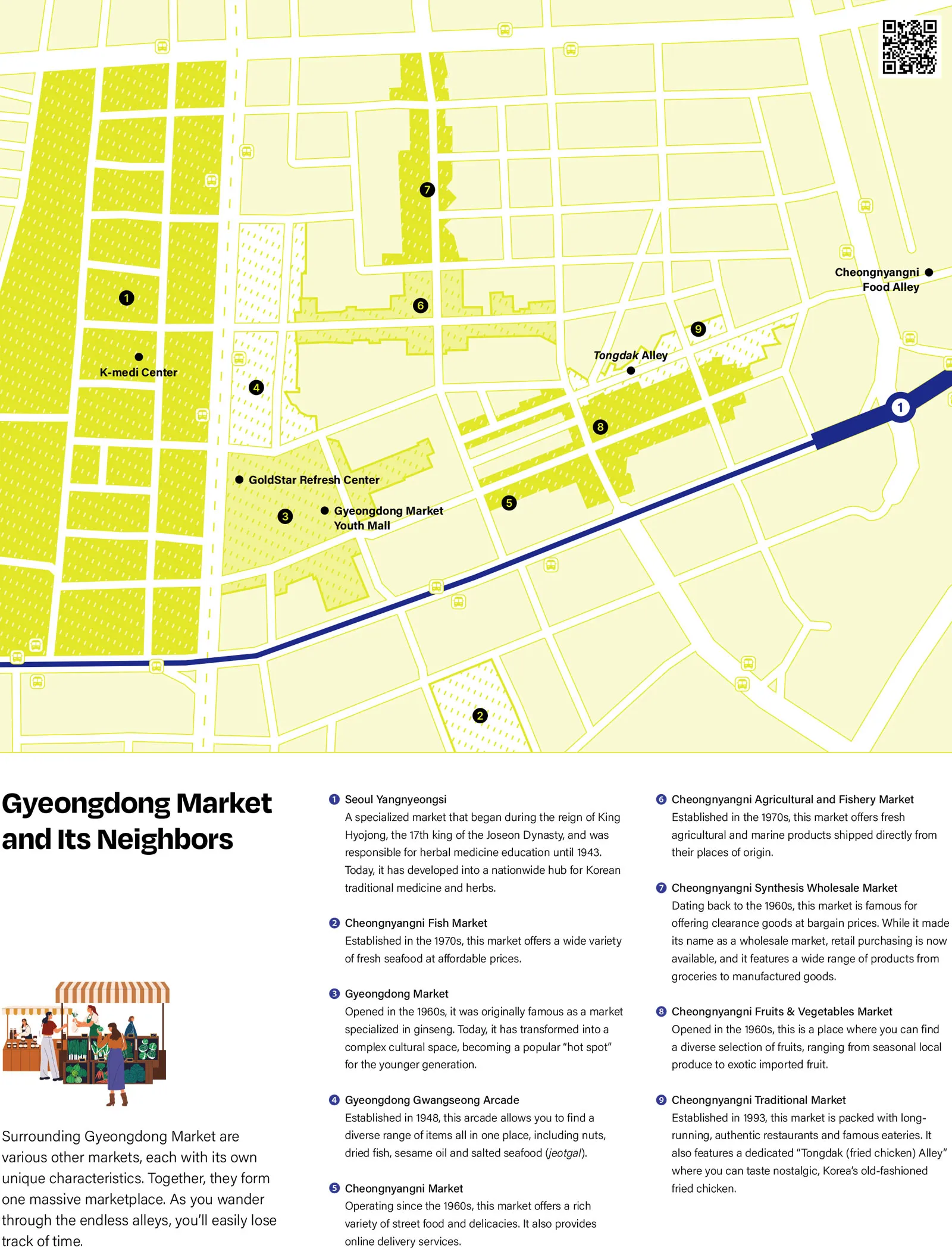
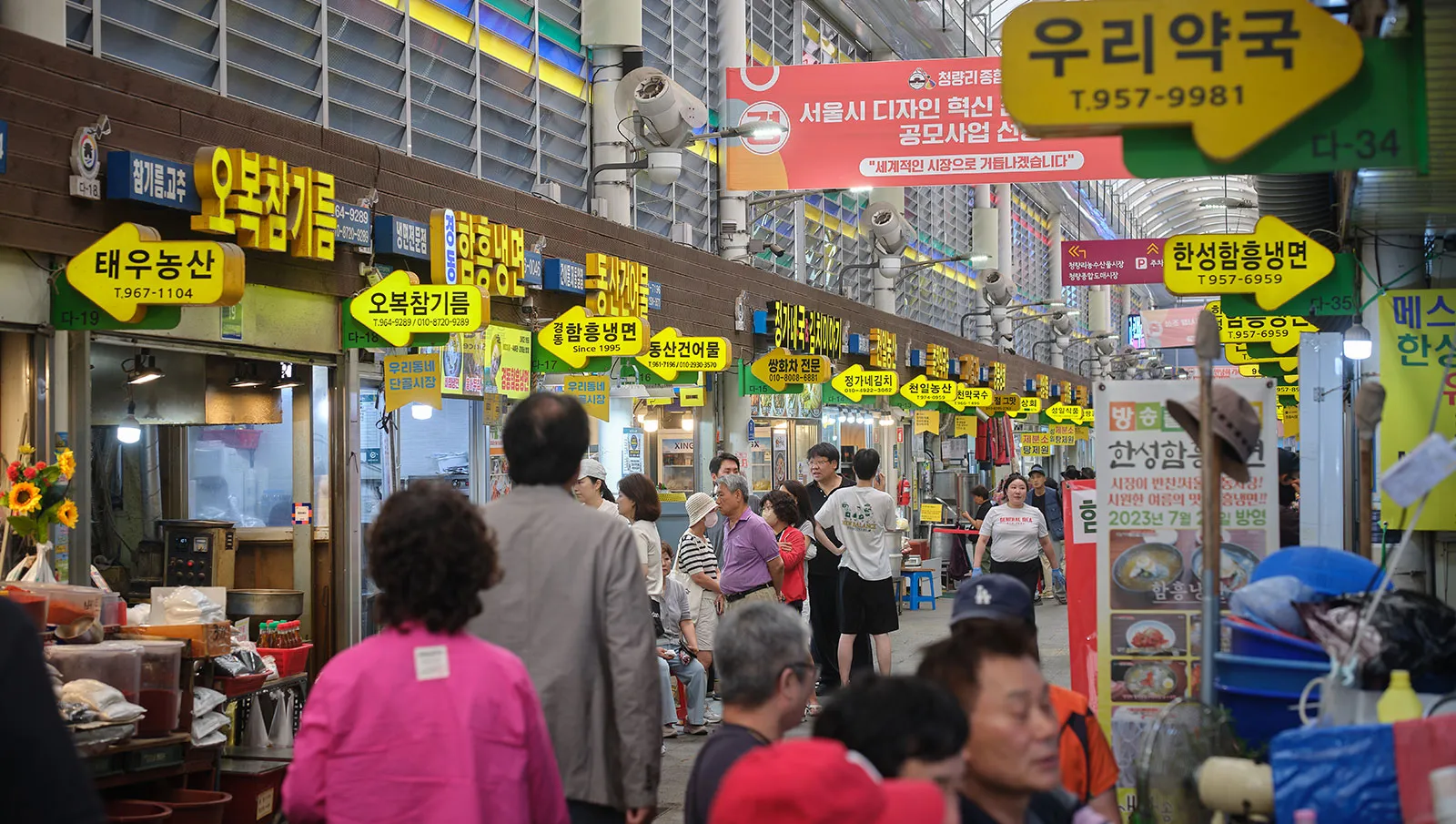
If it’s your first visit to Gyeongdong Market, the best way to start is simply by walking a full loop of the place. This is a market you learn with your feet, not a map—and with signs hanging over every alley, there’s no fear of getting lost. From Doraji (bellflower root) Alley and Vegetable Alley to Garlic Alley, the Country Market, the Dried Seafood Arcades and the Korean Ginseng Wholesale Arcade, each passageway has a face all its own.
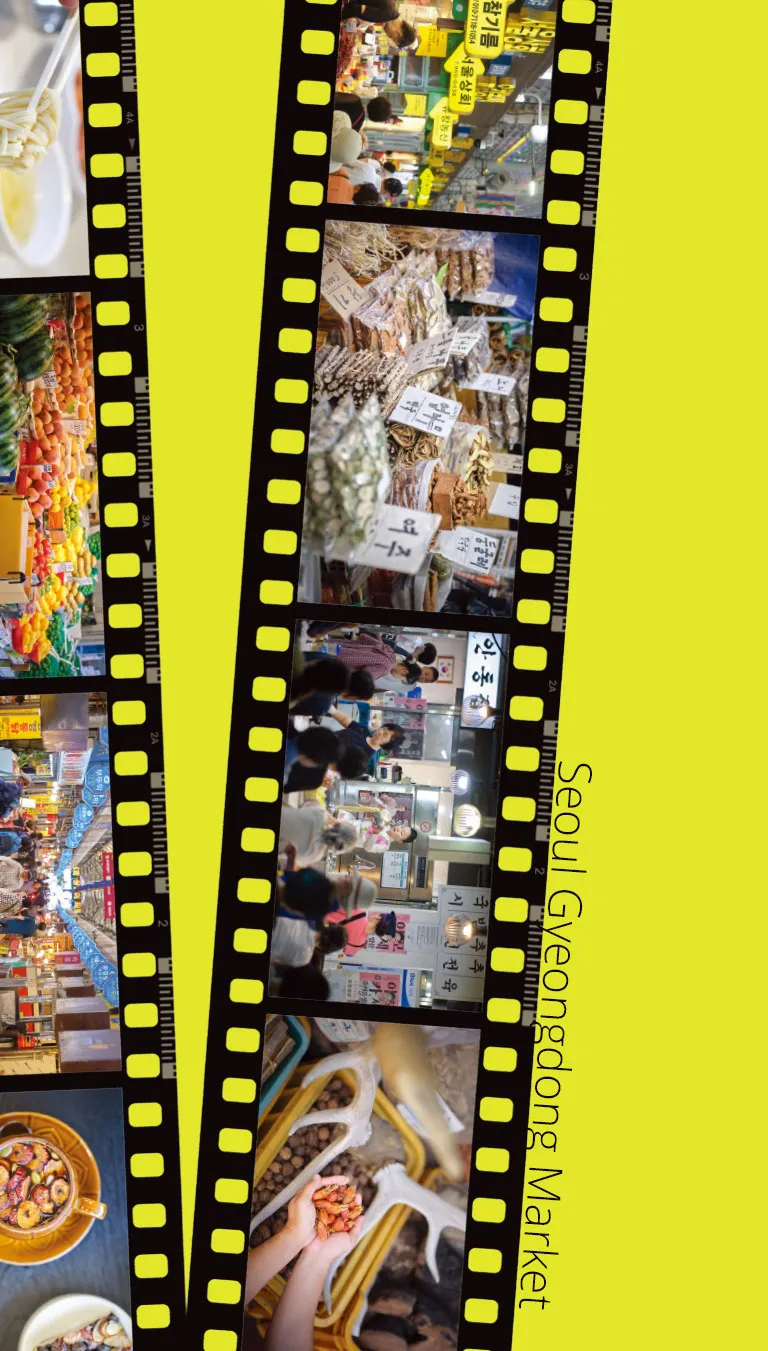
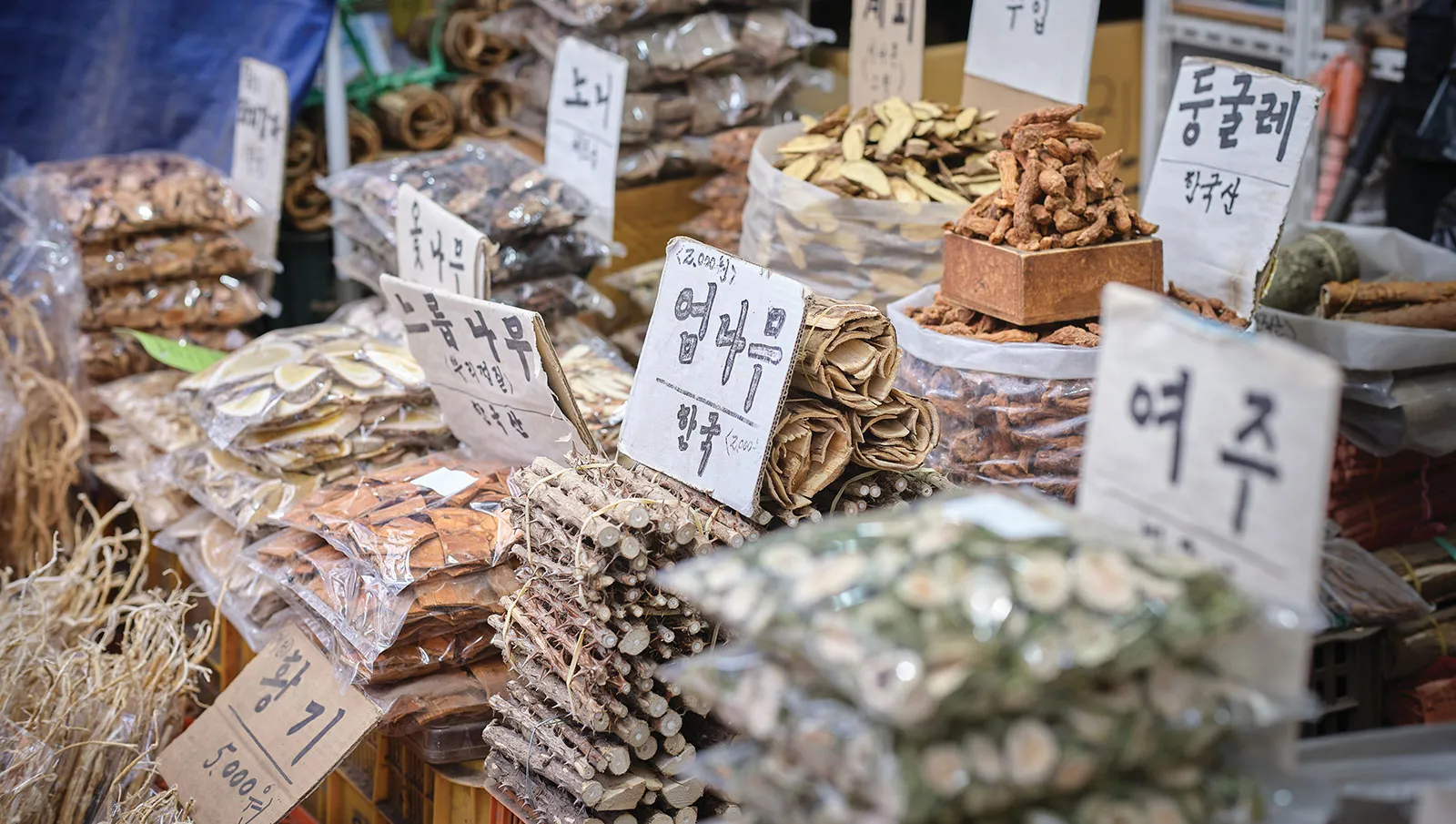
In Doraji Alley, dried goods of every kind—bellflower root, deodeok (codonopsis lanceolata), burdock—sit stacked tightly along the narrow corridor. Vegetable Alley overflows with potatoes and sweet potatoes right from the entrance, and the deeper you go, the more varieties of produce greet you. In Garlic Alley, mounds of garlic pile up beneath red awnings, and the scent of freshly peeled cloves fills the entire lane. The Country Market specializes in forest products like wild greens, vegetables and lotus root and the bustling scene under its blue roof feels like the most quintessentially traditional-market corner of all.
The Dried Seafood Arcade is divided into two buildings. Anchovies, kelp, dried pollack and squid are stacked nearly to the ceiling, and a medicinal herb shop sits at the entrance to Building 2. Broth is fundamental to Korean cooking, and it’s no exaggeration to say that every essential broth ingredient can be found here. Over in the ginseng wholesale arcade, vendors deal in red ginseng and honey products, with standing signs conveniently marked in English. Step out of one alley and another begins; the farther you walk, the more the market reveals—and your journey has only just begun.
Shopping Across Time
Seoul Gyeongdong Market
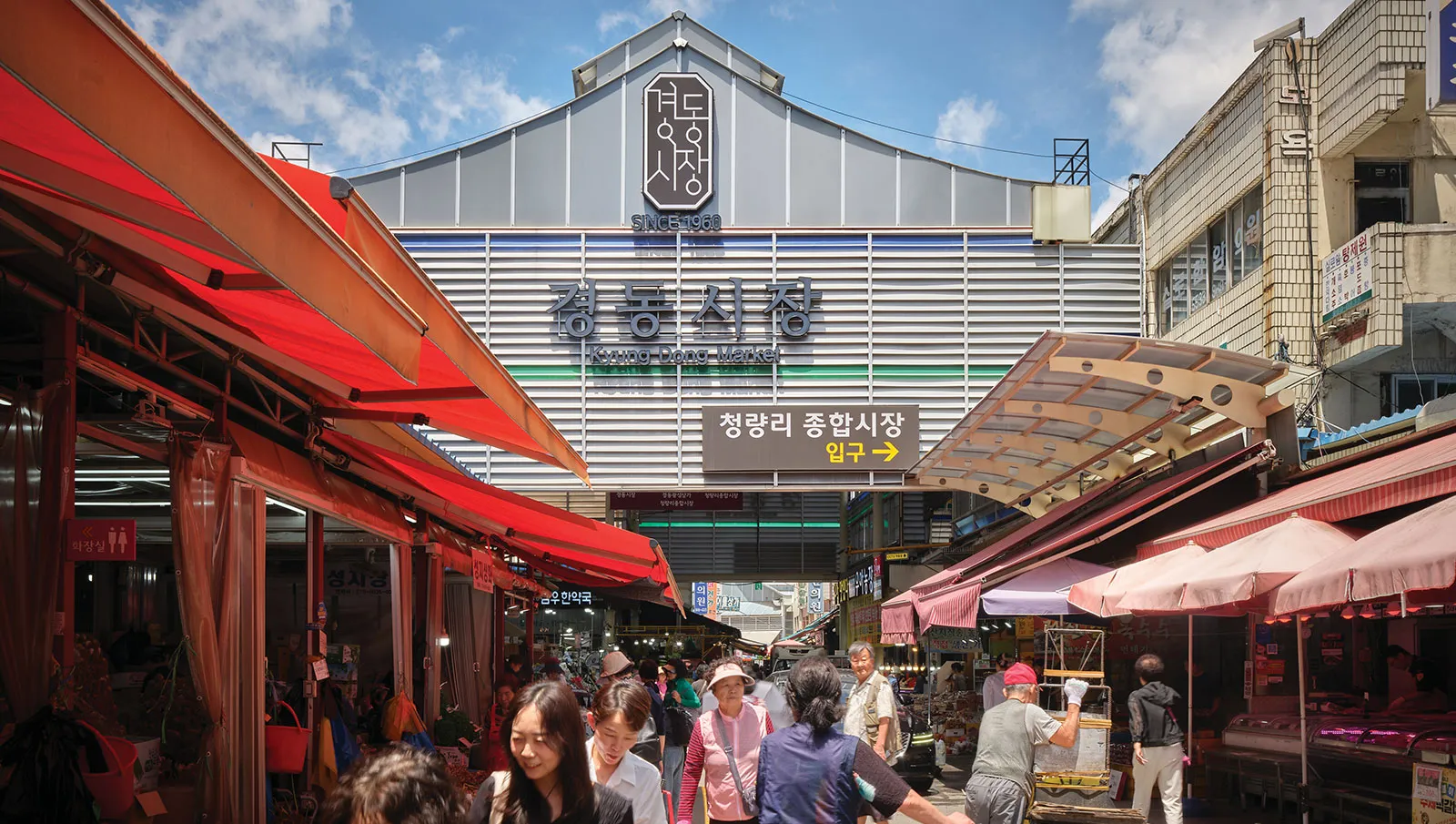
Located in northeastern Seoul, Gyeongdong Market has been a fixture of the city’s everyday life since its opening in 1960. Its alleys overflow with medicinal herbs, fresh produce and seasonal foods from every corner of the country, while the lively calls of vendors complete the market’s distinctive atmosphere. Known as Korea’s largest hub for traditional medicine, the market is a place where old-world charm coexists with vibrant new cultural offerings—making it one of the most vivid windows into Seoul’s past and present.
12:00
A Different World in Every Alley

Getting There
- Jegi-dong Station (Line ❶), Exit 2—5-minute walk
- Cheongnyangni Station (Line ❶), Exit 1—7-minute walk
- Yongdu Station (Line ❷), Exit 3—9-minute walk
- Gyeongdong Mart stop: 10A (Korea University direction), 120, 130, 141
- Jegi-dong Station, Seoul Yangnyeong Market stop: 105, 120, 147, 201
- Dongdaemun-gu Office, Yongsin-dong Community Service Center stop :110B (Kookmin University direction), 130, 141, 148
13:00
A Space Being Rewritten
Once you’ve finished exploring the alleys, it’s time to head to Gyeongdong Market’s new annex. From the basement to the third floor, each level houses a completely different kind of space, meaning a single building can offer a different experience depending on the hour.
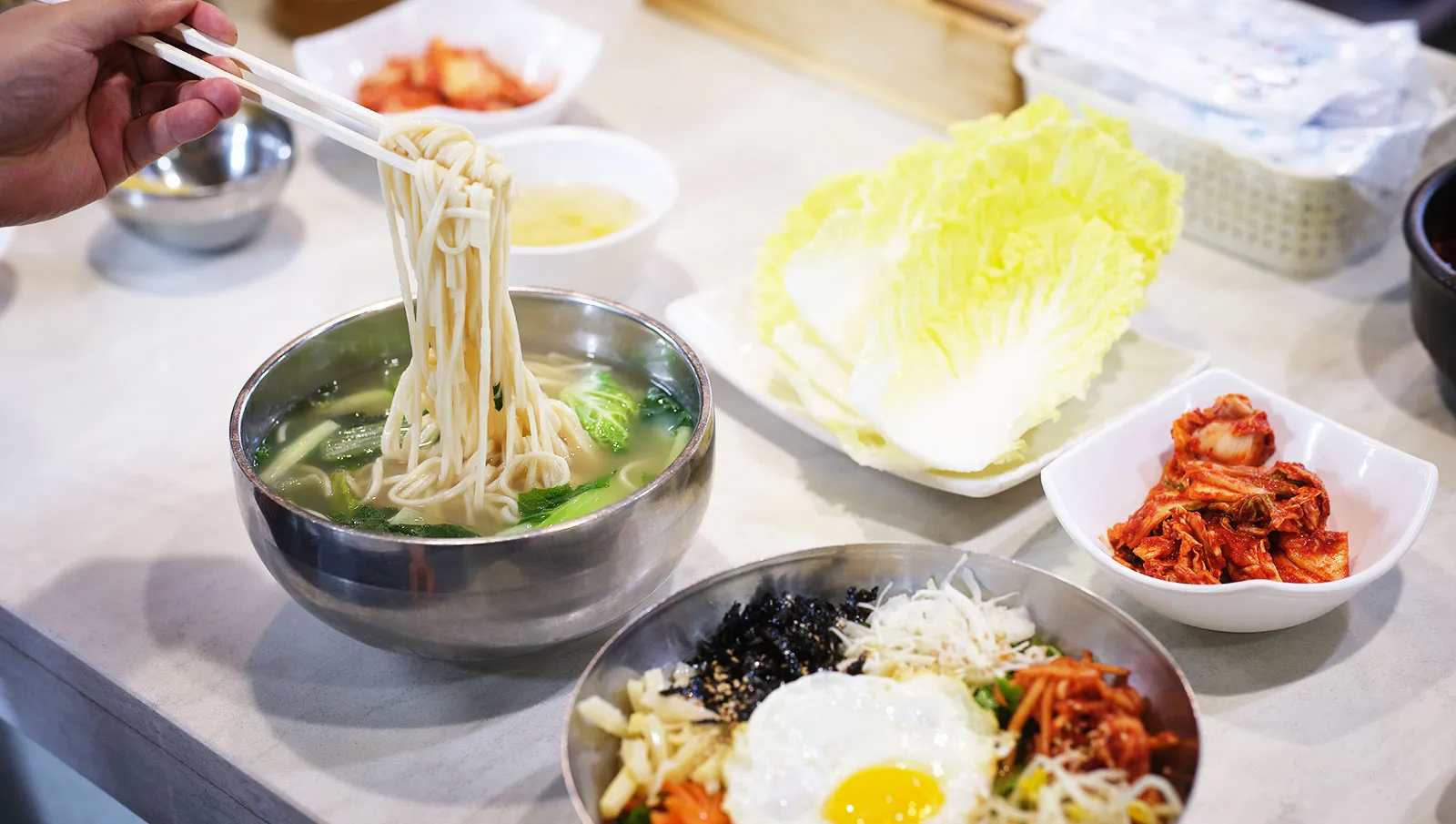
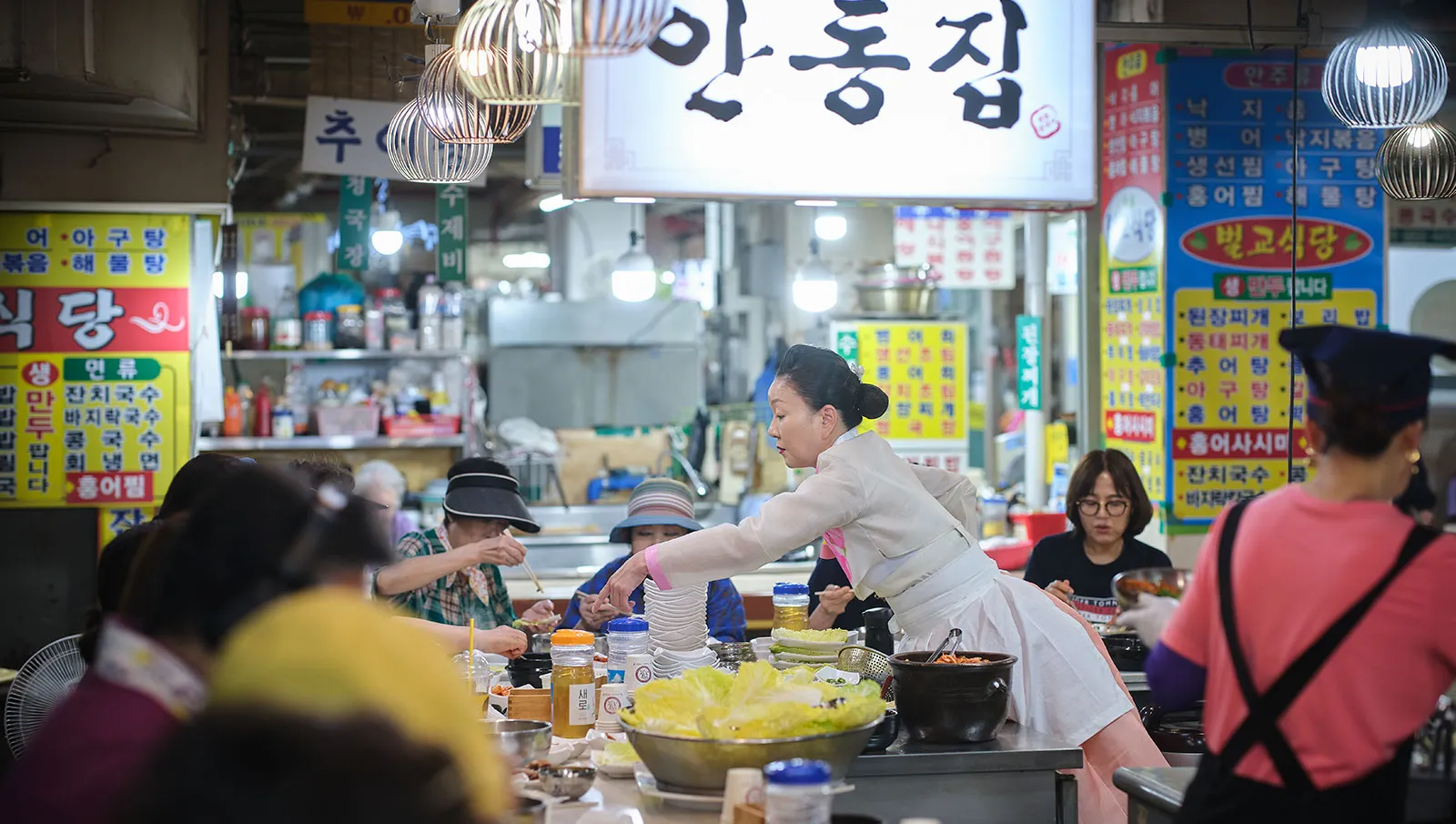
The basement dining hall is where market workers and tourists alike come for the real thing—honest, no-frills eateries. There is no “interior design” to speak of—just well-worn counters, aging fluorescent lights and vendors who have held their spots for decades. When it comes to authentic Korean market dining, it doesn’t get more real than this.
The second floor houses a discount supermarket and the Gyeongdong 1960 Mini Library. Open year-round, the library is a reminder that a market can also be a place to rest, free for anyone to use regardless of age or nationality.
The third-floor Youth Mall is organized around three themes—dining, desserts and craft workshops—with twenty young merchants each filling the space in their own way. A rice-dessert café sits next to a seolleongtang (ox bone soup) restaurant; a shared kitchen and a leathercraft studio stand side by side. The space was created in 2019 with renovation support from a major Korean retail company, but today it operates as a model of coexistence, bringing together a traditional market and a new generation under one roof. Up on the rooftop, a night market opens on Friday and weekend evenings, serving up street-food favorites like ssamgyeopsal (grilled pork belly) and beer.
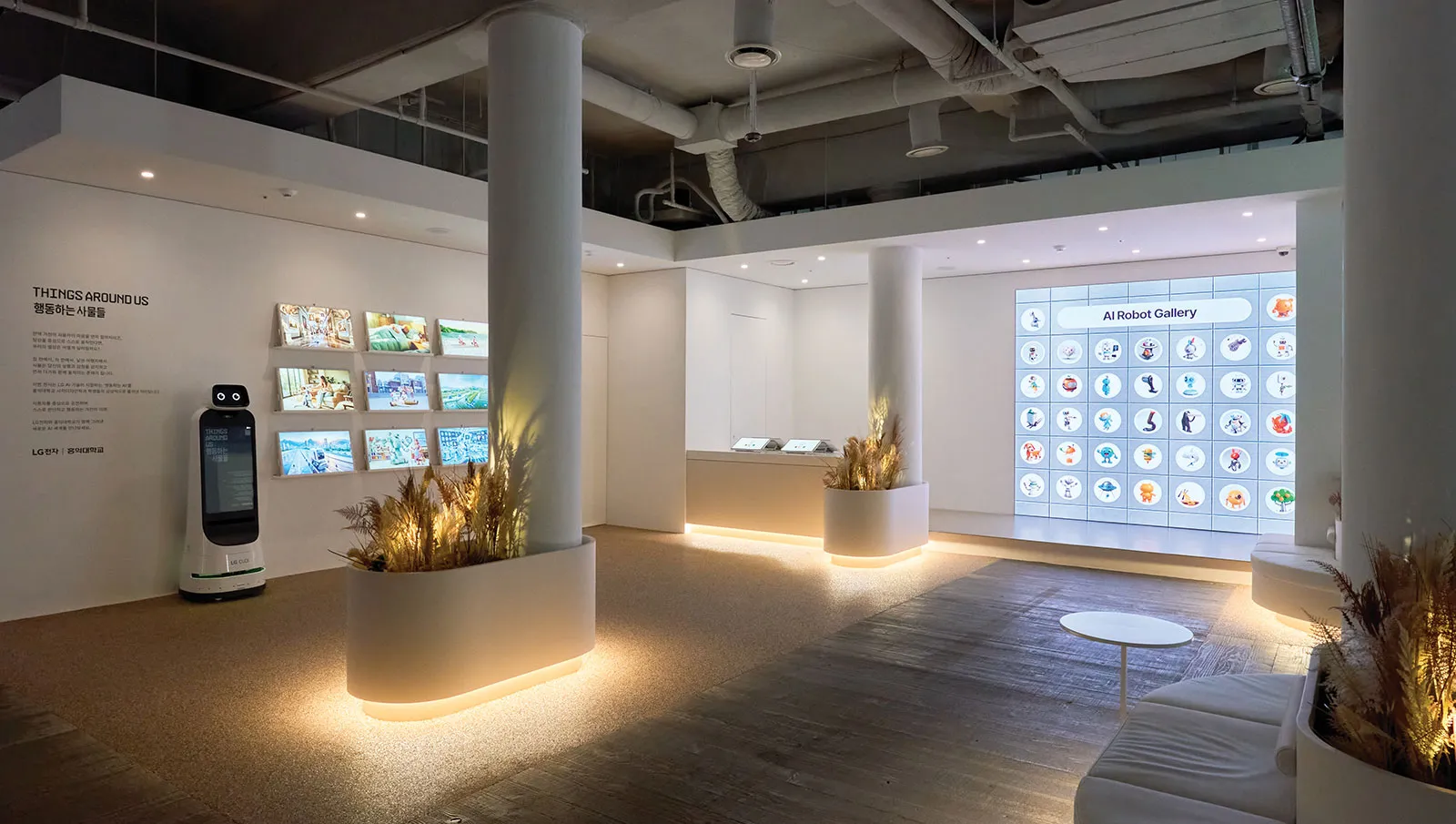
The market’s old annex, reachable via a connecting passageway, has become a hotspot in its own right. It houses a café built inside the remodeled former Gyeongdong Theater, as well as GoldStar Refresh Center, an experience space named after Goldstar—Korea’s first home electronics company and the predecessor of today’s LG Electronics. The center serves as a dynamic venue for campus art collaborations, featuring creative exhibitions curated through the fresh perspectives of university students. By blending these artistic showcases with immersive media art installations, the GoldStar Refresh Center has become a landmark destination in Gyeongdong Market, already drawing over 1.8 million visitors.
14:00
The City’s Kitchen
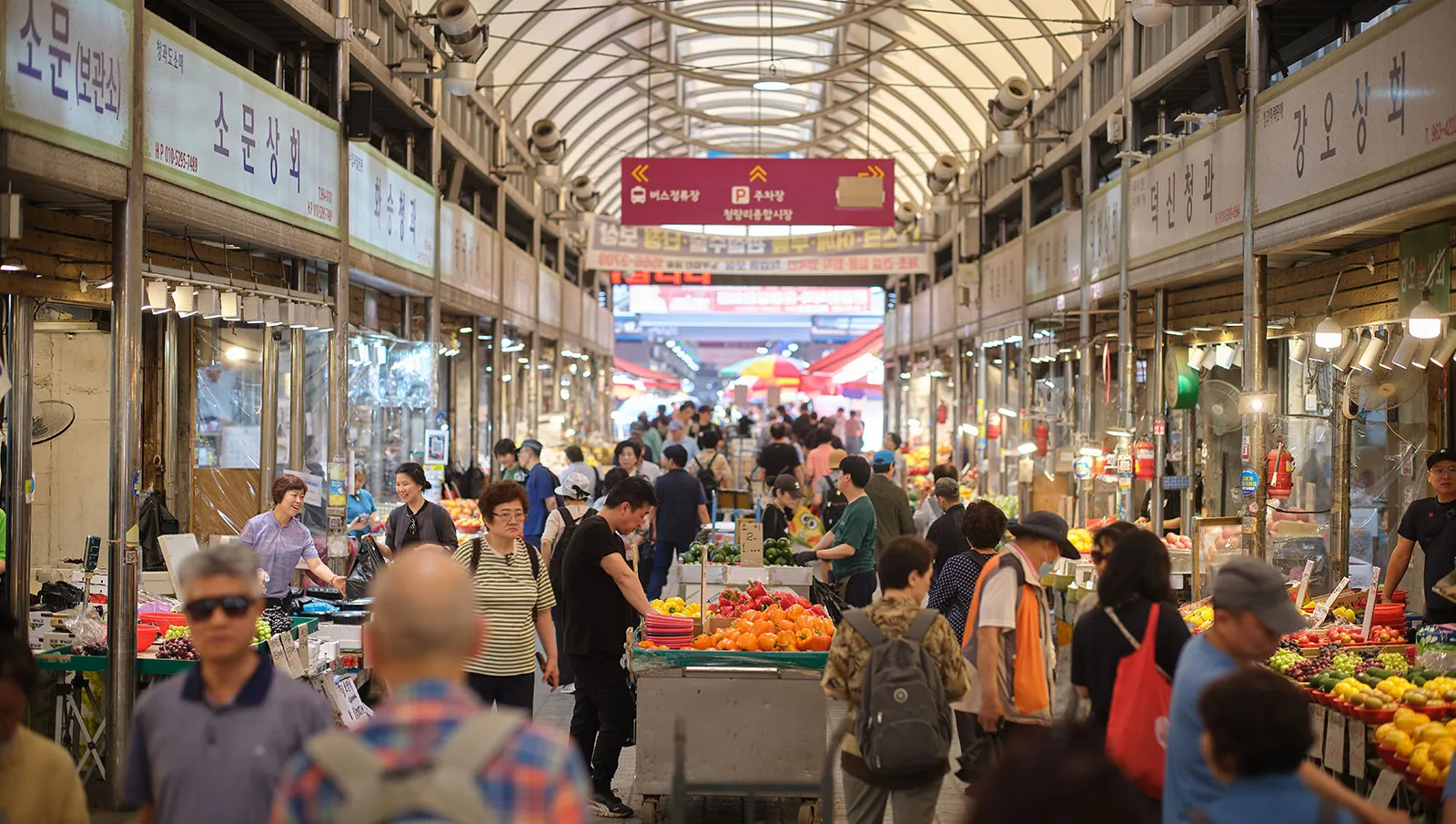
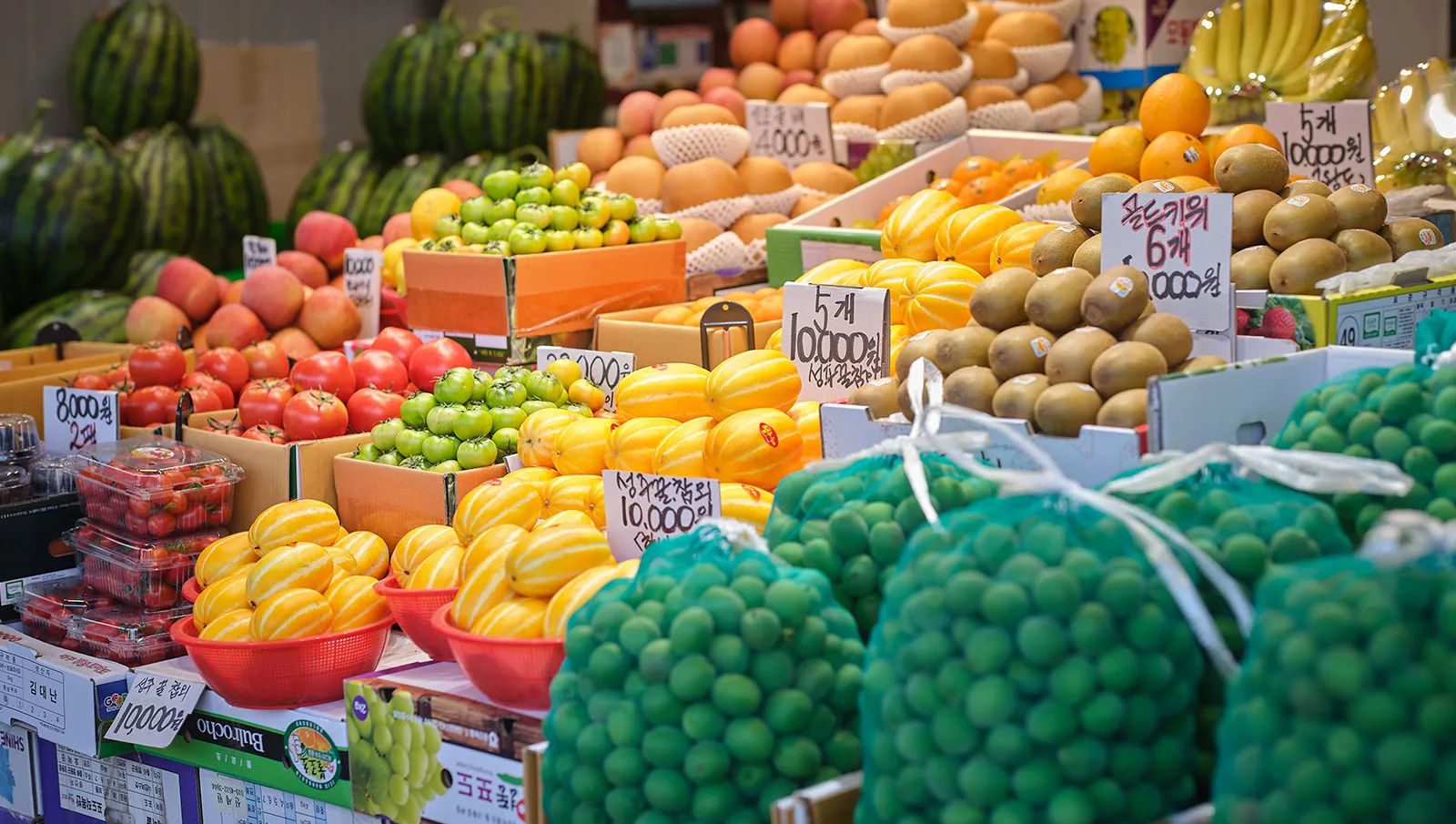
Step out of the new annex and walk toward Cheongnyangni, and the atmosphere changes completely. Compared to Gyeongdong Market’s orderly alleys, Cheongnyangni Fruit and Vegetable Market feels rawer. Vendors’ voices grow louder, and crates of fruit and heaps of vegetables fill the passageways. Handcarts and forklifts shuttle back and forth without pause as shoppers bustle about comparing prices.
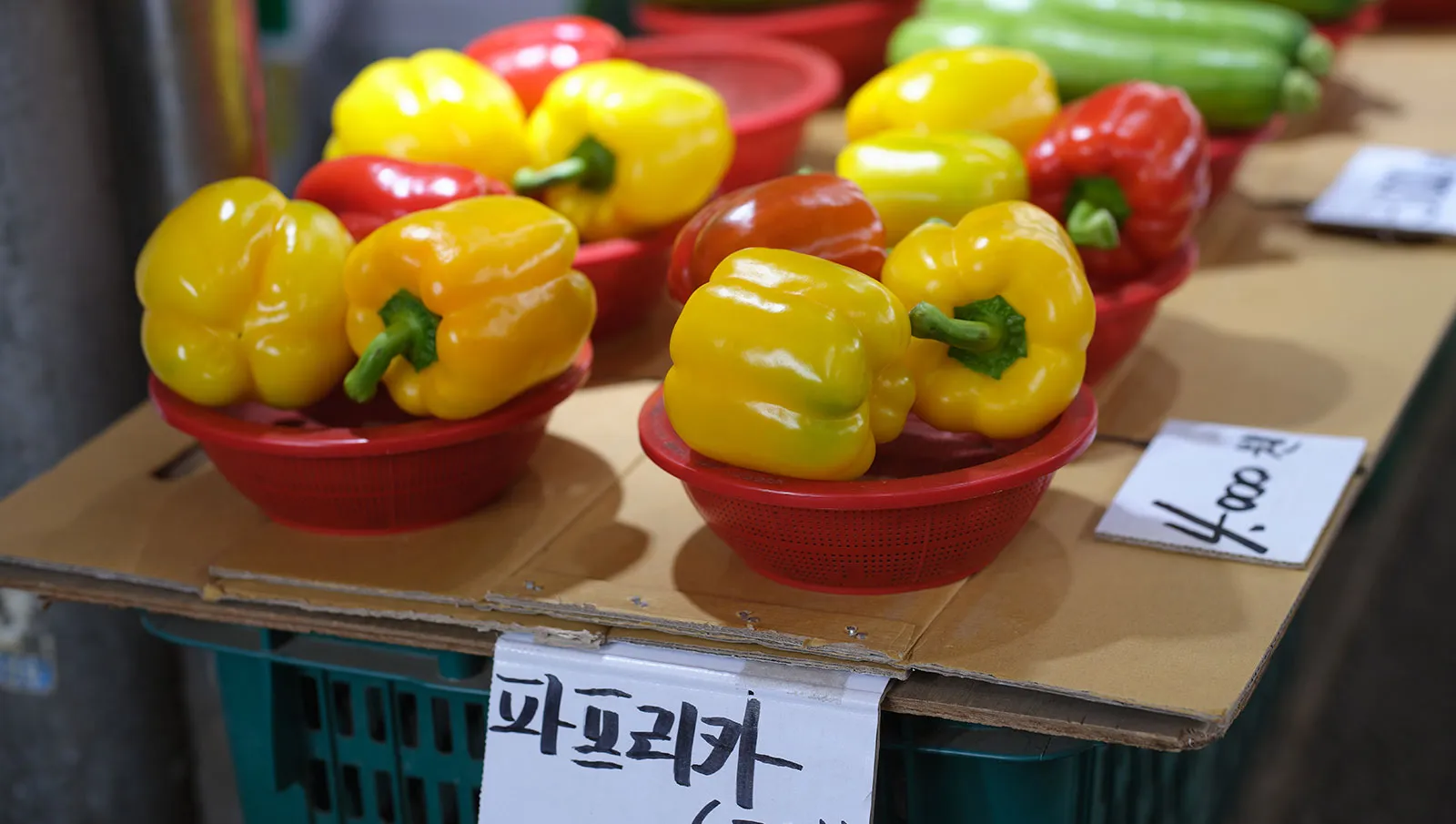
Next to a sign reading “Bell peppers—KRW 2,000 each,” a new handwritten note appears: “Today only—2 for KRW 3,000.” Lemons, tomatoes and apples sit piled high beneath red parasols. Produce from every corner of the country passes through here on its way to Seoul’s restaurants, supermarkets and home kitchens. There’s no better place to hand-pick the full range of seasonal fruit at retail prices.
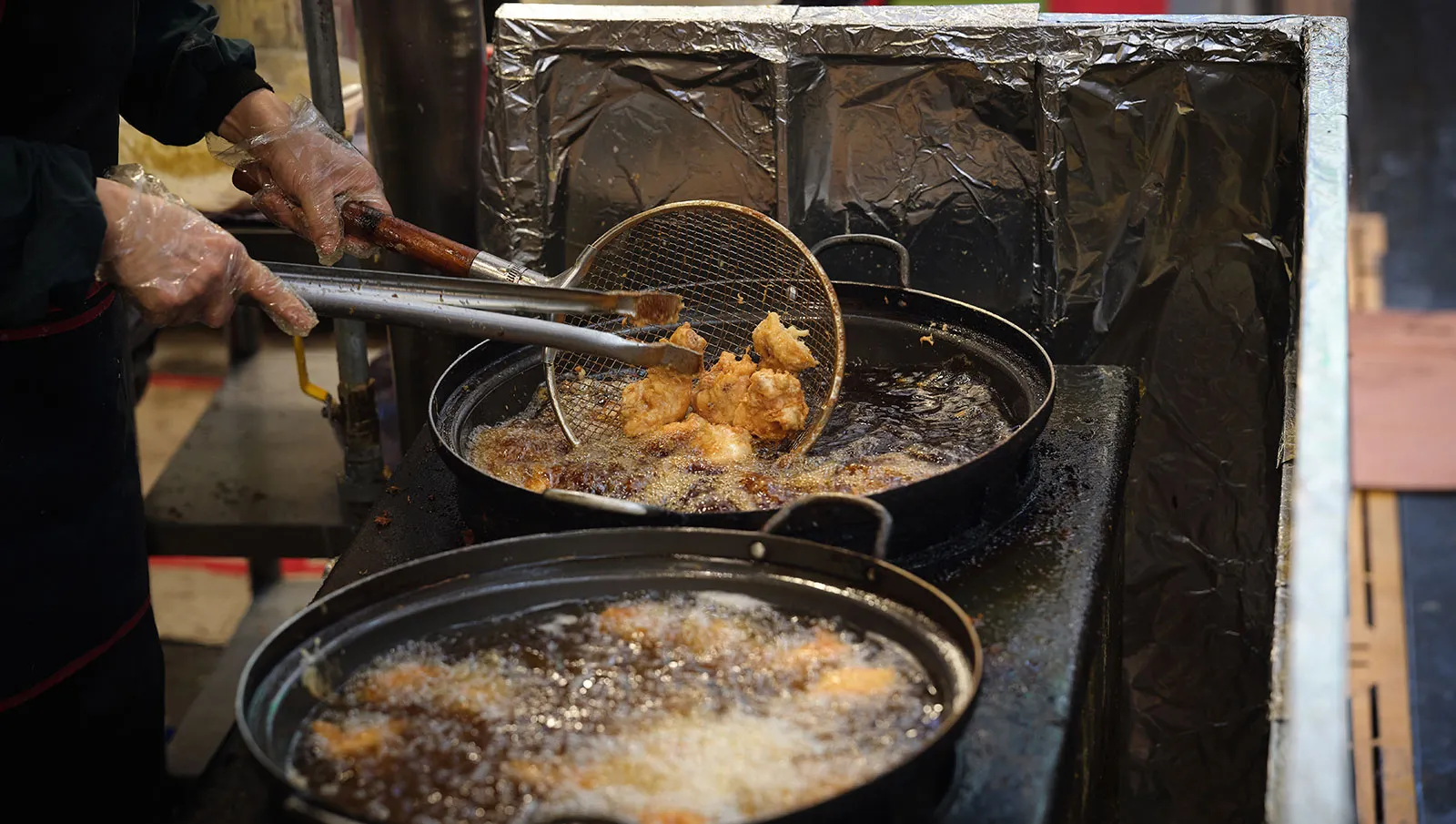
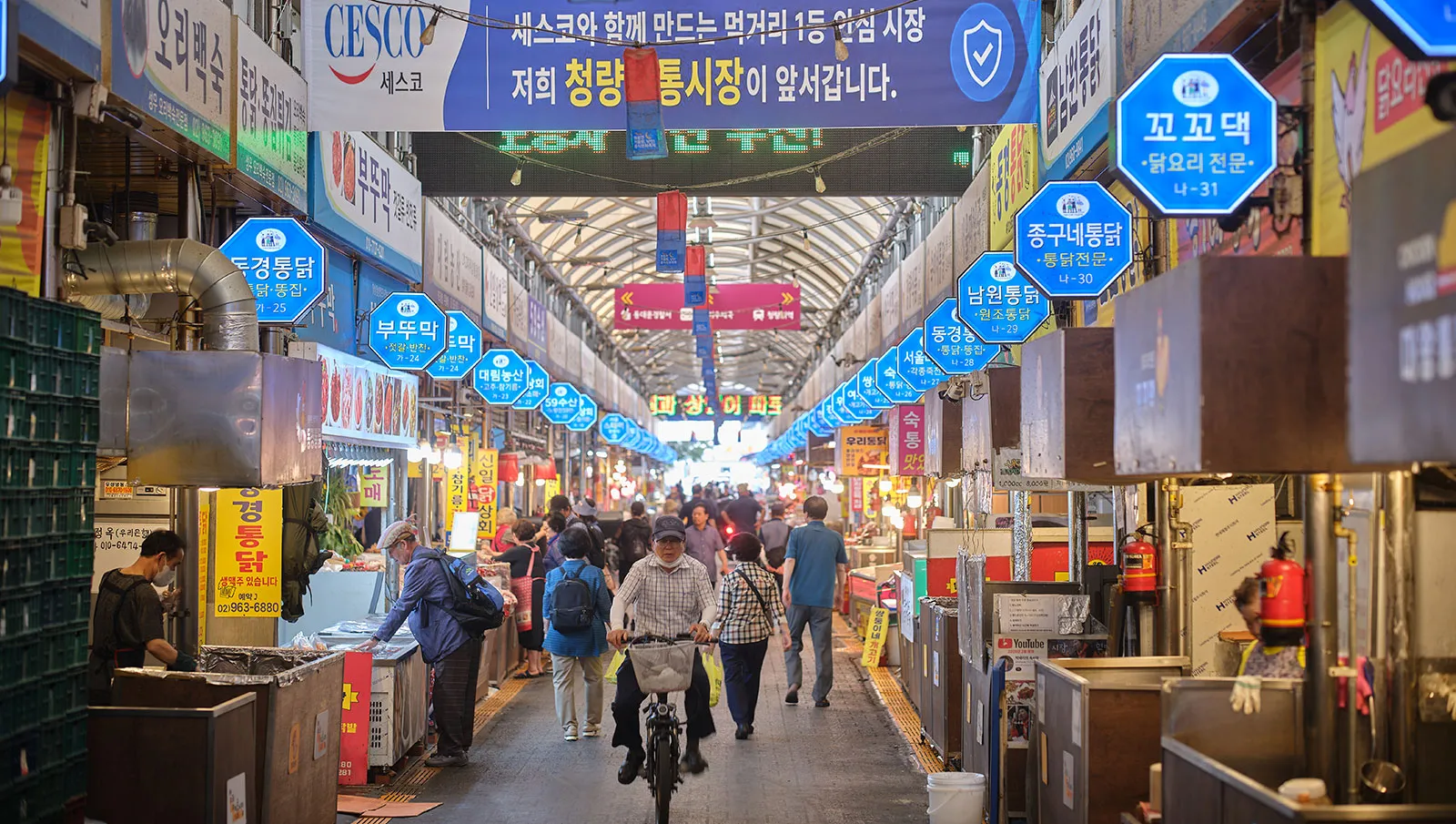
A loop around the produce market leads into Tongdak Alley, lined with shops selling fried chicken and smoked duck. Snack stalls hawking dakgangjeong (deep-fried and braised chicken), dumplings, doughnuts and hotteok (syrup-filled pancake) pull customers deeper into the lane. Even in an era when big-box stores and online delivery have become the norm, this market is still very much alive—perhaps because here you can check the freshness of your food with your own eyes and chat with the vendors as you choose. It may look like an old-fashioned way of doing business, but it remains a vital foundation supporting daily life in Seoul.
15:00
The Scent of a Thousand Years
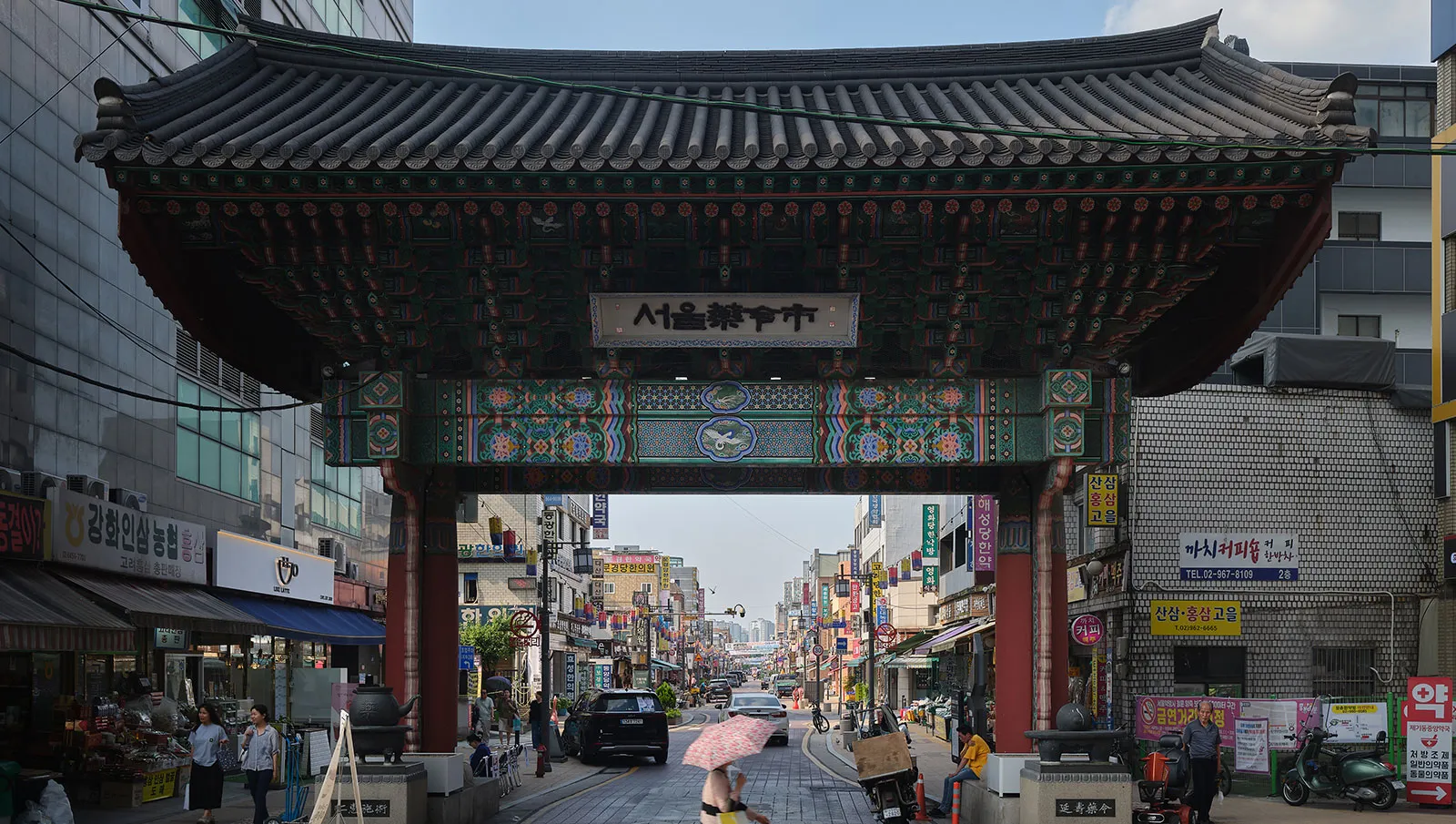
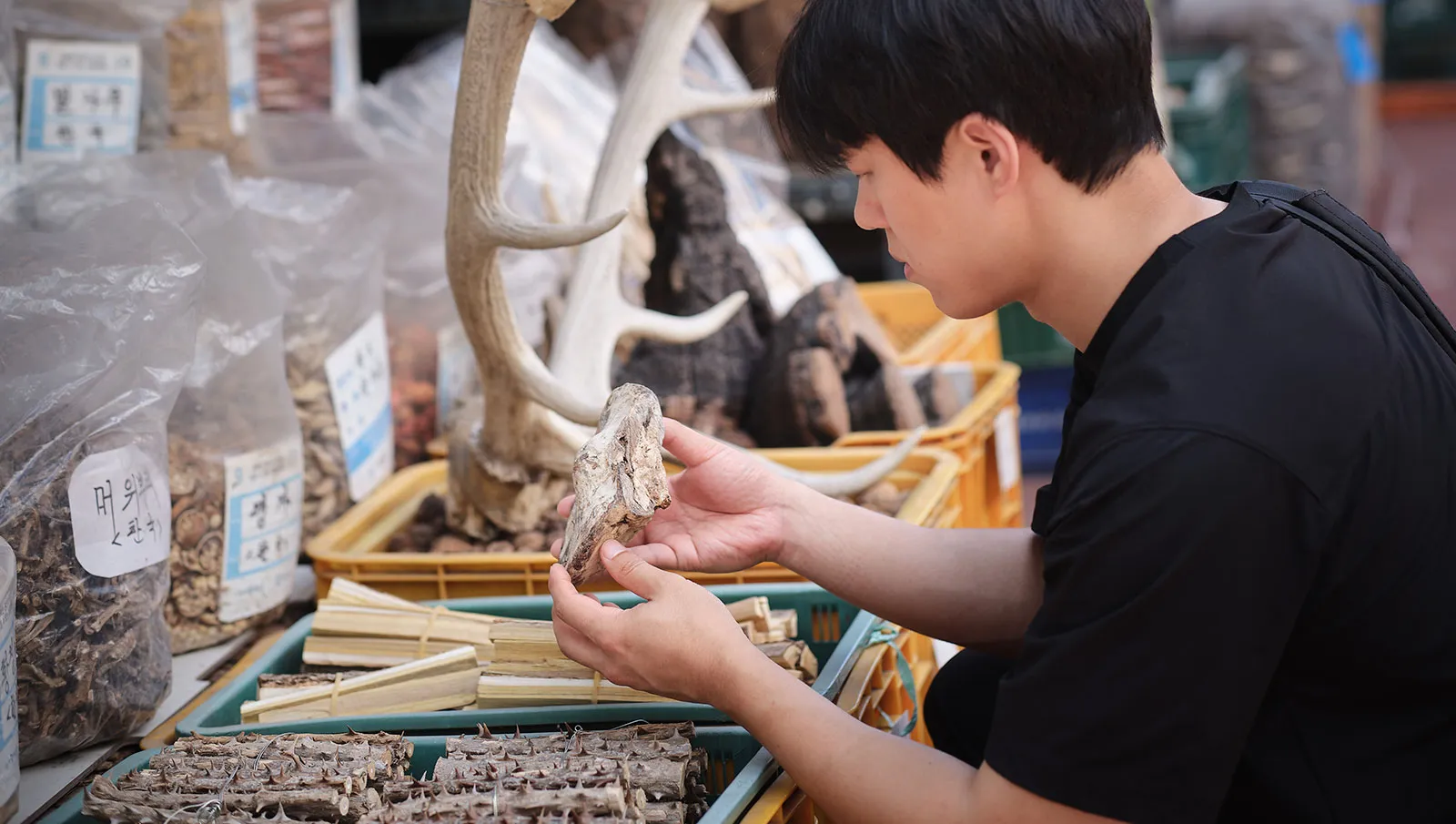
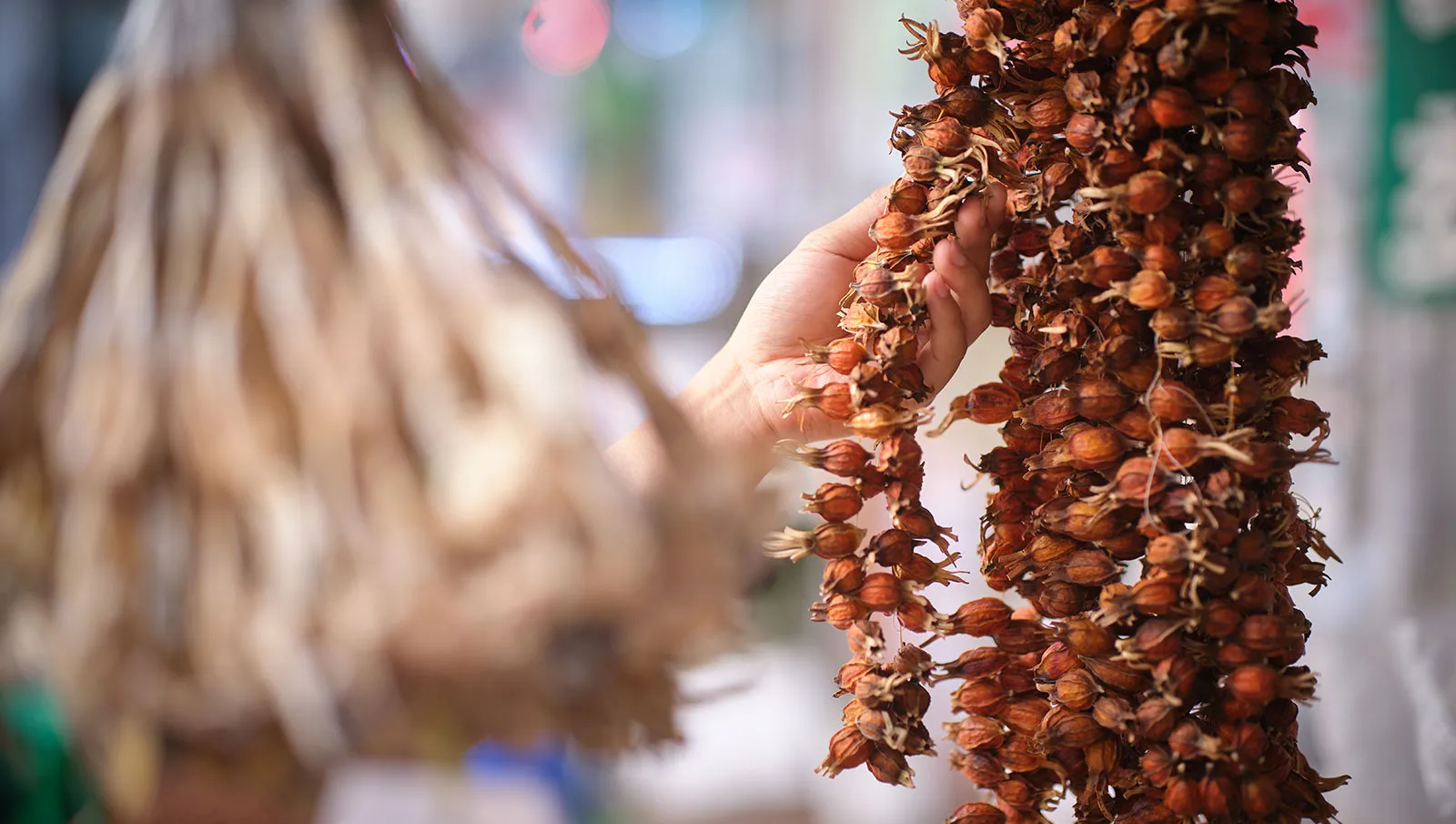
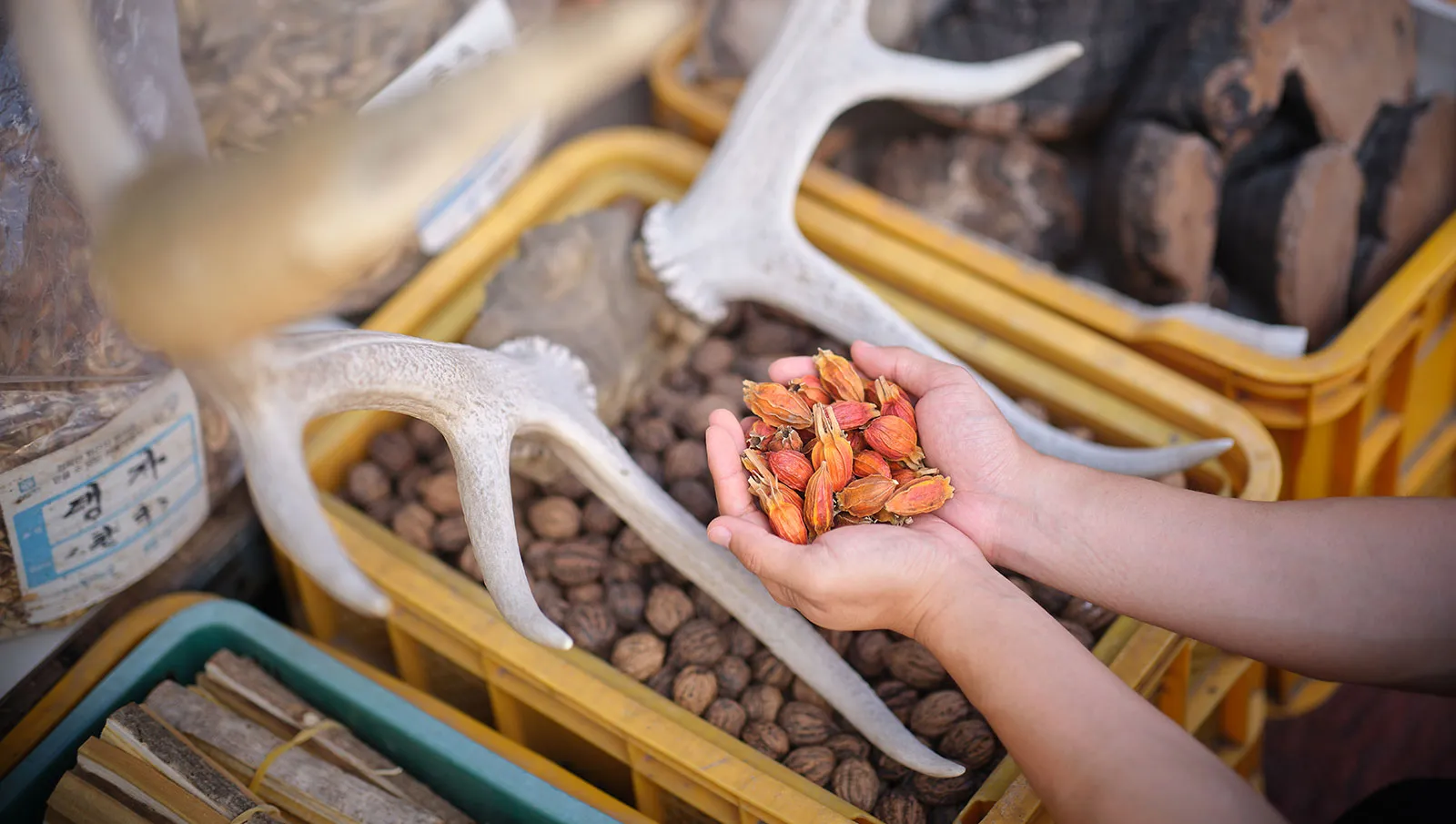
Leave the clamor of the produce market behind and cross over toward Yangnyeongsi, and the very air changes. Ginseng, astragalus, licorice root and jujubes sit stacked by the sackful, and merchants greet customers while deftly sorting dozens of varieties of medicinal herbs. Seoul Yangnyeongsi is the hub through which much of Korea’s traditional medicine trade flows, and the sight of hundreds of herbal medicine clinics and dealers packed into one district is something you’d be hard pressed to find anywhere else in the world.
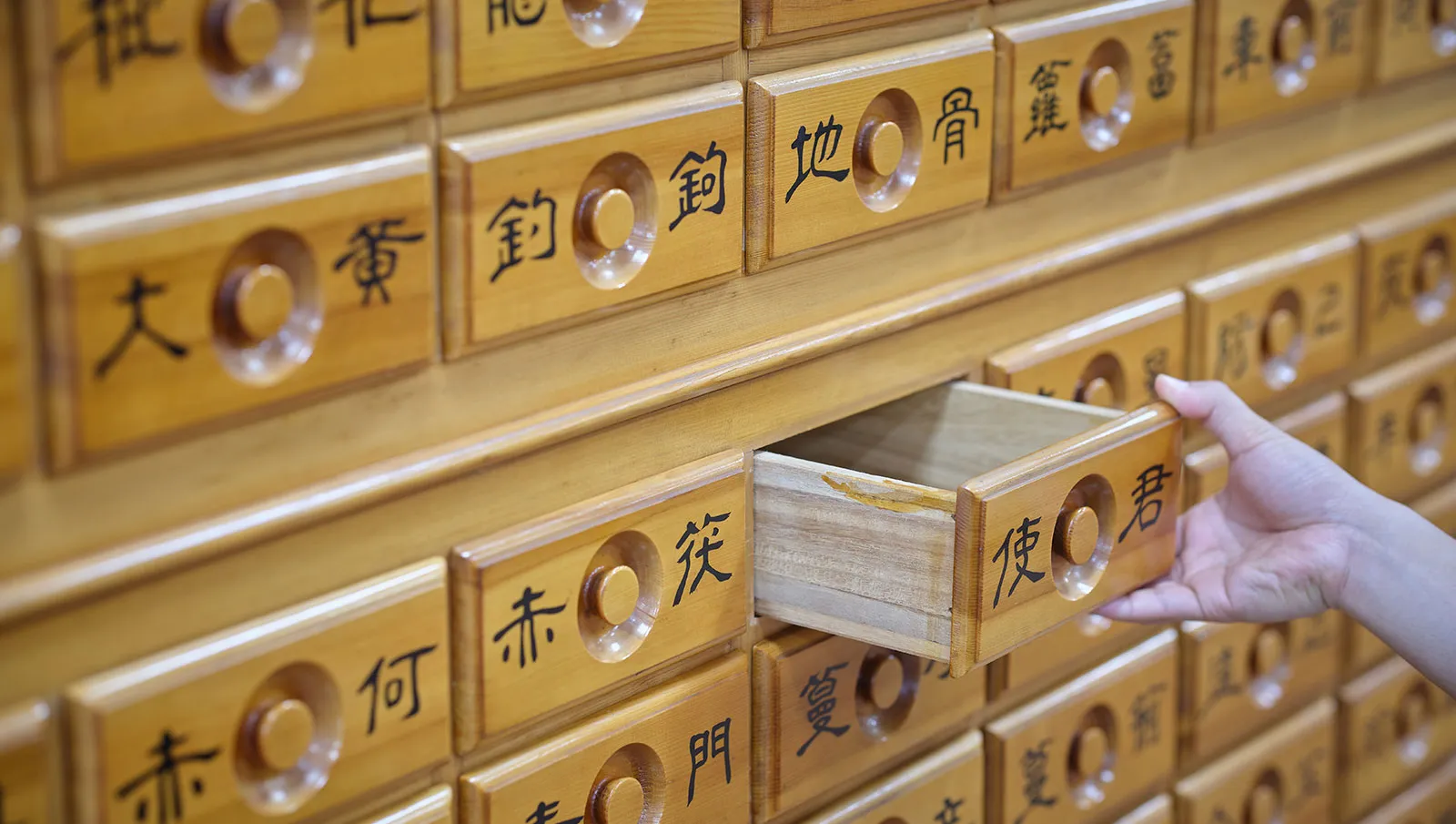
Decades-old herbal medicine shops stand shoulder to shoulder beneath modern signage, their aged wooden drawers filled with herbs most visitors couldn’t begin to name. The mingled scents of earth, wood and sweet jujube create the sensation of having stepped into another world entirely, right in the middle of the city.
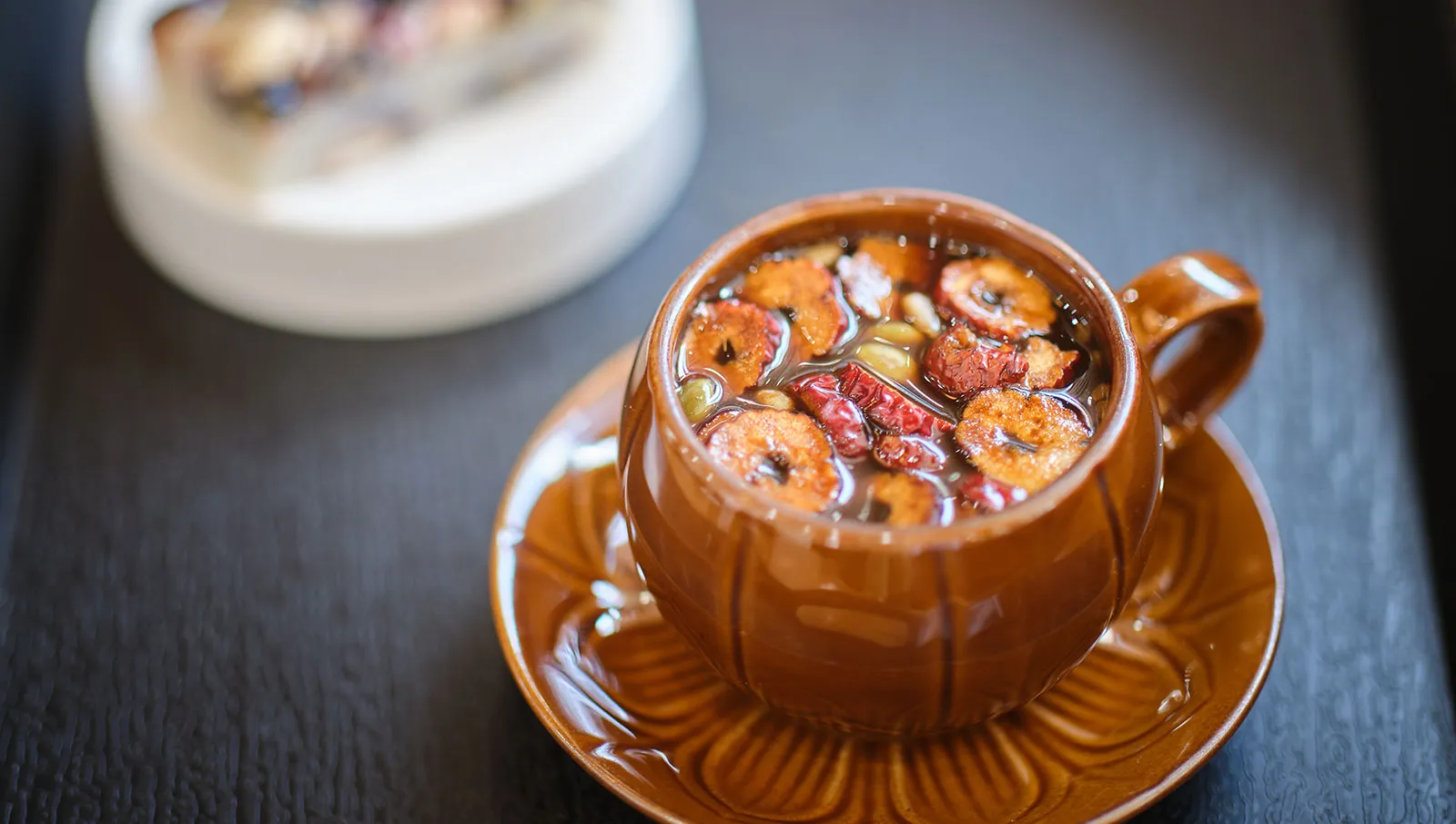
In Korea, traditional medicine means more than simple treatment. People seek it out to fortify the body at the change of seasons, or to prepare restorative tonics for students facing exams and for the elderly. Stop by a decoction shop and you can pick up sealed, ready-to-drink packets of herbal medicine for around KRW 10,000, and simply browsing rare ingredients like frog or soft-shelled turtle is a fascination in itself. Merchants will often tell curious visitors the names of unfamiliar herbs or invite them to take in the aroma—an experience you can only have at Seoul Yangnyeongsi. And before you leave, finding a traditional tea house at the mouth of an alley and ordering a cup of ssanghwacha (medicinal herb tea) is a step well worth saving for last.
16:00
A Journey That Ends in Rest
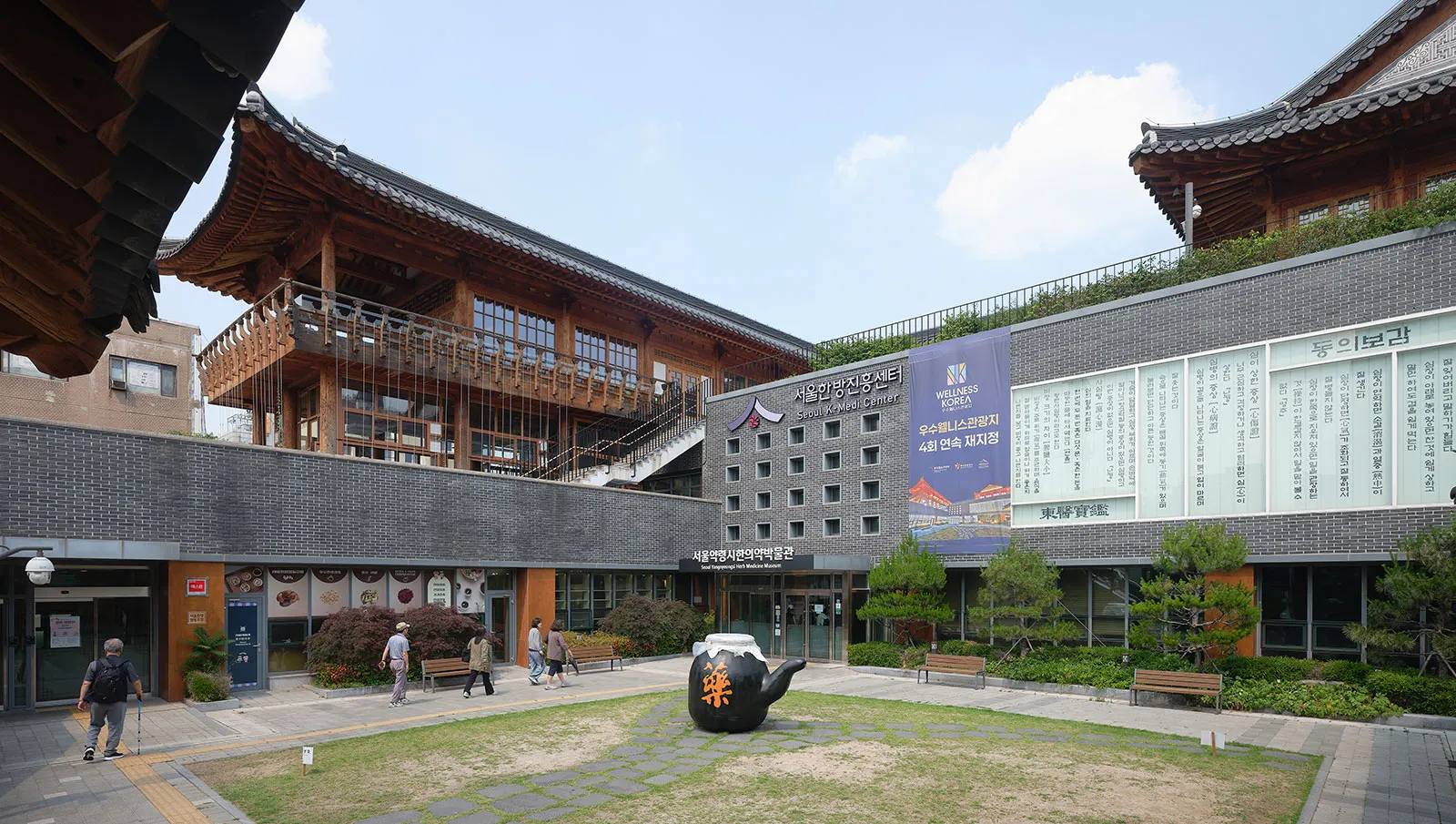
The best way to wrap up a market tour is at the Seoul K-medi Center. The building itself makes an impression, its exterior a modern reinterpretation of the rooflines of a Hanok (traditional Korean house), and inside, the long history of Yangnyeongsi blends naturally with contemporary exhibition spaces.
On the first floor, visitors can rent the traditional robes of physicians and medical women from the Joseon Dynasty (1392-1910)—a bargain at just KRW 1,000, and even that fee is waived with the purchase of a foot bath or Bojewon experience ticket. The Museum of Korean Medicine on the second floor lays out the history of Seoul Yangnyeongsi at a glance: from the market’s origins, established by royal decree under King Hyojong of Joseon, through its growth around Cheongnyangni Station after the Korean War (1950-1953), to its expansion into the country’s largest medicinal herb distribution center in the 1970s.
This site historically housed Bojewon, a public medical welfare institution that began in the Goryeo Dynasty (918–1392) and continued through the Joseon Dynasty. Bojewon embodied the principle of caring for all people without discrimination. The special exhibition currently on display at the center features some 250 historical documents and old maps—restored with the help of AI—that highlight how this site has served the same purpose for hundreds of years.
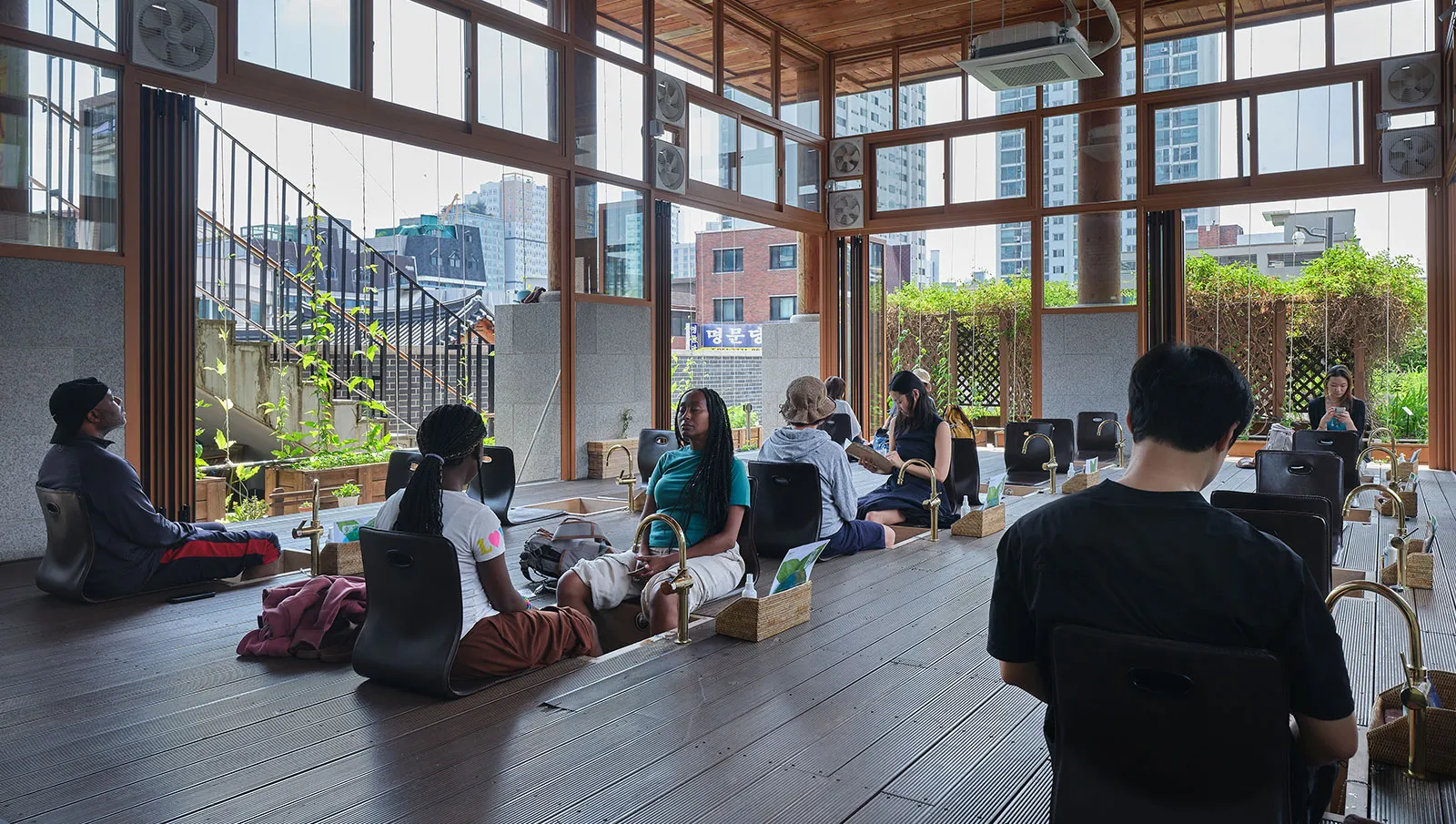
At the foot bath experience hall, twenty minutes in warm, herbal-infused water helps melt away your fatigue. In the third-floor Bojewon experience room, you can relax on a heated massage mat with a warming eye mask, then slip on soft moisturizing gloves for a hand and foot massage to round out the Bojewon program. At the end of a busy day in Seoul, this little sanctuary is reason enough to come back to the market again—next time with friends or family in tow.
SEOUL K-MEDI CENTER
ADMISSION Free (fees apply for some experience programs)
* Group reservations available on weekdays only
* Inquiries: +82-2-969-9241