On “Hey, First Time in Korea?,” international personalities working in Korea invite friends from their home countries to travel around Korea together. The visiting friends get to experience itineraries that ordinary tourists rarely encounter, while Korean viewers get a vicarious taste of Korea through fresh international eyes—a formula that has kept the show consistently popular.
One dish shows up on this program with notable frequency: dakbaeksuk (whole chicken soup), a symbol of Korea’s distinctive food culture. The three-part “Estonia” series of the show, which aired in summer 2025, followed four Estonians—hailing from a country with no mountains of its own—as they tackled Korea’s three great peaks: Jirisan Mountain, Hallasan Mountain and Seoraksan Mountain. After their enthusiastic hikes, the meal waiting for them at the foot of the last mountain was beoseot dakbaeksuk. In Korea, eating dakbaeksuk after a hike, or enjoying it as a summer delicacy by a mountain stream, is common practice—so the cast ended up experiencing Korean food culture in exactly the way locals do.
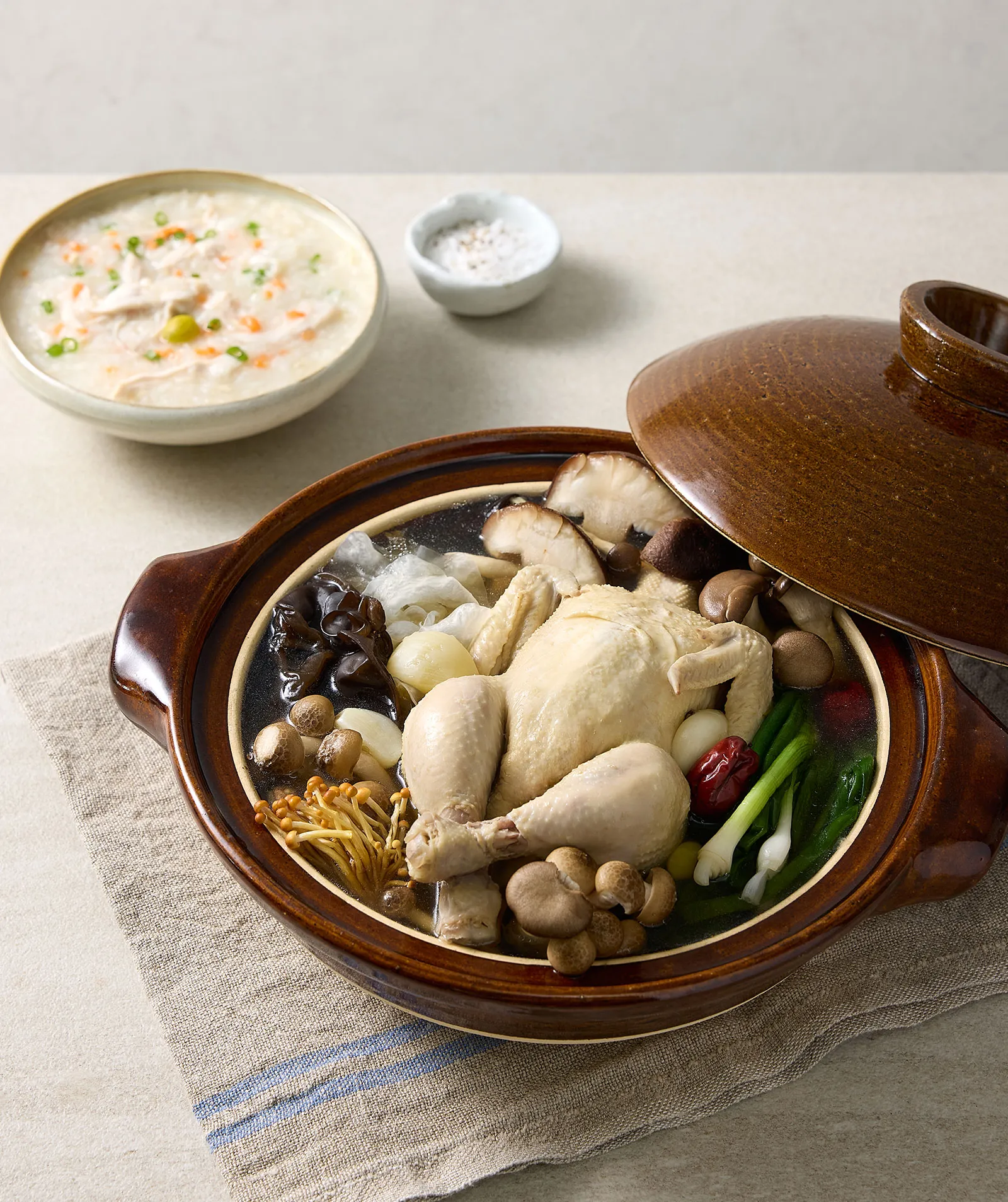
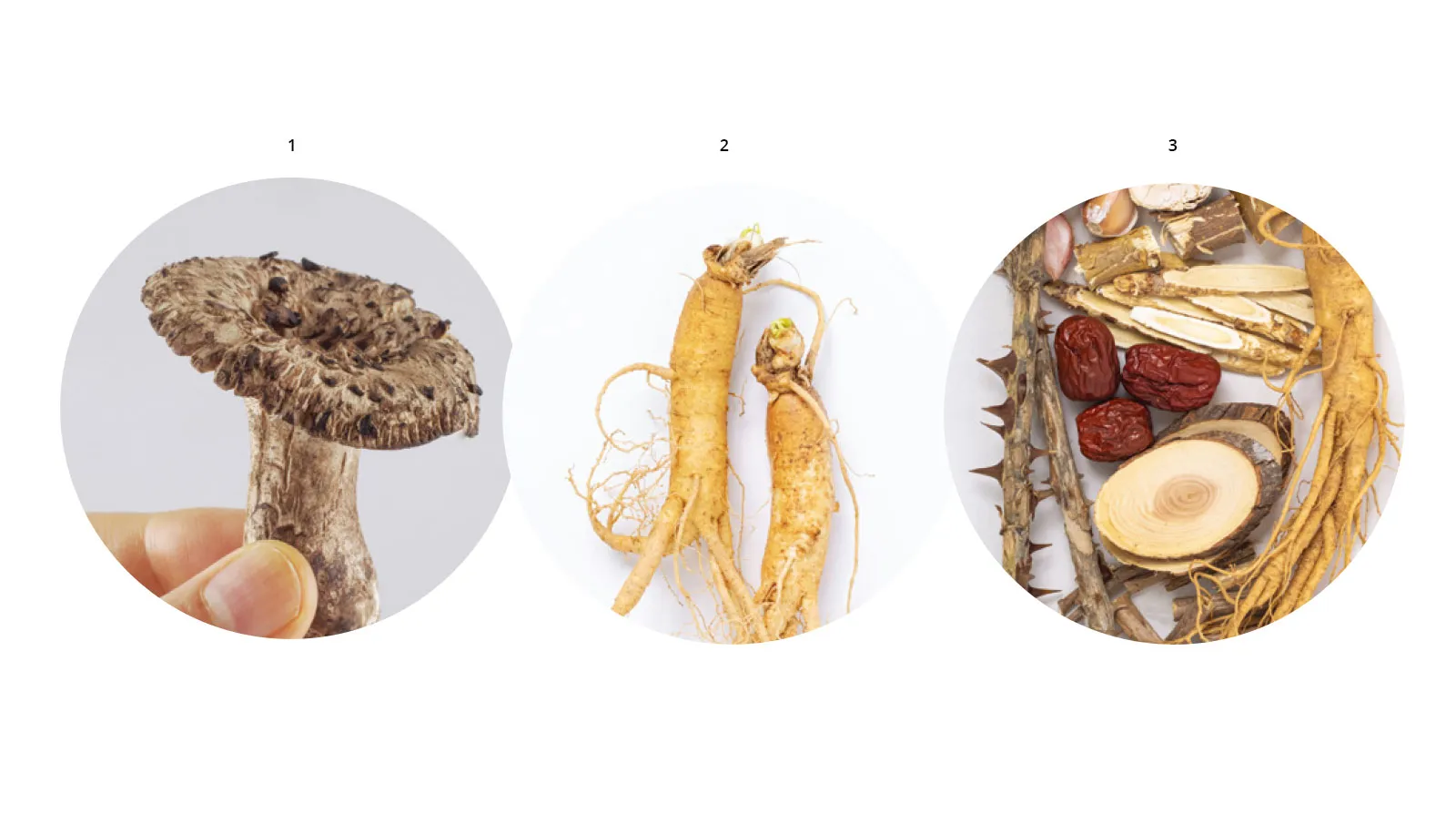
It was everyone’s first time trying dakbaeksuk, but the reaction was enthusiastic. The large pot held a whole chicken surrounded by an assortment of mushrooms—at least four varieties were visible on screen alone: crisp enoki mushrooms, mild-flavored oyster mushrooms, springy wood ear mushrooms and deeply savory oak mushrooms, all wrapped around the sizable bird. A faint sheen of savory oil floated atop the broth, which had been simmered for a long time with casto raralia branches and various medicinal herbs. The thoroughly cooked chicken pulled apart tenderly along its grain, and the broth—infused with the nutrients of both mushroom stock and chicken—had a light yet layered flavor that kept them coming back for more. Having just come down from the mountains, the cast might have been expected to feel overheated, but their chopsticks never stopped moving. Exclamations followed one after another: “The combination of mushroom and chicken is fascinating,” “This broth is amazing,” “This tastes incredible.” Once the chicken had been cleaned off the bone, they simmered the leftover broth with glutinous rice, diced carrots and chives. They even got the full Korean-style finale—turning the remaining broth into porridge to cap off the meal.
That scene from the show captures exactly what Korean summer looks like right now. Korean summers are humid and sweltering, leaving you exhausted after just a short time outside. Like the cast after their strenuous climb, Koreans often turn to food to restore their energy when their bodies feel depleted after hard physical activity, or when the heat has worn them down. This is the culture of boyangsik, or “nourishing food.” Among such dishes, modern Koreans especially favor chicken-based ones, like dakbaeksuk and samgyetang (ginseng chicken soup).
A Bowl of Vitality
Beoseot Dakbaeksuk

Most people would probably think of a cold drink, but Koreans reach for piping-hot chicken dishes instead. A prime example is beoseot dakbaeksuk (whole chicken soup with mushrooms), a recurring fixture on the variety show “Hey! First Time in Korea?,” which follows international visitors experiencing Korea for the first time.
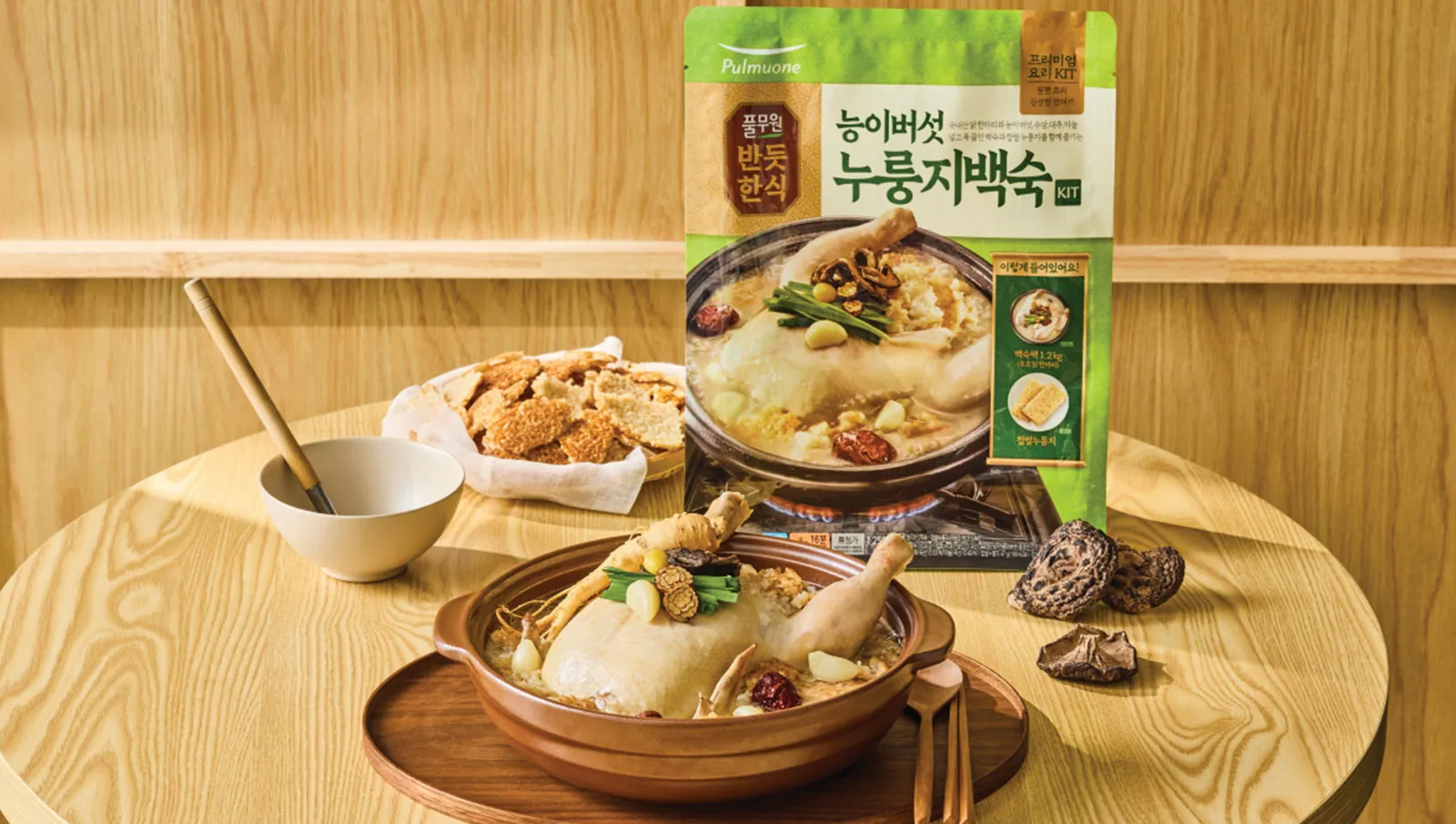
This boyangsik culture grew out of the custom of eating special foods on the three hottest days of summer—Chobok, Jungbok and Malbok, collectively known as Sambok—when the heat reaches its peak. That said, chicken wasn’t always the food of choice on Sambok in the past. Commoners ate red bean porridge, believed to ward off evil spirits, while noble households and the royal court made soup from black croaker, a seasonal delicacy. The foods varied, but the underlying wisdom—restoring a body worn down by the heat through food—was the same. The same holds true today. Some people replenish their depleted energy with eel or freshwater fish, but chicken dishes have simply become the most popular boyangsik of all. This is likely a natural extension of the old saying “fight heat with heat”—the idea that eating something cold when your body is already weakened by the heat can do more harm than good. The fact that chicken itself is rich in protein and minerals, low in fat and mild in flavor probably hasn’t hurt its popularity either.
If you’re visiting Korea in summer, or want to experience its nourishing-food culture firsthand, boyangsik is well worth seeking out. There’s just one catch for first-timers: several dishes look quite similar but go by completely different names—dakbaeksuk, samgyetang, dakhanmari (whole chicken stew) and dakgomtang (chicken soup). So what exactly sets them apart?
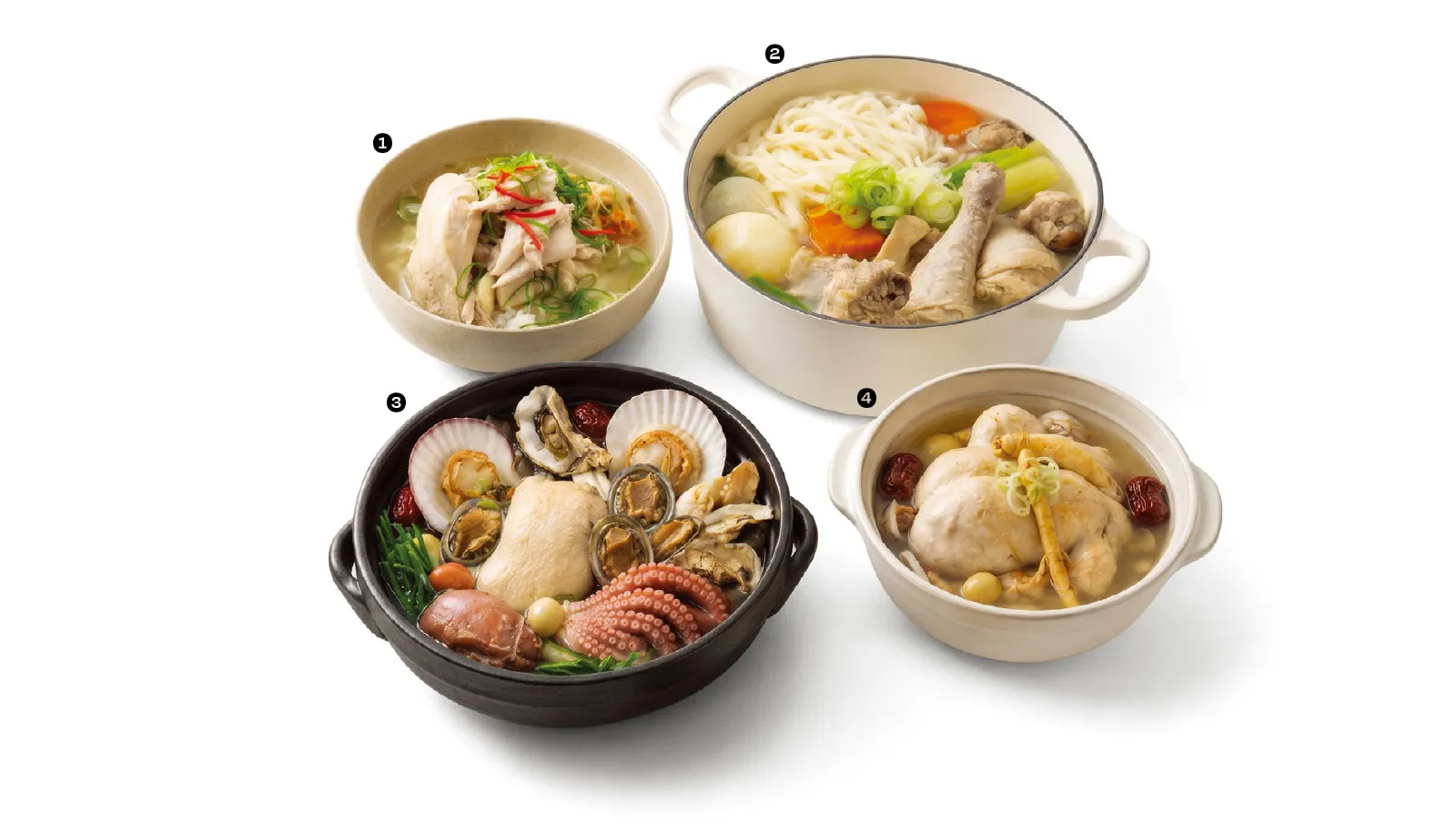
Baeksuk is a general term for any meat or fish simmered in water. The name changes depending on the main ingredient. Therefore, dakbaeksuk is a combination of baeksuk and dak (chicken), meaning a dish of chicken simmered in water. It typically uses a large chicken with few additional ingredients, and the broth stays clear.
Samgyetang can be considered a type of baeksuk, but it always includes fresh ginseng, which sets it apart. And while dakbaeksuk is usually served in a size meant for sharing, samgyetang uses a smaller chicken served in an individual earthenware pot per person.
Dakhanmari is made by cutting the chicken into pieces before simmering it, typically together with vegetables like potatoes, carrots, scallions and chives. Because the cooking time is shorter than for samgyetang or dakbaeksuk, its clean, light flavor stands out more. It’s common to finish the meal with noodles in the leftover broth, and if the smell of medicinal herbs feels like too much, dakhanmari can be a gentler choice than dakbaeksuk.
Dakgomtang, on the other hand, is built on a broth made by simmering chicken bones, then topped with shredded boiled chicken. Unlike the whole-chicken dishes above, it’s easier to eat.
Much like the satisfied expressions on the Estonian cast members’ faces as they wiped away sweat and gazed at their empty pot, perhaps a proper taste of this dish is all it takes to power through whatever heat or grueling schedule lies ahead.
Beoseot Dakbaeksuk
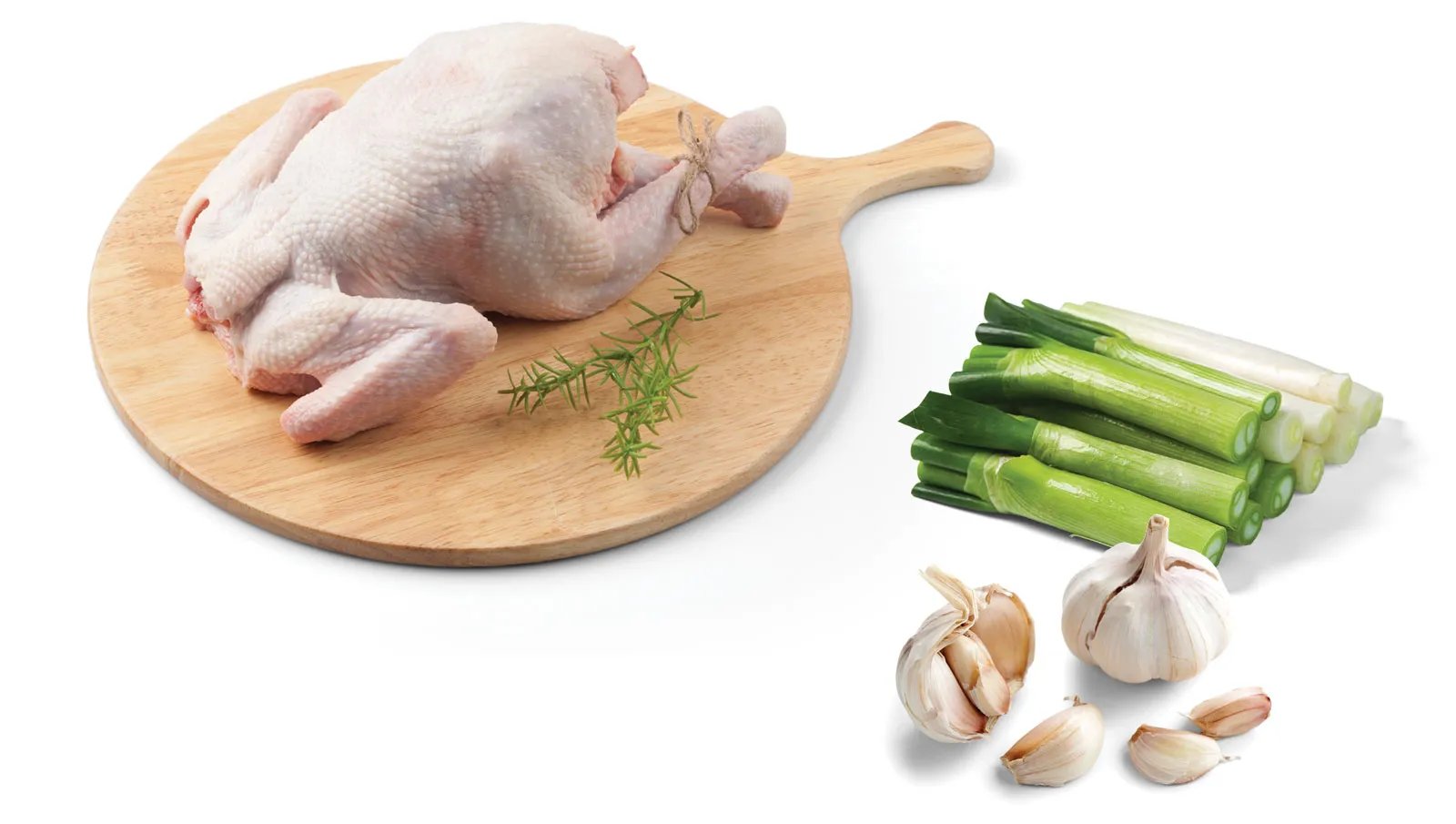
- Trim off the tail of the chicken and remove the fat deposits near the neck and tail areas, then rinse the chicken thoroughly inside and out under running water.
- Place the chicken, green onion, onion, garlic, mushrooms and salt in a large pot, and add enough water to cover the ingredients.
- If using a regular pot, boil over high heat for 20 minutes, then simmer over medium heat for about 40 minutes. If using a pressure cooker, bring to a boil over high heat; once the pressure valve starts whistling, reduce to medium heat and cook for about 15 minutes, then turn off the heat and let it rest for about 10 minutes.
- Once you’ve finished eating the chicken and mushrooms, add the glutinous rice—rinsed under running water and soaked for at least an hour—to the remaining broth.
- Finely chop the carrot and scallion and add them in as well; if any chicken meat is left, shred a bit and add it too, then simmer into a porridge.

- Instead of soaked raw glutinous rice, you can use pre-cooked glutinous rice, or, if you don't have any on hand, regular cooked rice or even instant packaged rice works fine. Adding nurungji (scorched rice)—similar to a Western-style cracker—to the broth gives the dish a different kind of appeal.
- Adding a packaged herbal mix sold for samgyetang, available at Korean or Asian grocery stores, gives the dish a distinctive flavor.
- The dish is usually seasoned with salt, and the chicken is dipped in salt as well, but if the flavor feels too plain, try a dipping sauce of 1 tbsp ground red pepper, 2 tbsp ganjang (soy sauce), 1 tsp minced garlic, 1 tsp mustard and 1 tbsp broth instead.