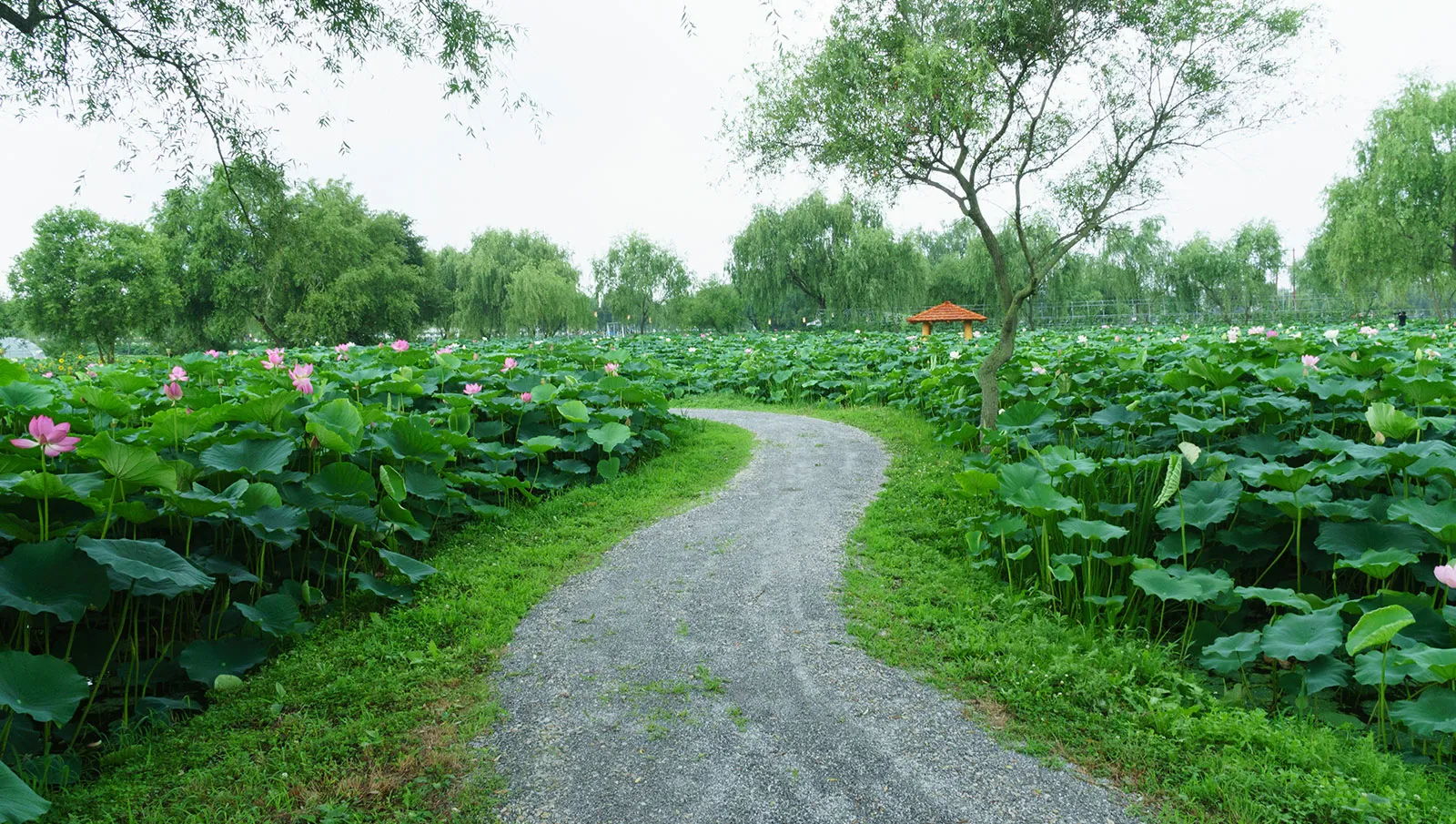
Gungnamji Pond is where Buyeo’s summer waits, just beyond the entrance. Unlike the quiet impression the city gives at first glance, a lively buzz of laughter and music spills out from every direction—just enough commotion to lift the mood. Beneath the dense shade of the trees, a dirt path winds through the crowd.
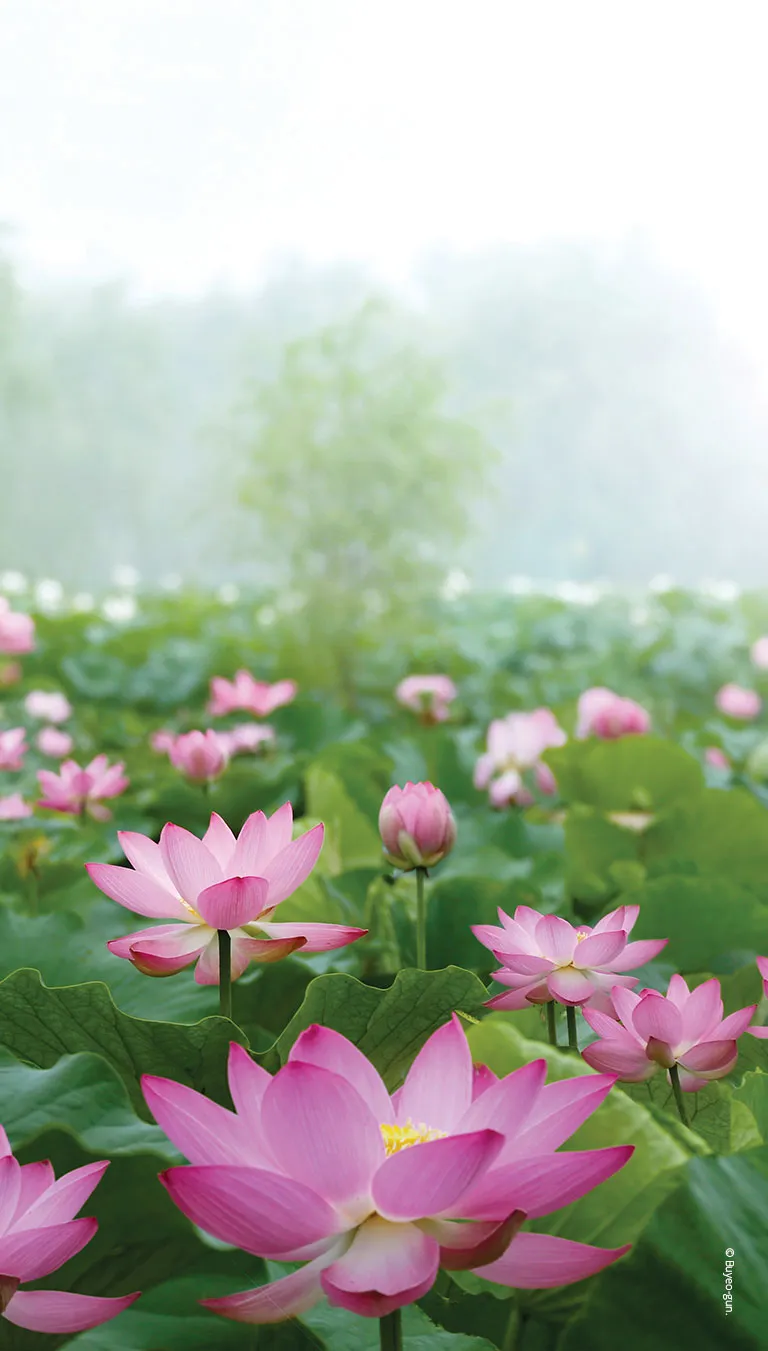
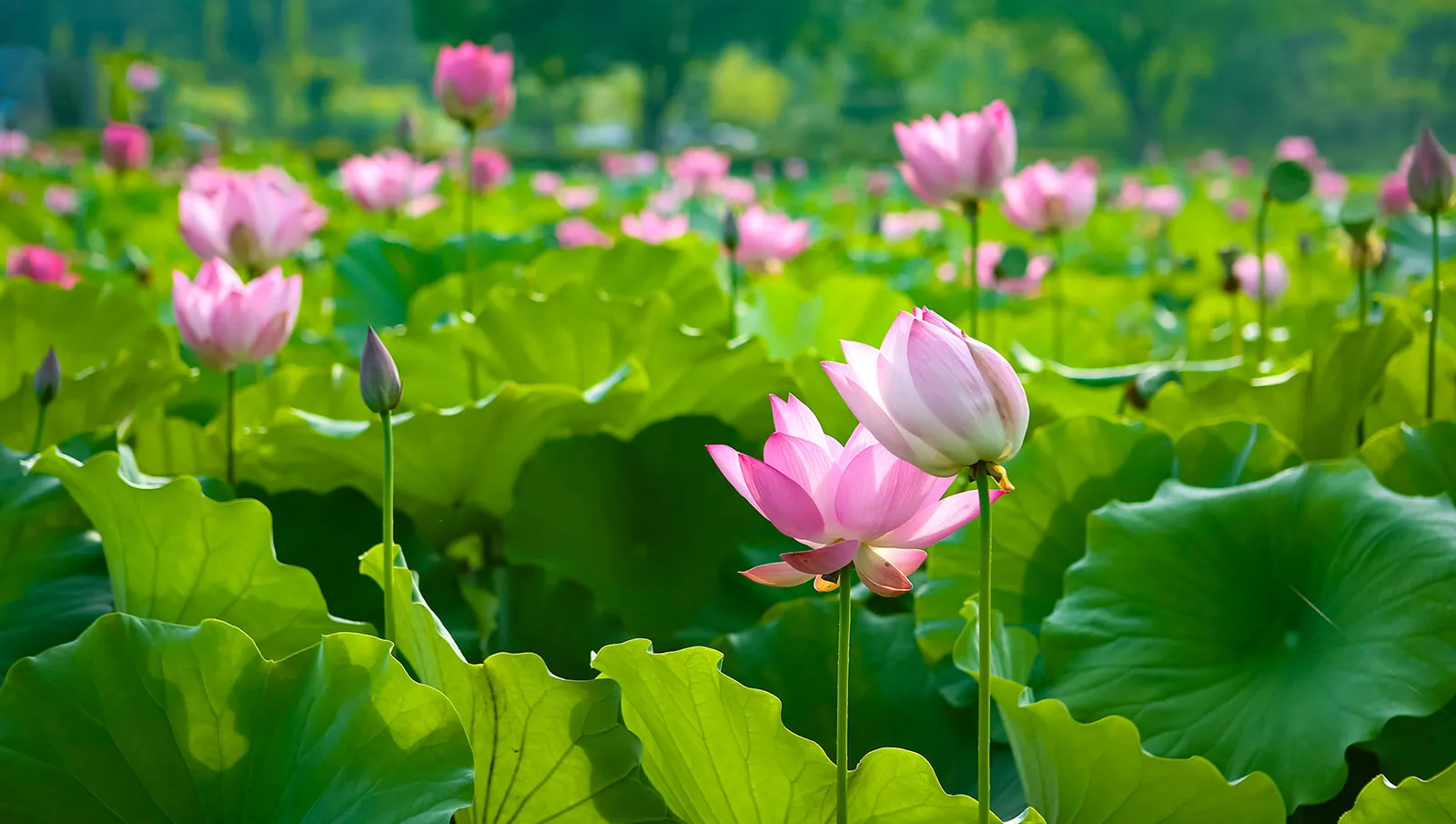
Then, at some point, the crowd thins, and Gungnamji Pond comes fully into view: summer in Buyeo, it turns out, is the color pink. Lotus flowers—the emblem of Baekje, the kingdom that made Buyeo its capital about 1,400 years ago—fill the pond so completely that they take over the entire field of view beneath the sky. A high blue sky, the occasional drift of white cumulus clouds, greenery so vivid it cools the eyes and lotus blossoms glowing with a clear, pure light all come together to form the face of the city. Wherever the eye lands, there isn’t a single spot that isn’t beautiful.
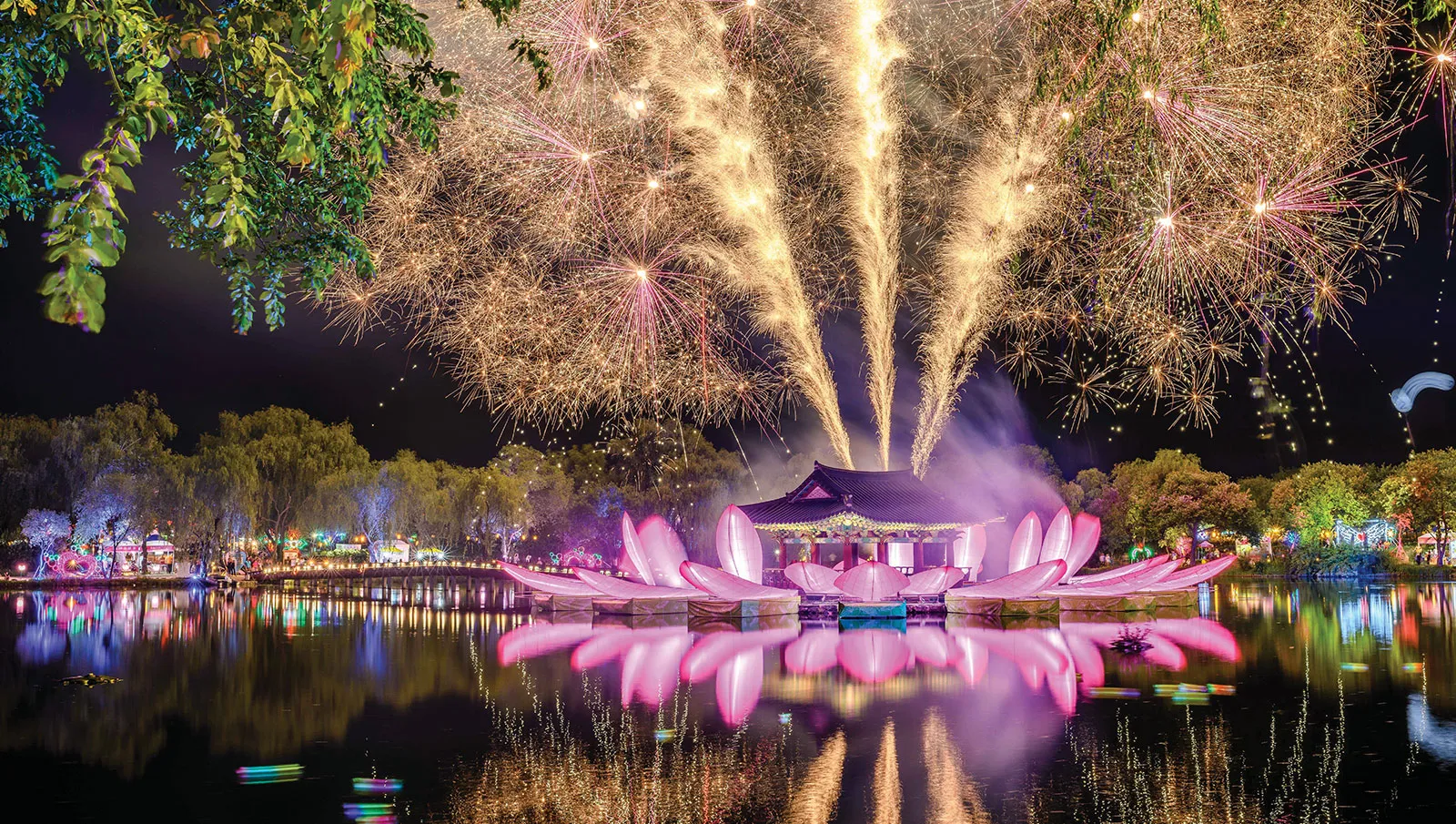
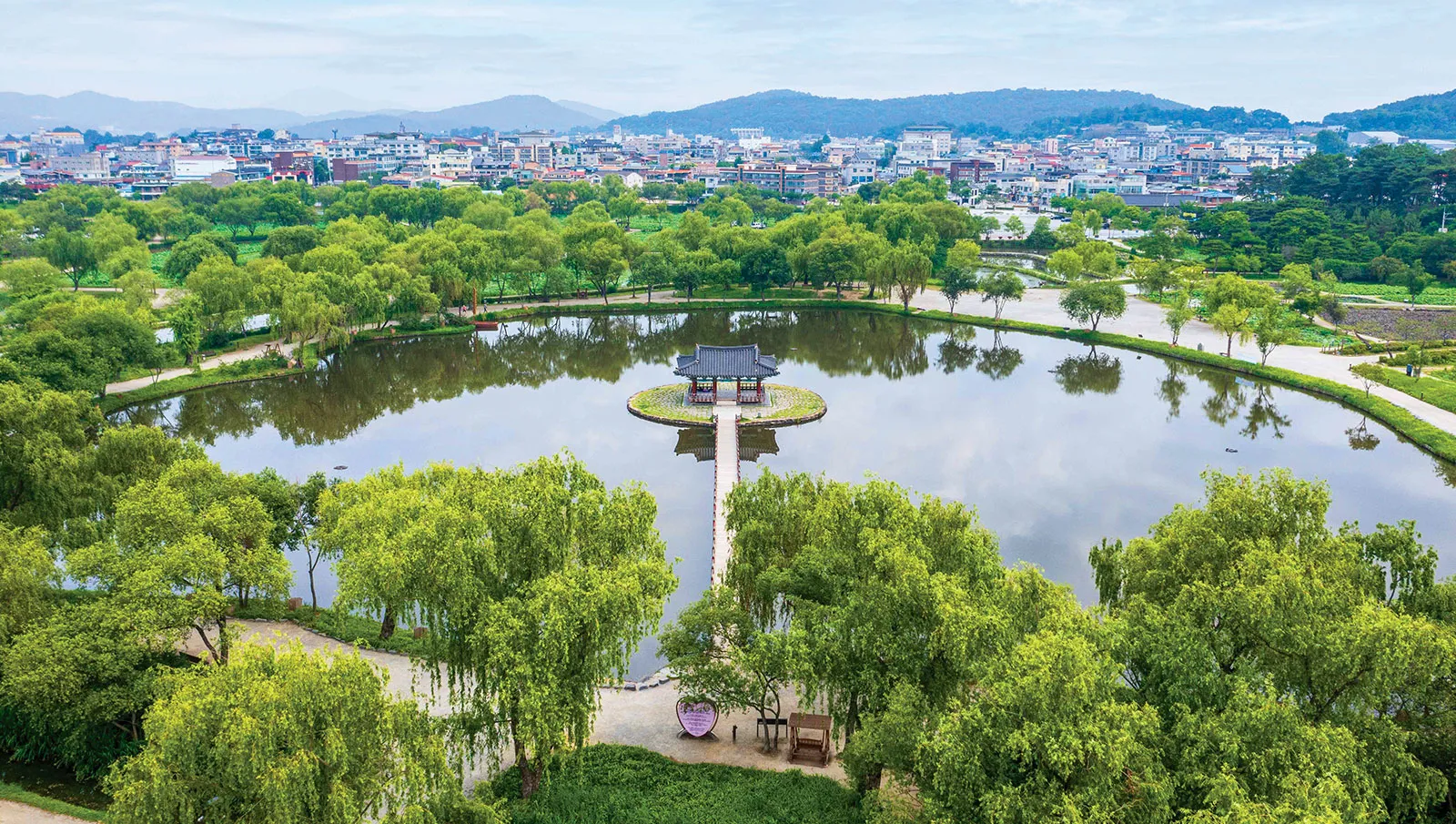
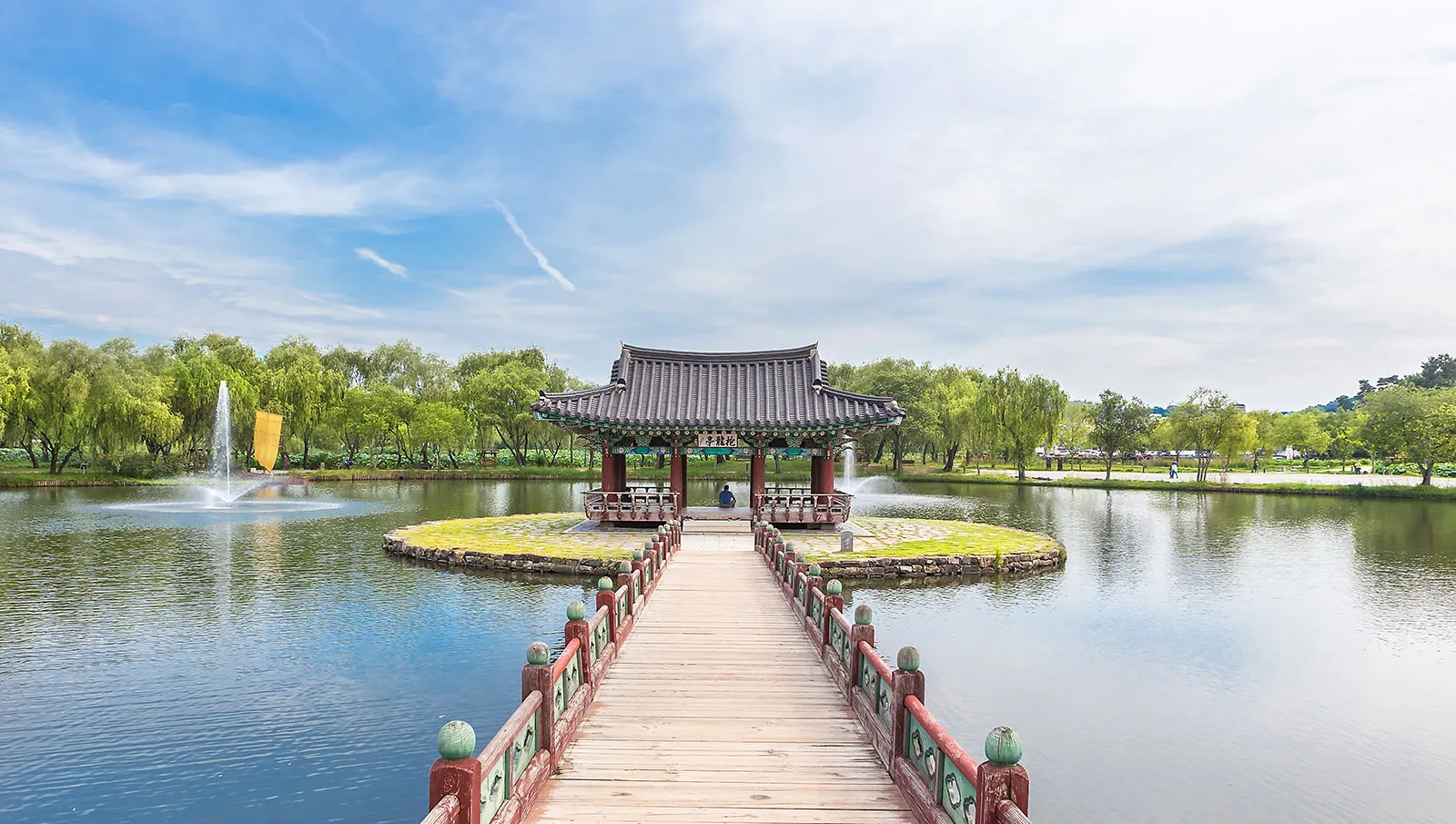
The many branching paths converge at the center, toward the broad waterside. This pond is believed to have been built during the reign of King Mu of Baekje (r. 600–641). At the center of the round pond stands the Poryongjeong Pavilion, solitary and tall, and people stroll across the bridge connecting to it. Large lotus-shaped installations have been set up around it, so that it almost looks as if people are stepping inside a giant lotus blossom. The pavilion and the figures on it are reflected on the water’s surface, like a scene from an ink-wash painting.
The pond is said to have been built by King Mu for the princess of Silla Kingdom (57 BCE-935 CE) he married. That story survives only as legend, and whether it’s true or not is uncertain—the pond’s exact age is uncertain, but it is regarded as one of the oldest artificial ponds in Korea, and it does not look the least bit dated or unsophisticated; instead, it carries real dignity and elegance. Even back then, people set out to build a space this beautiful, and everyone gathered here today shares in that same beauty from centuries past. There’s a strange sense of connection across time, and from it, a quiet wave of emotion emerges.
After Gungnamji Pond, a strip of restaurants waits nearby to welcome weary travelers. The lotus flowers on display throughout the park aren’t merely decorative—they’re a local specialty of the Buyeo region, and thanks to that, the area around Gungnamji Pond is full of restaurants serving full table spreads built around lotus leaves, lotus root and the like. At one such restaurant, a fragrant aroma fills the room from the moment the door opens.
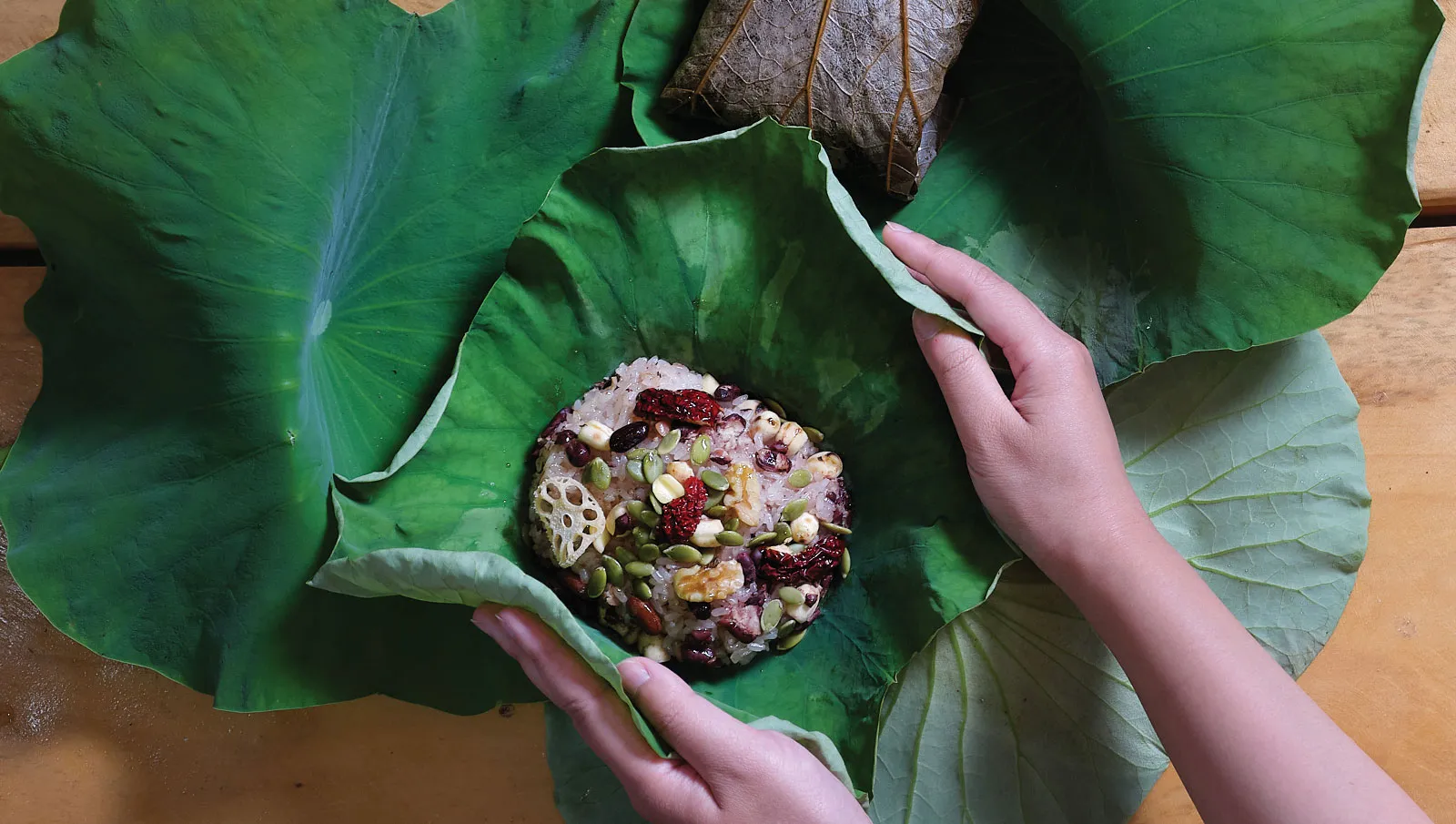
The table is set with yeonipbap—glutinous rice steamed with jujubes, chestnuts and other grains inside a large lotus leaf—along with an array of side dishes: lotus root braised both savory and tangy, plus generous portions of fish and stew. Every dish satisfies, but the standout, without question, is the lotus leaf rice. The chewy, sticky rice mingles with the gentle sweetness of the grains, and above all, the fragrance of fresh, in-season lotus leaf is simply moving.
Lotus leaf rice originated as temple food, and in Buddhism, the lotus carries enormous symbolic weight—it represents the Pure Land, a peaceful realm free of conflict and turmoil. Baekje was a Buddhist kingdom, and tasting this dish here in Buyeo, the city that still holds that history, feels all the more special—perhaps because it brings home, through all five senses, the lingering spirit of Baekje that remains in this place.
Still in Full Bloom
Buyeo-gun County

The last capital of the ancient Baekje Kingdom (18 BCE-660 CE) was located in modern-day Buyeo-gun County in Chungcheongnam-do Province. Come summer, the city shows its most beautiful face: Gungnamji Pond blanketed in lotus flowers, a stone pagoda that has stood for around fourteen hundred years and the Baekmagang River flowing on, unhurried. Although the kingdom itself has vanished, its legacy still warmly welcomes visitors today.
Summer Awakens in Pink
Facing the City’s Memory
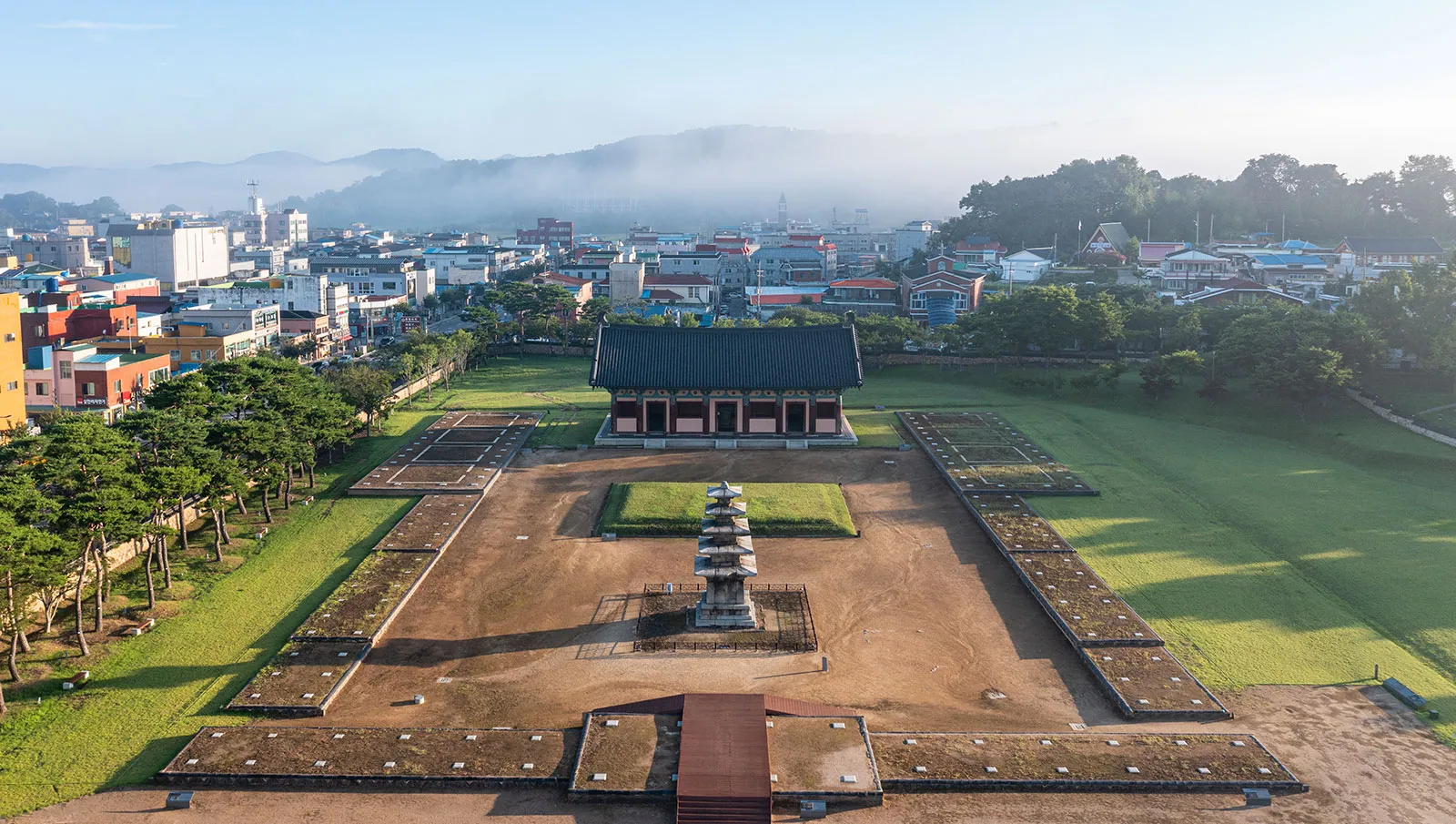
Not far from the restaurant, right in the heart of the city, lies the site of an old temple—a place that carries the late Baekje era within it, part of the Baekje Historic Areas UNESCO World Heritage site. This is Jeongnimsa Temple Site, founded during the Baekje period and still standing watch over the area through the Silla period that followed.
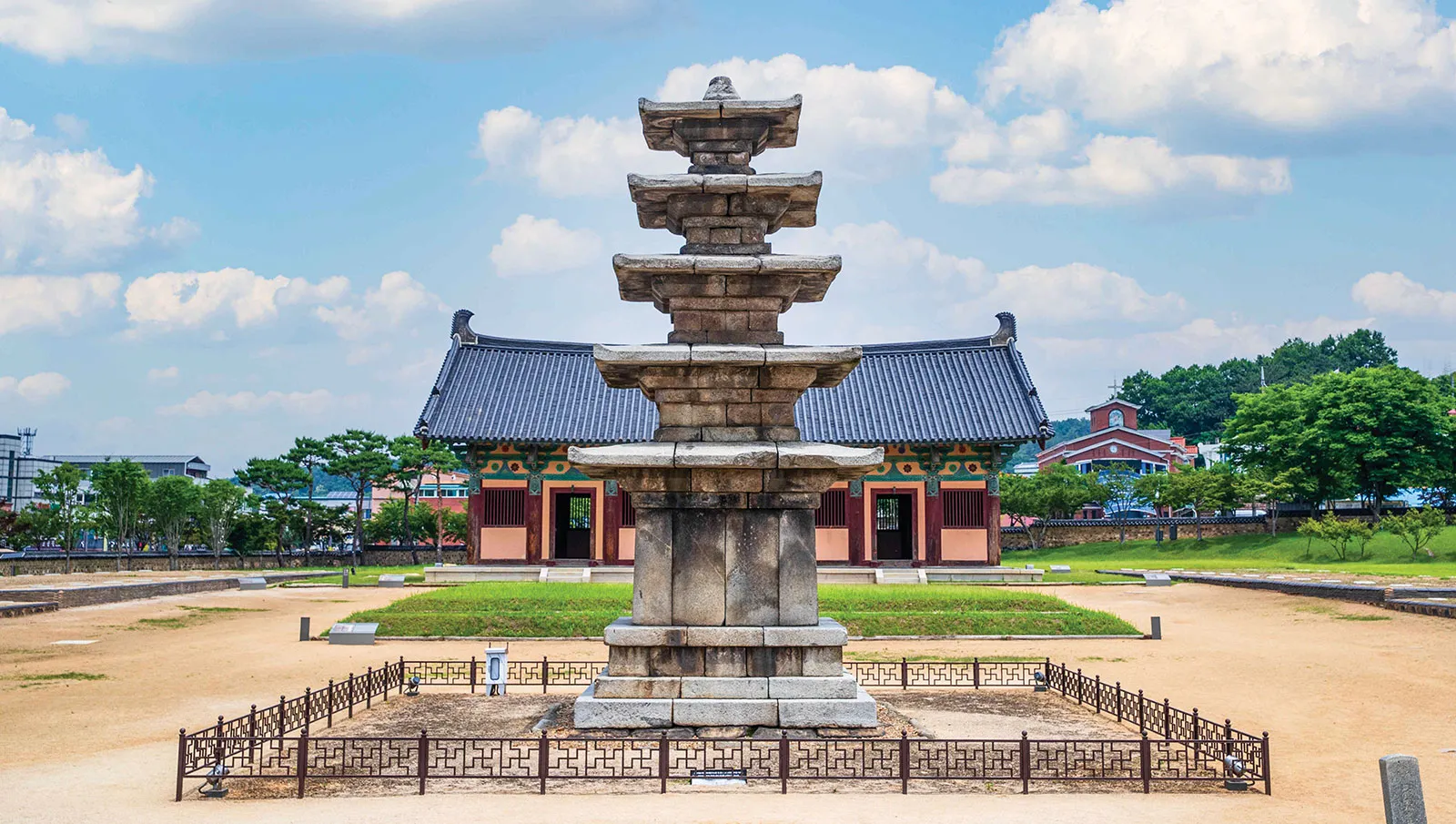
Across that wide expanse, only traces remain of a temple once visited by countless people with earnest hearts. What’s left standing are a stone Buddha statue cast in a gentle light (Stone Seated Buddha at Jeongnimsa Temple Site) and a stone pagoda—the Five-Story Stone Pagoda at Jeongnimsa Temple Site.
The pagoda’s form is elegant and understated. The grounds are spacious, and at roughly eight meters, the pagoda isn’t especially large, yet its presence is unmistakable. Looking at this scene, some might see only a lonely figure standing alone on an empty field. But the story behind it tells a different one.
Temple pagodas were once built from wood, large enough for people to walk inside. On the Korean peninsula, though, concerns like upkeep and fire risk gradually pushed wooden pagodas toward stone, and stone pagodas eventually became a style distinctly Korean Buddhism’s own. This pagoda stands at the very origin of that shift. Built during the transition from wood to stone, it still carries traces of wooden pagoda design in nearly every detail, once you look closely: the way the eaves curve gently upward recalls the tiled roofs of wooden architecture, and the pillars—thickest at the center, tapering toward each end—echo the wood-carving techniques of the time. It’s the most perfect translation, into stone, of proportions once worked out in wood.
This pagoda raises a larger question—what does it mean to hold more than a thousand years within a single structure? The riverside lies just beyond, a fitting place to let the thought settle.
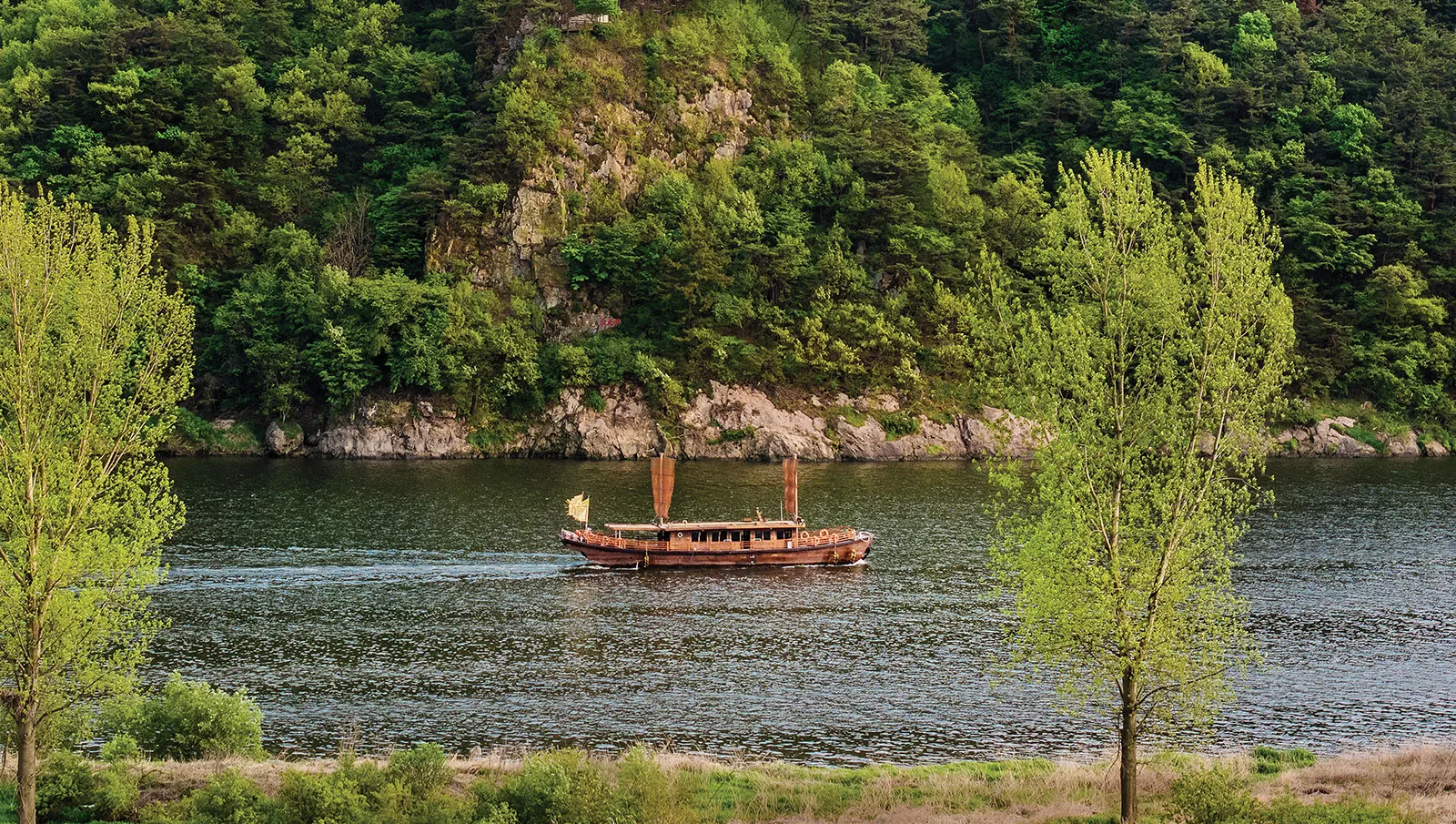
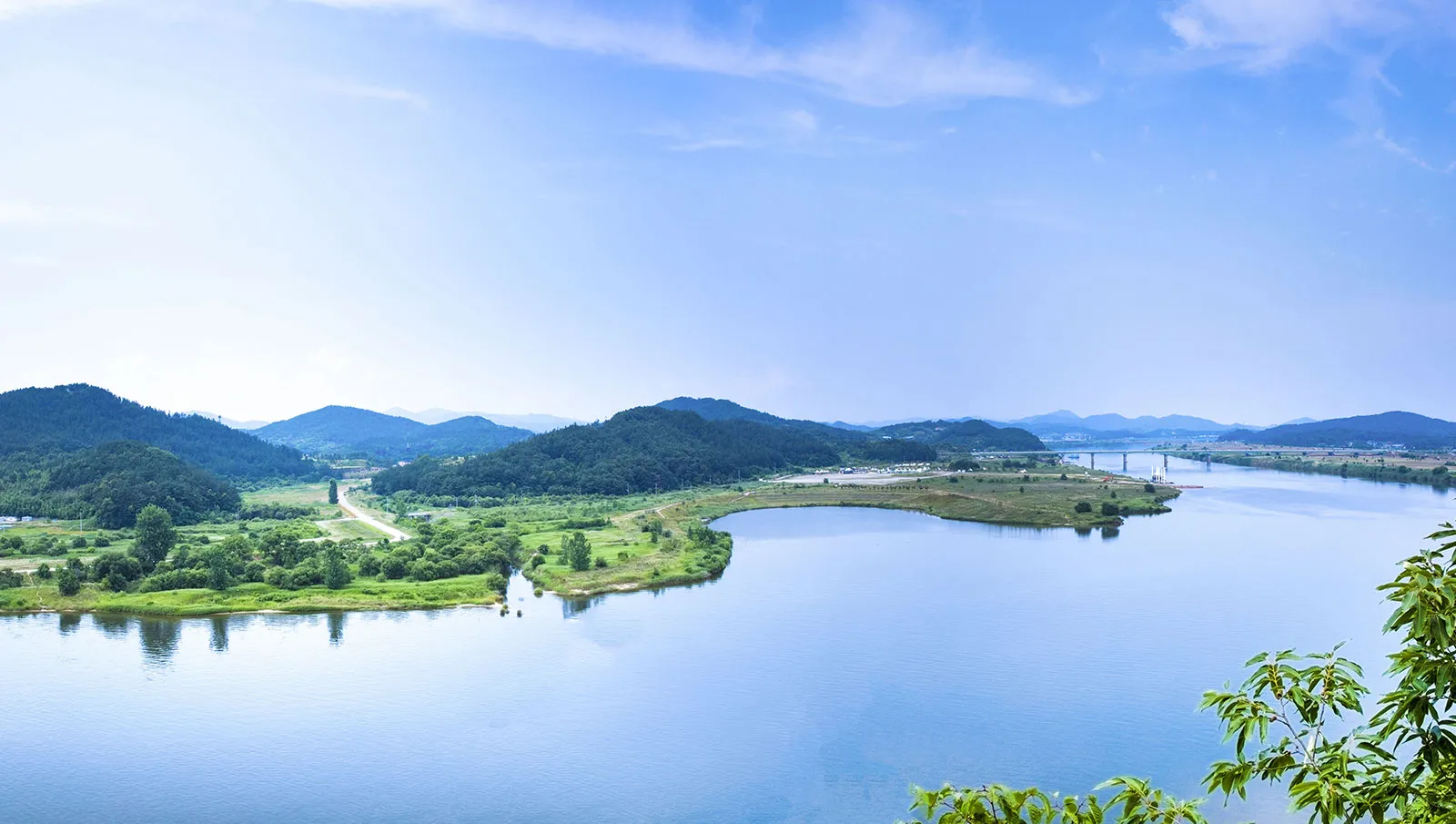
With a gently sloping mountain at its back, a ferry landing sits beside the river: Gudeurae Ferry Dock, a spot once bustling with merchant ships during the Baekje period. From there, tour boats set out recreating the Hwangpo Sailboat—the yellow-sailed boats that served as a major mode of transport during the Joseon Dynasty (1392-1910)—evocative enough to look at home in a period film. Just boarding seems to shift the mood, and the moment the boat sets off, the excitement is hard to contain. Cutting through the wind brings relief from the heat, while a vast plain unfolds in the distance and, closer at hand, a mountain dressed in rock and green trees comes into view.
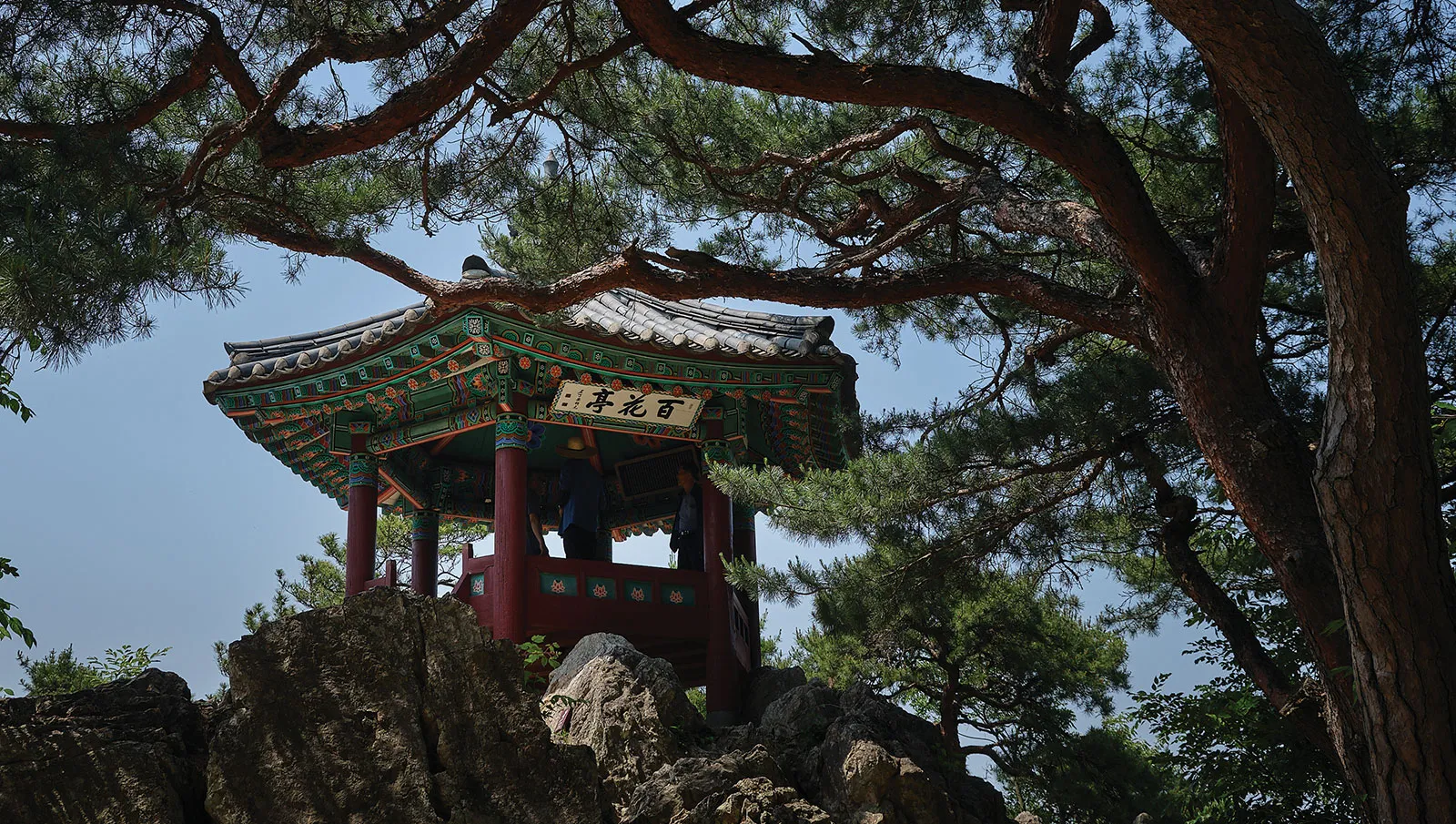
As the boat curves around the mountainside, a low hill comes into view: Busosan Mountain, Busosanseong Fortress that once housed the royal palace during the Baekje period. It too is part of the Baekje Historic Areas. The most famous spot here is Nakhwaam Cliff, because the final days of the Baekje are bound up with this place.
In 660, the capital fell under attack from the combined forces of Silla and Tang China. As the story is told, 3,000 court women, refusing to be taken by a foreign power, threw themselves from this cliff down to the water below. Later, the sight of them falling was likened to scattering flowers, and that’s how the cliff came to be called Nakhwaam Cliff—“Falling Flower Rock.” It’s such a calm, peaceful place today, but there was a time when it was filled with grief over a kingdom in its final collapse.
The boat pulls in at the dock beside Nakhwaam Cliff, the question of how to read this place still unresolved. From there, a paved path climbs the stone steps, passes a temple, and eventually reaches the top of the very cliff seen earlier from below. The feeling up here is nothing like the view from the water below—the vista opens up wide, and the wind, in both strength and feel, is something else entirely. Taking in the peaceful Buyeo of today from up there, it somehow feels incomplete, even a shame, to remember this place only as a site of tragedy.
The kingdom that once flourished so greatly here no longer exists. But what they created still endures, 1,400 years on. The spaces they left behind bring people joy, and the things they made stand as models for our own time. And in turn, they’ve become a lasting source of pride, spoken of by the people of this land for as long as time goes on. It brings the realization that no time, however faded from view, is ever spent in vain. In the wind blowing off Nakhwaam Cliff, the day’s impressions of Buyeo finally come into focus: something wistful, yet quietly grateful all the same.
Festival
Buyeo Seodong Lotus Festival
The festival that lit up Buyeo every summer has come to a close again this year: the Buyeo Seodong Lotus Festival, held throughout the Gungnamji Pond area. By day, performances and hands-on programs unfolded against the backdrop of lotus fields in full bloom, spread across a park covering more than 330,000 square meters. The hands-on programs included activities such as making lotus-shaped mobiles or lanterns, offering a variety of experiences for couples and families to enjoy together. In the evening, against that same backdrop, landscape lighting and media art combined to create a dazzling spectacle, accompanied by street performances and various shows staged around the pond.
Performance programs also took place throughout the festival, including busking performances, a silent disco, picnic events featuring the arts and martial arts performances, add-ing to the charm and lively atmosphere of Gungnamji Pond.
The hands-on programs also drew enthusiastic partici-pation. The canoe experience allowed visitors to paddle through the pond while admiring the lotus flowers up close, offering a unique way to appreciate Gungnamji Pond’s natural beauty.
At Poryongjeong Pavilion, visitors also took part in the tea ceremony experience, where they enjoyed traditional tea culture surrounded by the fragrance of lotus flowers and the tranquil atmosphere of Gungnamji Pond.

- July 3–5, 2026
- Around Gungnamji Pond