“Genie, Make a Wish” is a drama about a lamp genie who awakens after a thousand years and meets a human named Ga-young, leading to a series of events involving three wishes. The two protagonists have opposite personalities: the genie is overly emotional, while Ga-young is emotionally deficient (a psychopath). They eventually come to understand each other and heal their wounds, and one device that appears throughout this process is “gamjatang.”
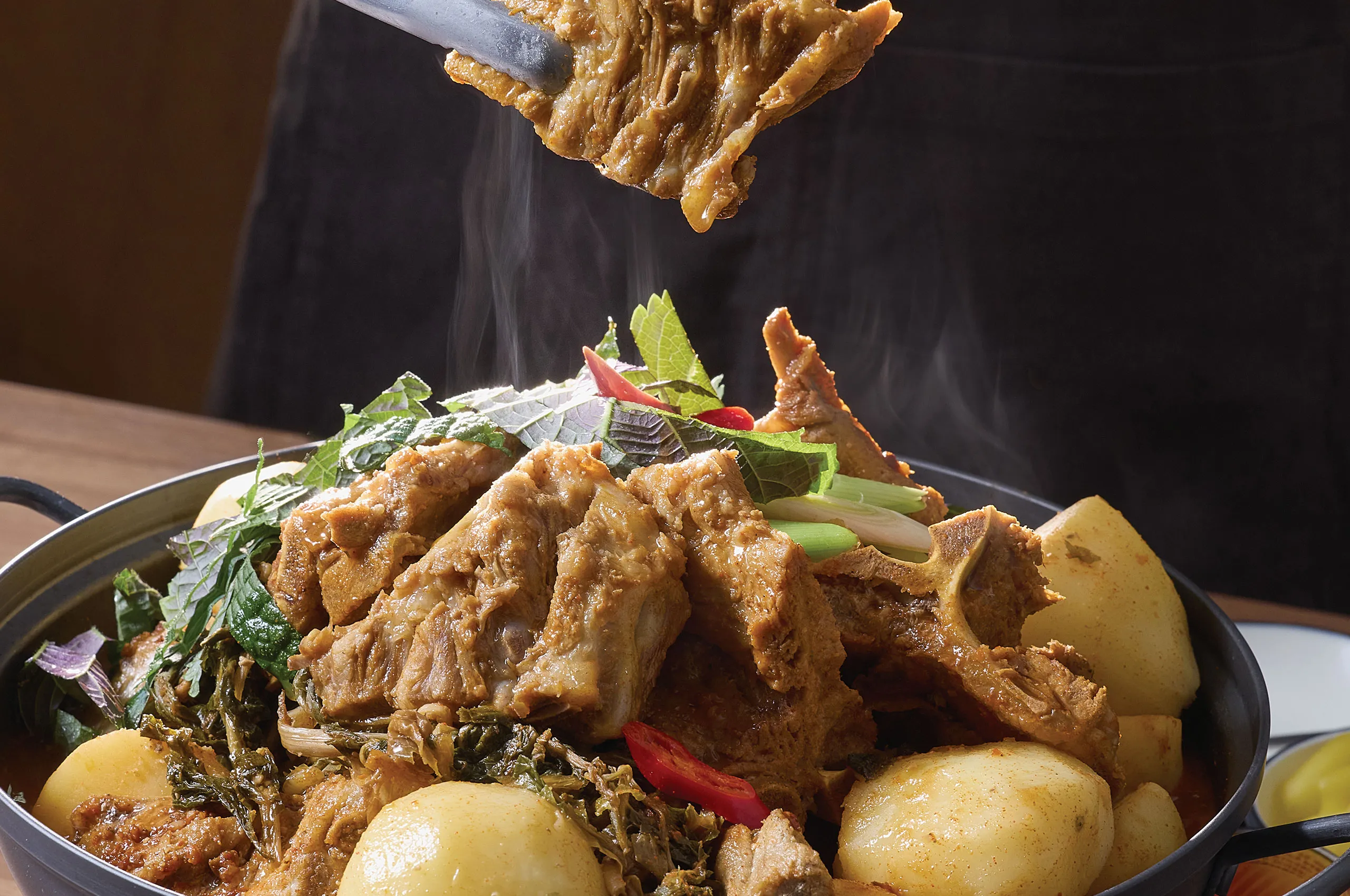
Gamjatang is a dish made by boiling pork backbones with various vegetables and seasonings in a large pot. While it’s an ordinary everyday meal for Koreans, for Ga-young in the drama, it holds meaning beyond just food. Ga-young is a character who values a regular routine above all else, and “eating gamjatang every Wednesday” is one of her important rituals. As a result, gamjatang becomes something she must eat even when she doesn’t want to or when it’s inconvenient. The other protagonist, the genie, observes this routine and gradually comes to understand Ga-young’s nature and daily life. Gamjatang also appears when depicting Ga-young’s relationship with her best friend Min-ji. Even on days when Min-ji meets her boyfriend, she goes to eat gamjatang with Ga-young, revealing the depth of their friendship.
A Quintessentially
Korean Dish
Gamjatang

Netflix’s “Genie, Make a Wish” employs various narrative devices to develop its protagonist and advance the story. One element that particularly resonated with international viewers is gamjatang (pork backbone stew), one of Korea’s most beloved everyday dishes.
Taking a closer look at gamjatang reveals several interesting points. First, let’s examine the history of gamjatang. It originated in Jeolla-do provinces as a nutritious dish for the elderly and sick. At that time, horses were used for transportation and cattle for labor, so pork was chosen as an ingredient because pigs had relatively lower utility. This dish, that began in this way spread nationwide in the late 1800s with the opening of ports and the establishment of the Gyeongin Line (the railway connecting Seoul and Incheon). As workers were mobilized from all over the country for railway construction, gamjatang took root as well, and it quickly gained popularity for being an affordable, hearty and nutritious dish.
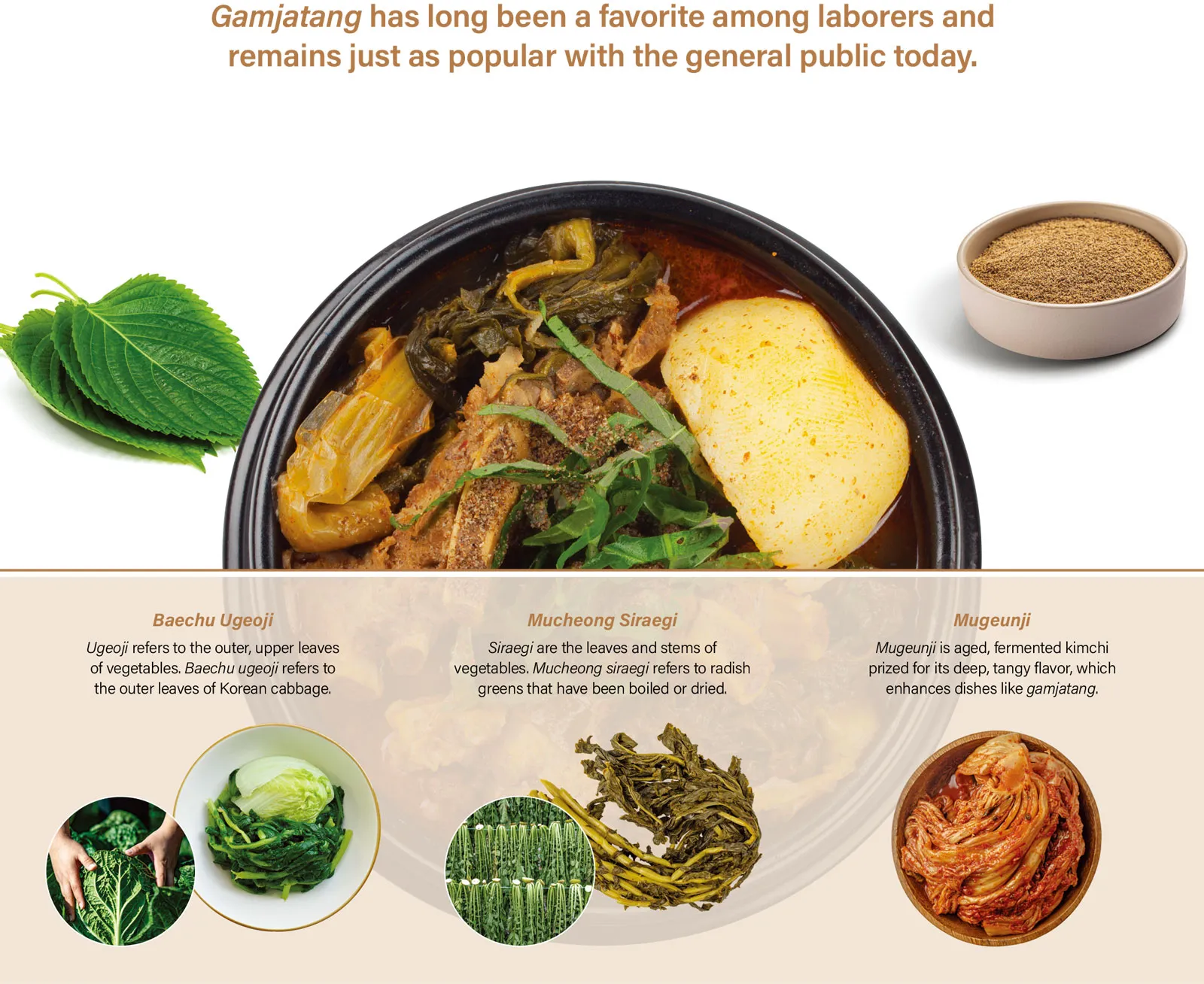
Looking at gamjatang’s appearance and ingredients reveals why this dish was beloved by workers. First, pork backbones are boiled thoroughly until the meat attached to the bones becomes so tender that it falls off at the slightest touch. To this broth, mucheong siraegi (dried radish greens), baechu ugeoji (outer leaves of Korean cabbage) and perilla leaves with their distinctive aroma are added, along with potatoes to increase satiety and enhance depth of flavor. The seasonings use red chili peppers, green onions, garlic and more to create a spicy and rich broth, and finally perilla seed powder is sprinkled to complete gamjatang’s unique flavor. Perilla is different from sesame, which is widely used in the West, with variances in both appearance and cultivation methods. Perilla seed powder has a richer, more oily quality than sesame seed powder, with a uniquely fresh aroma. Dissolving it in the broth creates gamjatang’s characteristically rich and thick taste. Because it is generous in quantity and appearance, and deep in flavor, gamjatang was beloved by workers of the past and continues to be loved by the general public today.
At this point, those who know Korean might have a question. The “gamja” in “gamjatang” is actually the Korean word for potato, but potatoes aren’t the main ingredient in the dish. So why does the name include gamja? Several theories exist about this. One theory is that the spinal cord inside the pork backbone was called “gamja.” Another suggests that the pork backbone itself was called “gamja” in some regions. Yet another theory proposes that potatoes were originally the main ingredient, but the roles reversed in the late 20th century as meat became more readily available.
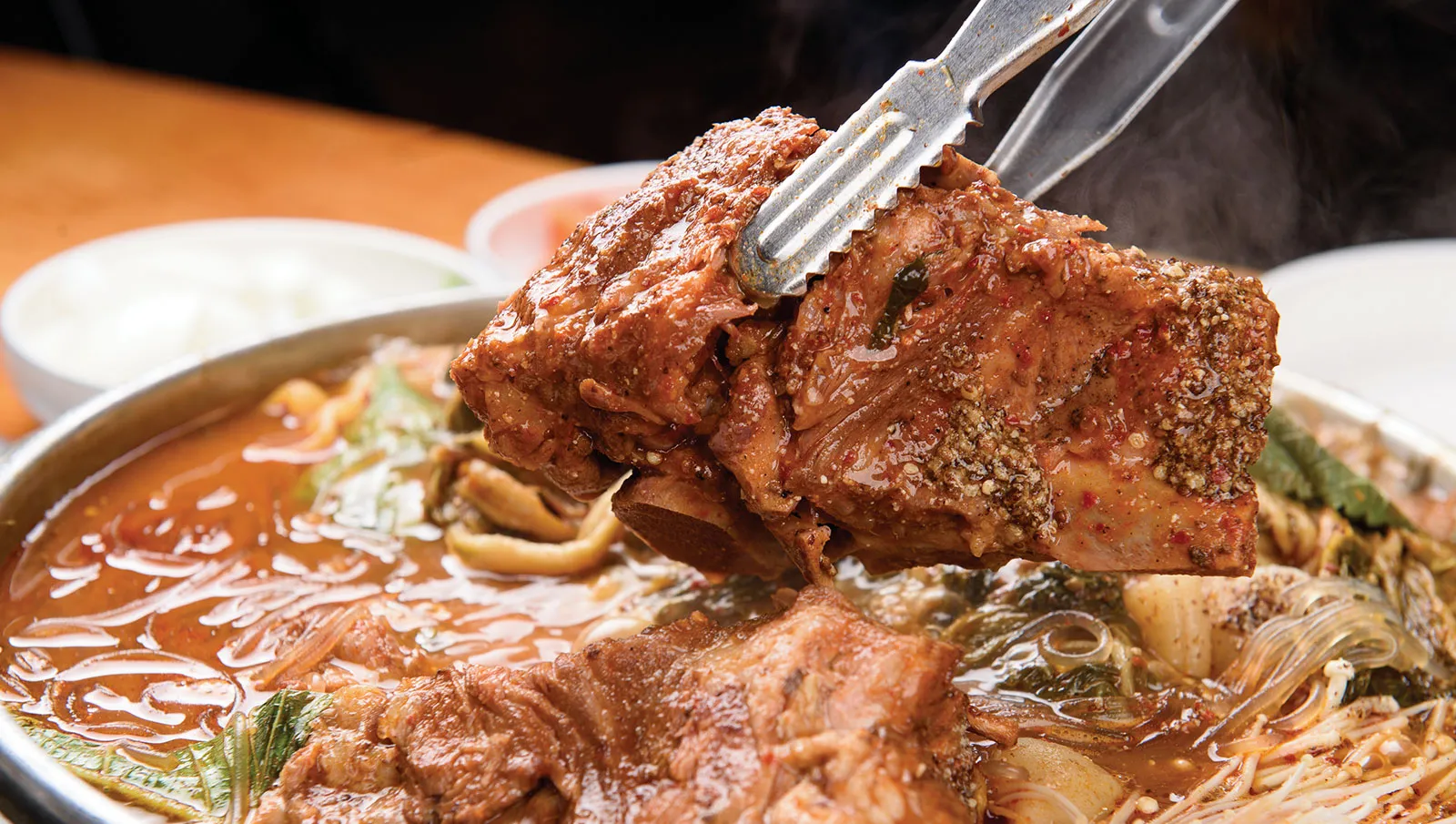
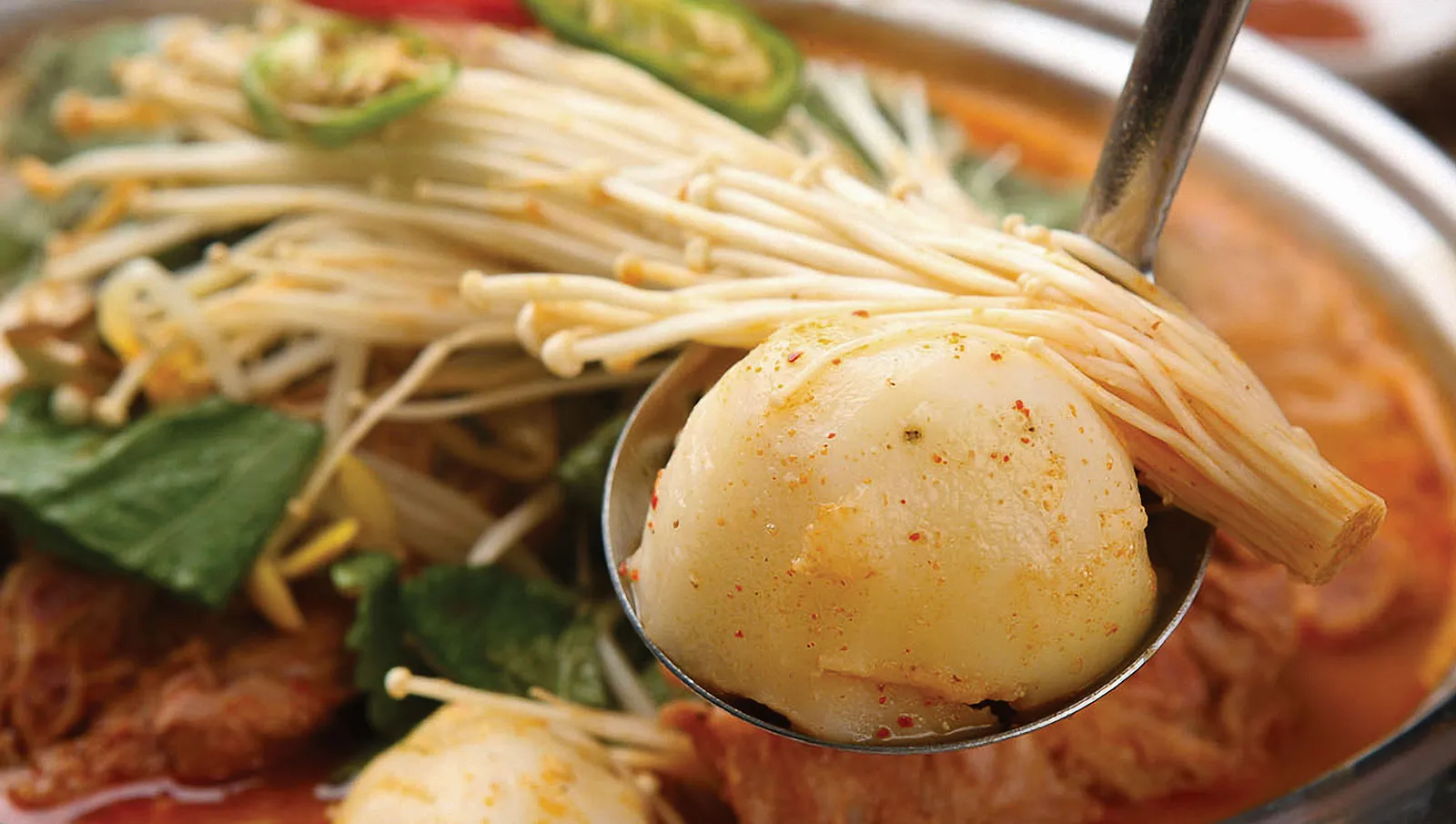
Though the etymology is unclear, the taste is unquestionable, and gamjatang remains a fascinating dish. Another interesting aspect of gamjatang lies in how it is eaten. In the drama, there’s a scene where Ga-young puts on transparent plastic gloves to pull the meat off the bones, saying, “There aren’t many foods where you can savor the bones and marrow piece by piece like this.” Indeed, if you visit a gamjatang restaurant, you’ll find plastic gloves prepared at every table. Because the bumpy structure of the backbones makes it difficult to pick off the meat, they’re provided as a courtesy so diners can eat with their hands. While it may seem unusual at first, once you try it, you’ll realize this hands-on approach is part of what gives gamjatang its character. Additionally, adding noodles like ramyeon (instant noodles), kalguksu noodles (knife cut noodles) or sujebi dough (hand-pulled dough) to cook in the broth, or making fried rice with the leftover broth, are also hallmarks of Korean food culture.
When you look closely, every aspect of gamjatang is distinctly Korean—from its history and ingredients to how it’s enjoyed. Though this dish made a brief appearance in “Genie, Make a Wish,” it has a rich story associated with it. Just like Korean dramas that weave together complex emotions and stories, gamjatang combines a variety of flavors and memories in each mouthful.
Gamjatang
- Soak pork backbones in cold water to remove blood. Change the water repeatedly until no more blood comes out. This takes at least 2 hours to half a day.
- Drain the bones and rinse with water, then place pork backbones, water, whole peppercorns, bay leaves and 1 stalk of green onion in a large pot and boil.
- Cut potatoes, 1 stalk of green onion and perilla leaves.
- Mix doenjang, red pepper powder, gochujang, ganjang for soup and minced garlic to make the seasoning sauce. Meanwhile, lightly massage roughly half of the seasoning into the mucheong siraegi or baechu ugeoji.
- Spread the seasoned mucheong siraegi or baechu ugeoji along the bottom of a new pot. Add the boiled backbones, cut potatoes, green onions and the remaining seasoning sauce. Finally, pour in enough water to cover everything and bring it to a boil.
- Add the cut perilla leaves at the end, then continue boiling a bit longer.
- Before serving, sprinkle perilla seed powder to taste.

- Use various mushrooms instead of pork backbones.
- To better replicate the original taste of gamjatang, be sure to add at least 2 tbsp of perilla seed powder.
- If pork bones are difficult to handle, you can use pork shoulder instead.
- For mucheong siraegi and baechu ugeoji, Korean grocery stores sell boiled or frozen boiled versions.
- If mucheong siraegi is unavailable, you can substitute turnip greens or collard greens. If using canned seasoned products, be sure to rinse before using.
- It’s great to include both mucheong siraegi and outer baechu ugeoji, but using just one is enough.