The train passes several quiet stations, winding along mountain roads before arriving at Cheoram Station. Fresh, cold air clears away the stuffiness, and as the surrounding scenery comes into view, scenes unfold like something from a film set in Korea’s modern era.
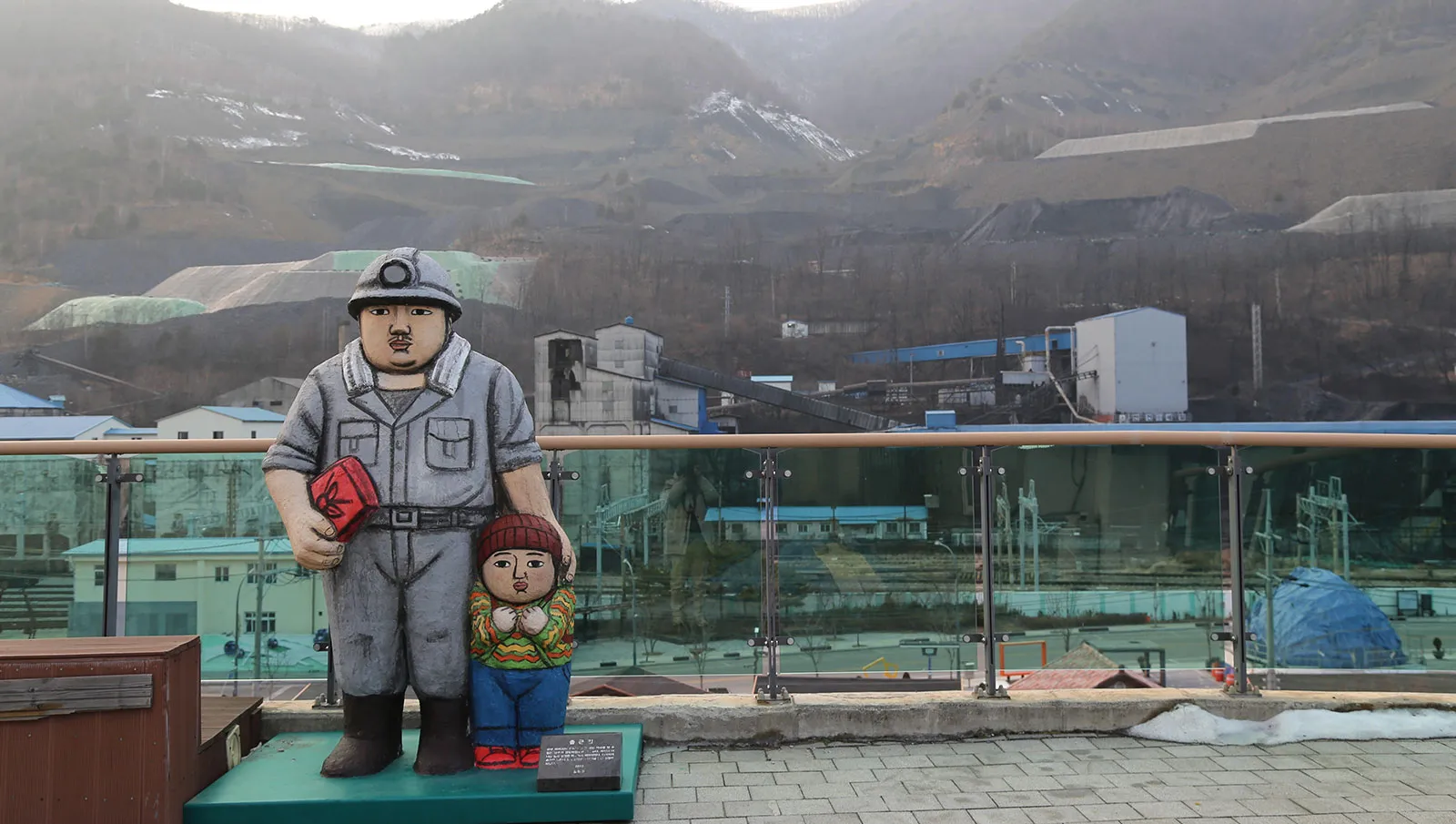
Taebaek is where coal was first discovered in Korea in the 1930s. The area was rich in iron ore, limestone, tungsten and graphite, and on this foundation, Taebaek established itself as the leading city during Korea’s coal industry boom. The city reached its peak alongside industrialization in the 1960s, and the area in front of Cheoram Station bustled with people who had come seeking work.
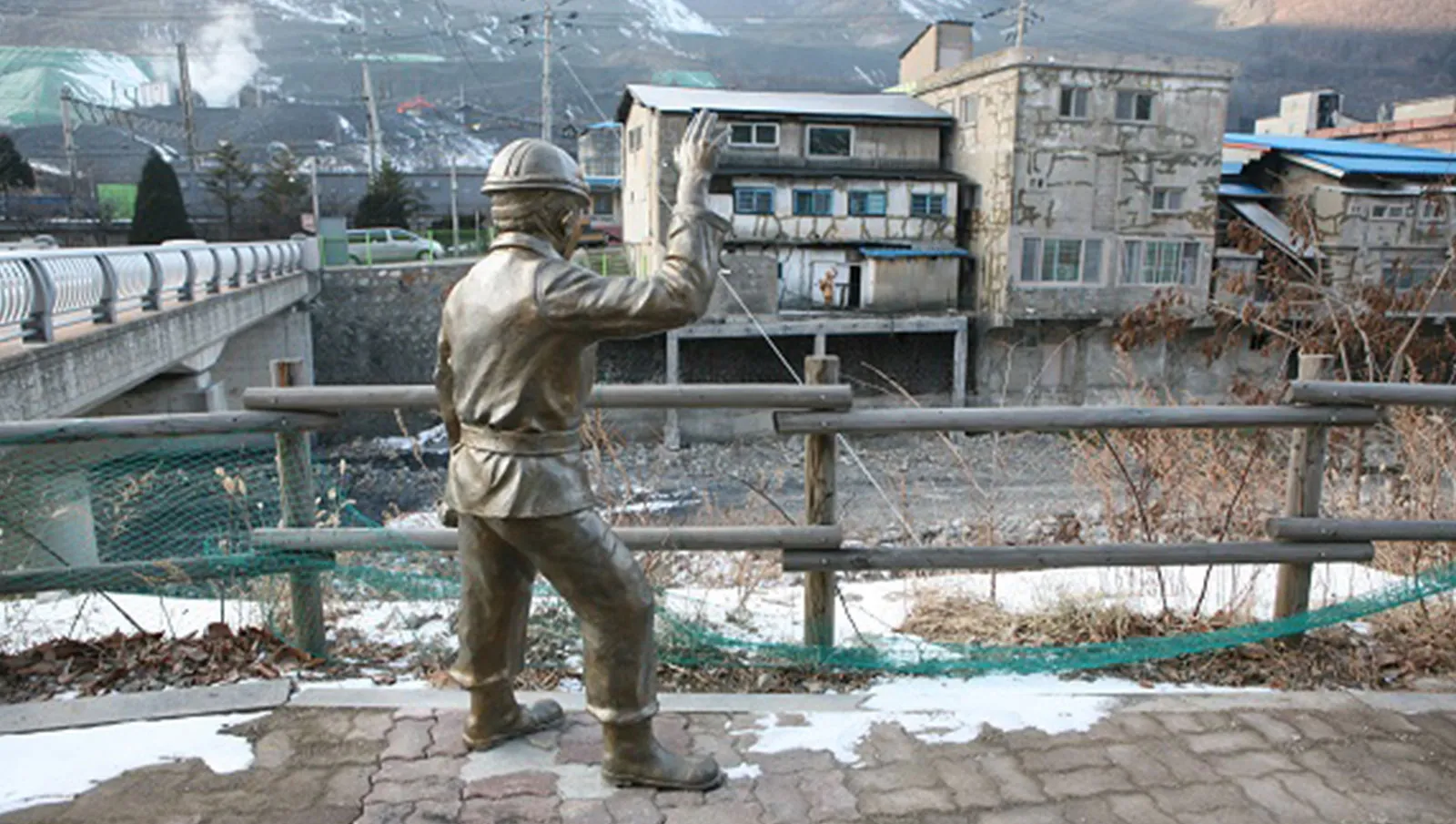
Right in front of Cheoram Station is a landscape that preserves memories of that era intact. Along the quietly flowing stream, residential buildings that retain their original appearance stand silently in place. The buildings with wooden or steel supports extending from the streambed to expand living space are particularly unusual—a form rarely seen in Korea. During the boom years, when the population surged rapidly and existing housing couldn’t accommodate everyone, people expanded their living spaces this way. Traces of that era permeate every corner of these buildings, and Taebaek has preserved them as a living history museum rather than tearing them down.
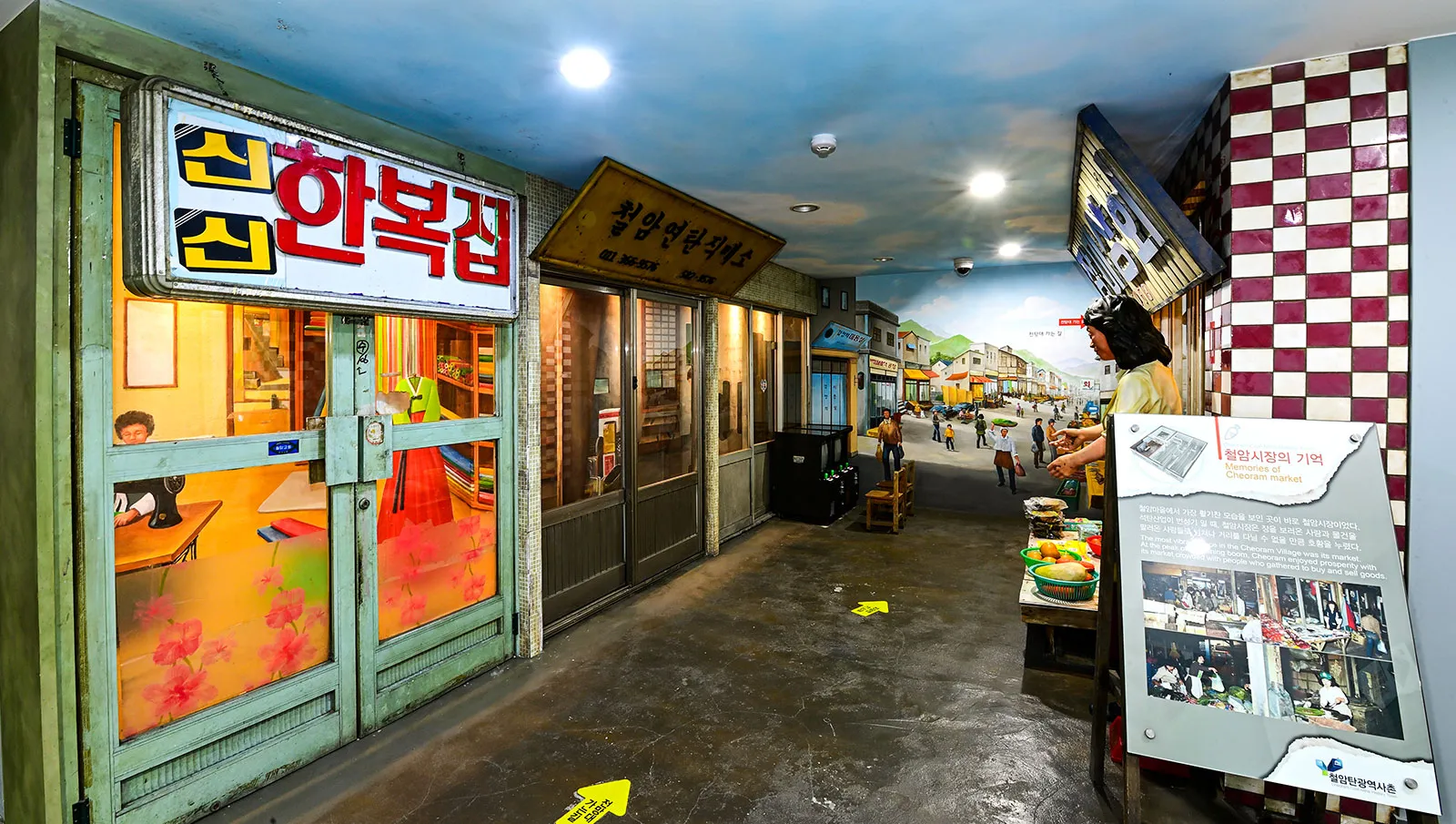
Six of the eleven buildings are being used as exhibition spaces. Supermarkets, restaurants and tea rooms have been recreated just as they were. One can picture miners fresh from work grilling meat at taverns, and old-style kitchens—rarely seen today—have been authentically recreated. Though visitors never lived in that era, traversing each exhibition space evokes a sense of nostalgia, as if one might encounter individuals returning home from work at any moment.
After walking through, Taebaek’s origins and history naturally sink in. Climbing up to the observatory, the “Coal Preparation Plant at Cheoram Station” comes into full view. Built in 1935, it’s Korea’s first anthracite coal processing facility and has been preserved as national heritage, recognized for its value as modern architecture.
Though it’s a sunset industry now, tracing Taebaek’s history makes it clear that you can’t tell this city’s story without coal. To truly understand Taebaek, one needs to examine this history more closely. Conveniently, there’s the Taebaek Coal Museum at the foot of Taebaeksan National Park that brings together the history of the coal industry.
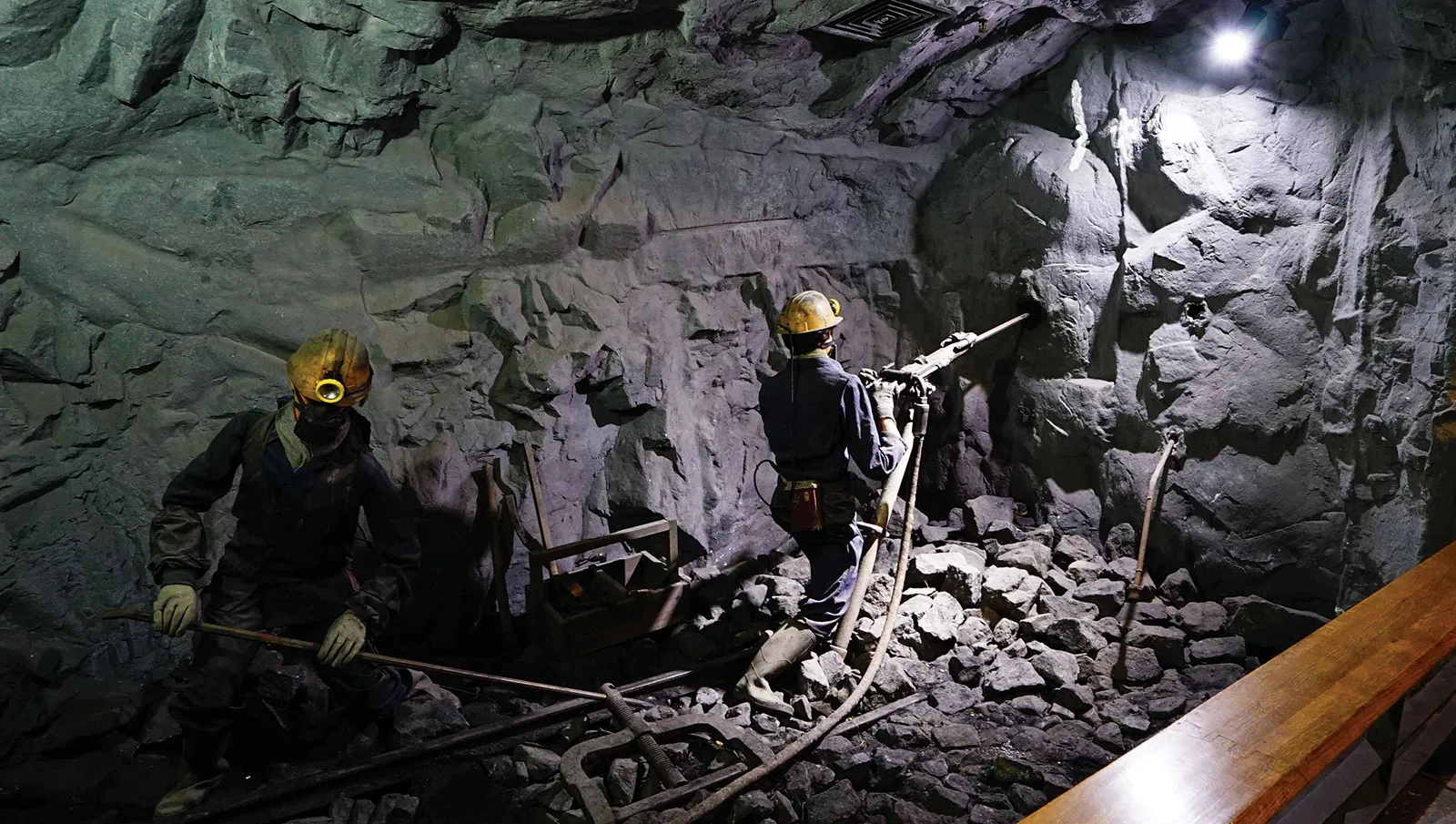
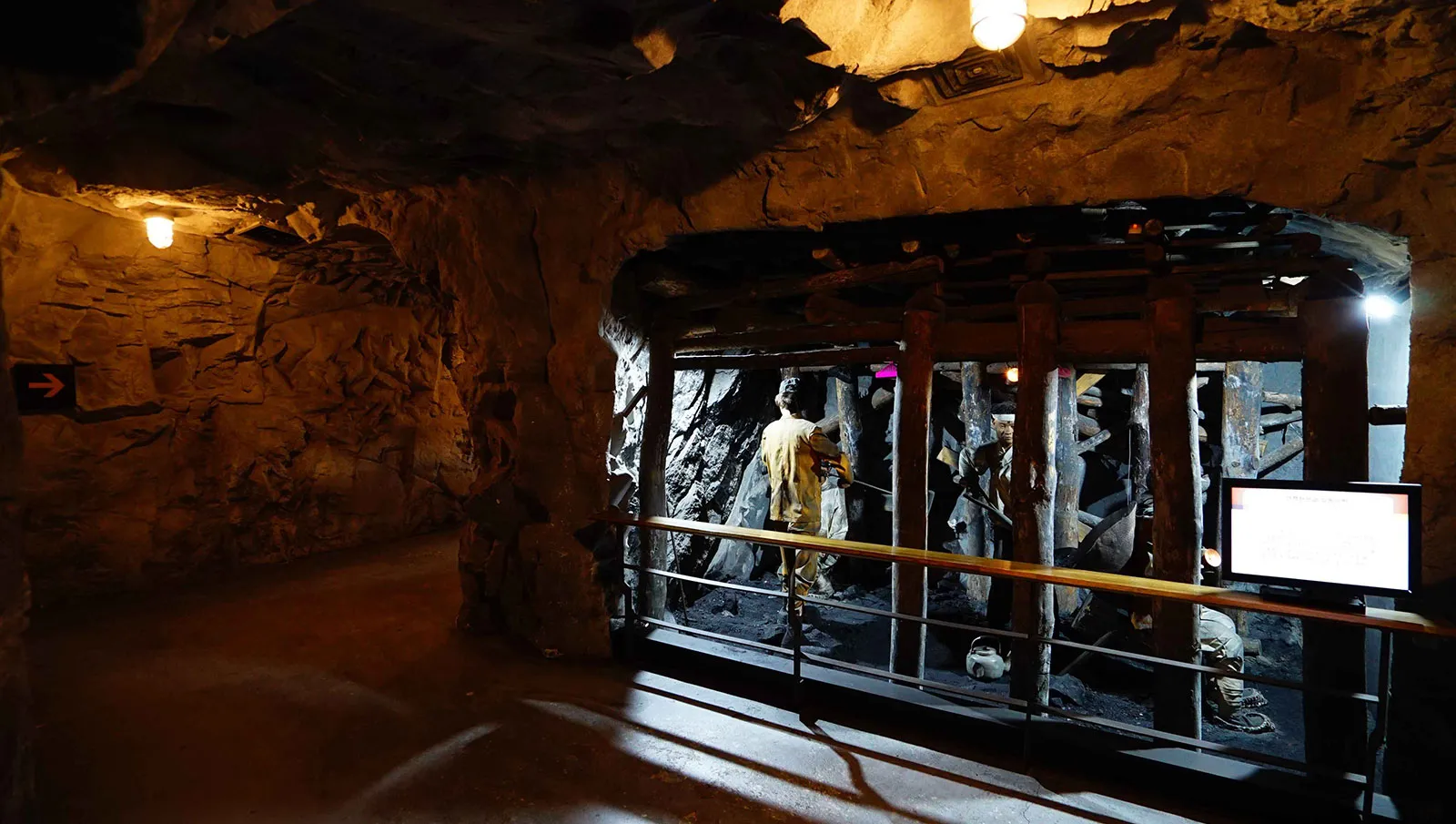
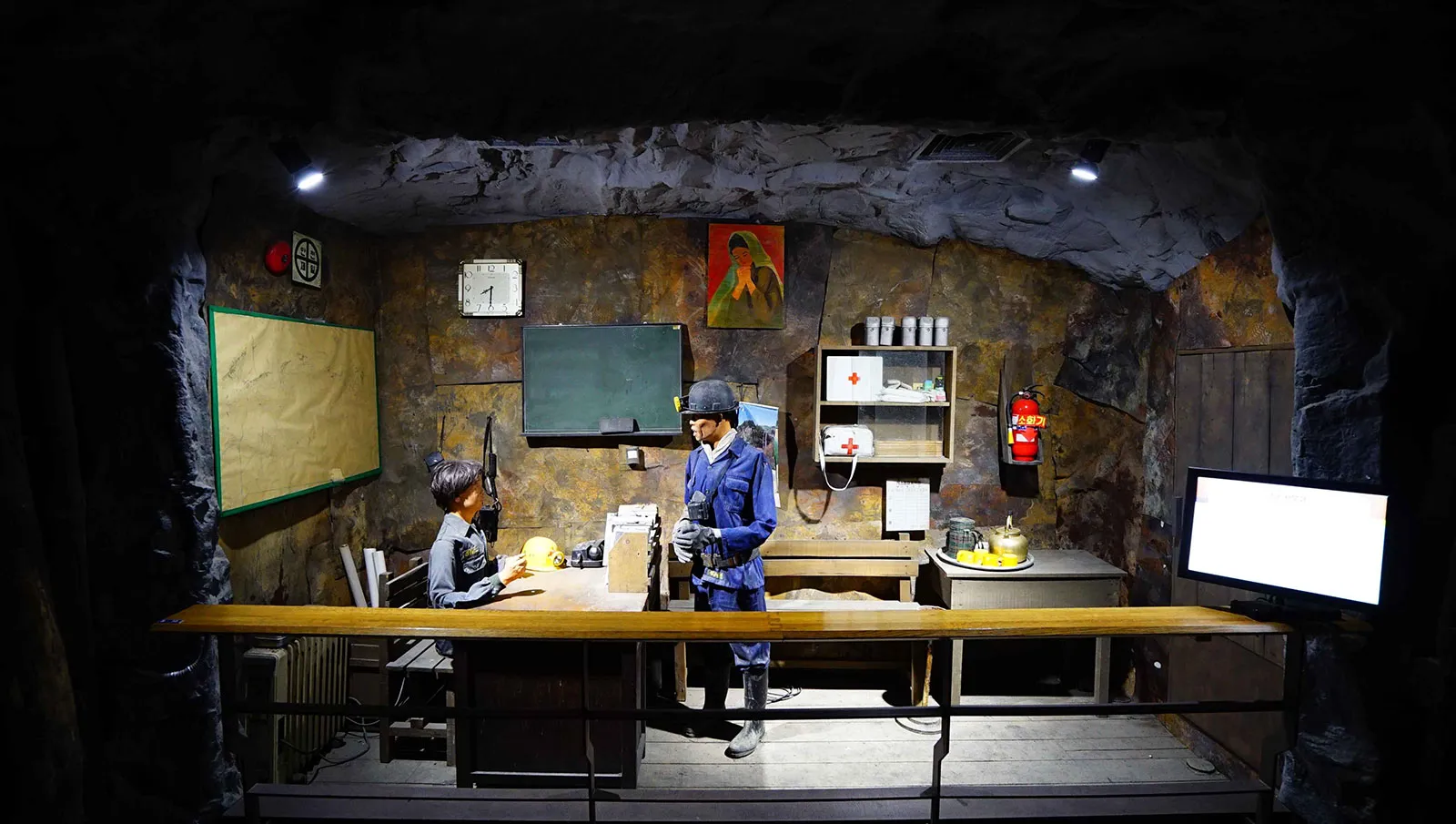
Though most visitors never lived through the coal industry’s heyday, upon entering the museum, one is swept up in the sensation of experiencing that era. Taebaek’s unique history is vividly recreated, from coal formation to the mining process to daily life in mining villages. There’s a space that faithfully recreates mine tunnels, and the figure models give the impression they’re still working on-site. The immersion is so complete that even the elevator feels like mining equipment. Visitors can also participate in a hands-on experience making mini coal briquettes. Mixing coal dust with water and pressing it into molds, encountering these briquettes that once kept countless people warm through winter stirs surprisingly complex emotions.
A City Beneath the Stars
Taebaek

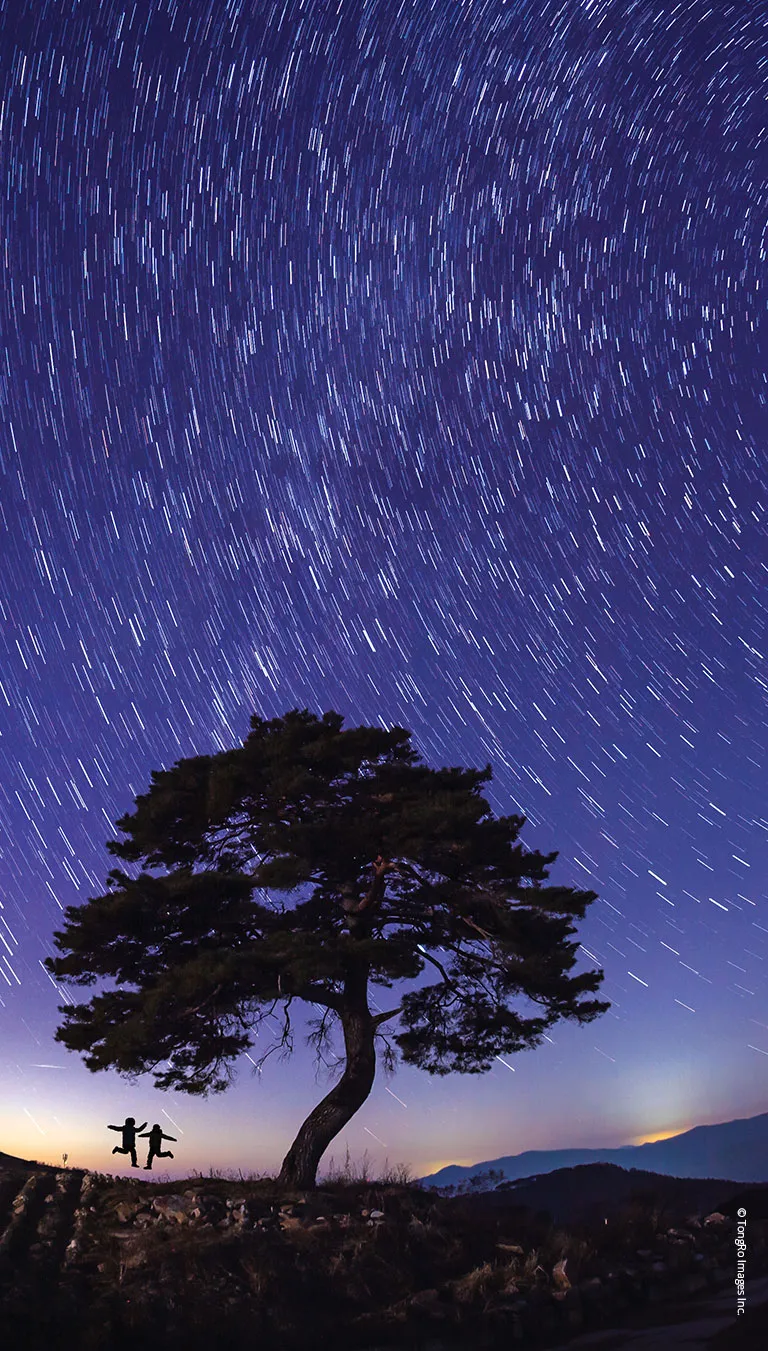
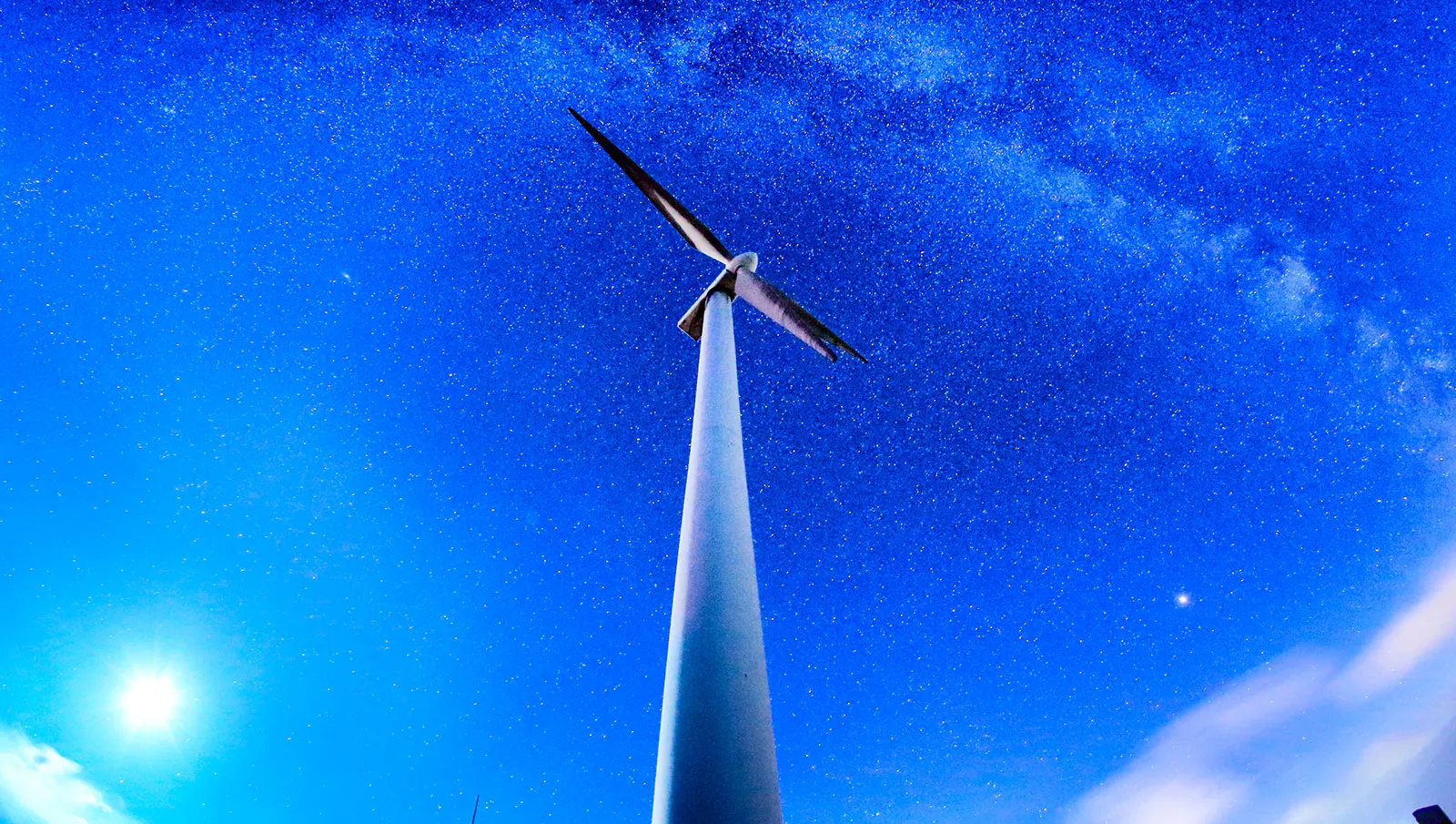
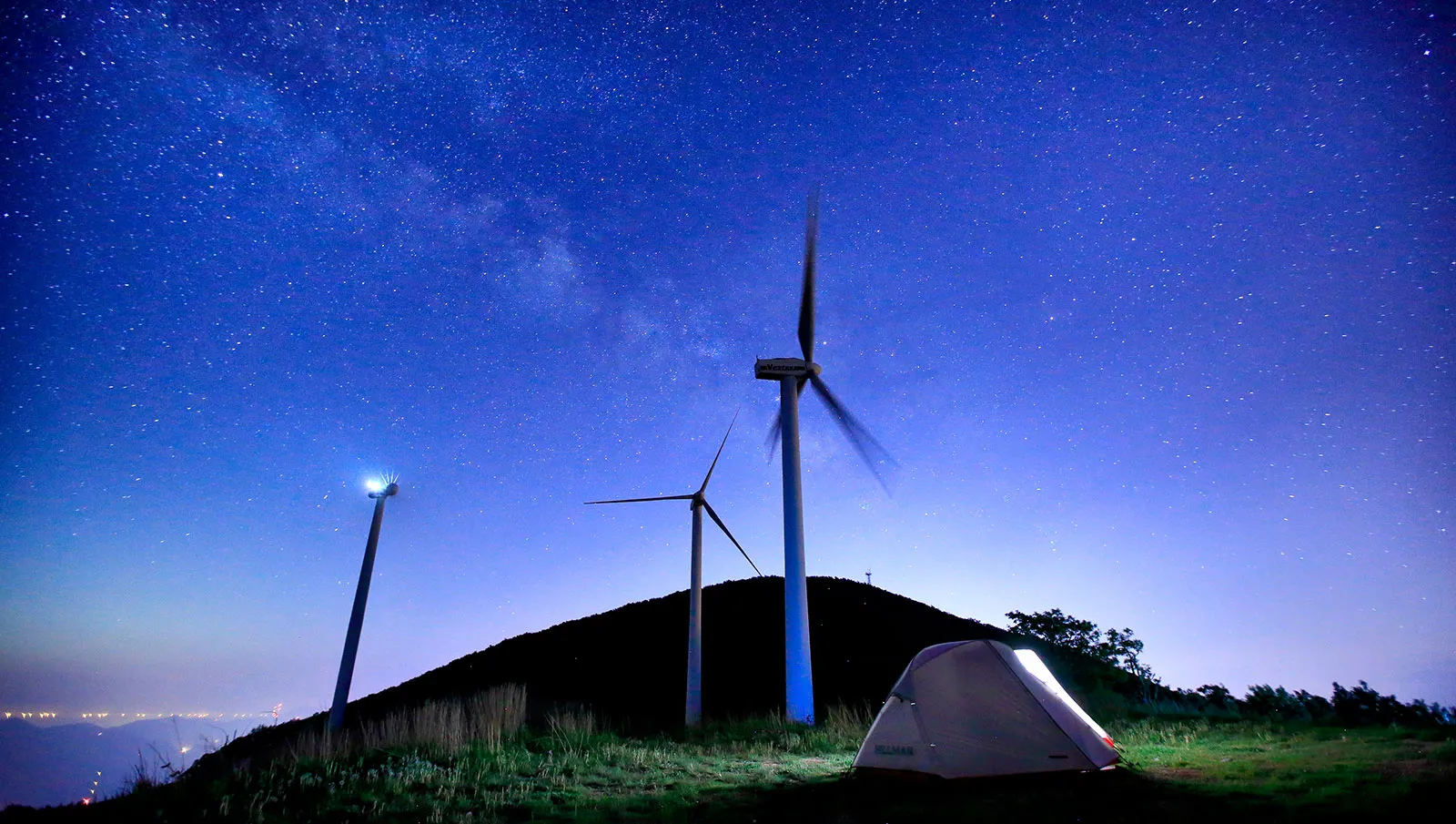
In February, when the warm indoor spaces become confining, a journey to Taebaek, Gangwon-do Province, offers a way to shake off that restless feeling. At an average elevation of 902.2 meters, the city is known as Korea’s highest “first city under the sky.” Here, visitors encounter both the history of a city that once drove Korea’s prosperity and the sight of the Milky Way that has gazed down on us for thousands of years.
Into the Memory of an Era
Standing Beneath the Milky Way
Traveling through Taebaek’s history, visitors naturally encounter foods that embody the region’s geography and way of life. One of these is mul-dakgalbi (spicy chicken stew). While typical dakgalbi is chicken stir-fried in a sweet and spicy sauce, Taebaek’s version is distinctly different. It has plenty of broth, with noodles and fragrant vegetables. Created to quickly and heartily satisfy miners exhausted from hard physical labor, it’s closer to a hot pot. Diners first taste the rich broth stewed with chicken and vegetables, then fish out the vegetables and noodles, warming themselves from the inside. After finishing with fried rice, the cold seems to have vanished entirely. One instantly understands why this has been beloved by Taebaek miners for decades.
With bellies full, contemplating the next part of the itinerary becomes easier. Being winter, the days are short and darkness has already settled in, but this is actually the time to experience Taebaek’s true charm. With its high elevation and clear air year-round, Taebaek is famous for having optimal conditions for stargazing.
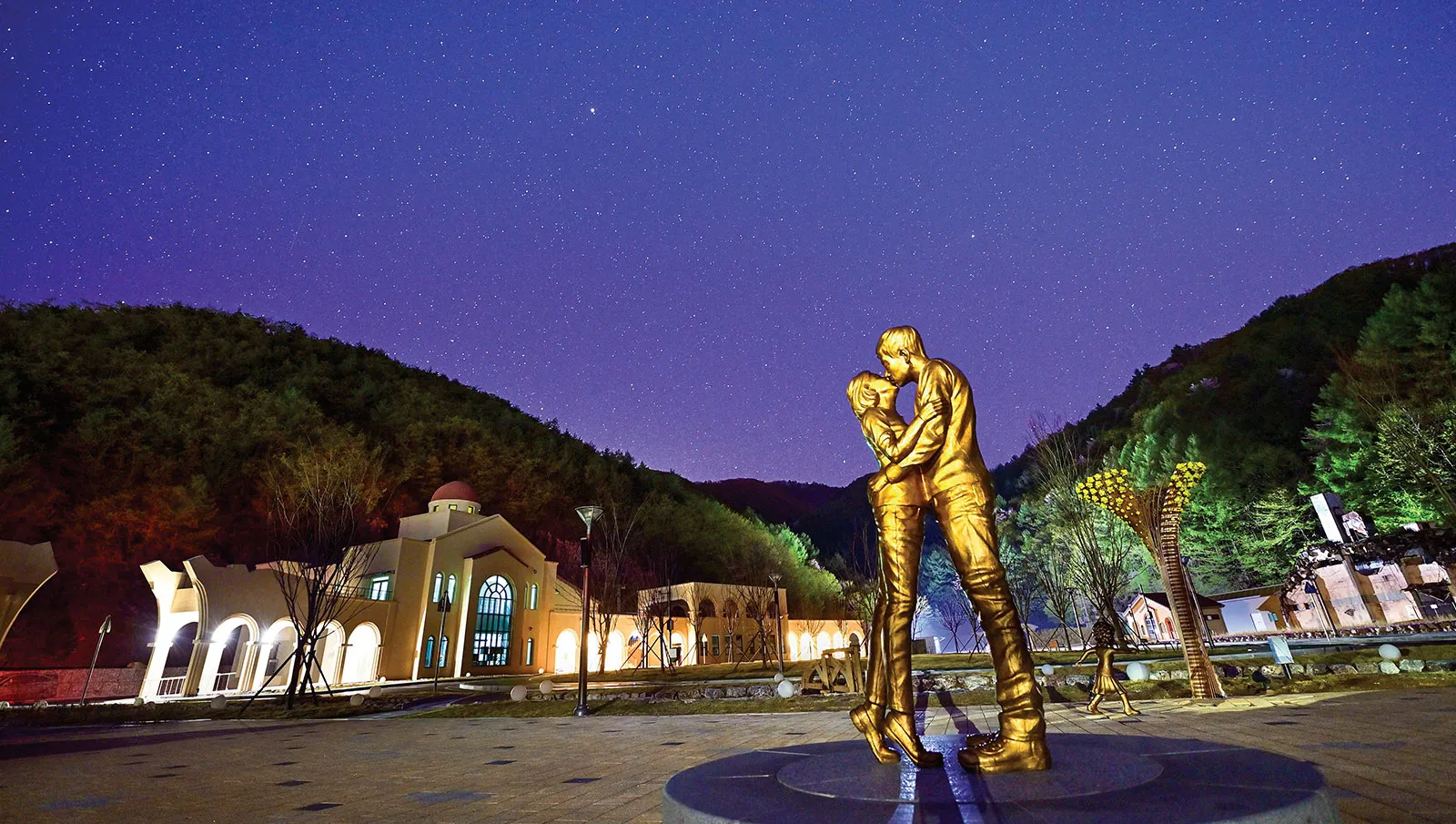
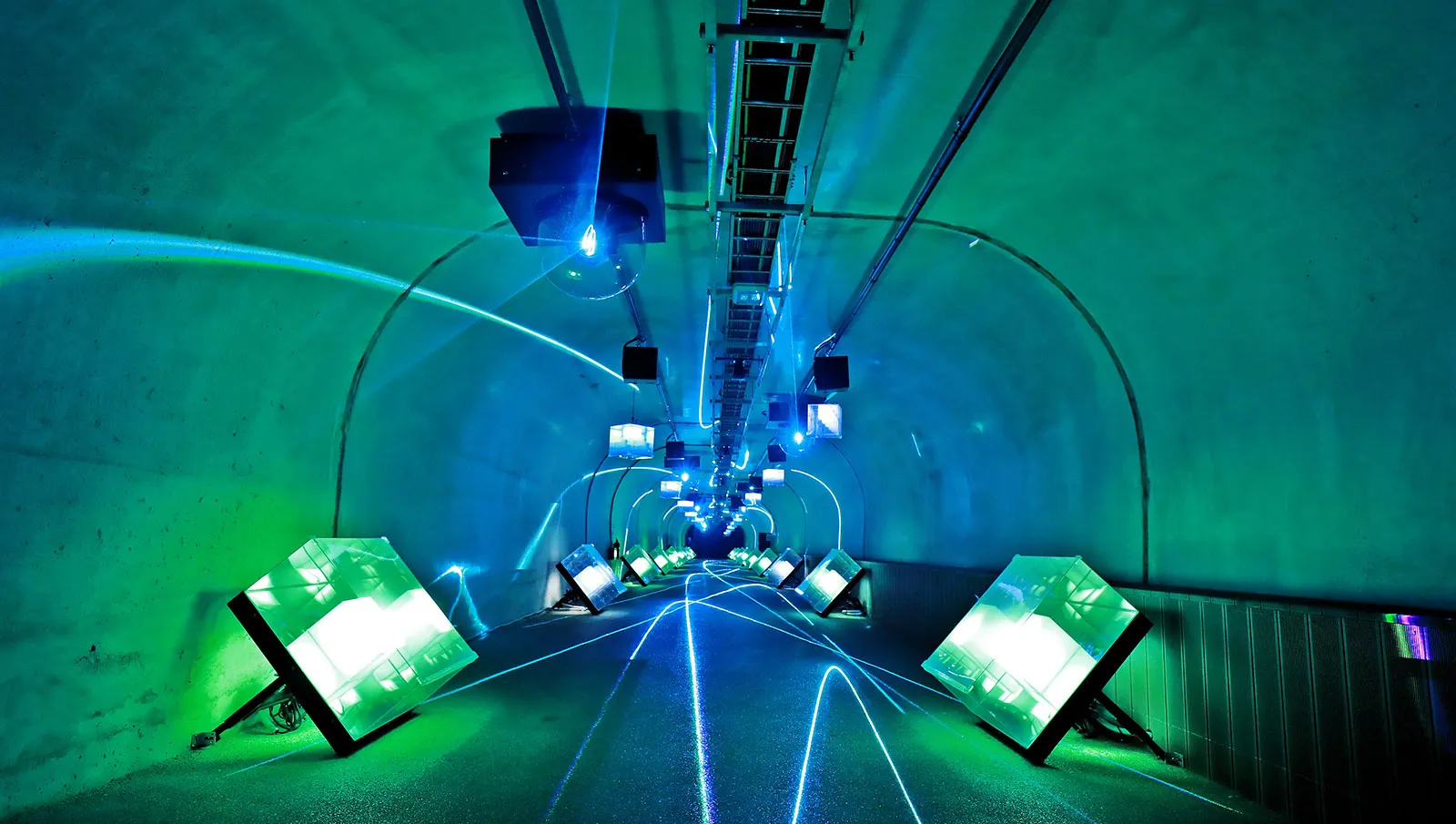
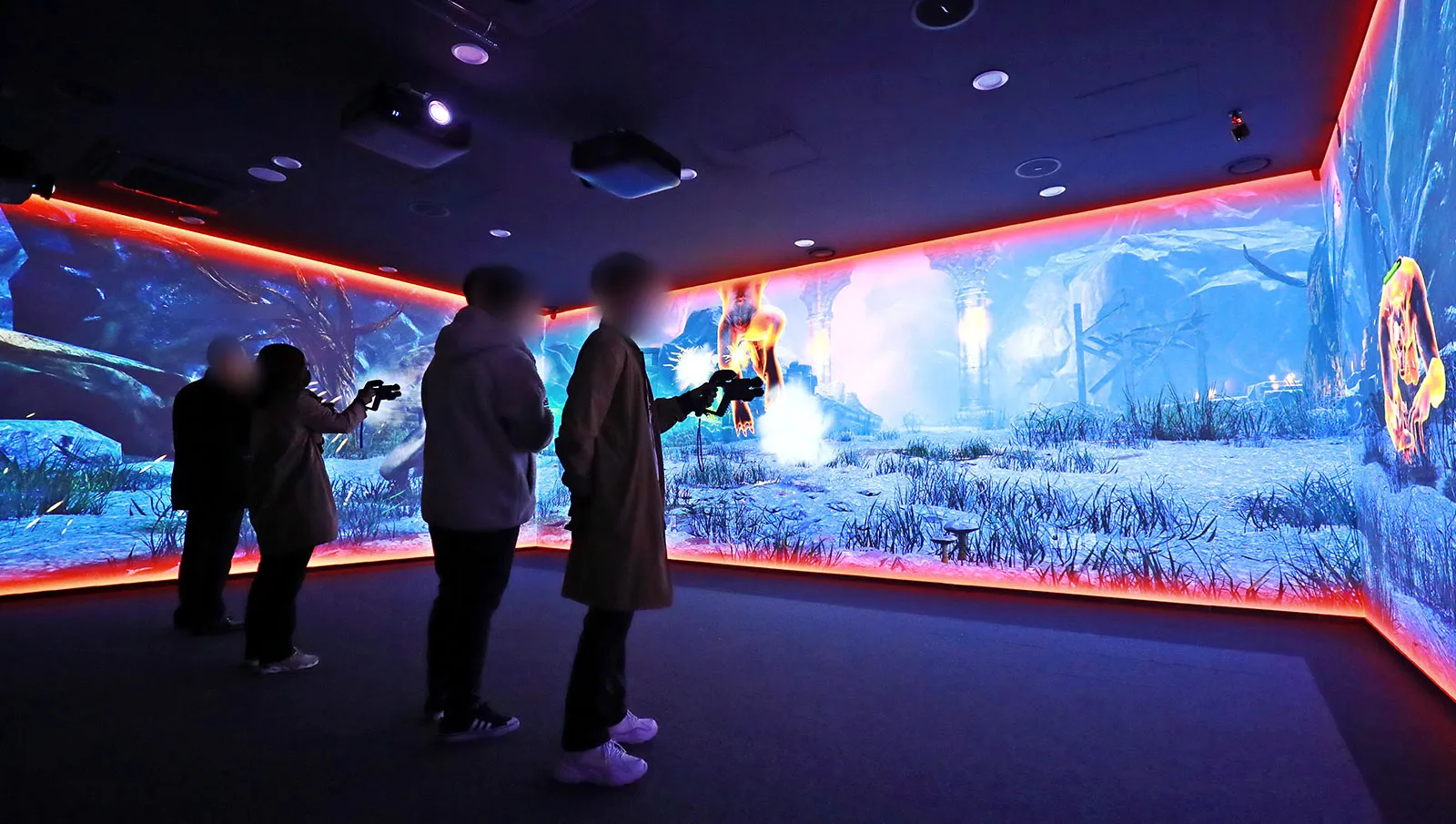
Before it gets completely dark, the route leads to Tongri Tantan Park. True to its reputation as a filming location for the popular drama “Descendants of the Sun,” sets remain throughout the park, inviting pauses at every turn. Once inside, LED artworks shine brilliantly along a long tunnel. This is a space where dark, deep abandoned mine shafts once used for coal mining have been transformed into a media art exhibition. Colored lights paint the tunnel interior in vibrant hues, and videos telling the stories of mining villages play, drawing viewers into the experience. Taking in the media art and snapping photos, deep night arrives.
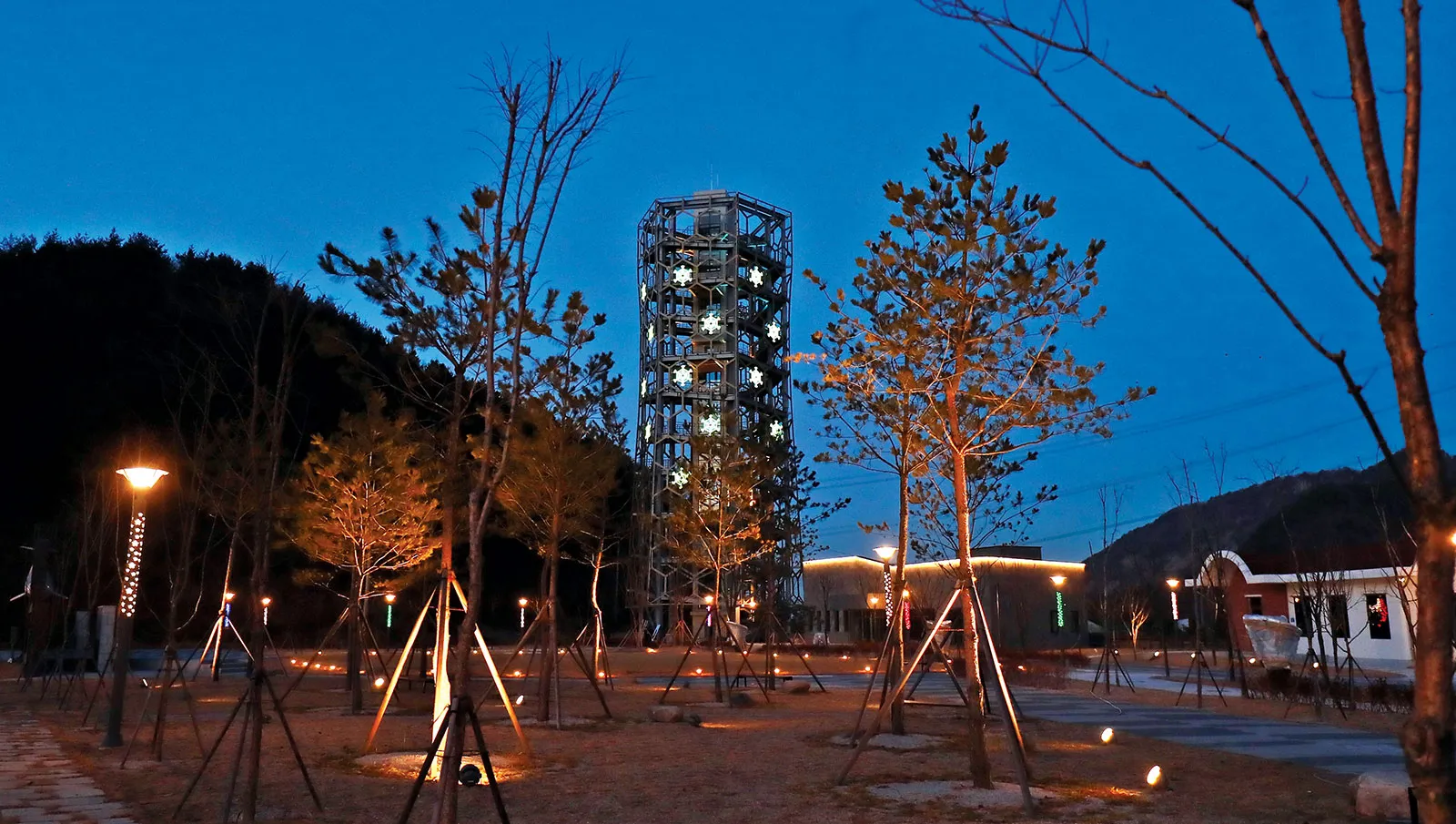
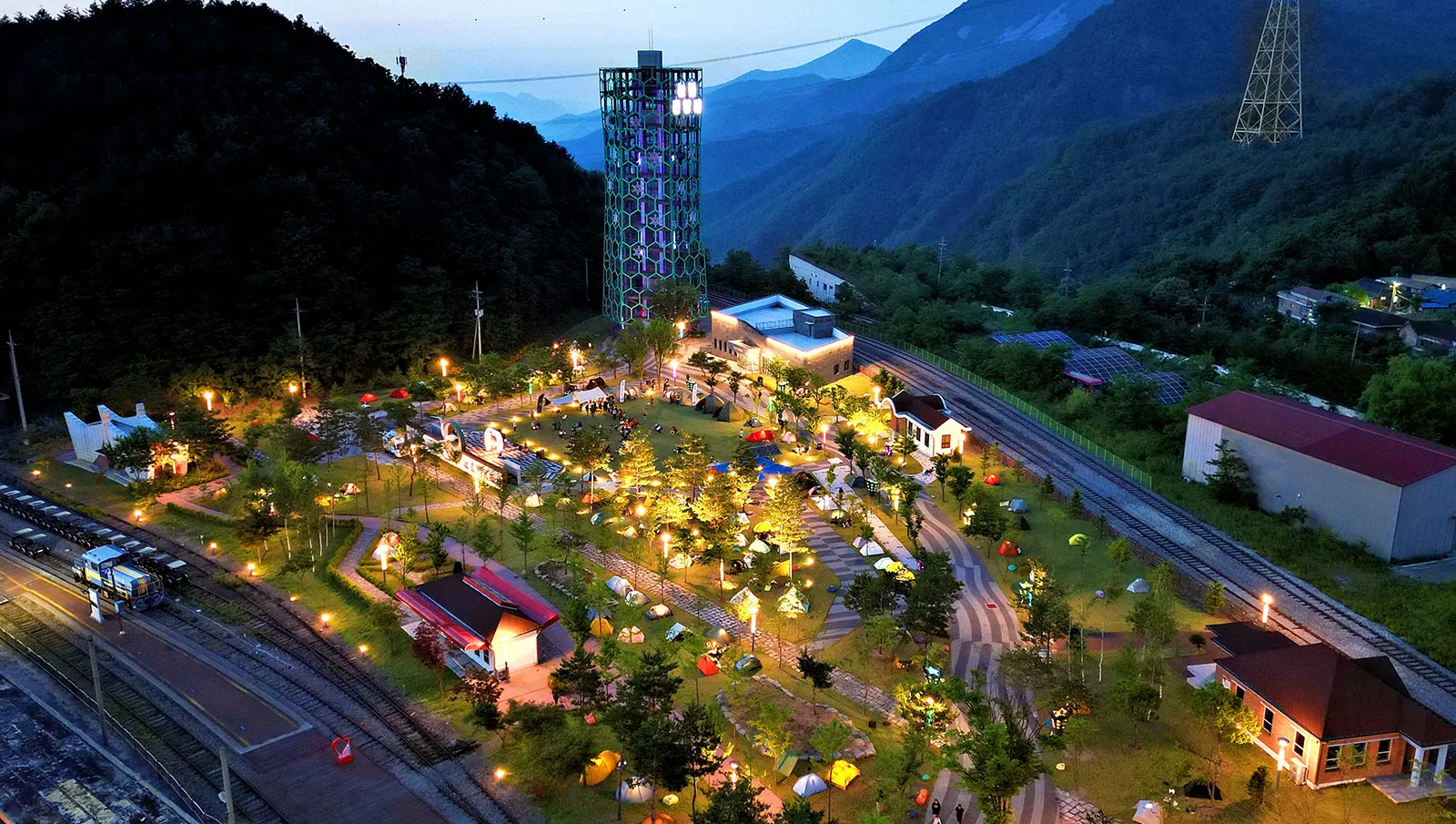
Next comes Aurora Park, located near Tongri Tantan Park. On one side of Aurora Park, the 49.2-meter-tall Snowflake Observatory glows. Climbing up to the observatory, the mountain ranges extending toward the Baekdudaegan ridge and the East Sea coast come into view, and one’s gaze naturally rests on the starlight appearing one by one. The cold winter breath rising from the mountain base completes a scene like a landscape painting.
Taebaek doesn’t let its past fade away—instead, the city has carefully preserved it as something meaningful for today. The bustling mining town of decades past holds its own fascination, but there’s something fitting about Taebaek’s current quietude, its winter calm inviting visitors to linger over what they’ve seen.


Festival
Taebaeksan Mountain Snow Festival
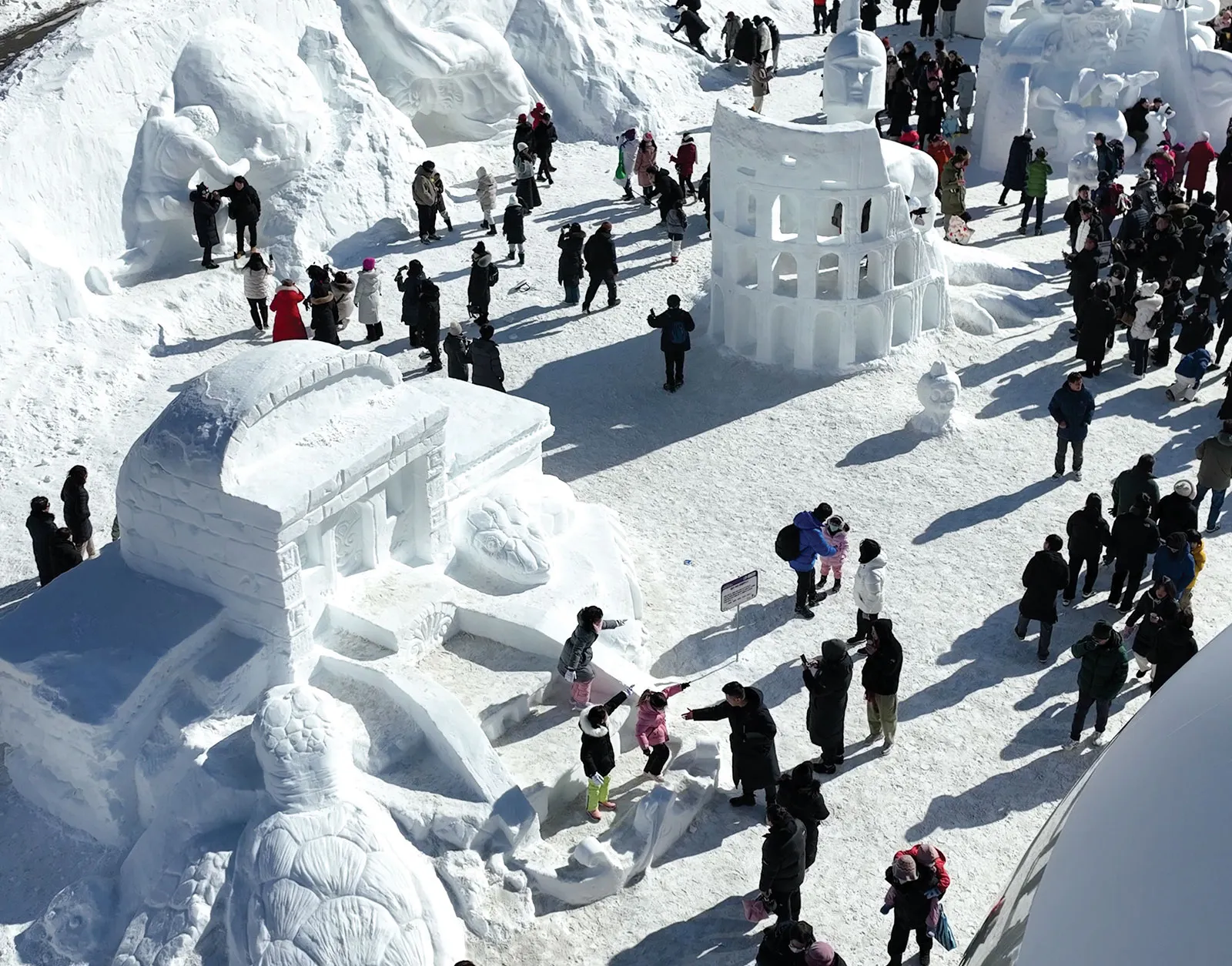
Now in its 33rd year, the Taebaeksan Mountain Snow Festival presents an opportunity to enjoy Korea’s snowy landscapes. Held around early February each year, this festival draws countless visitors to Taebaek with its diverse attractions.
This year’s slogan is “2026 REAL Taebaeksan Mountain Snow Festival,” operated as an extended-stay winter festival where locals and tourists participate together. The 33rd Taebaeksan Mountain Snow Festival features various hands-on and exhibition programs that truly evoke winter, including large snow sculpture displays, ice sledding and snow sledding.
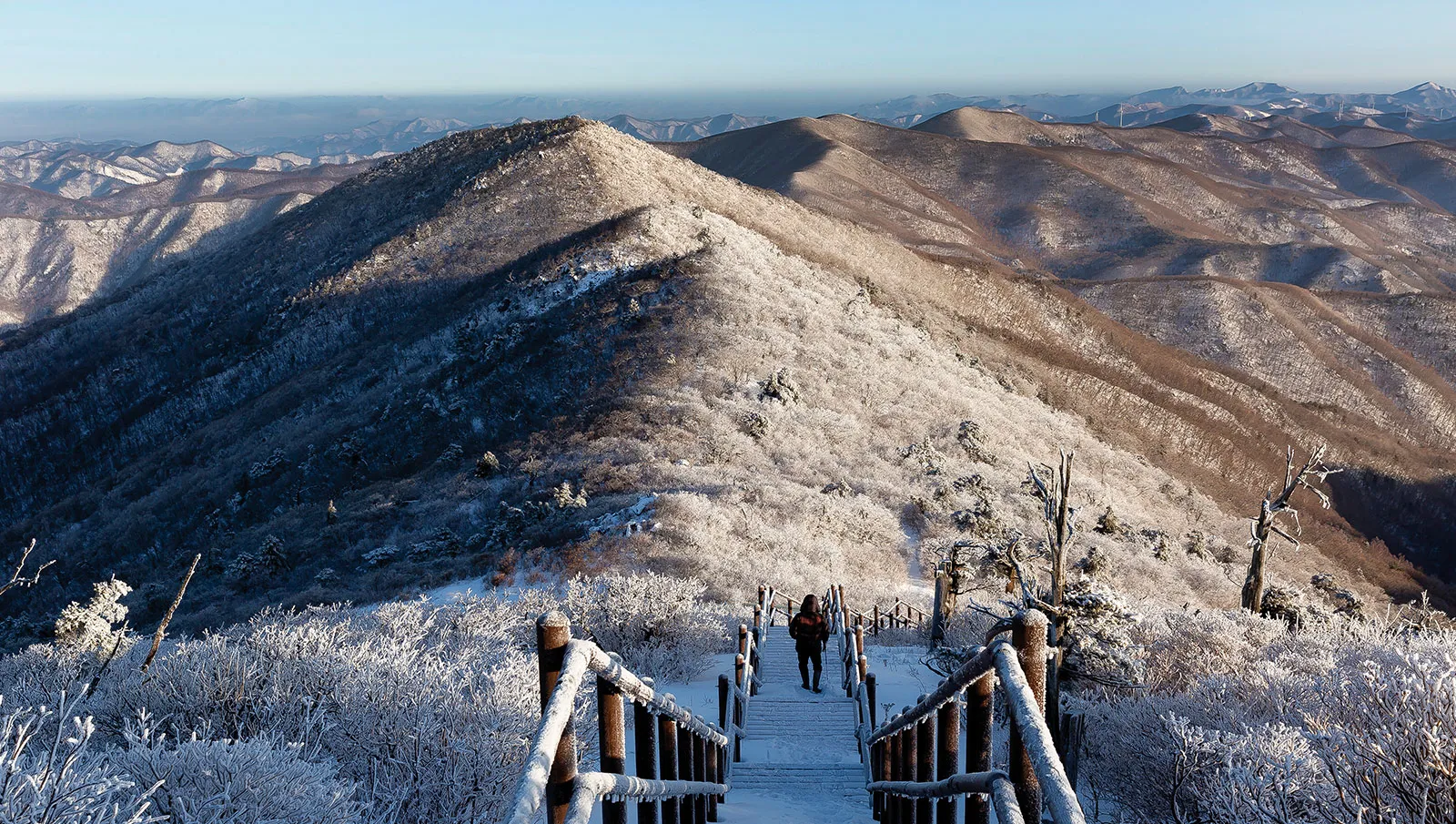
There are also programs set against Taebaek’s beautiful snowy natural scenery, including the Taebaeksan Mountain Snow Flower Climbing Competition and backpacking events running for one night and two days.
Additionally, there are places offering foot baths and massages, health programs where participants can check how healthy they are through body composition analysis and more, making this a festival that those seeking relaxation can enjoy.
With K-pop competitions and booths offering winter snacks also planned, this promises to be a festival that delights the eyes, ears and taste buds alike.

- January 31 - February 8, 2026
- Taebaeksan National Park area