“Kpop Demon Hunters” tells the story of HUNTR/X, a globally beloved girl group that performs on glamorous stages by day and transforms into supernatural demon hunters by night, protecting the world from evil spirits. Alongside its stage production, thrilling action sequences and addictive music, one of the most frequently cited reasons for the work’s popularity is its delicate and natural depiction of Korean culture. Food serves as a prime example.
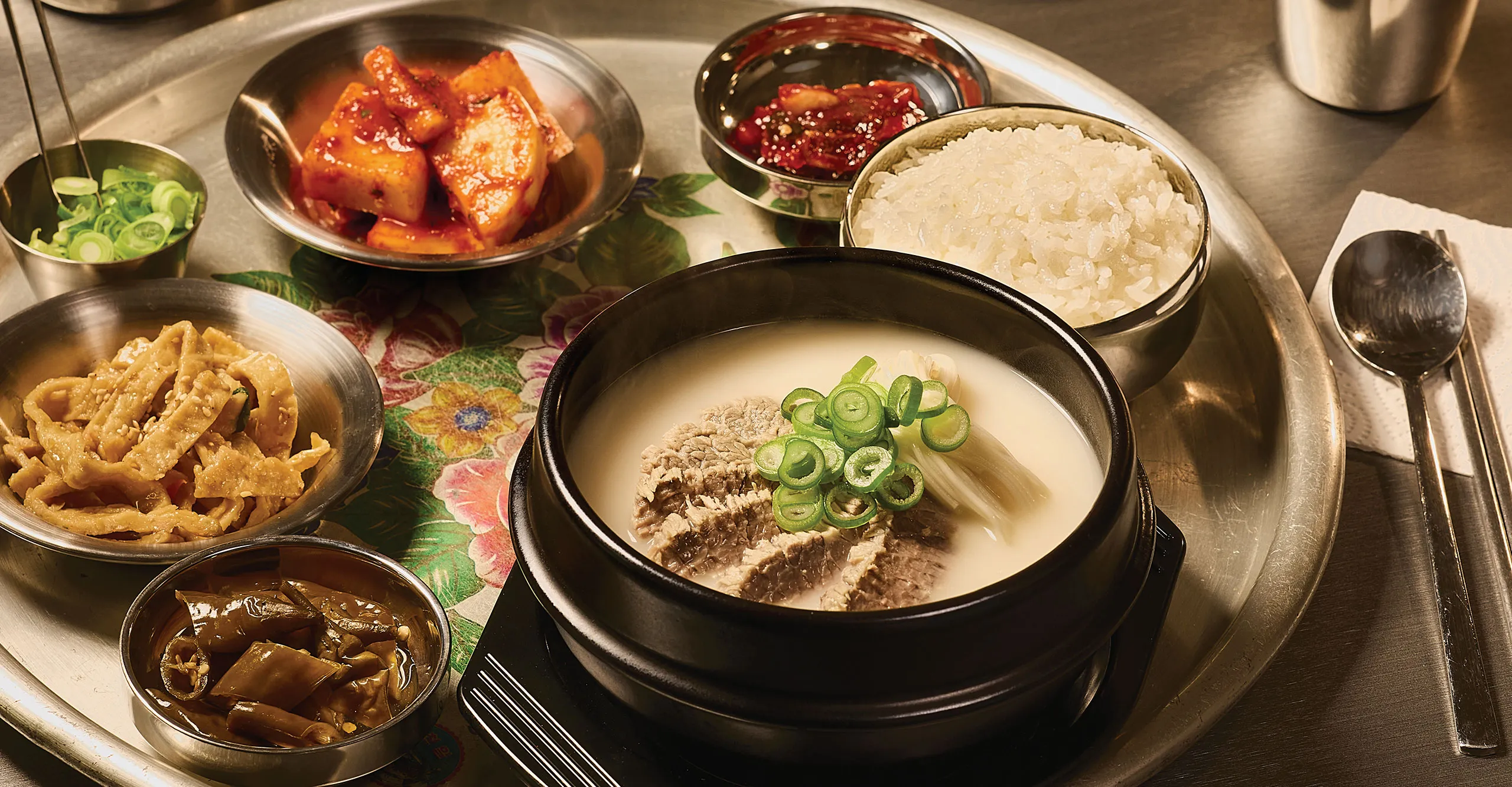
The Korean dishes consumed by HUNTR/X in the series stimulated viewers’ appetites with realistic portrayals and became a hot topic of discussion. Among these, seolleongtang drew particular attention. Seolleongtang is a type of gukbap—rice served in hot soup—made by simmering beef head, organs, bones and feet for hours. The dish appeared in a scene where characters shared honest conversations over their meal, with one character becoming visibly emotional.
Korean viewers pointed to details such as the hot earthenware pot, stainless steel side dish bowls and tissue paper placed under the spoon as fun touches familiar from everyday Korean dining tables. Simultaneously, they expressed deep empathy and admiration for how the collective memories and emotions associated with gukbap, symbolized by seolleongtang, were naturally integrated into the narrative.
To understand why the gukbap scene in “Kpop Demon Hunters” resonated so deeply with Koreans, we must first examine what gukbap means to Korean people. Above all, gukbap is an “everyday” food for Koreans. It can be easily found anywhere, from restaurant districts and markets to department stores, cafeterias and convenience stores.
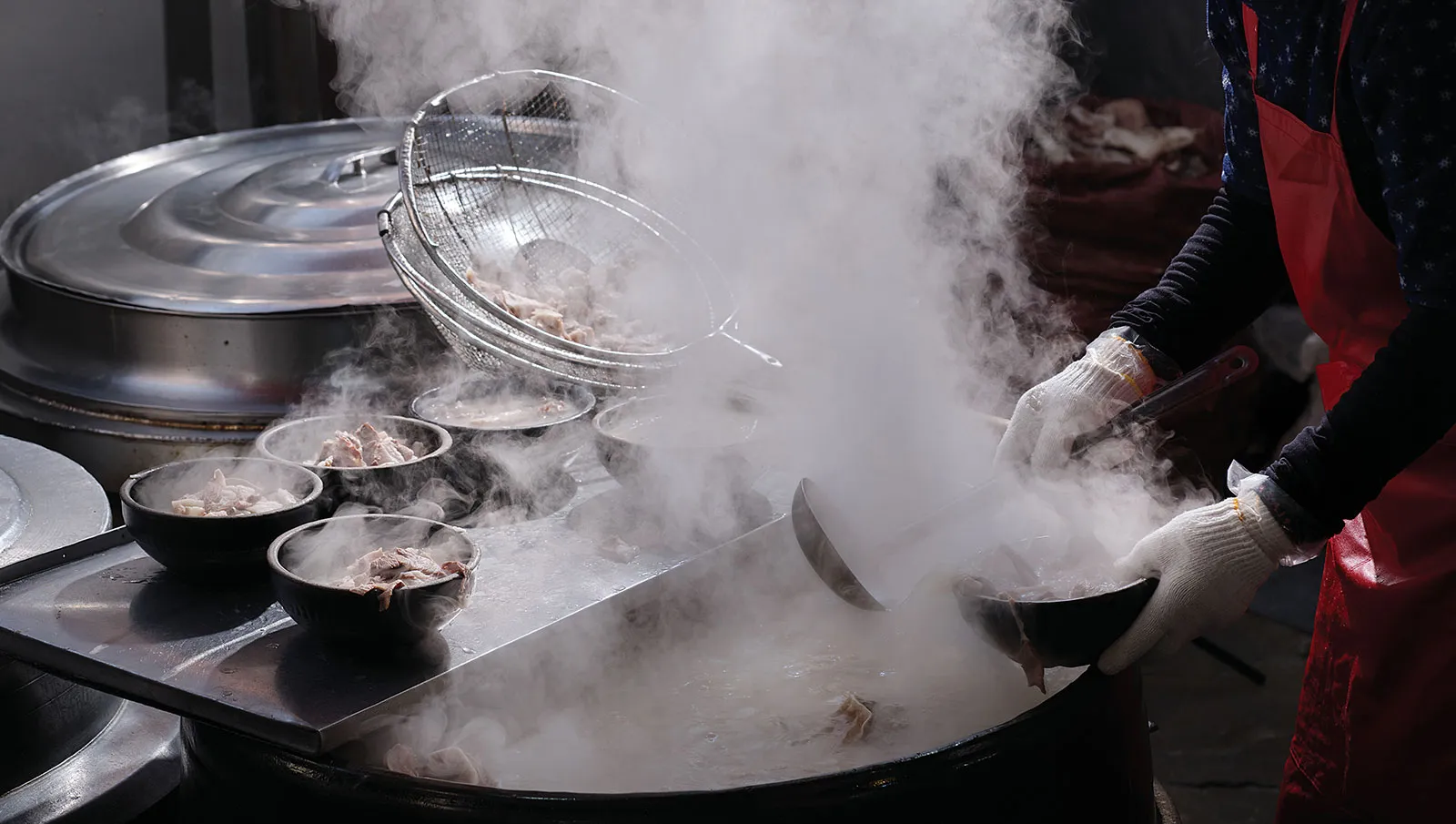
However, gukbap did not suddenly appear one day to claim its place on Korean tables. The period when gukbap began gaining widespread attention is generally estimated to be around the 16th century. During an era of increased productivity and flourishing markets nationwide, merchants traveling across the country selling goods were welcomed at jumak, inns comparable to today’s taverns. One food unfailingly served at these establishments was gukbap. The method of ladling rice into soup made by stewing meat in large cauldrons was ideal. It could be served quickly while completely satisfying hunger.
A Taste of Comfort
Beyond the Screen
Gukbap

The animated film “Kpop Demon Hunters” has garnered attention for its dynamic and detailed portrayal of Korea’s diverse culture. The meticulous details woven throughout the work have earned viewer acclaim, with food scenes particularly standing out as elements demonstrating a nuanced understanding of Korean culture. Among these, scenes featuring gukbap (rice soup), particularly seolleongtang (ox bone soup), distinctly capture Korean sentiments surrounding this dish, creating especially memorable moments.
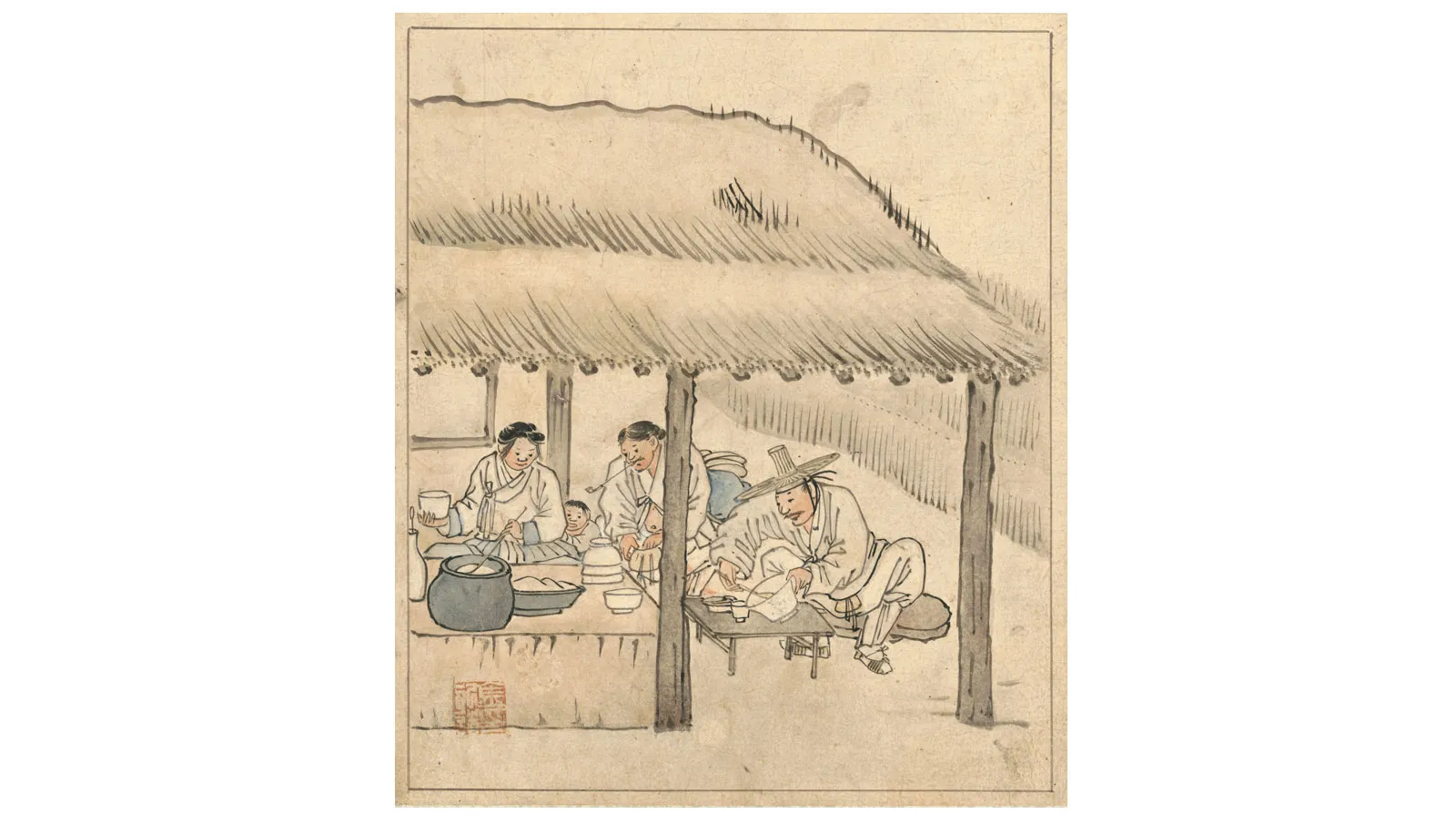
Subsequently gukbap, rice served in soup boiled in a large pot, became established as a quintessential popular Korean food. Scenes of people eating gukbap even appear in genre paintings by late Joseon Dynasty (1392–1910) artist Kim Hong-do, and records of it remain in the cookbook “Gyugonyoram,” published around the 19th century, testament to its widespread popularity.
As a popular food, its ingredients were also diverse. In Joseon society, which valued ancestral rites, various types of meat were widely used, and beef in particular—derived from ceremonial offerings—was utilized in many forms, including brisket, ribs, knee cartilage, ox feet, ox head and organs, as gukbap ingredients.
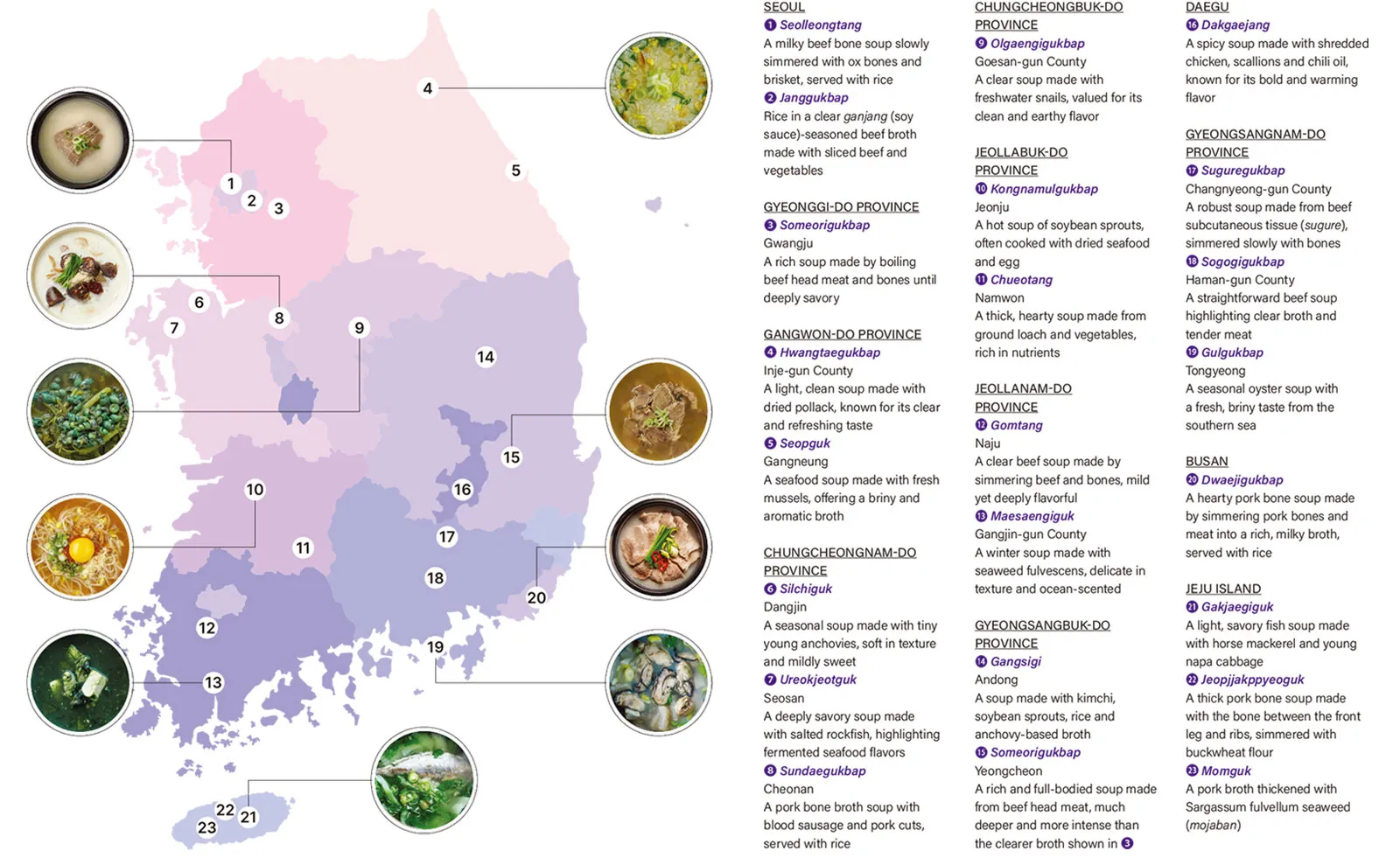
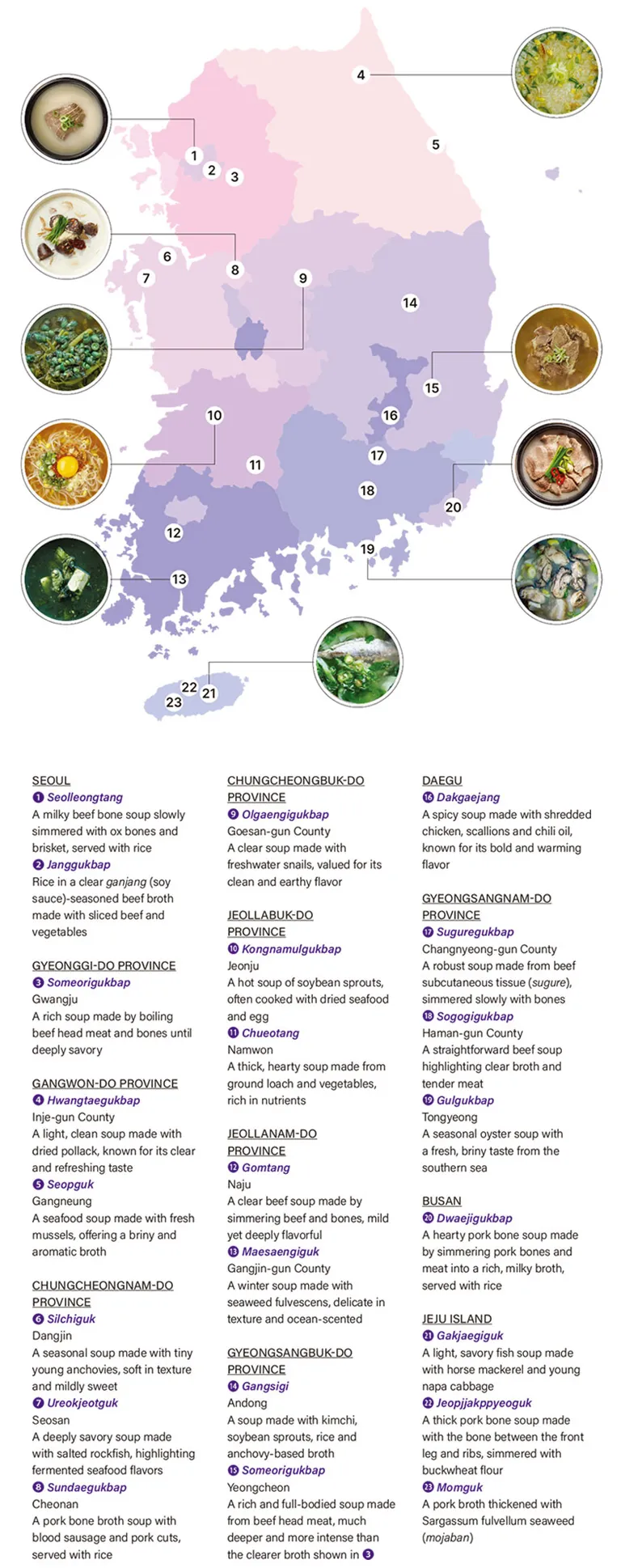
As gukbap spread nationwide, it combined with regional specialties to develop into even more diverse forms. Gukbap varieties not centered on meat naturally emerged, such as olgaengigukbap (fresh-water snail soup), hwangtaegukbap (dried pollack and rice soup), gulgukbap (oyster and rice soup) and kongnamulgukbap (bean sprout and rice soup). Today, countless varieties of gukbap exist, and the culture of visiting specific regions to seek out their unique gukbap, the so-called “gukbap map,” has become its own source of enjoyment.
Having permeated regions and daily life so deeply over such a long time, gukbap has become nearly synonymous with Korean life itself. Among busy office workers, it is sometimes nicknamed “K-fast food” because it provides a hearty meal the moment you sit down. At one point, the phrase “How many bowls of gukbap could you buy with this money?” became popular when discussing an item’s value, with gukbap functioning as a sort of unit of currency in everyday life.
Precisely because it is such an everyday food, gukbap could be there at the end of difficult days, in moments requiring comfort. “KPop Demon Hunters” transplants these sentiments surrounding gukbap into the narrative of a global animation. The bowl of seolleongtang on screen functions not as a simple meal but as a symbol containing Korean daily life, comfort and collective memory.
Seolleongtang
- Soak the brisket in cold water for 1 hour to remove blood.
- Then boil it in a pot (or pressure cooker) with water, onion, whole peppercorns, 1 green onion and garlic.
- When a chopstick inserted into the meat shows no blood and goes through easily, the brisket is cooked. Remove the brisket from the pot and slice it thinly.
- Thinly slice the remaining green onion.
- Fill a pot generously with water, and when it boils, add the somyeon. When it first comes to a rolling boil, add a cup of cold water. When adequately cooked, rinse in cold water.
- Place the somyeon, brisket slices and heated store-bought beef bone broth in a bowl and garnish with sliced green onion.
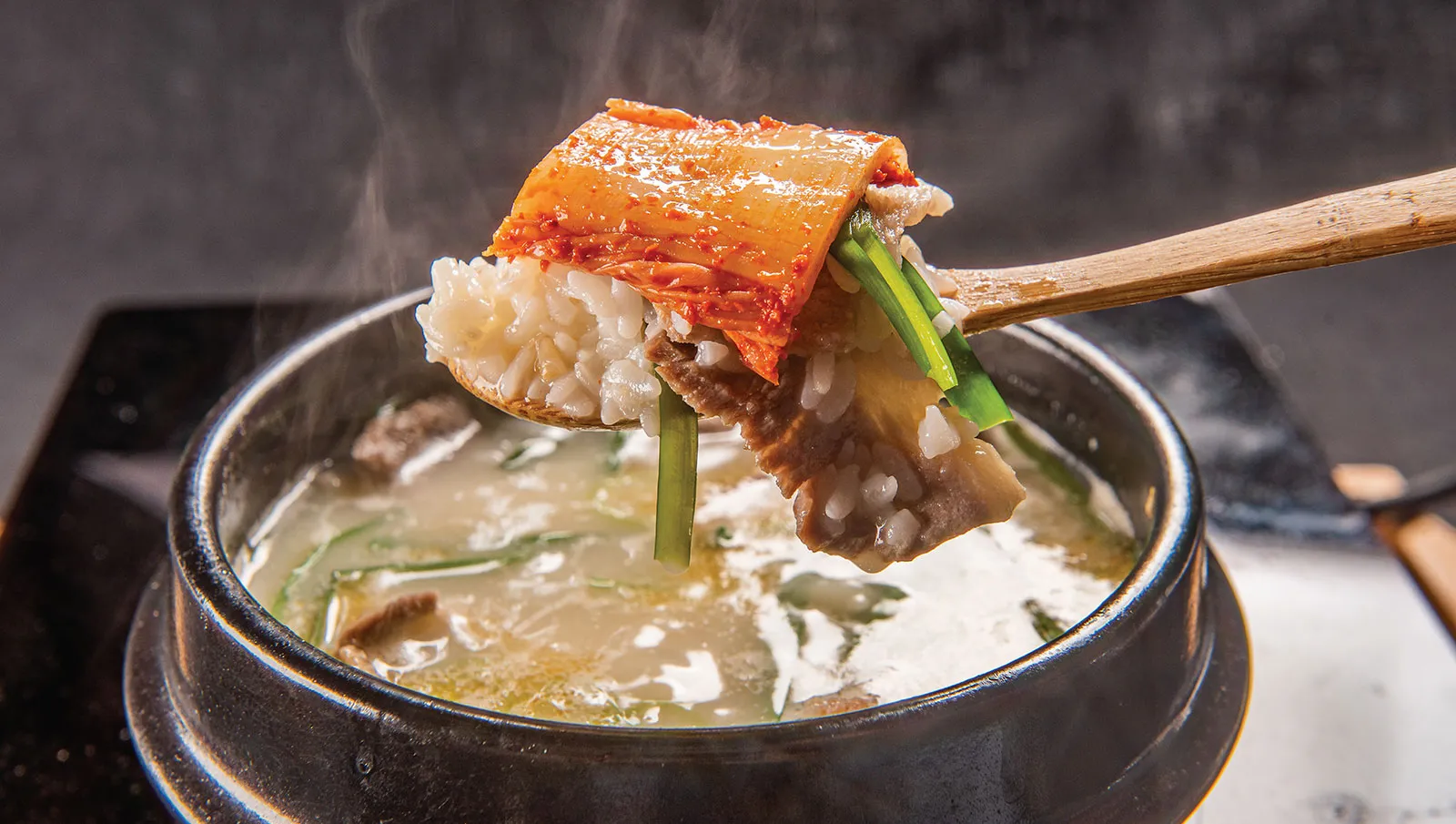
- Season to taste with pepper and salt and serve with rice to mix into the soup.

- Seolleongtang is a dish whose primary flavor comes from beef bones and meat, so there is no vegan option.
- If you want to experience the similar sensibility of Korean gukbap culture, there are gukbap varieties with vegan options available, such as kongnamulgukbap (bean sprout rice soup).
- Kongnamulgukbap is made by bringing broth with bean sprouts, ganjang (soy sauce) and various vegetables to a boil and, like seolleongtang, it is a traditional Korean regional dish eaten with rice mixed into the soup.
- Original seolleongtang removes blood from beef bones and simmers them for hours, using the resulting liquid as the base. However, this takes a very long time, so if you want to taste seolleongtang quickly, it is recommended to use packaged seolleongtang or gomtang (beef bone soup), as shown in this recipe.
- The broth from boiling the brisket can be used as a base for other dishes or mixed with store-bought bone broth to create new gukbap flavors.