
OOB Company designs “experiences” at every touchpoint where consumers come into contact with brands. From physical spaces like pop-up stores to digital content, we consider the most effective ways to convey a brand’s worldview without being constrained by medium.
Prominent examples include “Saerodoowon,” the flagship store for Lotte Chilsung Beverage’s soju (clear liquor) brand Saero and “MY VAULT,” aespa’s pop-up store conducted in collaboration with the global audio streaming service Spotify across Korea, Japan and Thailand.
Designing Experience
Without Boundaries
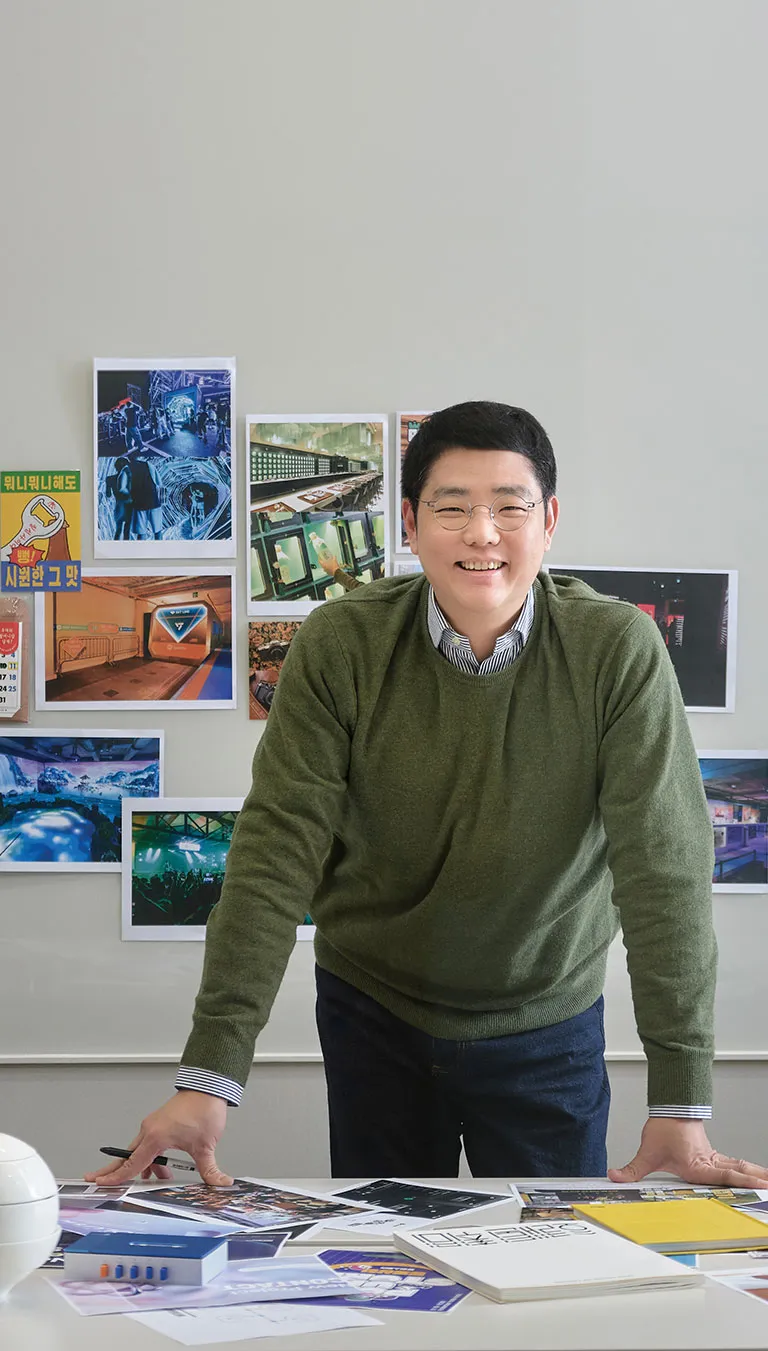
Lee Tae-young
CEO of OOB Company
Cover Story 2
Writer
Sung Ji Yeon
At the forefront of Korea’s pop-up store culture stands OOB Company. The name derives from “out of the box,” and the spaces they design always break free from conventional frameworks. From pre-pop-up digital content to the entire offline space, every moment consumers encounter a brand connects them to one unified experience. For OOB, a pop-up store is not simply a space, but the creation of a brand’s world and the path leading toward it.
Q.
What does OOB Company do?
Q.
Is there a set of criteria for a “successful pop-up store”?
First is whether everything is implemented in the way a client wants. We do not measure success by large crowds alone. A project is successful only when visitors fully experience the brand’s sensitivity within the space, that experience becomes a memory, and a sustainable relationship forms that leads to return visits.
Second is freshness. For OOB, both clients and visitors are important customers. The goal is to leave the impression that spaces designed by OOB always offer a fresh perspective and spark curiosity to visit.
Lastly is whether pop-up store campaigns are positioned within a staged narrative. Just as the Marvel Cinematic Universe gradually builds its world, pop-up stores should guide consumers from brand recognition to understanding and, ultimately, fandom.
For this reason, we design elements that immerse consumers from the digital marketing stage through their visit to the physical space. Like a movie trailer, we preview the pop-up store’s concept through social media, naturally shaping expectations before the visit.
To ensure cohesive planning, we remove everything unnecessary and add only what is needed at each stage. This process defines a successful pop-up store at OOB: a space where consumers freely engage within the brand’s worldview.
Q.
What do you consider most important in the process of organizing a pop-up store?
Creating a space where core fans can get excited about the brand. We believe that if you satisfy your main audience, secondary audiences will follow naturally. While mixing in popular elements would be the safe approach, it’s harder to create a truly unique experience that way.
For the Stray Kids pop-up store, we started with the meaning of the title track “CEREMONY.” We asked ourselves, “If I were a fan, how would I welcome this album?” We realized we didn’t want to create just a simple album purchase experience—we wanted to create a celebration of the album release. So we designed the space not as a store, but as a “festival venue” where artists and fans celebrate their achievements together and cheer each other on.
Q.
What aspects do you find are unique to Korean pop-up stores?
While international pop-up stores are mainly showrooms displaying products or sales-focused, Korean pop-up stores have much more carefully designed experiential elements that consumers directly participate in and complete.
“Sangkwaehwan THE BLUE EXPRESS,” planned in 2024, is one good example. At the time, we wanted to convey the message that “Sangkwaehwan is not simply a hangover remedy, but a hope for another’s refreshing tomorrow.” This is difficult to explain through text alone.
So we made the “process” itself the main content—customers become delivery personnel, wrap gifts for loved ones, attach shipping labels, and send them off. We designed it so consumers would feel the “heart” the brand talks about by physically moving through the space and taking action themselves.
We believe that precise experiential design—where people feel things through their own actions rather than just being shown messages—is what clearly sets Korean pop-up stores apart.
Q.
What’s in store for OOB in the near future?
This March, we’re unveiling a project that will surprise a lot of people. We can’t reveal the name yet, but we’re working on a large-scale project with a well-known IP.

Check out OOB Company’s amazing portfolio.
Country to City, by Pop-up
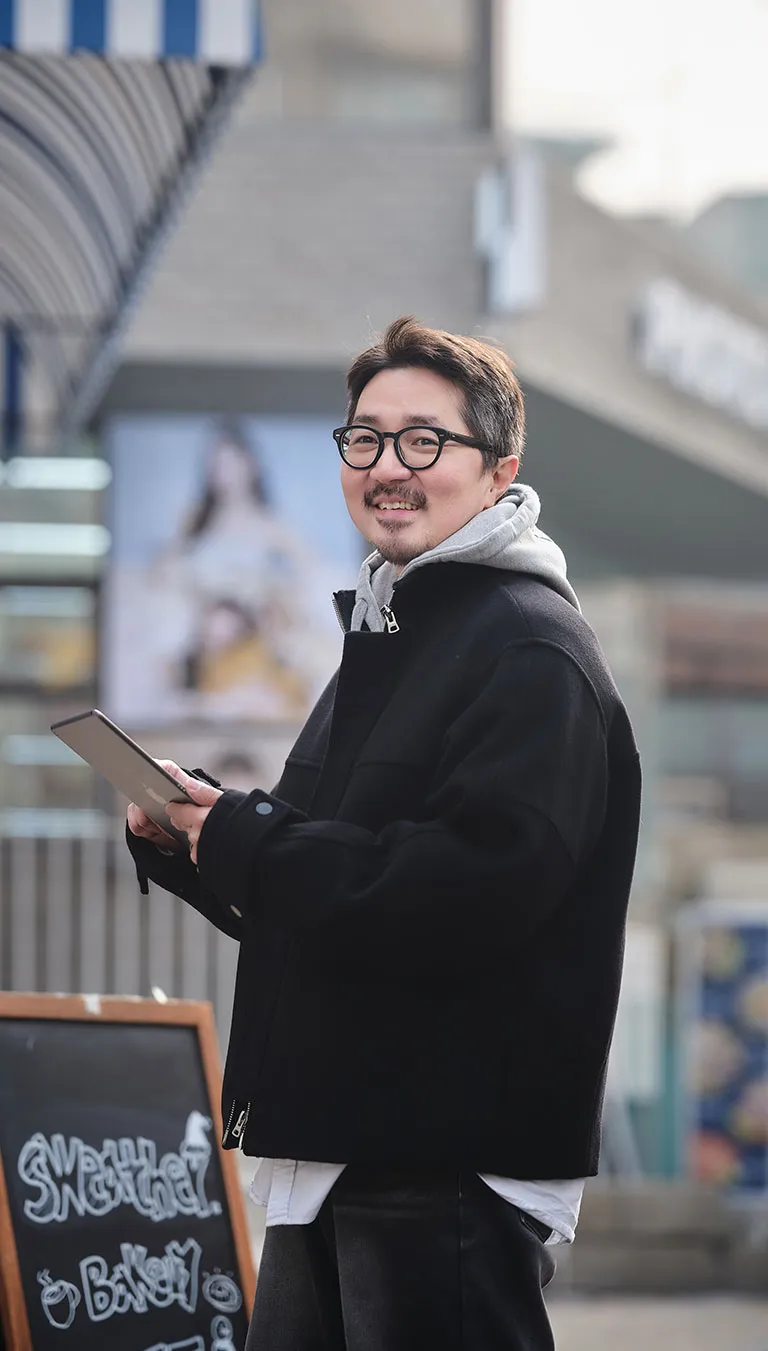
Lee Jae-sun
CEO of Country Citizen
Cover Story 2
Writer
Sung Ji Yeon
“How can we introduce these charming regions to more people?” Country Citizen has focused on the potential of local areas, connecting regions and cities through pop-up stores. They take the messages from regions and institutions that might feel distant, add narrative and trend appeal, and transform local areas into spaces for new experiences. Through their work, local areas reconnect with people.
Q.
How did Country Citizen begin?
Country Citizen was founded in November 2021 to address the problem of regional extinction. At the time, as this issue was becoming urgent nationwide, many local governments were promoting relocation policies to stop it. But people weren’t getting enough information about these regions. When people couldn’t even visit because they ‘didn’t know’ these places existed, there were obvious limits to encouraging relocation.
We believed that with the right medium to introduce regions, we could encourage visits, and those visitors could eventually develop relationships with the region and even consider relocating. That’s the problem Country Citizen set out to solve.
Q.
Why did you choose to use pop-up stores to share information about local areas, local governments and public enterprises?
Korea has many charming regions that aren’t yet widely known. Each region has its own unique sentiments, culture and natural environment—and the content showcasing these is incredibly rich. But regional specialties, festivals and package tours are hard to appreciate unless you actively seek them out or experience them firsthand, and they’re particularly inaccessible to younger generations.
We realized that by combining the pop-up store trend with regional content, we could introduce these regions to a wider range of age groups. Plus, this approach benefits everyone—not just people interested in local content, but also the businesses and organizations active in these regions, who can now promote themselves on a national scale. It creates positive momentum for both potential visitors and local communities.
Q.
Is there something that makes urban consumers enthusiastic about local pop-up stores?
The most important element is design. We put a lot of effort into the space and visual composition so that people of all ages can experience the unique sensibility of local areas in a visceral way. Many partners have approached us for collaboration because they appreciate this aspect.
The second element is our strategy of designing content within the pop-up store in stages. Everything—from the leaflets visitors receive, to the promotional materials they encounter while exploring the space, to the events and hands-on programs—is structured to sequentially build toward a single message and concept. This allows visitors to immerse themselves in the story we want to tell.
Q.
Are there any notable success stories or criteria?
It’s hard to point to a specific project as a success story. What matters as much as the results is how well the project’s “composition” is designed. With that in mind, we have our own success criteria.
First, the concept and message must be clear. The space and content should make it obvious what the pop-up store is trying to communicate.
Second, there must be collaboration with locals. Local institutions, residents, university students and creators using local resources should participate together to showcase the region’s many facets.
Third, it must lead to sustained interest in the region. Rather than being a one-off pop-up store, it’s important to create ways for visitors to maintain their relationship with the region—through regional tour programs, transportation subsidies, regional travel content development and more.
Q.
From your perspective as a pop-up store planner, what’s the biggest advantage of Korean pop-up store culture?
I think it’s the visitors themselves. Korean consumers are trend-conscious and highly active on social media. These are the people who make up the main audience for pop-up stores. They actively engage with the content in the space, and then amplify it through social media. I believe Korean pop-up store culture has grown so rapidly thanks to these active visitors.
Q.
What are your future aspirations?
Going forward, we want to expand nationwide and run pop-up stores in regional hub cities that introduce local content from other parts of the country. Beyond that, we’d like to create opportunities to showcase Korean regions internationally as well. We plan to keep working hard to promote the charming aspects of each Korean region.

Take a look at the great projects created by Country Citizen.