Setting out early from Seoul and making the long journey down to Tongyeong—over an hour by train to Daejeon, then more than three hours by bus from there—any traveler will find it’s not a short trip, but somehow it never feels tedious. You travel knowing that a bright, cheerful landscape is waiting to greet you at the other end.
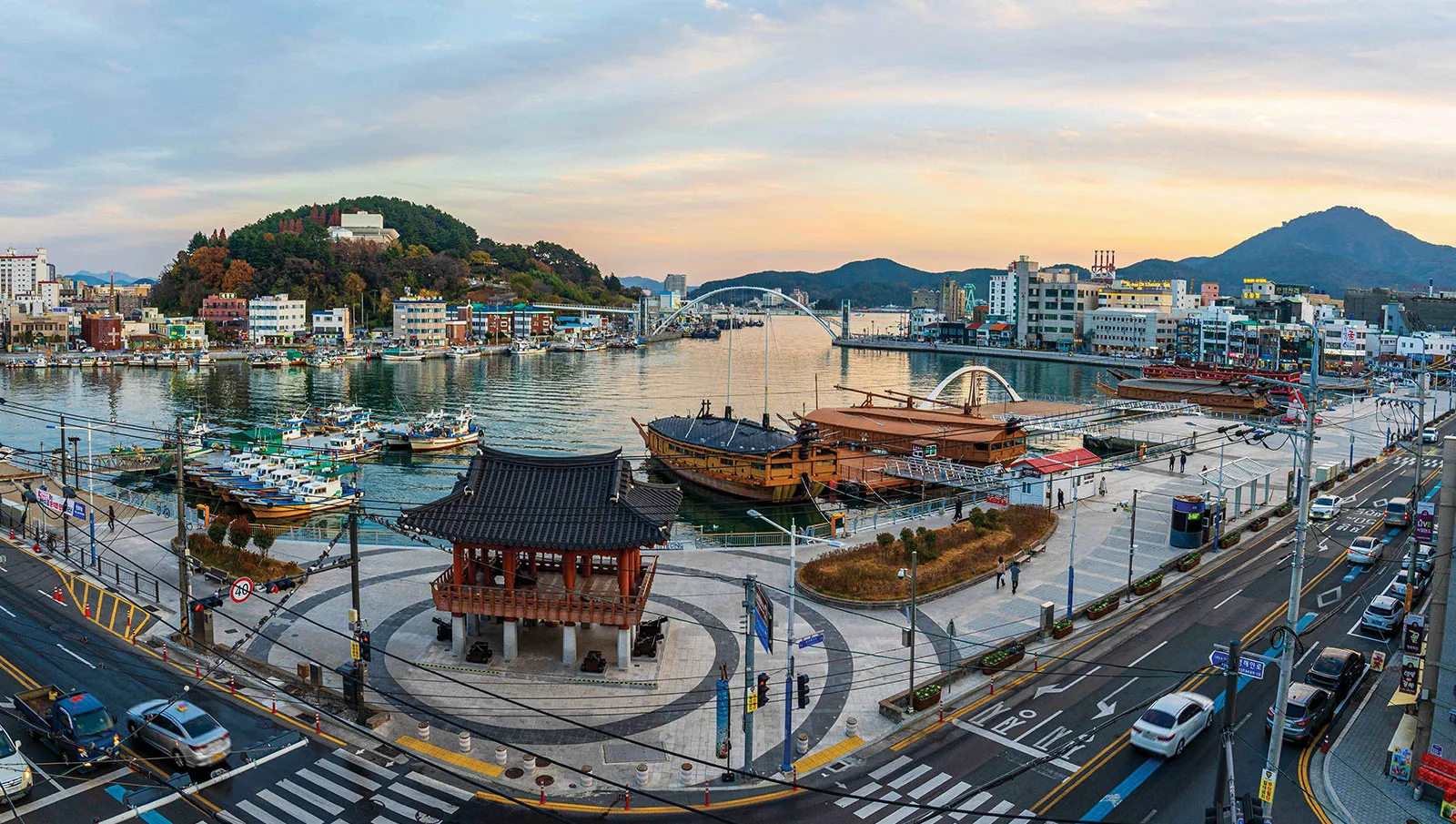
Eager to see the breathtaking views, visitors step off at the bus terminal and make straight for Gangguan Port, the old harbor at the heart of Tongyeong’s historic waterfront. The name means “mouth of the river,” and the harbor sits nestled gently into the land as if cupped in two hands. Small fishing boats bob on the calm surface of the water. A bustling fish market stretches out in front, and behind it, an irregular row of buildings creates a skyline with an almost musical rhythm. The whole scene has an easy charm that puts you immediately at ease.
A large replica Turtle Ship sits anchored at one end of the harbor, and in front of it, performers are deep in rehearsal. April in Tongyeong means the city is saturated with music. The Tongyeong International Music Festival draws artists and audiences from around the world, and the energy spills out into every corner of town. Taking a cue from the moment, music makes the perfect theme for a visit, and the Yun Isang Memorial is the natural place to find where it all began.
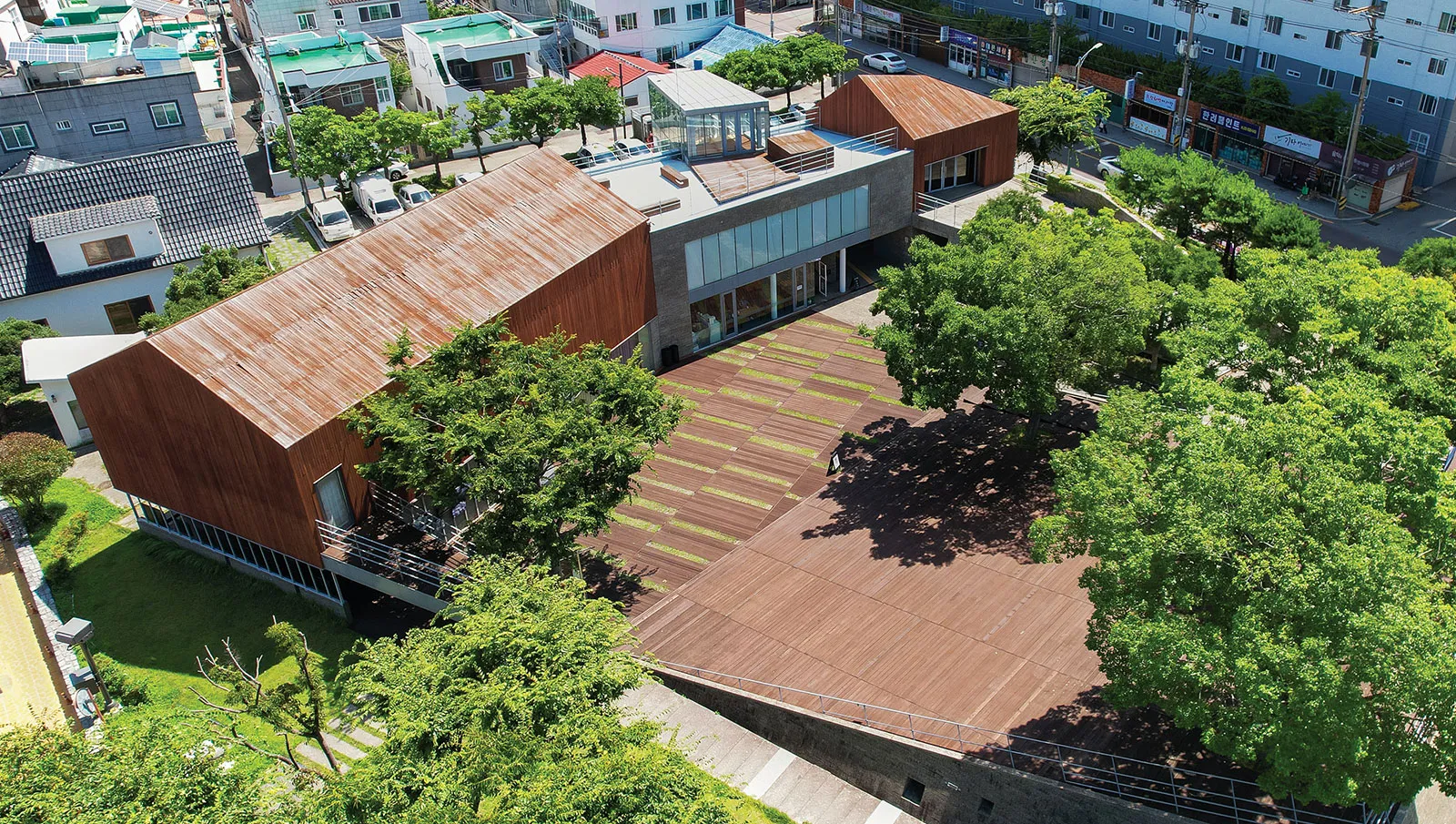
The walk there winds through alleyways covered in music-themed murals. QR codes along the way let visitors scan and listen as they go, a small touch that makes the stroll feel genuinely alive. The memorial itself, dedicated to Tongyeong’s most celebrated composer, feels like a carefully wrapped gift: modest and elegant on the outside, full of meaning within. Yun Isang was a pioneering figure in contemporary classical music, known for his distinctive fusion of Eastern traditional music and Western avant-garde technique. The memorial brings together his scores, personal effects and the full arc of his artistic life. Moving through it feels less like visiting an exhibition and more like spending time with a person.
Outside, a faithful reconstruction of his Berlin residence, where he lived for 25 years, has been built on the grounds. Downstairs, visitors can sit and listen to his compositions surrounded by shelves of music books. Upstairs, his study has been recreated with the sofa, table and objects he actually used. Standing there, one gets the strange and moving sense that he is still present, quietly welcoming everyone who comes to pay their respects.
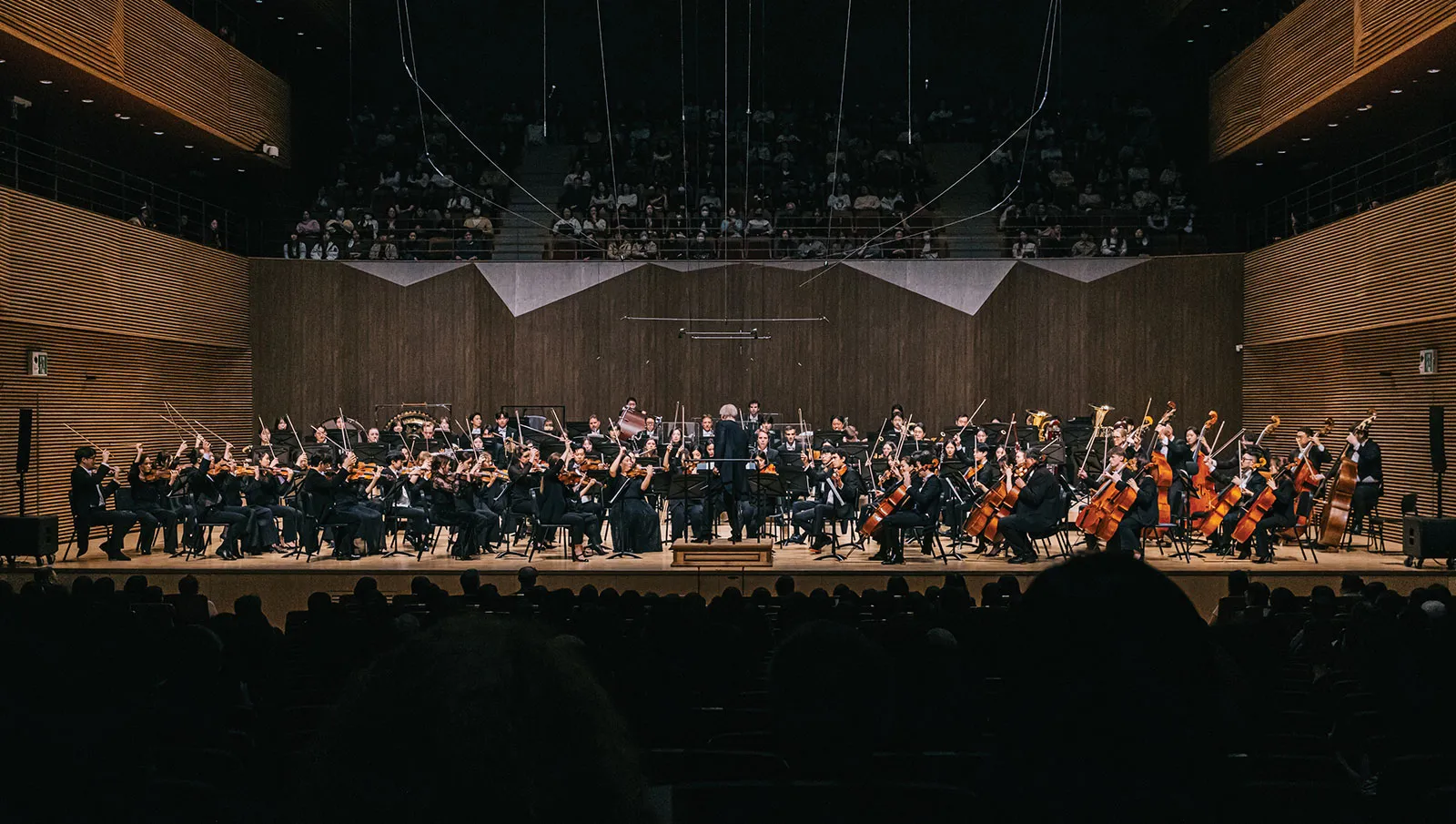
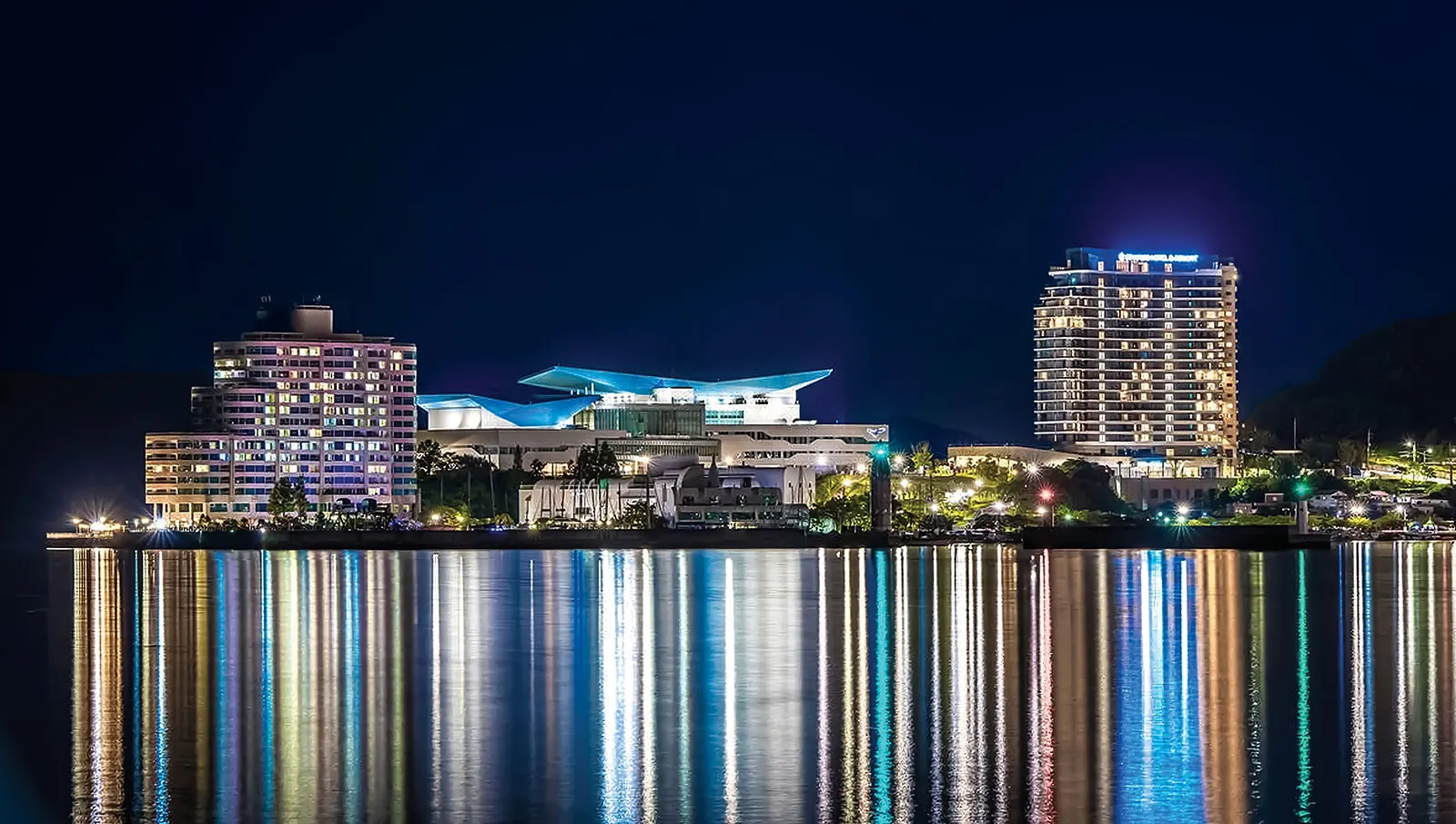
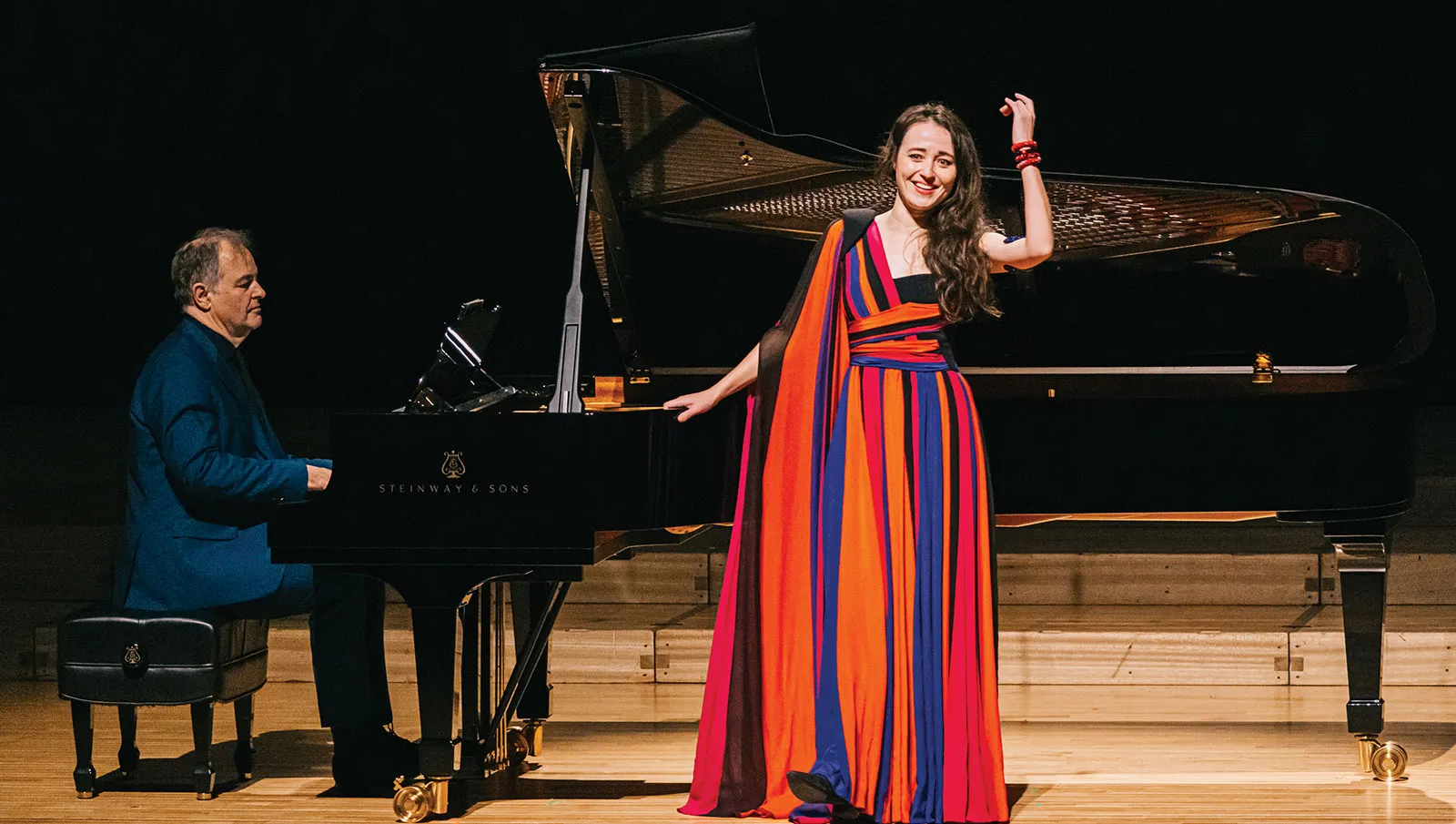
From the memorial, the path leads to the Tongyeong Concert Hall, the grand venue that hosts the festival and was itself built in Yun Isang’s spirit. The building is sweeping and sculptural, its roofline suggesting the arc of a seagull in flight. Inside, the main concert hall seats 1,309 across five levels, and its stage has welcomed some of the finest musicians in the world: pianists Cho Seong-jin and Lim Yunchan, violinist Chung Kyung-wha, and internationally acclaimed orchestras among them.
When the orchestra takes the stage and the conductor raises the baton, the experience is unlike anything a recording can replicate. The sound doesn’t just enter the ears; it seems to move through the whole body. The concentration on the performers’ faces, the physical energy of live music, all of it registers on a level that feels almost visceral. It isn’t just listening. It’s something closer to immersion.
A Harbor Full of Song
Tongyeong

Scattered islands, a generous sea, warm neighbors and music everywhere you turn—Tongyeong has a way of making life feel vivid again. Every moment here seems to unfold like a scene from a stage. It’s the kind of place you go to willingly, and leave reluctantly.
Following the Overture of Spring
Like a Scene from a Film
Walking out of the concert hall still carrying the weight of the music, the world outside looks somehow more cinematic than before. That feeling is worth following.
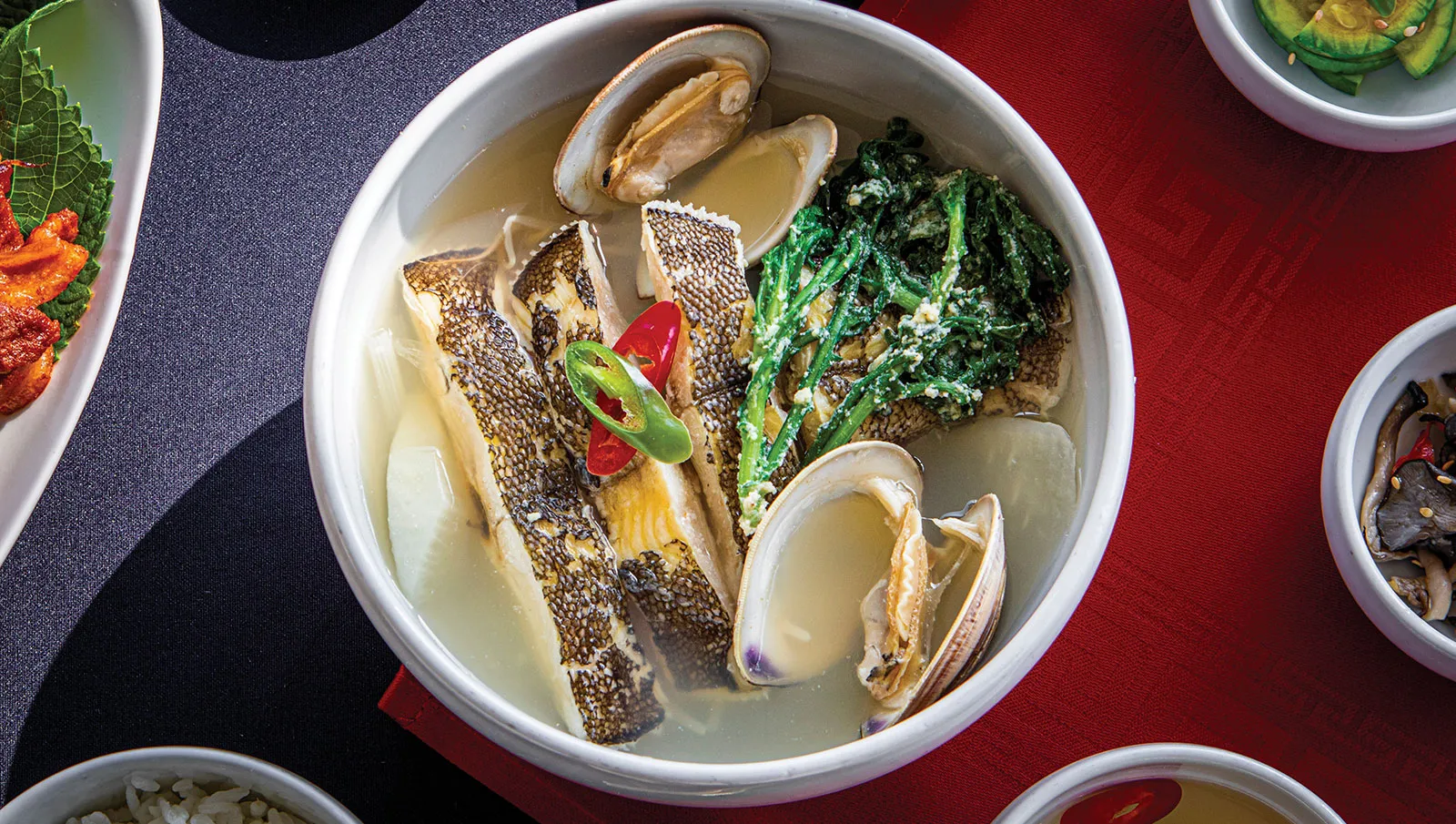
First, though, there is the matter of lunch. Near Tongyeong Port, the waterfront is lined with markets and restaurants, and the smells coming from every direction make the decision feel urgent. A small place serving dodarissukguk (flounder and mugwort soup) is the reward. Made with ingredients at their peak in April, it’s a dish deeply rooted in Tongyeong. The broth is clean and gentle, the fish delicate, and the mugwort (ssuk)—a fragrant spring herb that grows wild in the mountains—adds a distinct seasonal note. Every spoonful tastes like spring in a bowl.
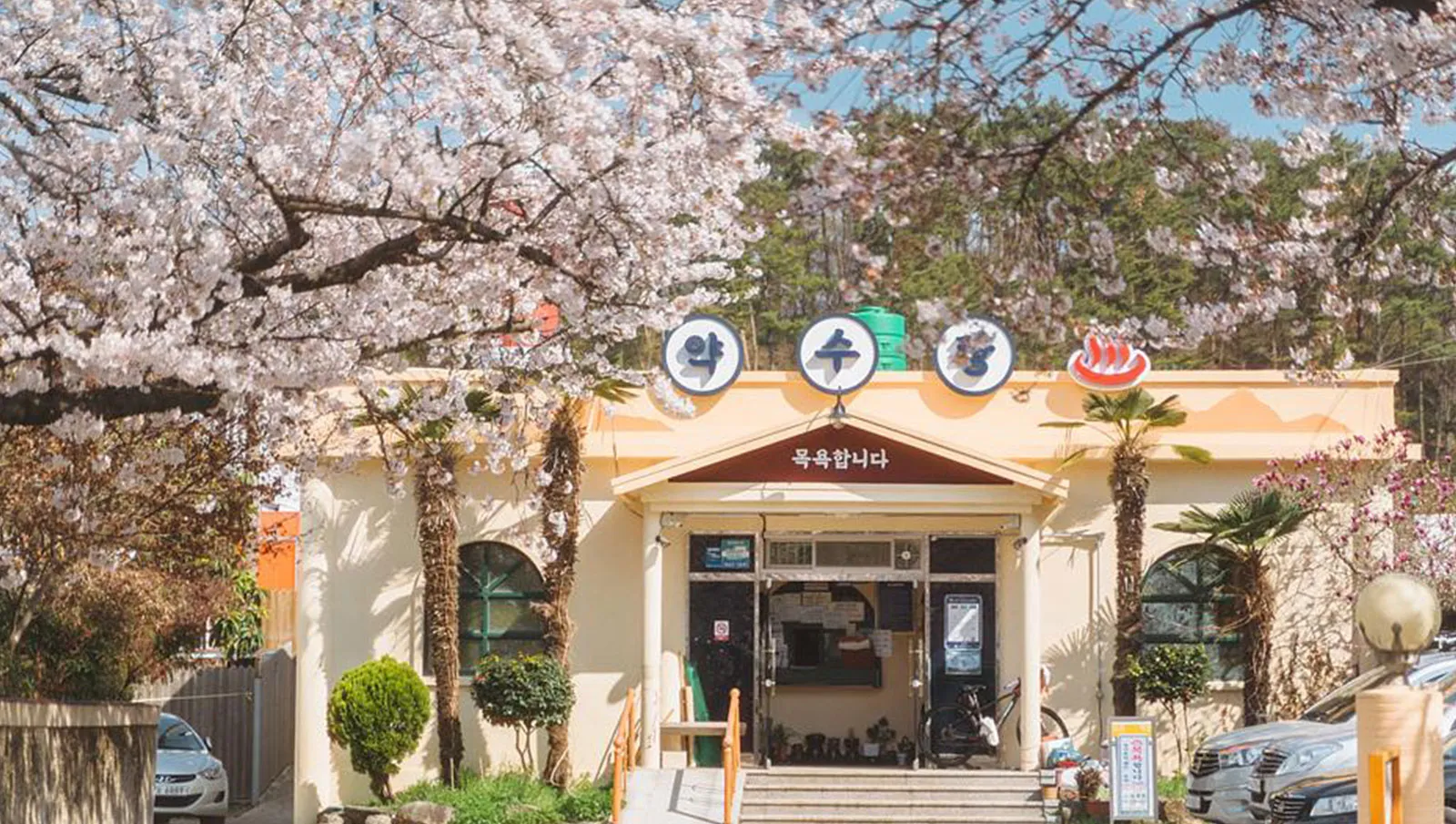
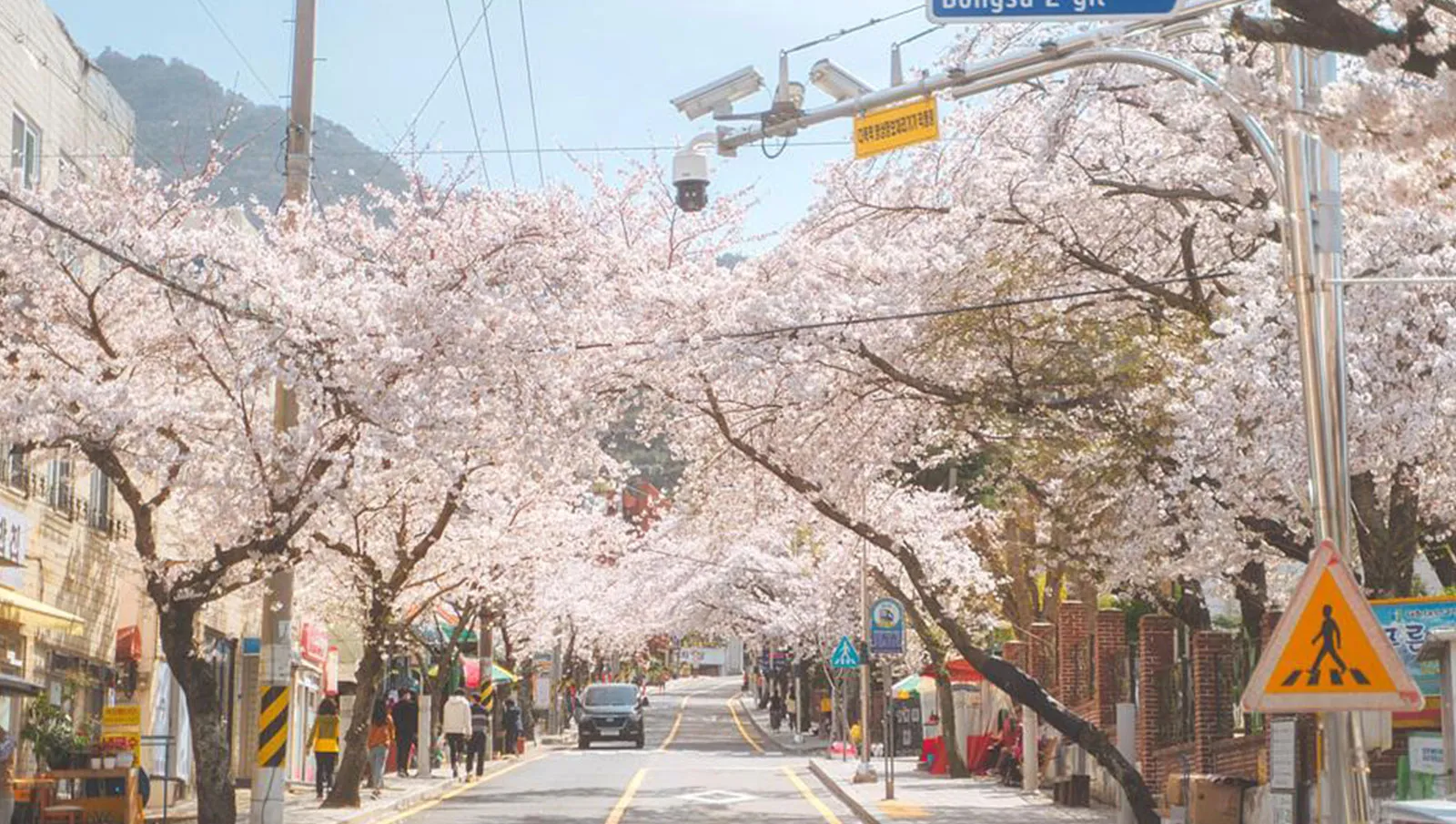
After lunch, the neighborhood of Bongsugol awaits: a cluster of small cafés and guesthouses currently transformed by cherry blossoms. The trees are in full, extravagant bloom, so dense and luminous that the whole street seems lit from within. People stop every few steps to take photos, and spontaneous exclamations break out around every corner.
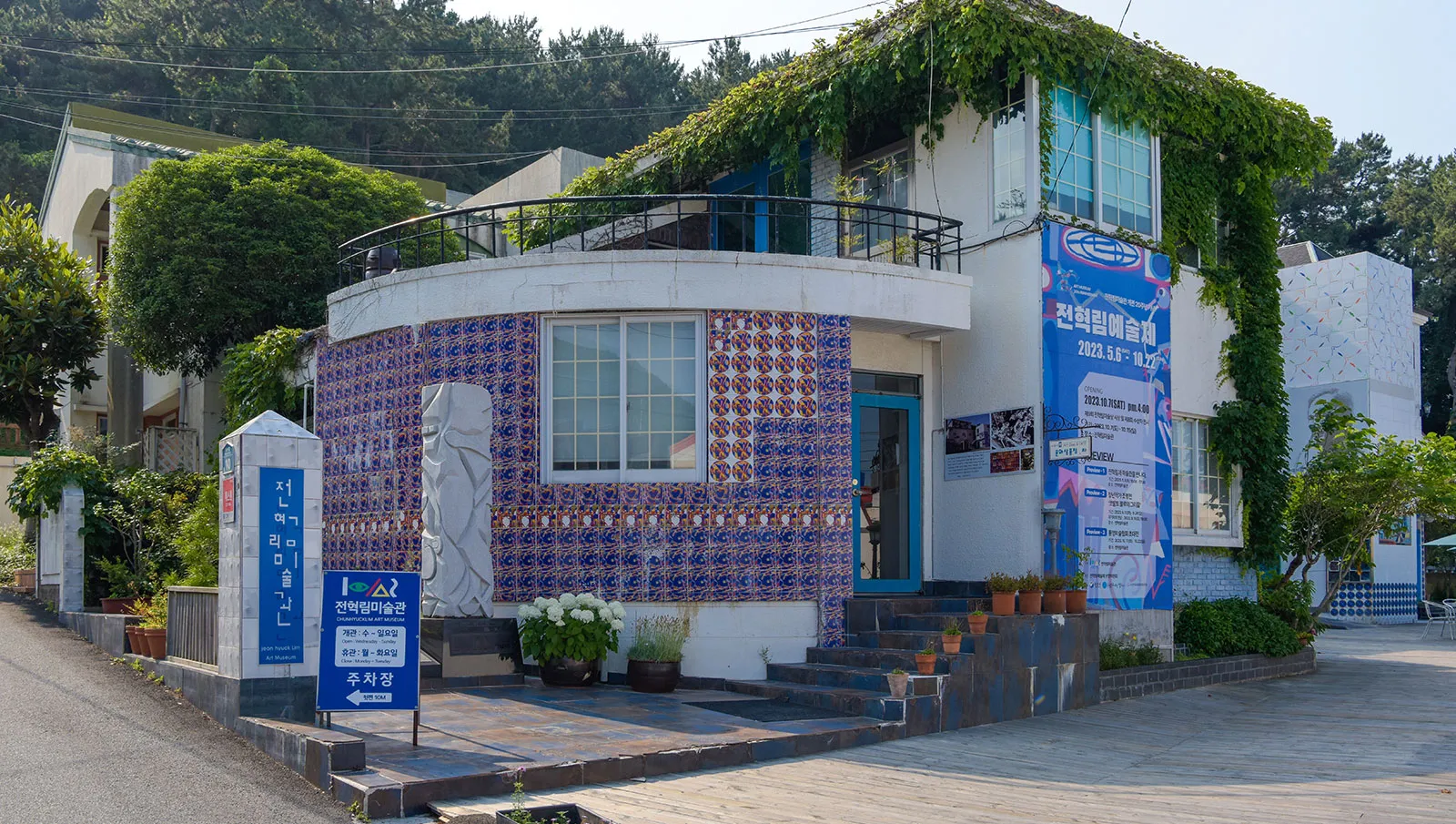
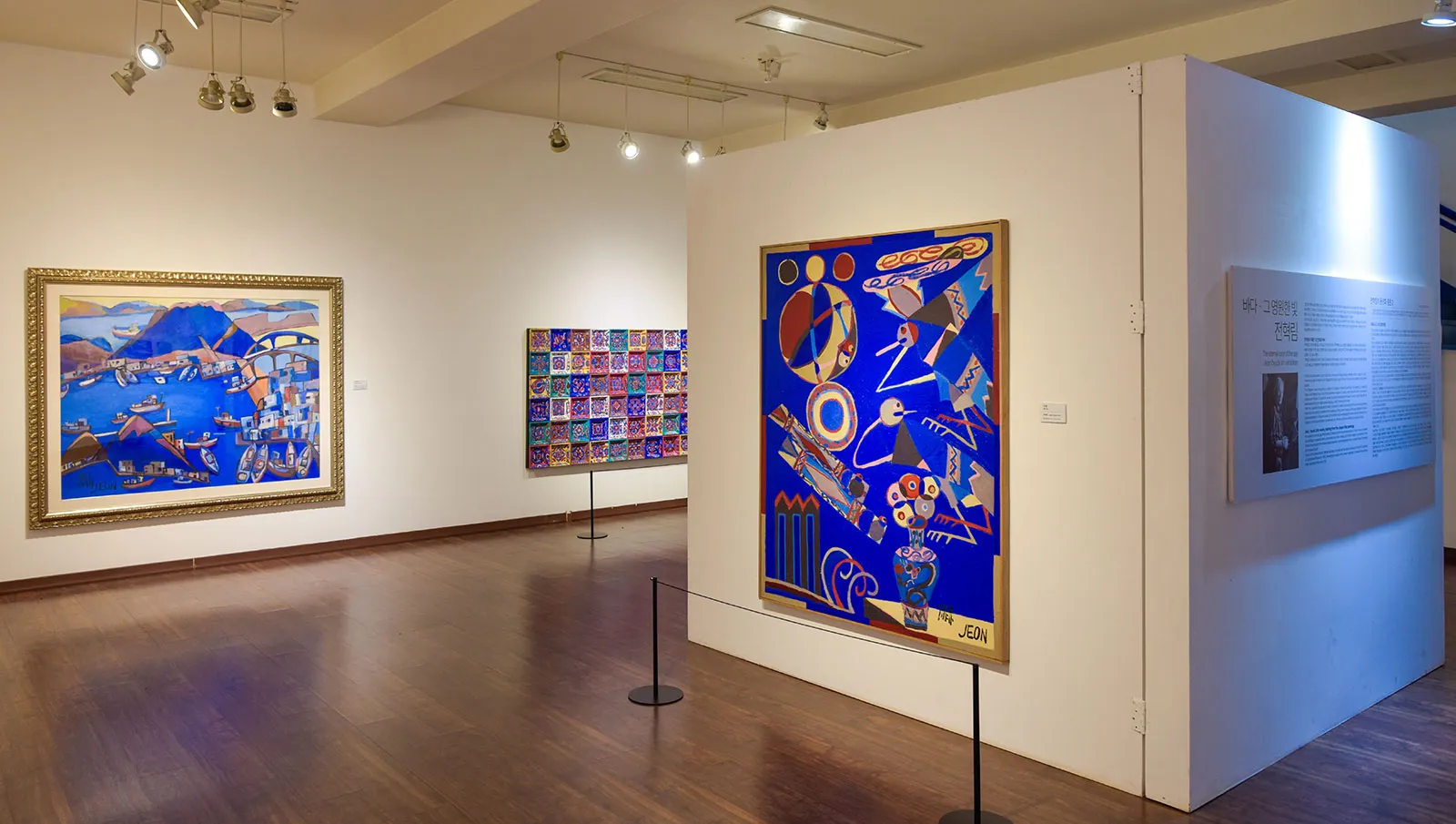
A spring afternoon this lovely deserves to be prolonged. The blossoms lead naturally to the Jeon Hyuck Lim Museum of Art, its building itself a burst of color against the hillside. Jeon Hyuck Lim, sometimes called a magician of color and a pioneer of Korean abstract painting, was also a son of Tongyeong, and this museum gathers the full range of his work. The first two floors are his; the third belongs to his son, Jeon Young Geun. Their styles are distinct, but both have painted Tongyeong with unmistakable love, and standing among their canvases one feels the depth of that attachment.
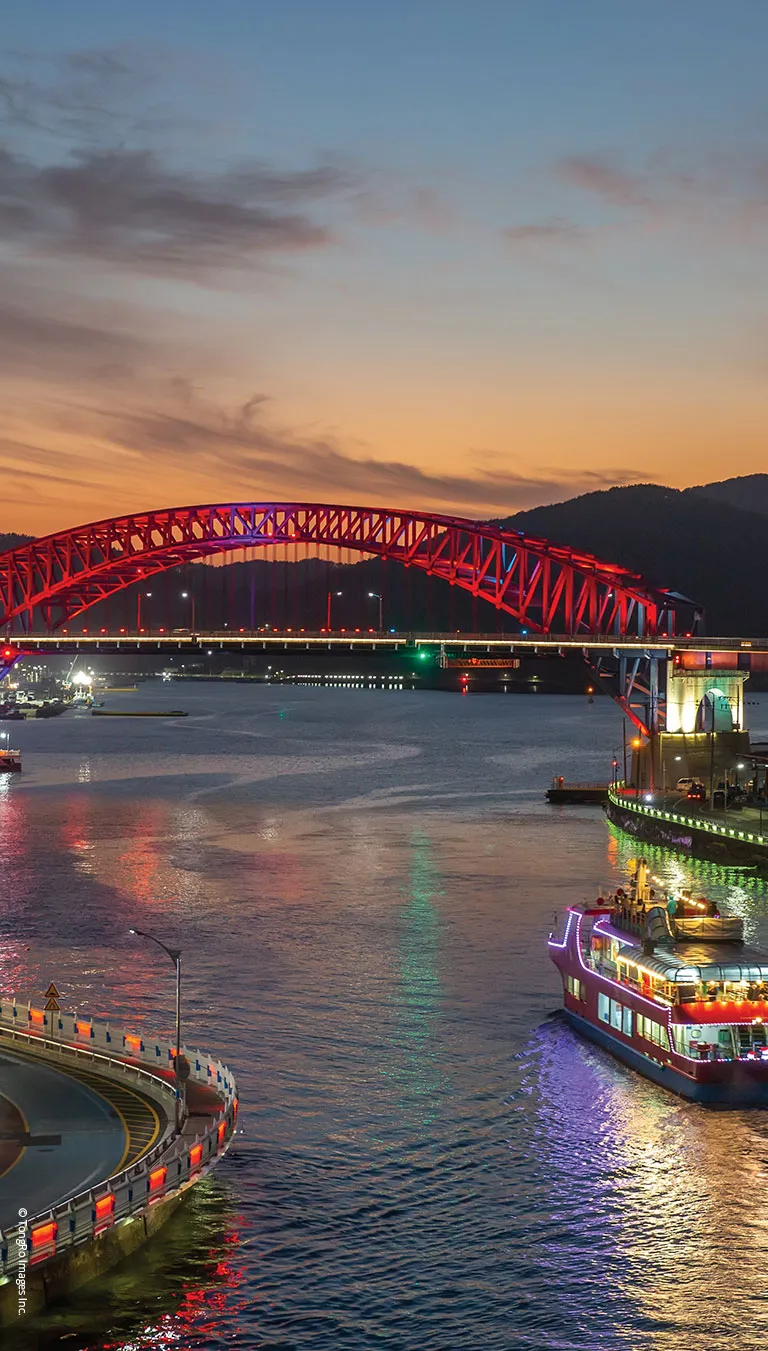
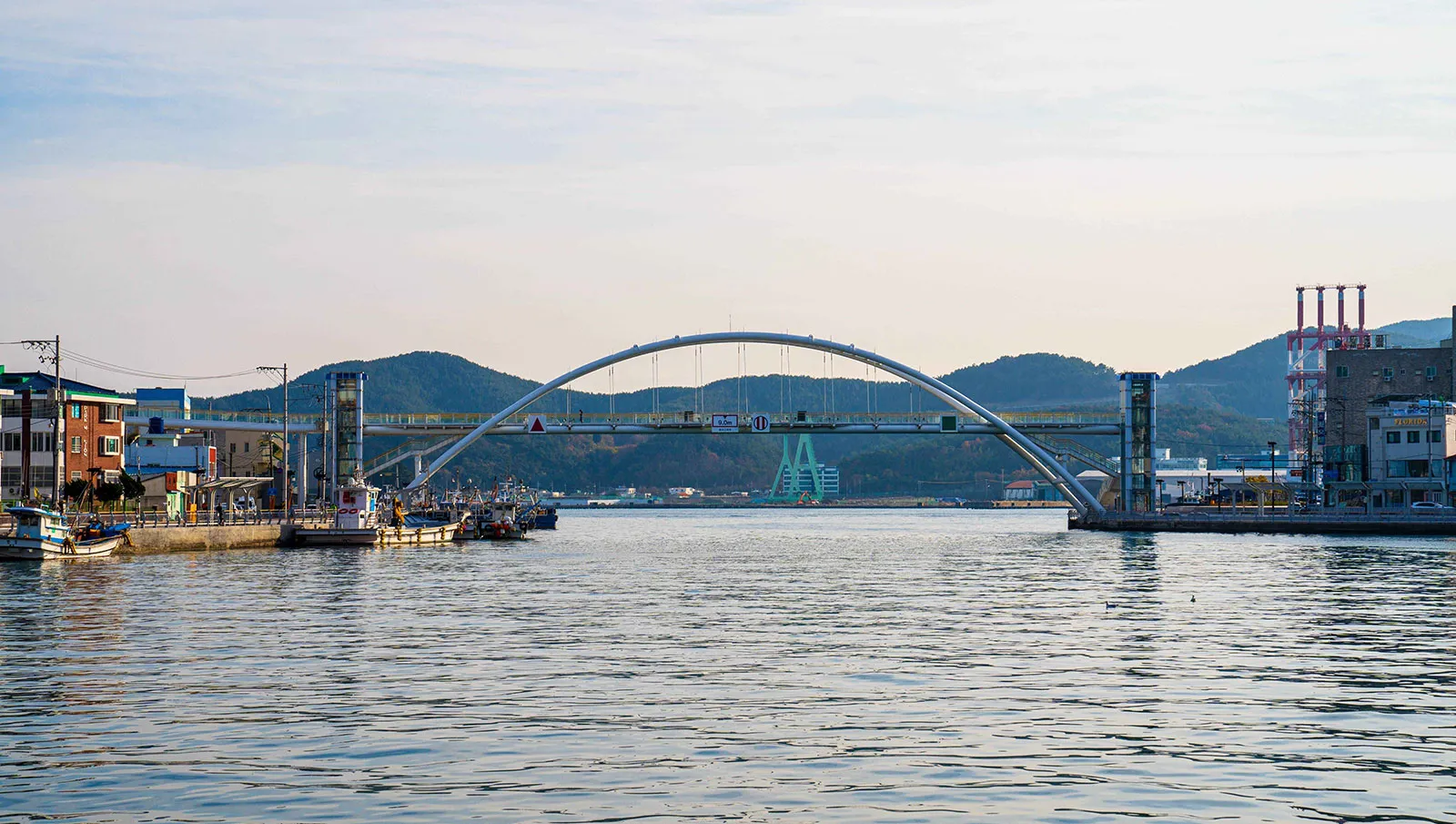
By the time all these moments have passed, the sun is beginning to go down. The path leads back to Gangguan Port, where the day began. As the sky darkens, the lights on Gangguan Bridge come on one by one, and the buildings lining the harbor light up in warm succession, casting a soft glow across the water. People are out walking, or sitting on the harbor steps, taking it all in.
Finding a spot among them and watching the lights shimmer on the surface of the sea, no one wants to leave. Tongyeong has a way of working itself under the skin, filling every sense with something warm and beautiful. A city you want to linger in for days. That’s what Tongyeong becomes, once you’ve been.
Festival
Tongyeong International Music Festival
The Tongyeong International Music Festival was founded to honor Yun Isang, the world-renowned composer who was born here, and his enduring legacy. Each year’s program balances contemporary and modern works, including Yun Isang’s own compositions, with repertoire familiar to broader classical audiences. The festival also serves as a platform for discovering the next generation of composers and performers, and aims to function as a cultural bridge between East and West.
This year’s theme was “FACE the DEPTH.” The program included a piano recital by Cho Seong-jin, the Gyeonggi Philharmonic Orchestra with Kim Sunwook, the Verbier Festival Chamber Orchestra with Nicolas Altstaedt and Kim Yubeen, a concert featuring violinist Augustin Hadelich and the Modigliani Quartet, among others. A total of 26 official performances were scheduled.
Running alongside the main festival was the 2026 Tongyeong Fringe, a free, open-genre performance series held across the city, including at Gangguan Port and the Yun Isang Memorial. No tickets were required, making it a perfect option for anyone who didn’t manage to book festival seats in advance. This year’s Fringe lineup spanned electronic music (Melki), punk rock (Soeumbaelkwang), R&B (A.TRAIN) and Korean geomungo (a traditional Korean string instrument) crossover (Hwang Gina).

- March 27 - April 5, 2026
- Tongyeong Concert Hall (with Tongyeong Fringe 2026 throughout the city)