The April issue spotlights convenience store culture, a defining fixture of everyday life in Korea. The cover features AI-generated imagery of Korea’s leading convenience store brands: CU by BGF Retail, GS25 by GS Retail, emart24 by Shinsegae Group and 7-Eleven (Korea Seven) by Lotte Group.
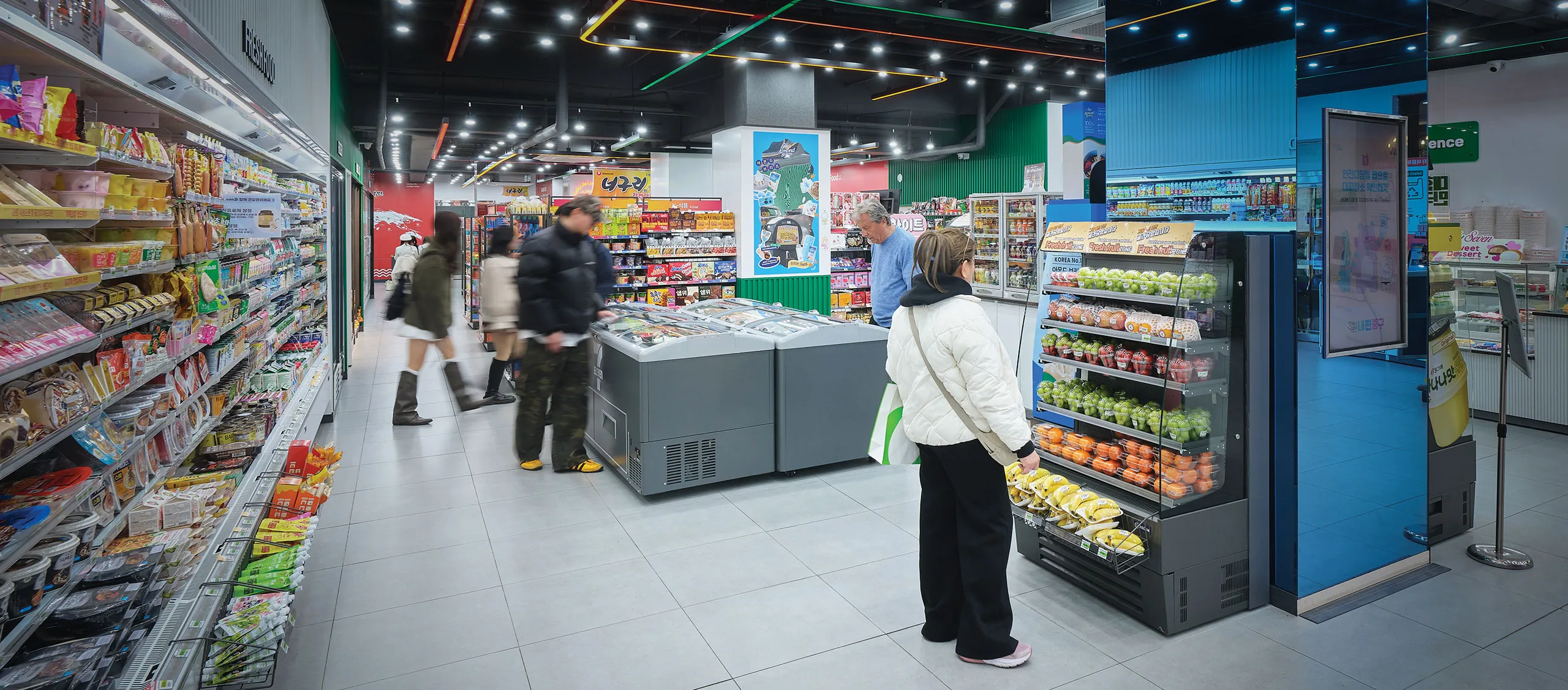
From solving life’s small inconveniences to delivering unexpected moments of joy, convenience stores are reshaping everyday life in Korea.
Beyond the Corner Store: How Korea Transformed Convenience Retail
Cover Story 1
There’s a place Koreans gravitate toward without a second thought, whether they’re feeling peckish or need something in a pinch. That place is the convenience store, a modern neighborhood staple. Korea now ranks first in the world in convenience stores per capita, cementing its status as an undisputed “convenience store kingdom.” Korean convenience stores have evolved far beyond simple retail outlets into hubs of cutting-edge technology and trends, as well as multifaceted cultural spaces offering one-of-a-kind experiences.
A Platform for Korean Culture, Going Global In Pursuit of the Ultimate Dessert
Chae Oh-jeong
Head of Global Business Team, GS Retail Co., Ltd.
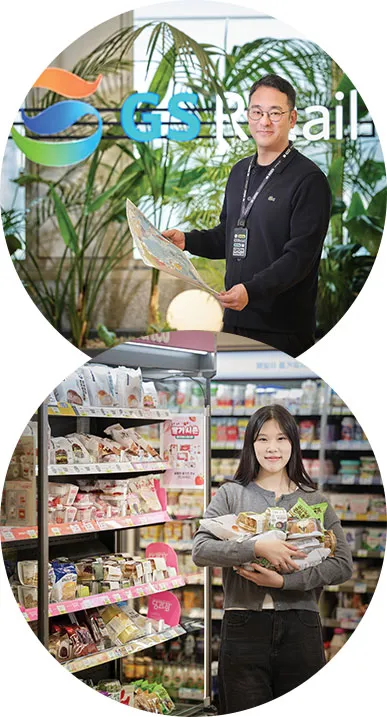
Imagine being able to experience the Korean culture you’ve seen on TV dramas and YouTube—right around the corner from your home. One company is turning that vision into reality. As of 2026, GS25 has surpassed 700 locations worldwide outside of Korea. But these overseas stores are more than just retail outlets. They’ve become spaces where customers can sample Korean products, enjoy Korean food, and naturally immerse themselves in Korean cultural life. While browsing the shelves or sitting down for a meal, shoppers find themselves inside a small hub of the Korean Wave—embedded in their own neighborhood.
Kwon Yujin
Merchandiser, Snack Foods Team, BGF Retail
Where do Korean dessert trends come from? High-end cafés? Department store bakeries? Independent patisseries? The answer might surprise you: convenience stores. They respond to trends faster than almost anyone, offering a remarkable variety of desserts at accessible prices. Among them, CU—operated by BGF Retail—has established itself as a brand that doesn’t just follow dessert trends but creates them. Kwon Yujin, the merchandiser (MD) behind CU’s dessert lineup, is driven by a vision that goes beyond a simple sweet bite: she wants every product to leave customers with a genuinely enjoyable experience.
Among the dishes that captured the attention of both Korean and international viewers on “Culinary Class Wars 2”—a fierce cooking competition featuring 100 top chefs—one stood out above the rest: jatguksu, a noodle dish made from pine nuts. Despite containing no meat or strong spices whatsoever and being entirely plant-based, this single bowl earned a reputation as a dish you just can’t stop craving. And within it lies a tradition and a philosophy.
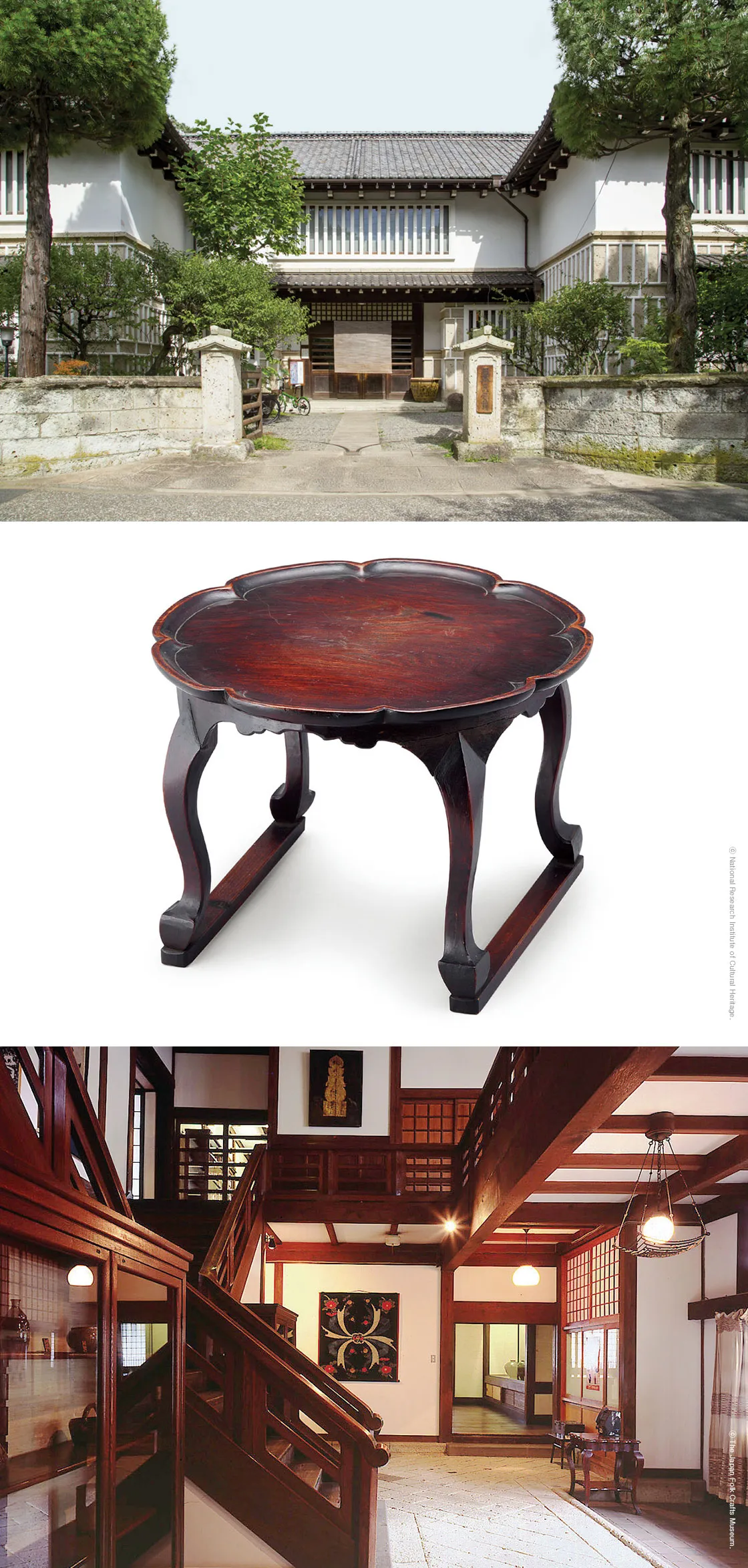
In a backstreet of Tokyo, a museum houses the handiwork of countless unnamed craftspeople gathered from around the world. This is the Japan Folk Crafts Museum. Step into one of its galleries and you’ll find wooden furniture, lacquered boxes and palm-sized objects bearing the distinctive aesthetic sensibility of Joseon Dynasty (1392-1910, Korea’s last and longest-lived imperial dynasty), arranged with quiet care. At the center of it all stands an object whose presence, though unassuming, is impossible to ignore. It is the soban—a small Korean dining table.