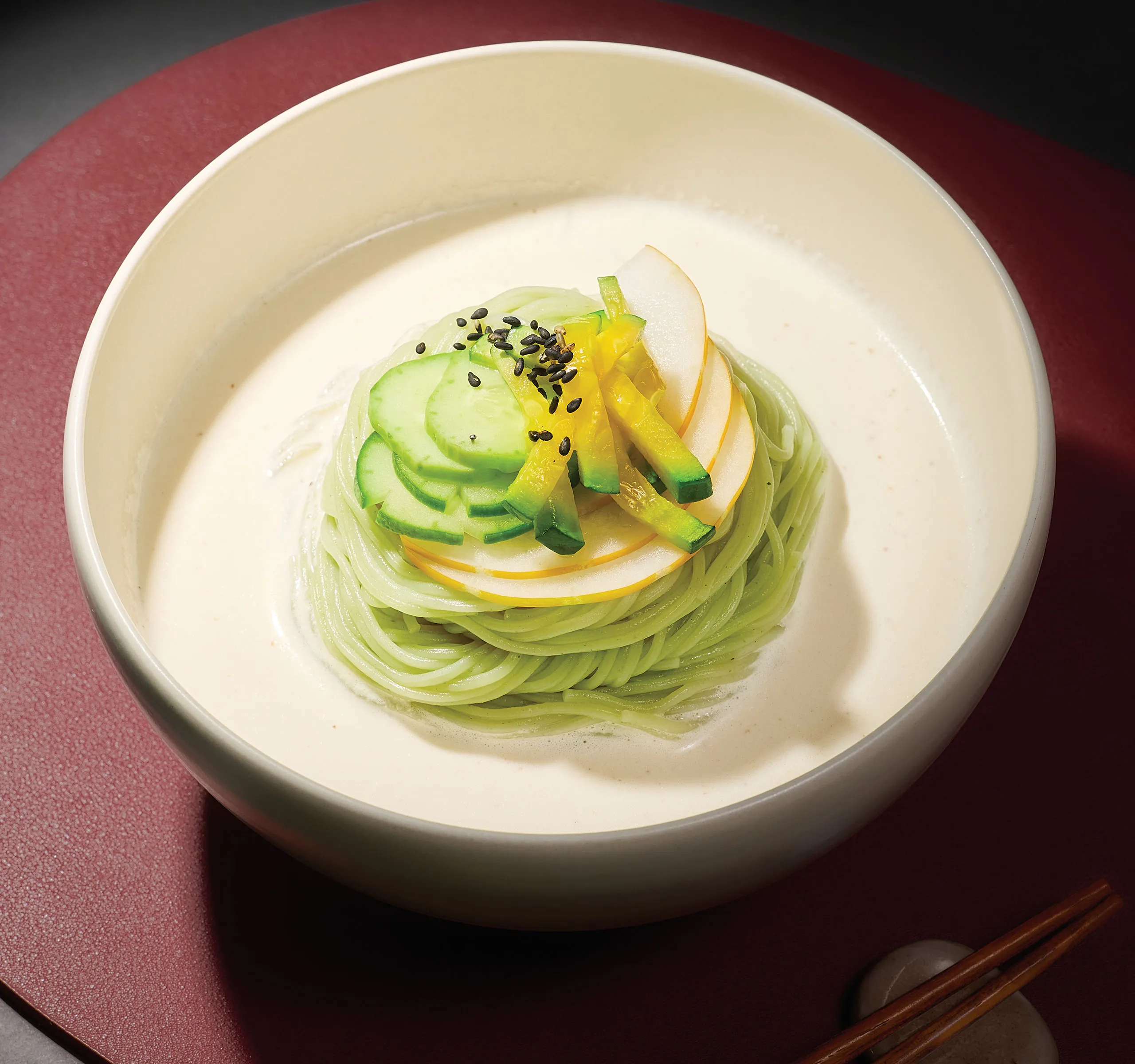
Netflix’s “Culinary Class Wars 2” is a reality competition in which 100 chefs battle it out through cooking. Among the participants boasting impressive careers, one person piqued the curiosity of many: “Venerable Seonjae.” The Korean temple cuisine she would present forbids the taking of life, meaning no animal-based ingredients such as meat or fish are used—and even the osinchae (the five pungent vegetables used in ordinary vegetarian cooking: green onions, garlic, chives, wild garlic and onions) are off the table. People’s reactions were uniform: “How good could temple food really be?” or “She has to compete against everyone else in this culinary war armed with nothing but vegetables and a few fermented pastes?” Expectations were low.
Yet every dish she presented was met with lavish praise. Of these, the one that drew the most attention from viewers and the press was “Seungso-jat-yachae-guksu” (jatguksu, hereafter). Seungso means “a venerable’s smile”—the name carrying the meaning that this noodle dish brings a smile to a venerable’s face even through the hardships of spiritual practice. What kind of flavor could possibly make a venerable smile, especially in a bowl of noodles made with jat (pine nuts) and guksu (noodles)?
With that name raising expectations, a look at the preparation method is surprisingly simple. Pine nuts are toasted in a dry pan. To draw out their flavor as fully as possible, they are finely chopped, then blended with water and salt. That is the broth. The noodles are no more complicated: blanched zucchini and spinach are blended and strained, and the resulting liquid is gradually worked into flour to form a dough. Noodles are made with a pasta machine, boiled, the pine nut broth is poured over them, and cucumber, Korean melon and sesame seeds are added as garnish.
The ingredients and process seem simple—but the flavor apparently is not. The judges tasting these noodles broke into smiles, and expressions of wonder followed. One chef offered this assessment: “The natural flavors of the ingredients are maximized. This is not a dish an ordinary person could make.” The rich nuttiness of the pine nuts envelops the palate, and trailing behind the chewy noodles, a refreshing hint of cucumber and melon spreads gently. The colors, too, are beautiful—a feast for the eyes as well.
The Richness of Simplicity
Jatguksu

Among the dishes that captured the attention of both Korean and international viewers on “Culinary Class Wars 2”—a fierce cooking competition featuring 100 top chefs—one stood out above the rest: jatguksu, a noodle dish made from pine nuts. Despite containing no meat or strong spices whatsoever and being entirely plant-based, this single bowl earned a reputation as a dish you just can’t stop craving. And within it lies a tradition and a philosophy.
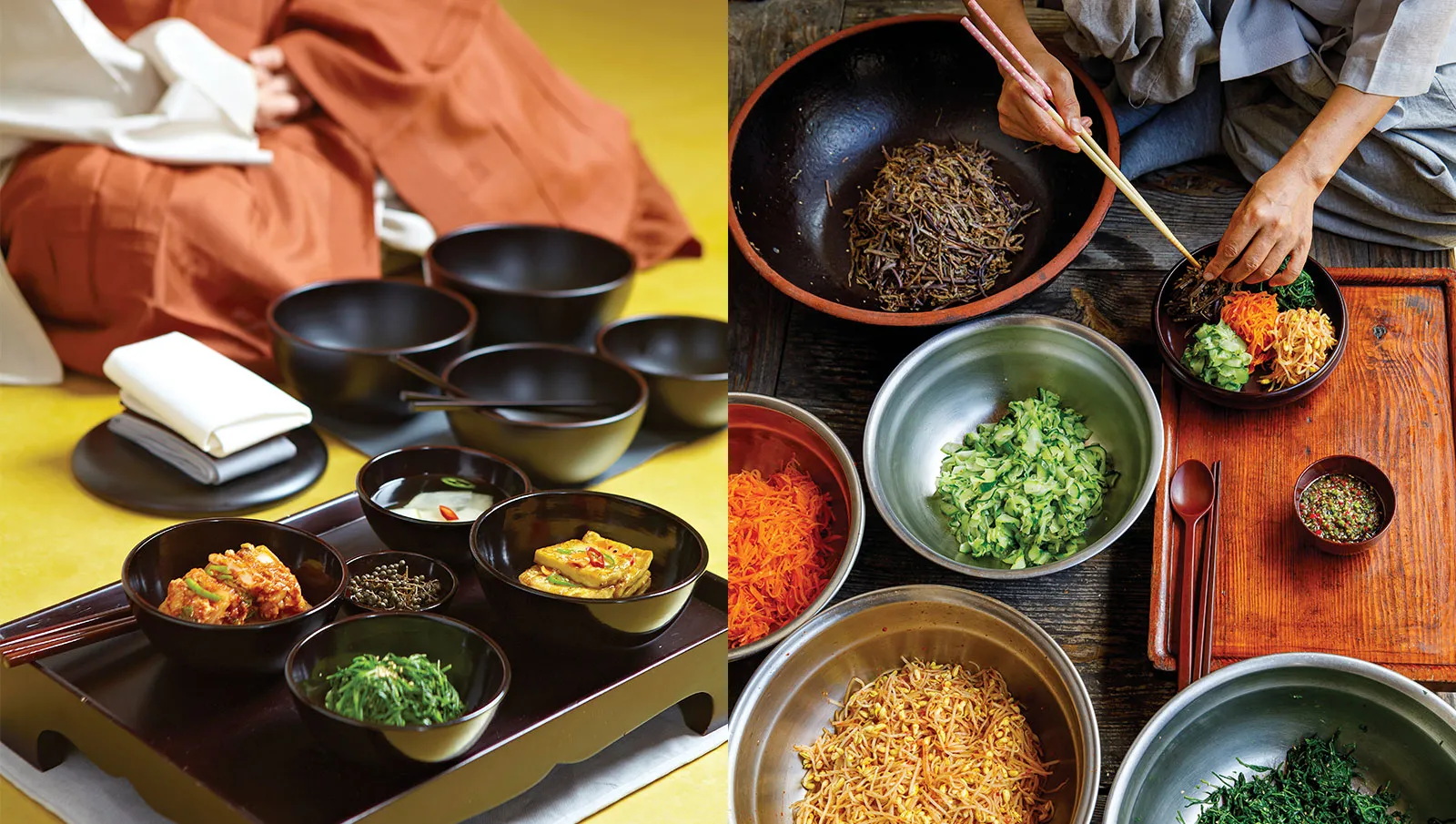
(Right) Temple food preparation at Cheongamsa Temple / © Cultural Corps of Korean Buddhism.
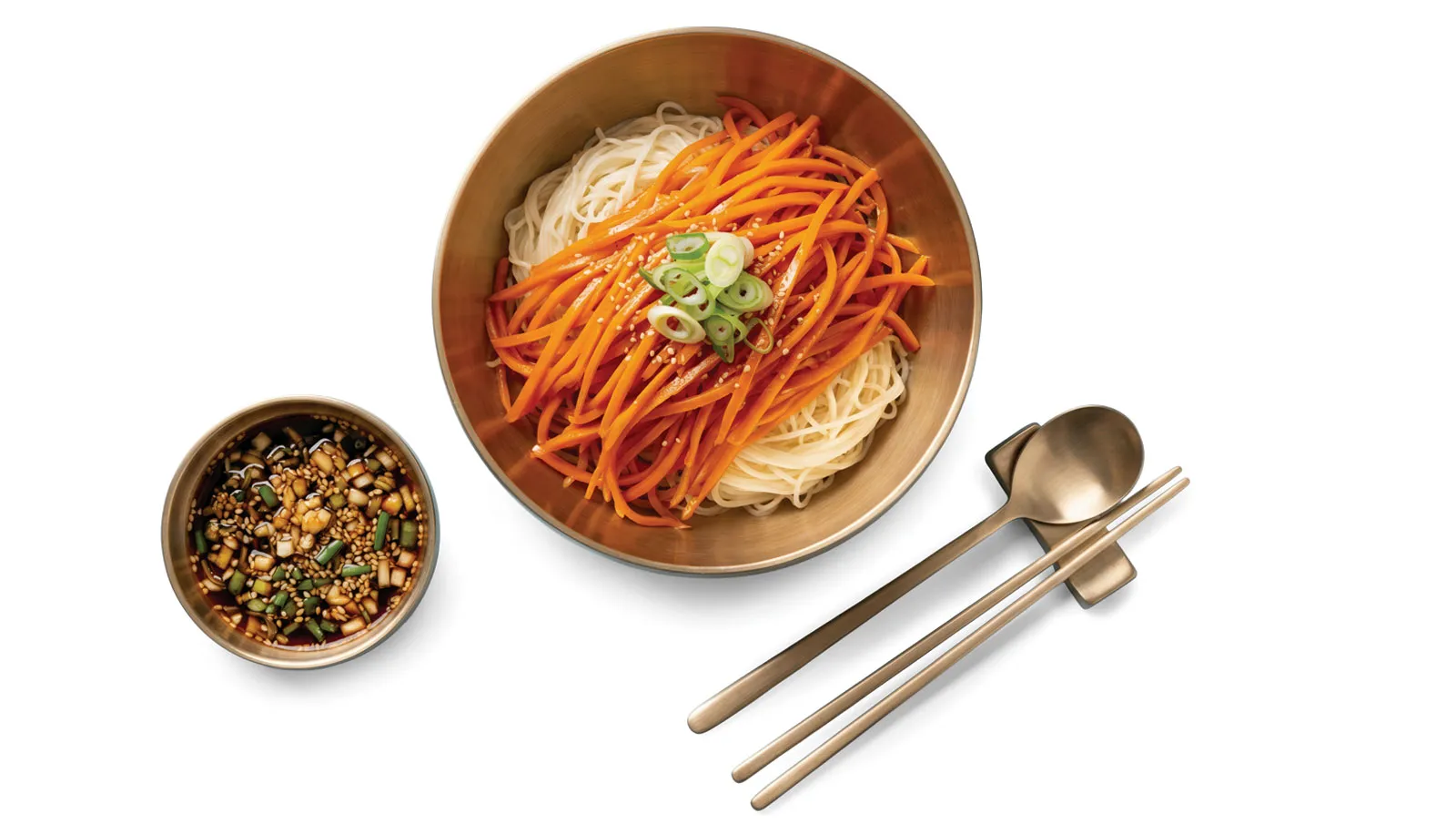
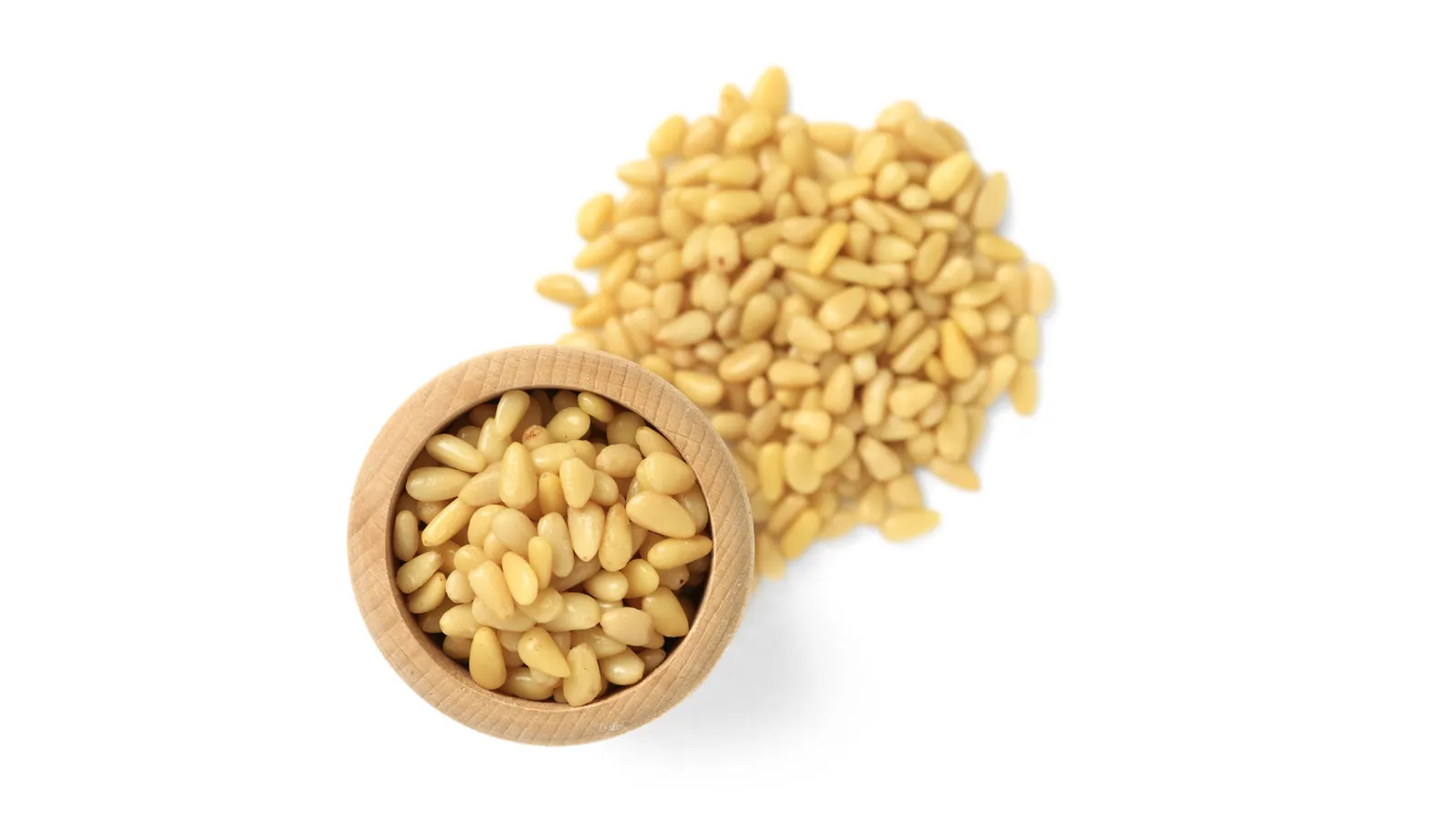
The reason this dish achieves such depth of flavor without pungent seasoning lies in an understanding of the ingredients themselves. Unlike other nuts, pine nuts possess a soft, subtle fragrance—one that, paradoxically, becomes more distinct the more other ingredients are minimized.
What makes Venerable Seonjae’s noodles special is also in the noodles themselves. Pine nuts and flour can be heavy in large quantities, and the addition of spinach and zucchini helps balance the dish. Noodles made with added vegetables are not only beautiful in color but also easier on the body. The temple cuisine philosophy—of viewing food not merely as sustenance but as something akin to medicine that cares for the body, and of drawing out each ingredient’s natural taste to the fullest—is preserved entirely in this single bowl.
Through the popularity of jatguksu, people have taken notice of Korean temple food—and many are surprised by its depth. This is because it is a unique culinary tradition spanning 1,700 years, born from the meeting of Korean Buddhist tradition and everyday folk food culture, and passed down within temples through monks’ daily meals and communal dining rituals.
Part of what makes Korean temple cuisine so distinctive is its approach to ingredients—an approach shaped by Korea’s climate and cultural context, setting it apart from temple cuisines in other countries. It relies heavily on fermentation and seasonal wild greens, while avoiding osinchae—the five strongly aromatic vegetables—based on the belief that stimulating flavors can disturb the mind. Grounded in this philosophy, temple cuisine is clean yet layered in flavor, and varies widely from temple to temple.
Interest in temple cuisine has grown in recent years, as these distinctive qualities have drawn attention beyond traditional contexts, with prominent chefs studying it to broaden their culinary horizons. Designated a National Intangible Cultural Heritage in 2025, it is also drawing attention among younger generations for its health benefits and sustainable values.
If you’re curious to experience something out of the ordinary, why not try making Venerable Seonjae’s jatguksu at home? That single bowl might be your first step into a new culinary world.
Jatguksu
- Toast the pine nuts in a dry pan.
- Blend the pine nuts, water and salt together in a blender.
- Slice the zucchini lengthwise, cucumber into rounds and Korean melon into half-moon shapes.
- Sauté the zucchini in a pan with the oil.
- Bring a pot of water to a boil, cook the somyeon, then drain the noodles before immediately rinsing in cold water.
- Arrange the noodles with the zucchini, cucumber and Korean melon as shown in the picture to the left. Pour the blended pine nut broth over everything, and garnish with black sesame seeds.

- If Korean melon is unavailable, Korean pear works well; regular somyeon can replace green tea somyeon; and ordinary sesame seeds can stand in for black sesame seeds.
- The zucchini, cucumber and Korean melon are toppings, so adjust them to your preference.
- To try the recipe as it appears in the show, use the following method: blanch one zucchini and one bunch of spinach, blend, and strain through a sieve. Gradually incorporate the vegetable liquid and salt into flour to form the noodle dough. The ratio per 100 g of flour is 46 g of liquid (vegetable juice) and 1/8 tsp of salt—scale as needed for the number of servings. Wrap the dough in a plastic bag and rest at room temperature for 30 minutes to 1 hour to remove the taste of raw flour.