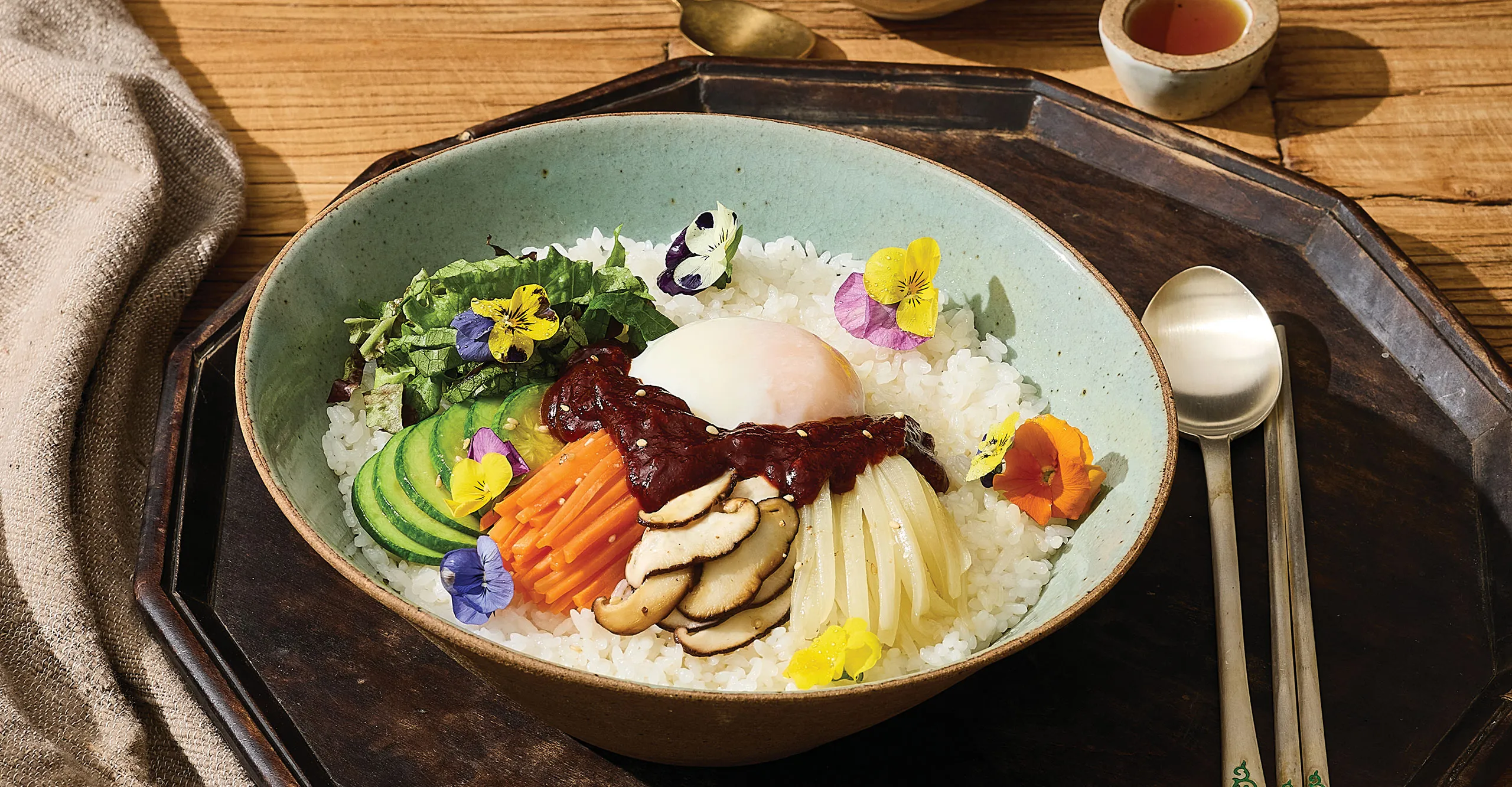
The buzz-worthy drama “Bon Appétit, Your Majesty” begins when Yeon Ji-young, a famous contemporary chef, falls 500 years back in time to the Joseon Dynasty and encounters the tyrannical King Yeonhuigun. Initially at odds, their relationship gradually thaws as Yeon Ji-young presents her dishes to the king, renowned as a gourmet. The food appearing in each episode functions as a crucial device—soothing characters’ hearts, resolving crises and ultimately leading the protagonist and the king toward love.
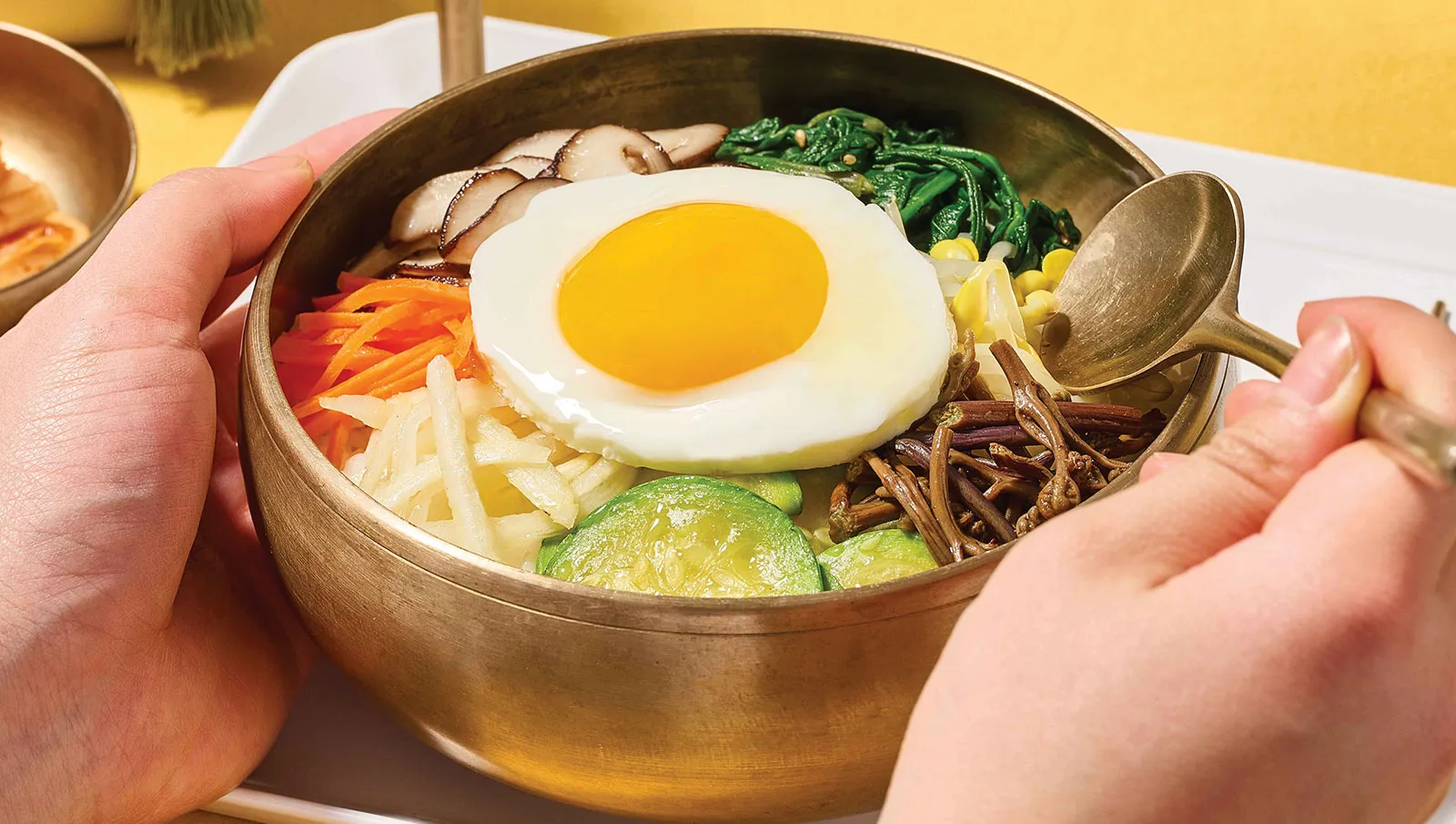
Of the dishes to make an appearance in the drama, Gochujang Butter Bibimbap was the first to appear. It became a sensation, drawing attention from viewers worldwide and international media alike. Bibimbap is a dish where rice gets mixed with various vegetables, gochujang (red chili paste), ganjang (soy sauce), sesame oil and other ingredients—it takes many forms depending on region and cooking method. Convenient and nutritionally balanced, it’s a regular part of Korean daily life and is also well-known abroad as a signature Korean dish. How did this food—ordinary in Korea yet already famous internationally—manage to captivate hearts all over again?
First, consider the cooking process shown on screen. Atop barley rice, Yeon places wild mountain vegetables and a poached egg, then adds the gochujang she brought from modern times. She then melts butter until it browns, drizzling it over everything to add a new depth of flavor. Here lies the key that unlocked viewers’ hearts: combining Western ingredients with jang, the fermented sauces central to Korean cuisine.
Traditional bibimbap includes sesame oil—a plant-based oil widely used throughout East Asia that Koreans have incorporated into a wide range of Korean dishes, from rice and side dishes to soups and snacks. Bibimbap is no exception. While sesame oil typically provides the finishing touch, Yeon chose butter instead. Butter, a signature animal fat in Western cooking, offers a rich, nutty depth distinct from plant-based oils. The technique of browning the butter to multiply its aroma proved captivating both for those encountering bibimbap for the first time and those already familiar with it.
Mixing Eras and Cultures in One Bowl
Gochujang Butter Bibimbap
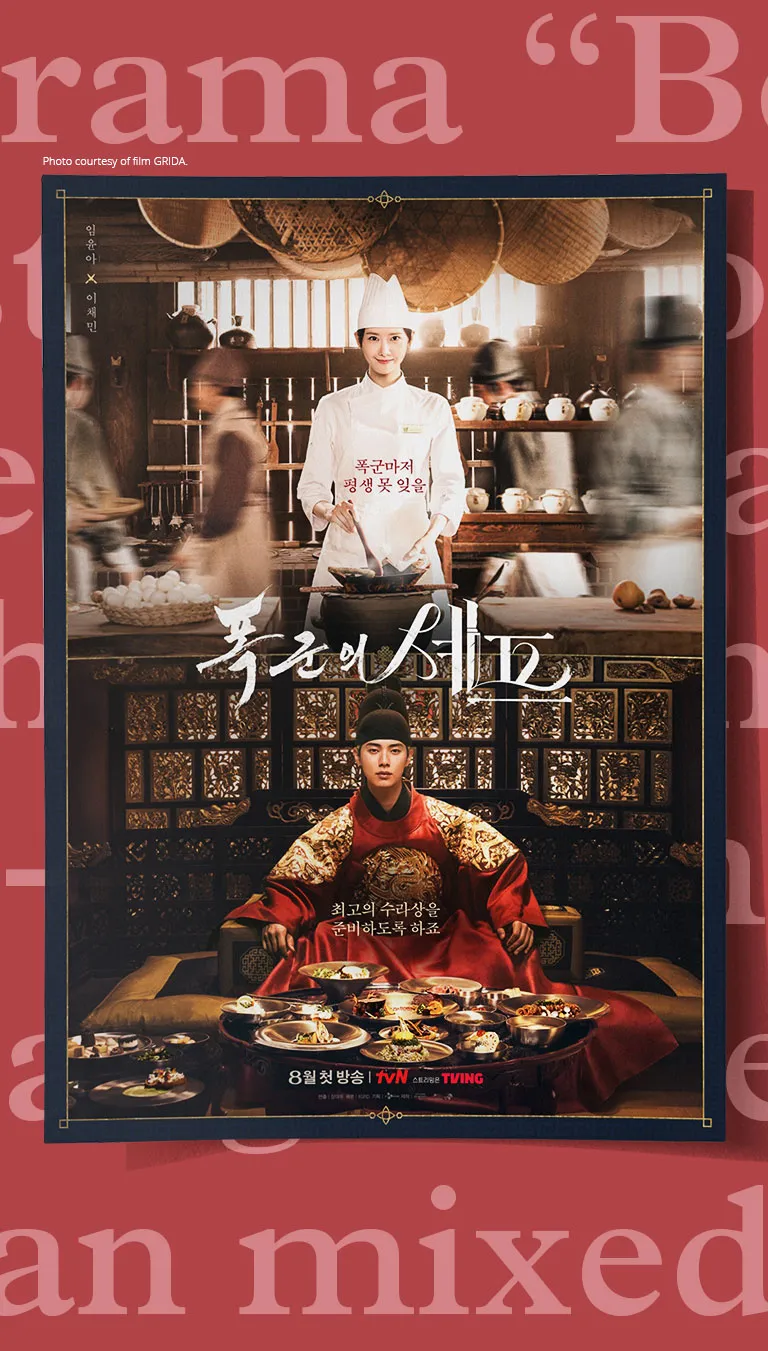
When the drama “Bon Appétit, Your Majesty”—about a modern chef who travels back in time to the Joseon Dynasty (1392-1910)—became popular, the “gochujang butter bibimbap” (Korean mixed rice with vegetables and meat, flavored with red chili paste and butter) from the first episode also became a sensation. Though it looks simple, this dish won viewers over instantly with its irresistible fusion appeal.

2. Sesame oil, a signature aromatic oil of East Asian cuisine, is used as a main sauce alongside gochujang, adding a rich, nutty depth to the dish. © Gettyimages Korea.

Gochujang’s appearance also contributed significantly to bibimbap’s popularity. This Korean fermented sauce made from soybeans, chili peppers and salt stands at the center of the recent global Korean food craze. Characterized not just by heat but by added sweetness, it pairs beautifully with butter’s deep, smooth flavor. International viewers seemed naturally drawn in by the “swicy” (spicy-sweet) trend. Moreover, the approach felt refreshingly novel—rather than the now-common practice of adding gochujang to Western dishes, this reversed the formula by incorporating Western flavors into Korean cuisine.
The combination of historical fact and imaginative storytelling also heightened the food’s appeal and curiosity. In the drama, the king’s first taste of Gochujang Butter Bibimbap leaves him overwhelmed by the spiciness, yet he keeps reaching for more, addicted to the flavor. The character’s inspiration comes from King Yeonsangun, who reigned from 1494 to 1506. Chili peppers only appeared in the late 16th to early 17th century, with gochujang created afterward. Against this backdrop, the king’s varied reactions to a single bite of Gochujang Butter Bibimbap were sufficient to spark viewers’ culinary curiosity.
Following this opening dish, the drama continued introducing fusion menus that graft modern and Western cooking methods onto traditional Korean cuisine: doenjang pasta (soybean paste pasta), boeuf bourguignon made with wild grape wine and pressure-cooked samgyetang with silkie chicken (ginseng chicken soup with silkie chicken). As episodes progress, the narrative flow gets driven by Yeon’s ability to conceive, create and use food to resolve situations. Thanks to this, viewers naturally immerse themselves in the drama’s world and its cuisine.
Viewed this way, Gochujang Butter Bibimbap serves not merely as the dish featured in the show’s first episode, but as a starting point that reveals the story ahead. Simultaneously, it becomes an opening to introduce global audiences to new possibilities with regard to Korean food and ingredients.
Gochujang
Butter Bibimbap
- Julienne the carrot, zucchini, onion and oakwood mushrooms.
- Wash the lettuce thoroughly and cut into bite-sized pieces.
- Heat oil in a pan and stir-fry the carrot, zucchini, onion and oakwood mushrooms separately, seasoning each with salt.
- Bring a pot of water to a gentle simmer. Lightly grease a ladle, crack the egg into it, and gently poach the egg in the water.
- In another pan, melt and brown the butter.
- Top the rice with stir-fried vegetables, chopped lettuce, poached egg, browned butter and gochujang, then finish with sesame seeds and edible flowers.

- The edible flower garnish can be excluded.
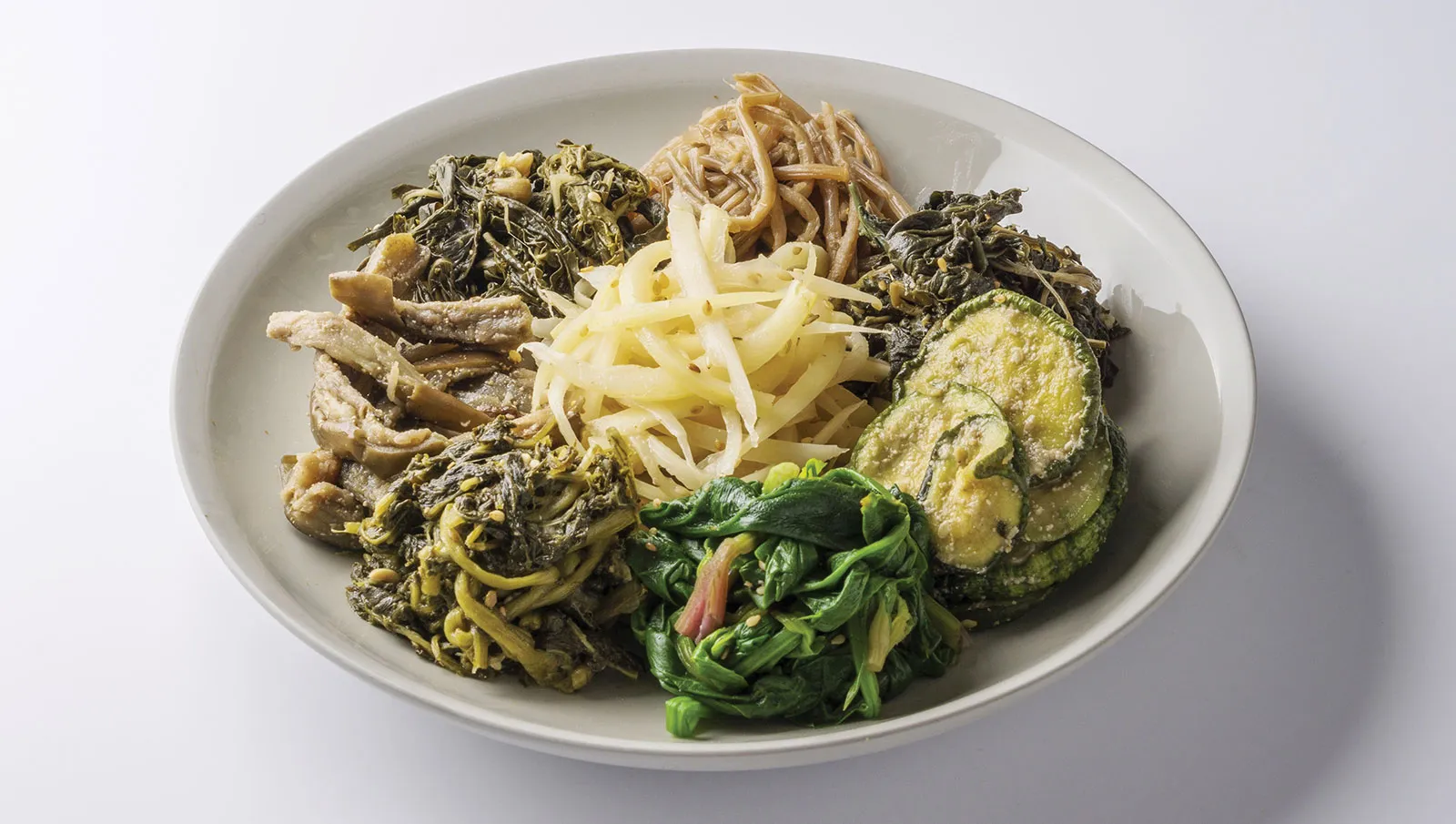
- The stir-fried vegetables topping the rice don’t necessarily need to be these specific ingredients. Cooks can use whatever vegetables are at home, or search for “namul” online to get ideas for what to put on top of the rice. In fact, Koreans mix whatever side dishes are available into rice to make bibimbap.
- For those who don’t prefer spicy flavors, substitute the gochujang with 2 tbsp of ganjang.