
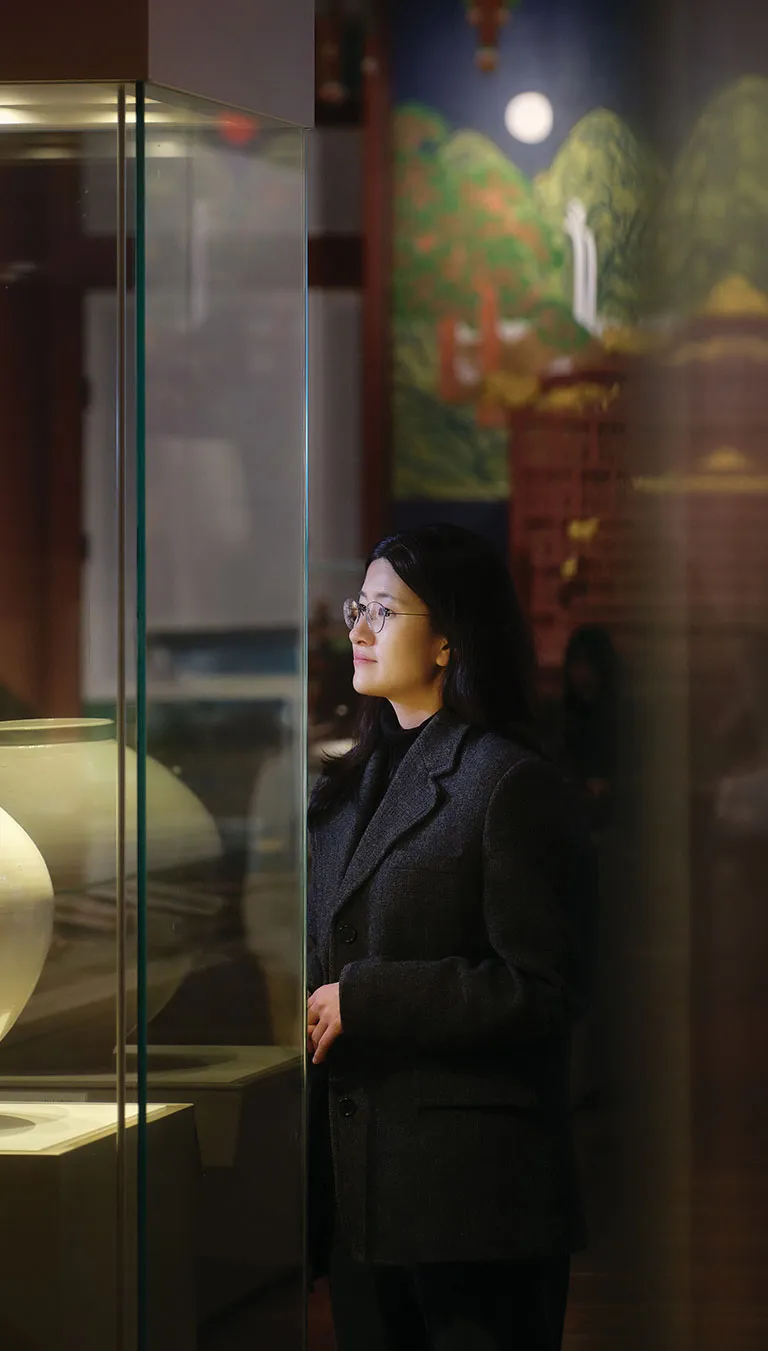
I plan and manage exhibitions about Joseon Dynasty (1392-1910) history at the museum. I’m in charge of “The King’s Archive,” which opened in 2024 and is the museum’s first exhibition devoted exclusively to the Oegyujanggak Uigwe. Together with my department colleagues, I was involved in nearly every aspect of creating the exhibition’s content—from planning and developing ideas about spatial design and interior elements to arranging artifacts, writing object labels and more.
The Curator as Storyteller
Kim Jin-sil
Curator at the National Museum of Korea
Cover Story 2
Writer
Sung Ji Yeon
In December 2024, the National Museum of Korea launched a permanent exhibition on the “Oegyujanggak Uigwe”—royal protocols documenting major events of the Joseon court. The exhibition has been widely praised for presenting both the historical significance and aesthetic beauty of these records. Behind this success is curator Kim Jin-sil, who thoughtfully designed the exhibition’s presentation and narrative while considering how the Oegyujanggak Uigwe could resonate with today’s audiences.
Q.
Please tell us what you do at the National Museum of Korea.
Q.
What was your most important objective while planning this exhibition?
The Oegyujanggak Uigwe is a unique cultural heritage artifact, significant both as a historical record and for its story of being taken overseas for a long period before returning to Korea. Therefore, my goal was to highlight both the basic characteristics of the Uigwe as records and the story of the Oegyujanggak Uigwe being taken and then returned, in order to draw visitors into the narrative.
Q.
This exhibition has been very popular for the distinct ways it uses space. What details can you give us about how the exhibition was put together?
Since the Oegyujanggak Uigwe were royal records stored in the “Oegyujanggak” on Ganghwado Island, we drew inspiration from royal architecture and developed the spatial design around the theme “The King’s Archive.” The story of the Uigwe’s plunder and return is presented symbolically at the entrance through a cluster display of torn silk covers. Inside, we used walls shaped like traditional window lattices along with soft lighting to create a calm atmosphere, as if entering a quiet archive. I believe that sometimes a space’s mood and presentation can convey more than explanatory text.
Q.
There are a total of 297 Uigwe, but the exhibition shows just eight books at a time, four times a year. That’s 32 books annually. How have you selected which books to show?
First, the Oegyujanggak Uigwe have a different appearance from other royal records. We prioritize books whose original form has been preserved to showcase this external beauty, as well as unique copies, to demonstrate their distinctive value as records. Also, since more than half of the 297 Oegyujanggak Uigwe volumes concern royal weddings and funerals, we display different Uigwe on these themes each time, varying the specific topics with each rotation.
Q.
What are the must-see items at the exhibition?
At the end of the exhibition is a “digital book” where you can browse the full content of the Uigwe. It mimics turning real pages. Since we can only display one opened page of each Uigwe in the exhibition cases, visitors miss most of what’s inside—but the digital book lets you explore the details in both Korean and English.
Q.
Do you have any memorable visitor reactions related to the exhibition?
The Joseon Dynasty left so many records it’s called “the nation of records.” The royal court compiled both the annals and Uigwe to preserve them for posterity. One visitor wrote: “The Joseon Annals are familiar, but I didn’t know much about the Uigwe. The exhibition gave me a better sense of their importance as historical records.” As the exhibition’s curator, that kind of response from a visitor meant a lot to me.
Q.
Is the museum preparing any additional exhibitions related to the Uigwe?
Research on the Oegyujanggak Uigwe began after they were returned to Korea in 2011. This research is ongoing, and we plan to continue updating content such as the digital book with future research findings. We’ll be able to present more interesting and informative content based on the records within the Uigwe.

View the National Museum of Korea’s exhibition information.
Spotlighting Photography as Art
Jung Hee Han
Director of the Photography Seoul Museum of Art
Cover Story 2
Writer
Sung Ji Yeon
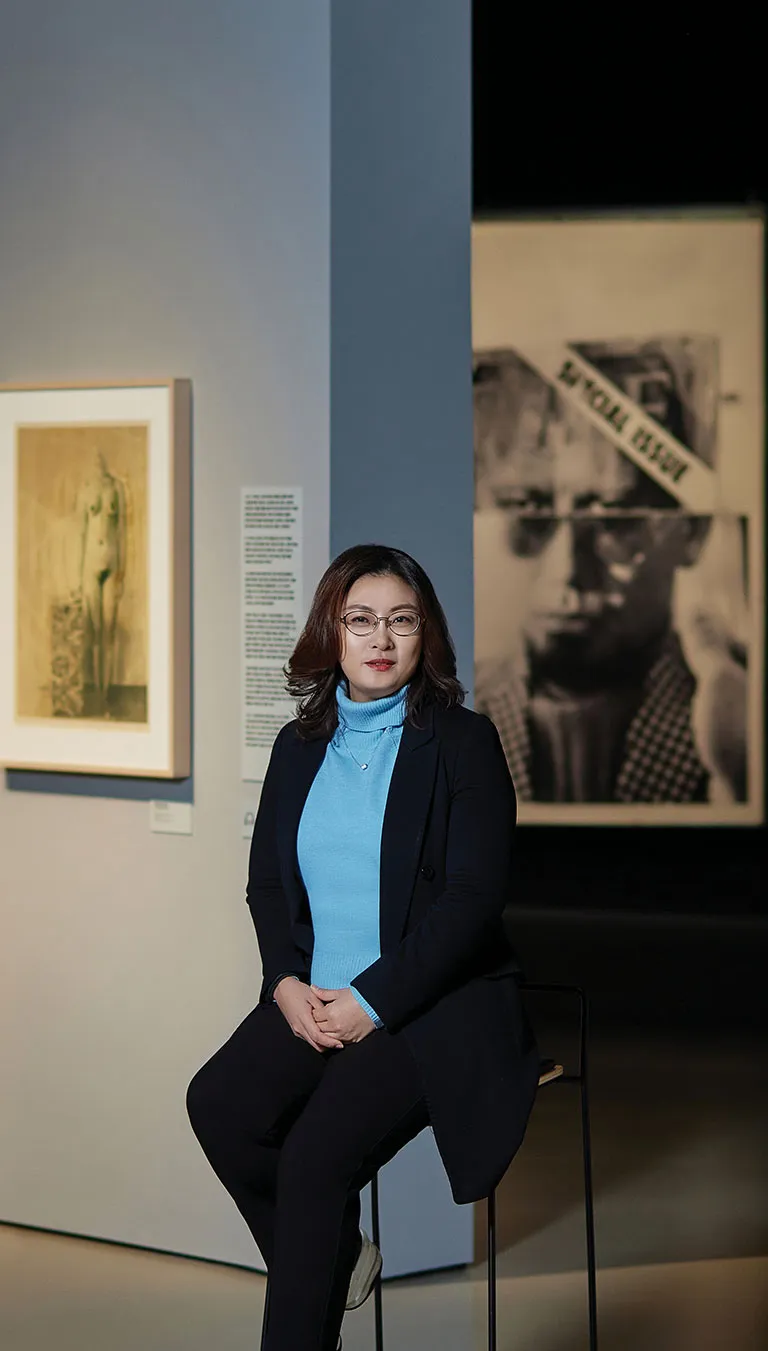
First proposed in 2015 and opened a decade later in 2025, the Photography Seoul Museum of Art is Korea’s first public art museum dedicated to photography. Jung Hee Han, the museum’s founding director who joined in 2024, has been carefully shaping the institution’s direction to expand the artistic possibilities of photography—long seen simply as a medium for documentation and representation—through exhibitions, education and research.
Q.
As Korea’s first public photography museum, what is the institution’s core mission?
As a museum dedicated to photography, we aim to convey its influence and artistic value while creating a space where visual culture producers and audiences can connect. To this end, we’ll develop exhibitions and programs that emphasize photography’s creative potential and artistic qualities. Our exhibitions will span classical to contemporary works, showcasing both creative and experimental projects. We’ll offer educational programs that let participants experience challenge, creation, sharing and collaboration through photography, and we plan to discover and partner with talented artists, curators, educators and researchers. We’re also committed to researching photography’s history and future while building and preserving our collection.
Q.
What did you focus on most while preparing the museum?
Building our collection has been our greatest focus. We conducted extensive research to develop our acquisition strategy, guided by the principle of “collecting works that played a decisive role in Korean photography history.” Specifically, we acquire materials that support the museum’s research, exhibitions, education and publications. We also seek works that can serve as the museum’s signature content. Finally, we gather pieces spanning all eras to complement the museum’s photography collection. Following this approach, we’ve assembled approximately 21,000 works and materials—including photographs, films, cameras, manuscripts, scrapbooks and more from 26 artists active from the early 1900s to the early 2000s.
Q.
Are there any behind-the-scenes stories about the recent exhibition “Everything Photography Can Do”?
It’s a large-scale exhibition featuring photographs and photo-based works by 36 masters of Korean contemporary art. The show highlights photography’s stature and reach by demonstrating how it has been a driving force in Korean contemporary art. Unlike previous exhibitions, which were limited to the second and third floors, this one uses all our exhibition spaces—signaling our commitment to presenting museum-wide shows going forward.
Q.
Do you have any special tips for enjoying the museum or exhibitions?
The second floor is a non-traditional space, while the third floor is a classic white cube. These two exhibition halls will continuously evolve according to each exhibition’s concept, so watching how the spaces transform from exhibition to exhibition makes for an interesting point of comparison. The fourth floor features an education room, darkroom, photo library and garden. Rather than ending your visit on the third floor, take time to explore these spaces and browse the materials for a richer experience. The museum’s furniture is also worth noticing. Designed to bring vitality to the achromatic spaces and let visitors experience photography from multiple angles, the pieces draw inspiration from photographic frames, apertures and other elements. I hope visitors will wander through every corner of the museum and enjoy all the spaces and programs we offer.
Q.
Do you sense there has been a boom in museums and galleries in Korea?
I’ve noticed that both the quality of what institutions offer and what audiences expect have risen significantly. This reflects how museums are evolving from places that simply present content to spaces where visitors help shape it. The Photography Seoul Museum of Art embraces this same approach—we’re focused on two-way dialogue, expanding opportunities for active participation, and continuously developing exhibitions that respond to what our visitors want to see.
Q.
What direction will the museum take going forward?
While we can’t predict what challenges lie ahead, one thing is certain: we’re focused on creating opportunities for everyone who loves photography to share and explore diverse stories through the medium. With that as our foundation, we aim to stabilize our operations, build public recognition, share our content globally through exchange and collaboration projects, and establish ourselves as Korea’s leading photography museum.

Discover the Photography Seoul Museum of Art’s exhibition programs.