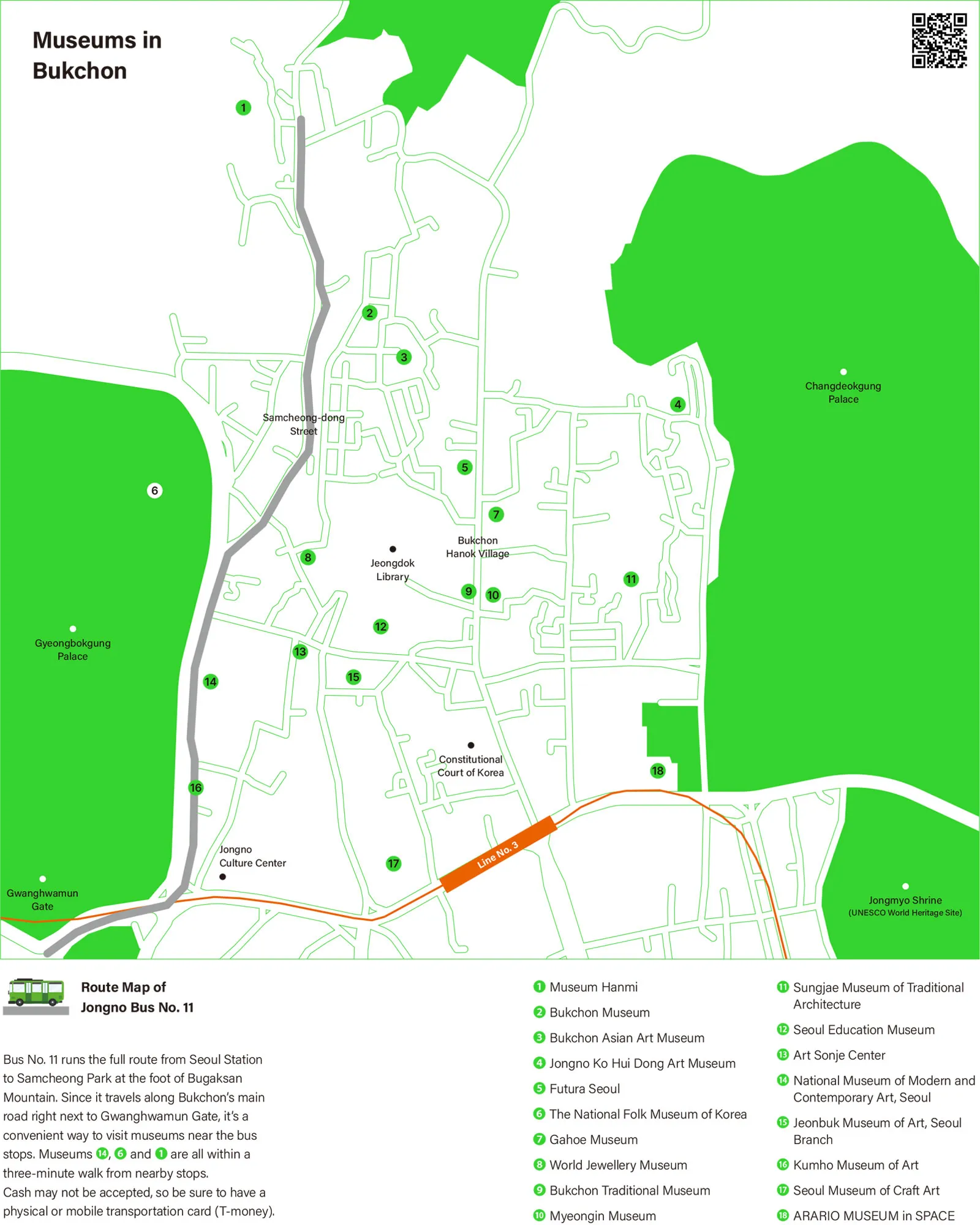
From Seoul Station, hop aboard Jongno bus No. 11. The bus runs in a straight line to the end of Samcheong-dong, where you’ll find Museum Hanmi.
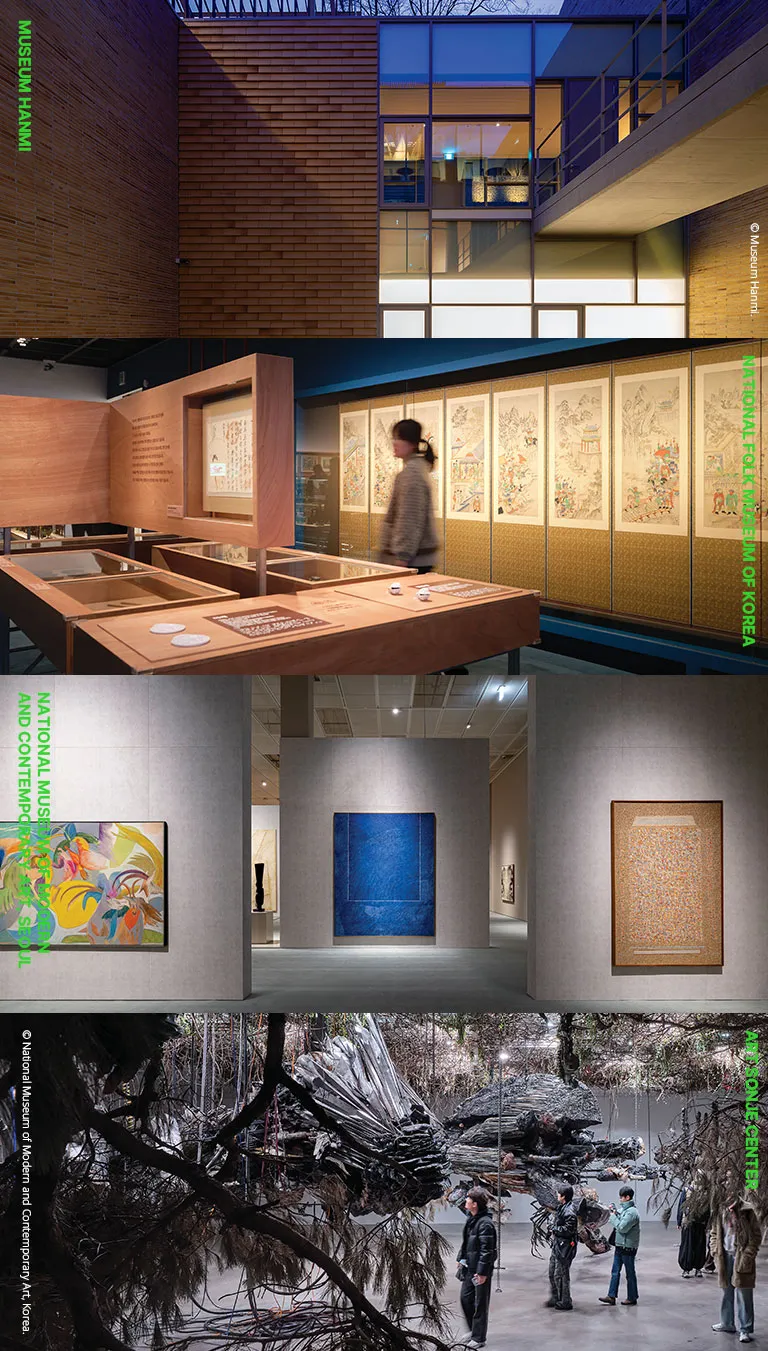
Museum Hanmi opened here in 2022 as a continuation of the Museum of Photography, Seoul which was Korea’s first art museum specializing in photography. Since its establishment in 2003, the museum has played a major role in the Korean photography scene, supporting artists and collecting major pieces from Korea and other countries. It has helped compensate for the lack of local institutions focusing on art photography.
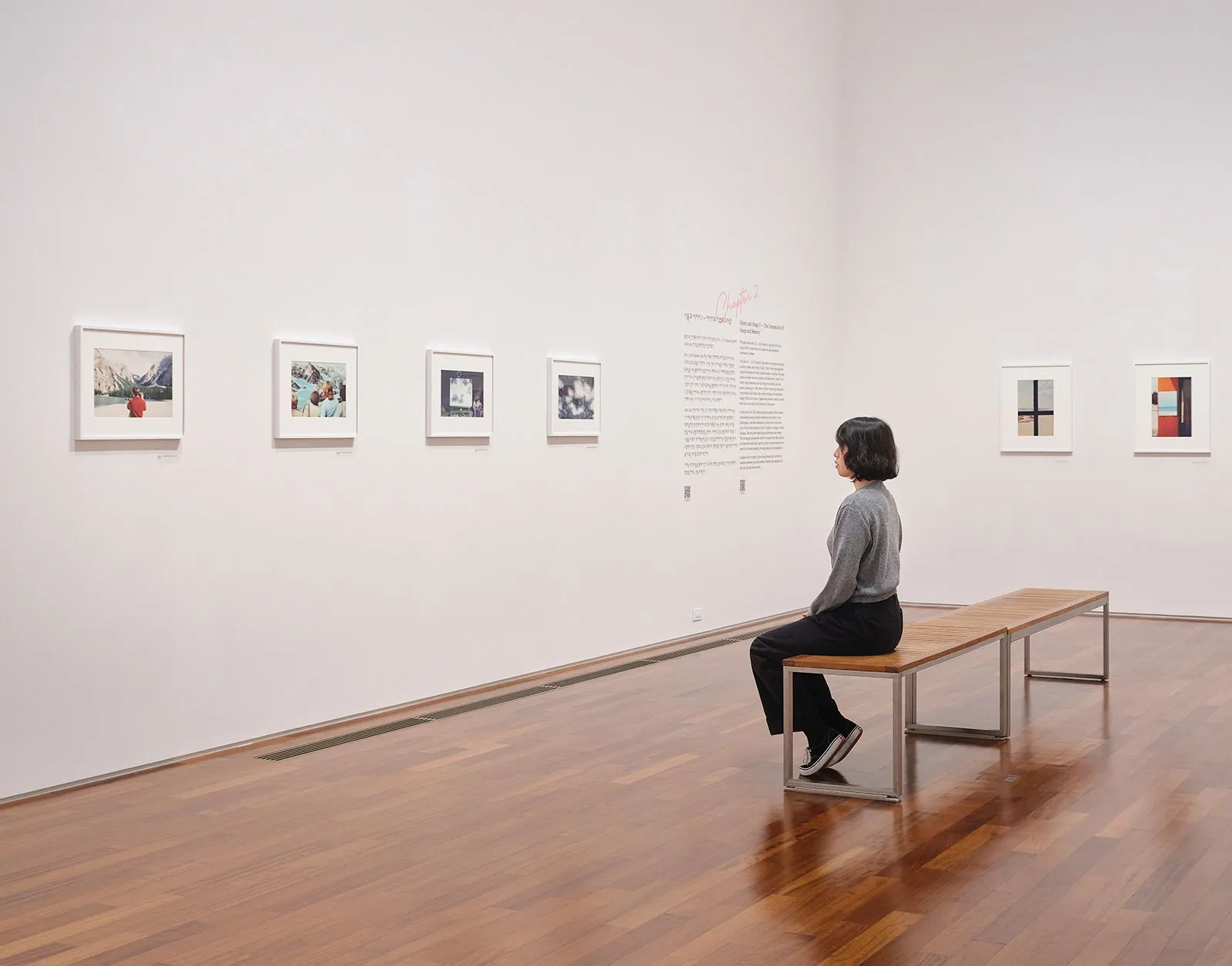
Nestled in the hills, Museum Hanmi is a neat and tidy place, a perfect fit for its peaceful neighborhood. Step inside to find Korea’s first retrospective of Luigi Ghirri, an Italian pioneer of color photography. The retrospective, which spans the first floor and a lower level, includes not only standard prints but also polaroids and the artist’s personal belongings and autobiographical writings. As such, a stroll through the retrospective feels like a journey through the artist’s life.
Your gaze may rest on a cluster of photographs exhibited in a hallway. As it happens, this is the public section of Korea’s first dedicated photographic storage facility—a vault capable of preserving photographs for up to 500 years. Visitors here often feel awe and gratitude for a facility that ensures public access to invaluable artifacts in the history of Korean photography, as well as films and polaroids that would otherwise be difficult to preserve.
An Artistic Tour of Bukchon
At the junction of past and present in downtown Seoul, the backstreets of the Bukchon neighborhoods play host to history and art museums both great and small. Explore these areas to satisfy your curiosity about Korean art and culture.
10:00
Museum Hanmi

HOURS OF OPERATION
- Nearby is the Bugaksan Mountain stretch of Seoul’s historic city wall,
which runs through the heart of the city. - The museum offers free admission every last Wednesday of each month to
celebrate “Culture Day.”
13:00
National Folk Museum of Korea
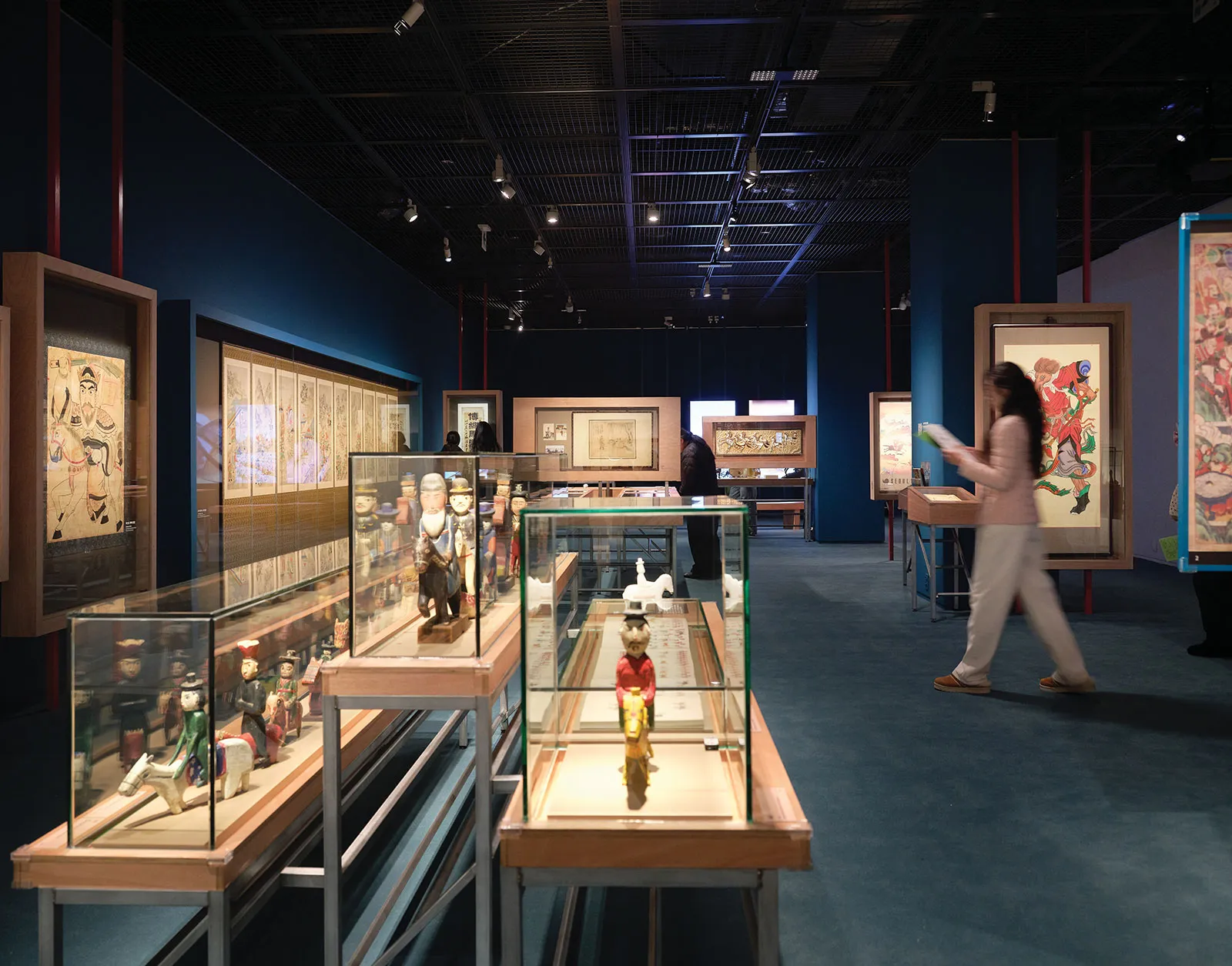
The next stop is the National Folk Museum of Korea. Tree-lined avenues, rustic stone walls, Bukchon’s famed Hanok (traditional houses), cozy boutiques and chic select shops lead you to a major street fronted by Gyeongbokgung Palace. The museum is on the palace grounds and is easily reached from the eastern gate.
The purpose of the National Folk Museum of Korea is to study and exhibit the cultural life of Korea, as well as countries around the world. It is the perfect place to examine how history has touched people’s lives from the distant past down until the present day.
The path leading to the museum’s entrance is itself an exhibition space. You can survey a stone pagoda, a tile-roofed house built in 1848 and a water wheel, as if you had been suddenly transported into the past. The next section recreates a more modern scene: a Korean street from the 1970s and 1980s.
Passing through this outdoor exhibition space brings you to the actual museum, which includes three permanent exhibition spaces and two special exhibition spaces. The mundane items of Koreans’ everyday lives are displayed in the three permanent exhibitions, which take the themes of “The Beginning of K-culture, A Year in Korea,” and “Korean Life Passages.” Each exhibition space gives a sense of the distinctive Korean values that persist despite the passage of time.

HOURS OF OPERATION
November to February: 9 a.m. - 5 p.m.
- Since the National Folk Museum is located inside Gyeongbokgung Palace, it’s recommended to visit the museum while touring the palace. Note that while the museum itself has no admission fee, visitors must pay a separate admission fee to enter the palace.
- A reservation is required to visit the separate children’s museum also located here.
- Folk performances are held at 3 p.m. every Saturday, along with outdoor performances between April and June and from September to October.
15:00
National Museum of Modern and Contemporary Art, Seoul
Once you reach the National Museum of Modern and Contemporary Art, Seoul (MMCA Seoul), you may want to take a load off at the tea shop inside and quench your thirst as you admire the scenery of Samcheong-dong. Next to the garden is a digital archive where you can access academic articles and other art sources. It’s a great spot to visit if you need time for some serious reflection.
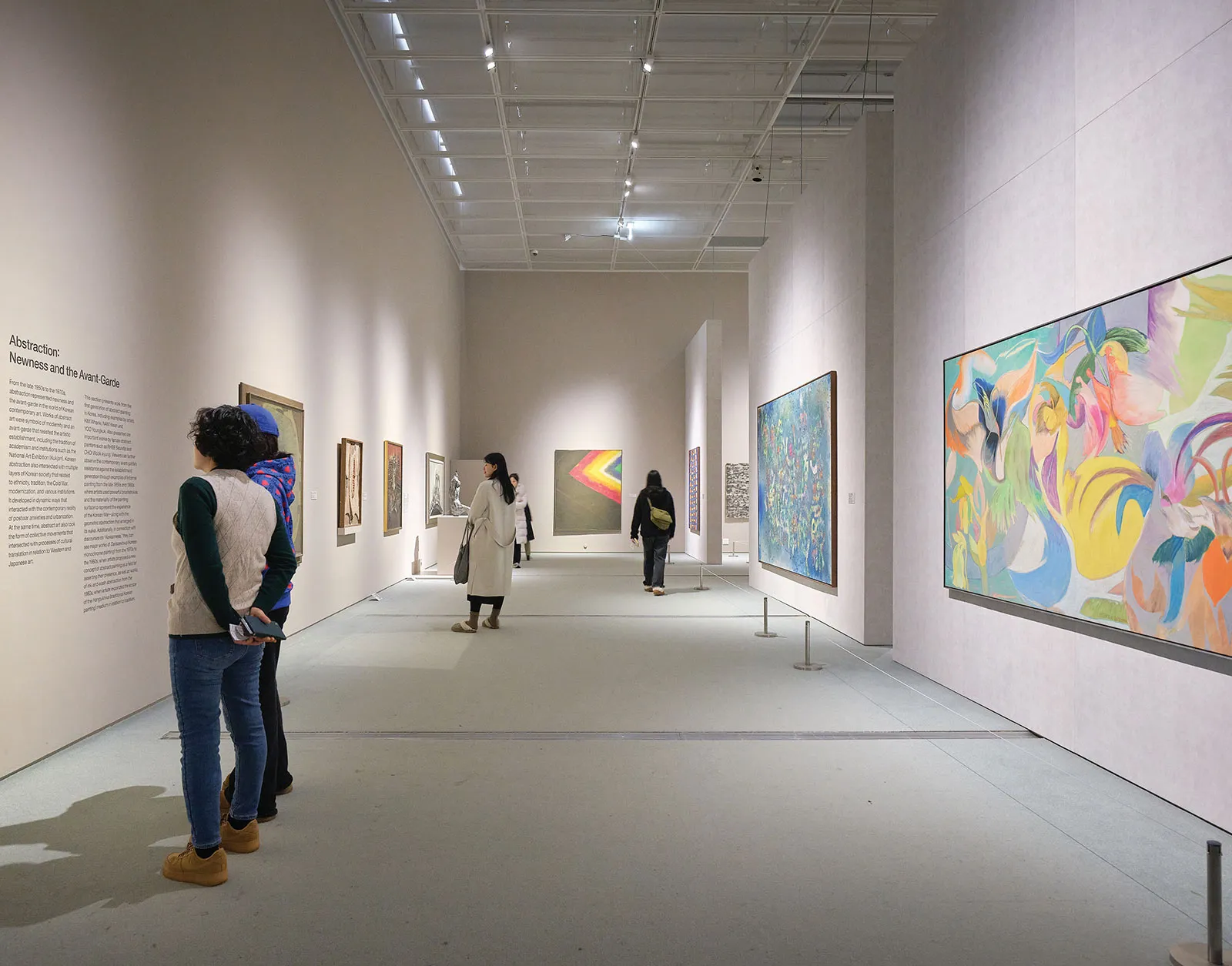
The museum first opened in Gyeongbokgung Palace and underwent several relocations before settling in its current location. To get an overview of its rich history and extensive collection decades in the making, head toward the permanent exhibition called “MMCA Collection: Korean Contemporary Art.”
This exhibition includes around 90 representative pieces of modern and contemporary Korean art from the 1960s to the 2010s. Presented in a series of rooms is a stunning assortment of work in the areas of painting (both representational and abstract), sculpture, photography, installation and media art. Artworks by some of Korea’s best-known masters await, inviting you to explore a world of unknown beauty. Along the way, you can sense how Korean art trends have shifted through the decades.
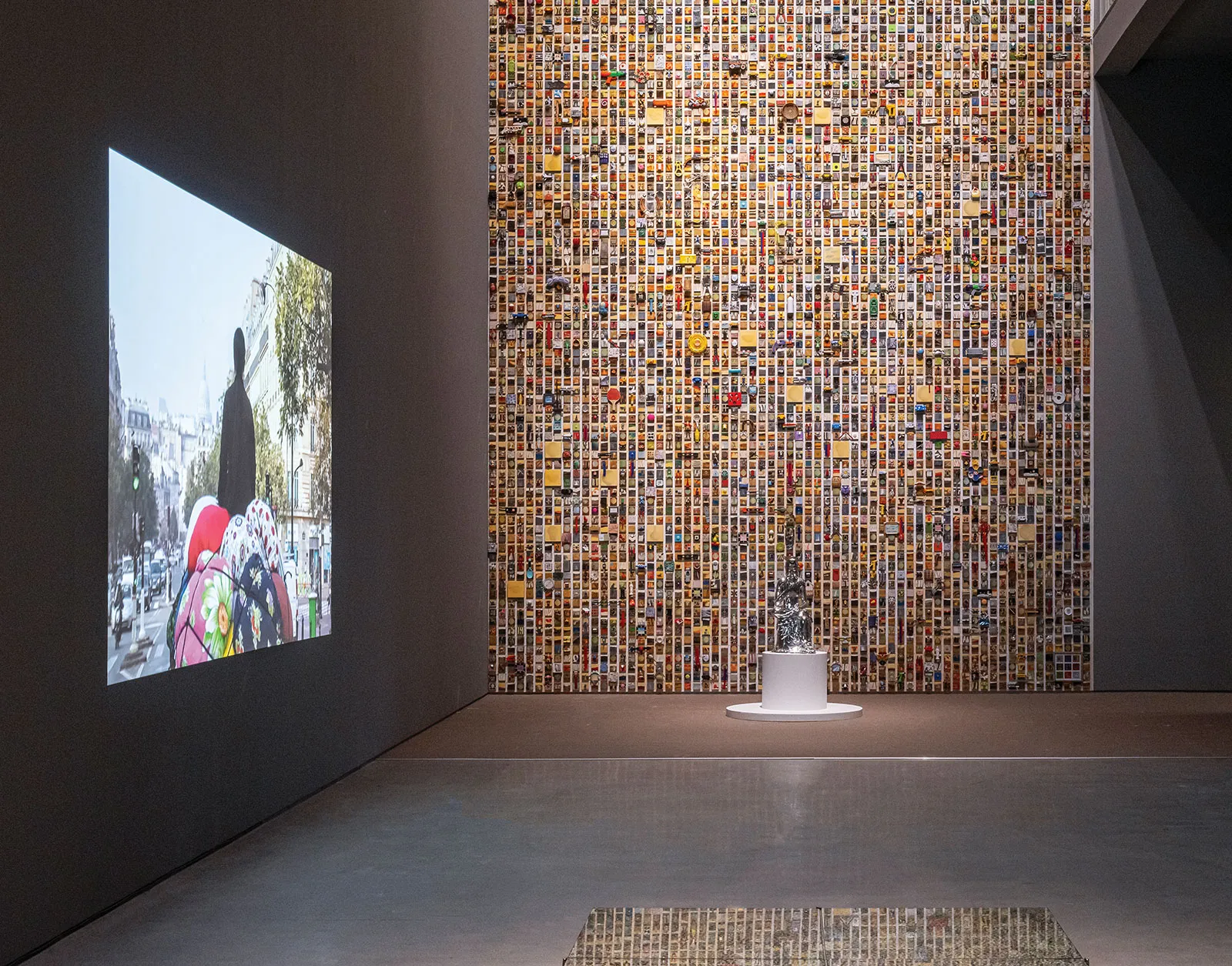
Once you step outside, the gargantuan digital artwork invites you to raise your camera in wonder. There’s plenty to keep you busy here, including the Film and Video theater for viewing art films and experimental videos, and a range of feature exhibitions.
It would be a shame to leave the MMCA Seoul empty-handed, so be sure to stop by the bookstore and the gift shop. The range of products here includes exhibition-inspired stationery, decorative objects and postcards, as well as tote bags emblazoned with the museum logo. Pick out an item to help you remember your whirlwind tour of the Seoul art scene.

HOURS OF OPERATION
- There is an admission fee except for the last Wednesday of every month.
- Admission to the museum is included in the Discover Seoul Pass for international tourists.
- An art shuttle bus that runs to the museum’s Seoul, Deoksugung Palace and Gwacheon branches is available for free. The shuttle bus does not run on Mondays, weekends or public holidays.
- The museum provides various amenities including two cafés, one restaurant and two gift shops.
17:00
Art Sonje Center
In the Bukchon neighborhood, you’ll find the Art Sonje Center. Since its opening in 1998, the museum has consistently held experimental shows covering a range of areas including fine arts, design, architecture, the performing arts and film. Given that legacy, visitors are always excited about what they will find.
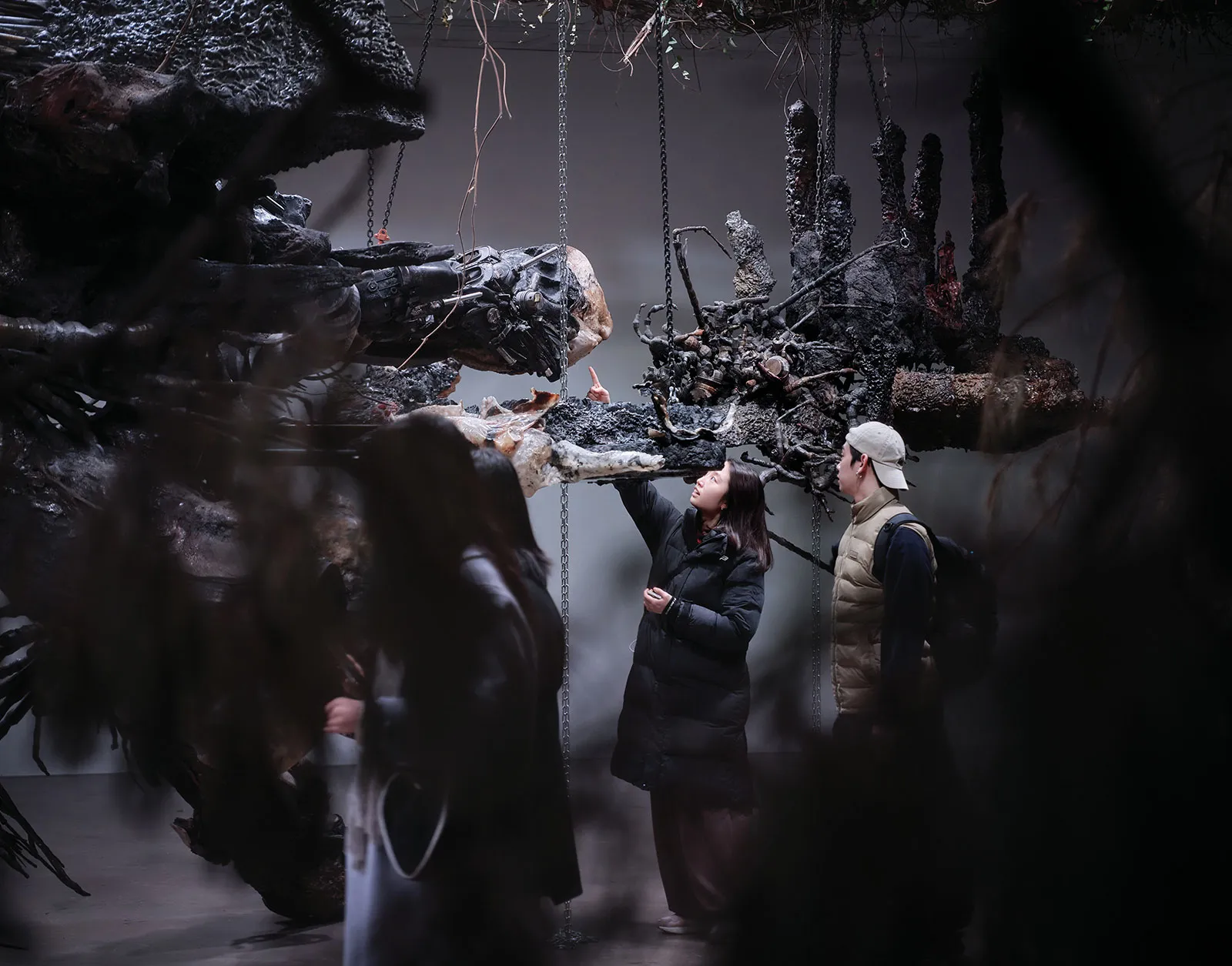
The museum’s capacity to surprise is neatly illustrated by the current exhibition “Adrián Villar Rojas: The Language of the Enemy.” Spanning all four floors, from one level below ground to three above, the exhibition presents the museum building itself as a single sculptural work.
The white partitions that are a hallmark of art galleries’ “white cube” aesthetic are gone, and the first floor entrance is blocked off by a pile of dirt. Structures that look like massive alien life-forms hang from the ceilings or squat atop earthen mounds. Forget the humdrum museums to which you’re accustomed: throughout your tour, this feels like a special space teetering between the real world and the world beyond.
The Art Sonje Center boldly sheds the conventional stereotype of museums being places for preserving and protecting artworks. The result is a fascinating encounter with an entirely different world—one rarely experienced in ordinary museums.
In recent years, the Art Sonje Center has presented a series of exhibitions in striking new formats, staging shows at other galleries outside its own walls and mounting performances in which artworks are played like musical instruments. These thought-provoking experiments raise questions about the content and format of exhibitions, as well as the roles of museums themselves.

HOURS OF OPERATION
- Visitors who reserve tickets in advance on the museum’s website have priority admission.
- With a variety of art galleries and art and history museums nearby, Art Sonje Center makes an excellent starting point for an art tour of the area.
- “THE BOOKS,” a bookstore housed in a Hanok, is located in the museum.