
Step into the Korean gallery at the Guimet - National Museum of Asian Arts and one statue commands your attention immediately. A long, square face with a narrow forehead, a solemn expression beneath a crown decorated with lily motifs. Dozens of arms radiate outward in every direction, each hand holding a different object—a sword, a book, a ritual water vessel. Two hands at the sides cradle a small Amitabha Buddha, lifting it toward the heavens.
This is the “Avalokitesvara with a thousand arms,” a bodhisattva said to save all living beings with a thousand eyes and a thousand hands. Cast in iron, it still bears traces of its original gilding, gleaming quietly under the museum lights. Anyone captivated by its unfamiliar form and overwhelming presence will want to know the story behind it.
Look closely and the layers begin to unfold. Statues of this type typically have forty arms, each representing twenty-five powers (40×25=1,000). This one, however, has one extra arm on the right. Each hand holds an object with its own meaning—all symbols of saving sentient beings or conveying Buddhist teachings. This form is rare in Korea, which makes it all the more remarkable.
According to the inscription on the wooden base, the statue is linked to Dongbangsa Temple. The temple was near Sangju in Gyeongsangbuk-do Province, Korea, founded during the Unified Silla Period (676-935) and known to have flourished during the Goryeo Dynasty (918-1392). Today only the site remains.
Why an Avalokitesvara with a thousand arms? The late Goryeo to early Joseon period—the 14th and 15th centuries—was a time of upheaval, marked by Mongol invasions and widespread suffering. Faith in Amitabha Buddha, a symbol of salvation and compassion, ran deep, and people turned to the Avalokitesvara with a thousand arms—the bodhisattva who assists Amitabha and reaches out to relieve the suffering of all beings. Centuries of history and memory rest quietly within this single statue.
Beside it stands another statue that moves you in a different way: the bodhisattva meditating. Right foot resting lightly on the left knee, right hand raised to the chin, head tilted gently downward in contemplation. No ornaments. A soft smile at the corners of the mouth. The flow of the body from foot to crown is utterly natural and graceful.
Rooted in the image of Prince Siddhartha meditating on the suffering of human existence before his renunciation, this statue shifts between infinite gentleness and quiet strength depending on the angle. Spend long enough with it and you may find yourself slowly drawn into whatever the figure is thinking.
The refined rendering of the human form, the delicate treatment of the fabric folds—the originality and technical mastery of Baekje Kingdom (18 B.C.E.–660 C.E.) art are concentrated in this single work. The meditating bodhisattva style was popular in the late 6th to early 7th century during the Three Kingdoms period, arriving from China, evolving on the Korean peninsula, and going on to influence Japan. Together with the Goryeo-era Avalokitesvara with a thousand arms, these two statues encapsulate what the Korean peninsula contributed—with genuine originality and refinement—to the great flow of Buddhist art that traveled from India through China and onward to Japan.
Ancient Light:
Buddhist Art
Guimet - National Museum of Asian Arts
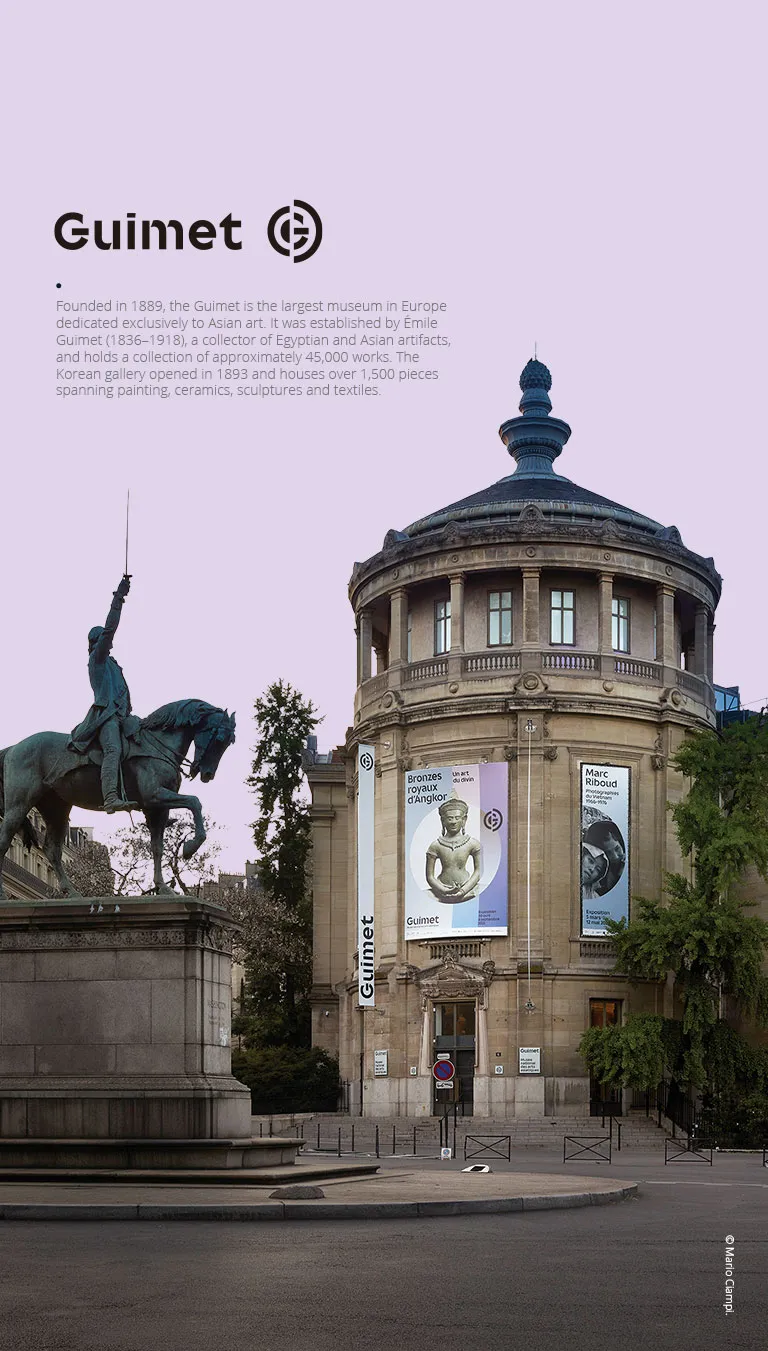
In the heart of Paris—one of the world’s most beloved cities—the Guimet - National Museum of Asian Arts houses works that stop you in your tracks: Buddhist statues that glow with a quiet radiance, embodying both stillness and grandeur.
A Vessel for Devotion
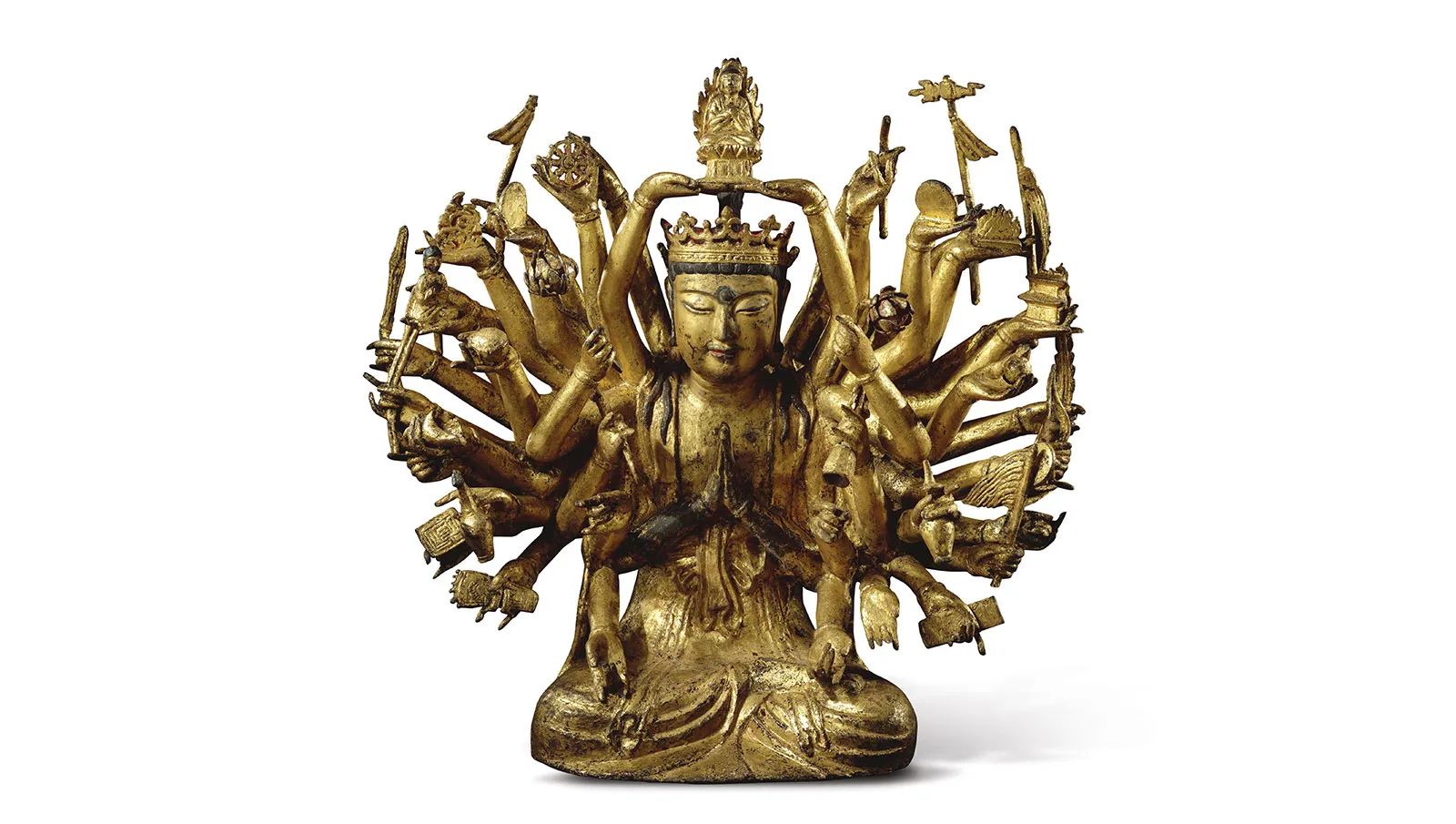
Cast iron, 10th-11th century (Goryeo Dynasty), 151 × 142 × 50 cm © MNAAG, Paris, Dist. GrandPalaisRmn / Jean-Yves et Nicolas Dubois.
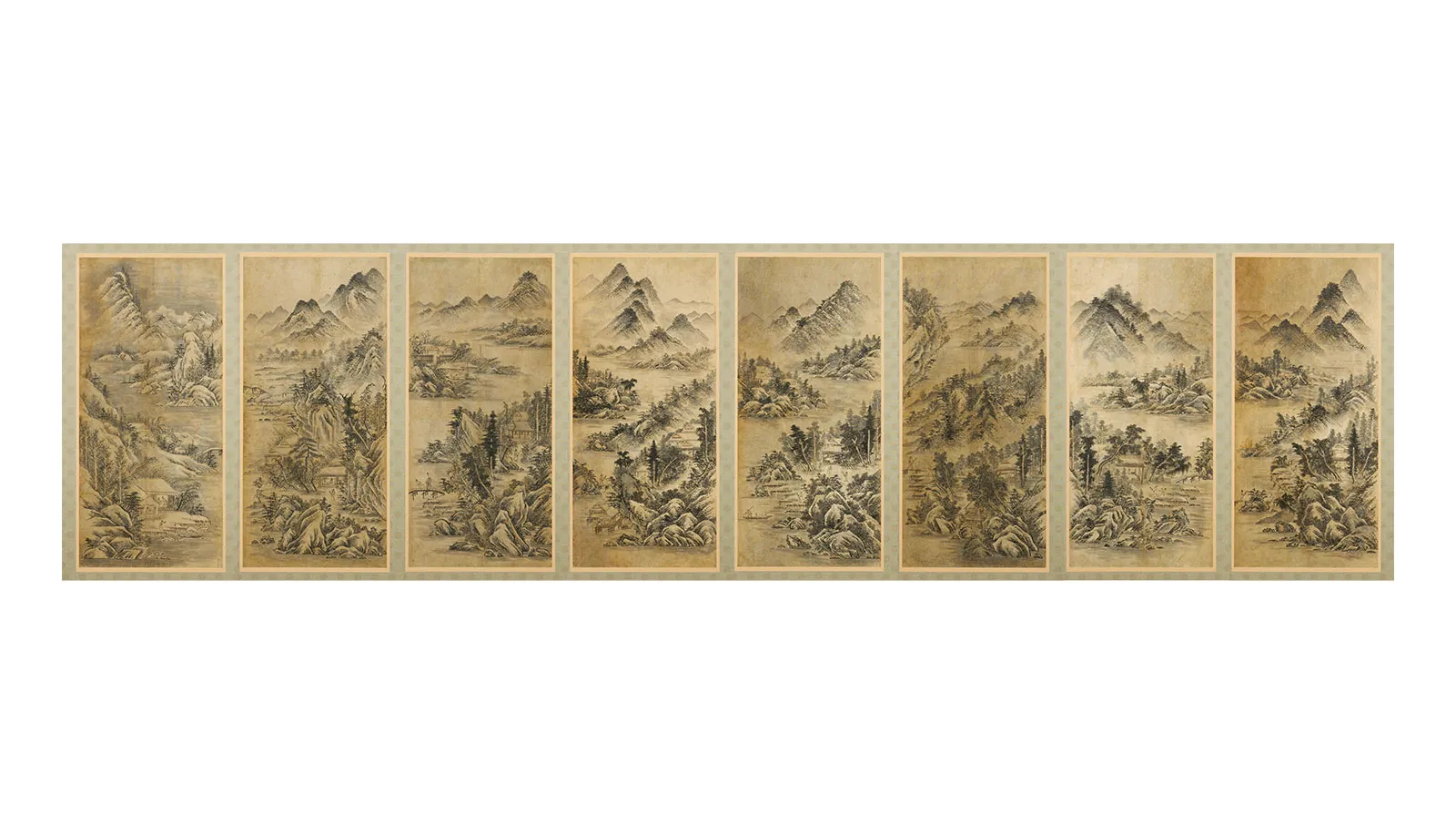
Ink and color on silk, 18th century (Joseon Dynasty), 108 × 49 cm © GrandPalaisRmn (musée Guimet, Paris) / Thierry Ollivier.
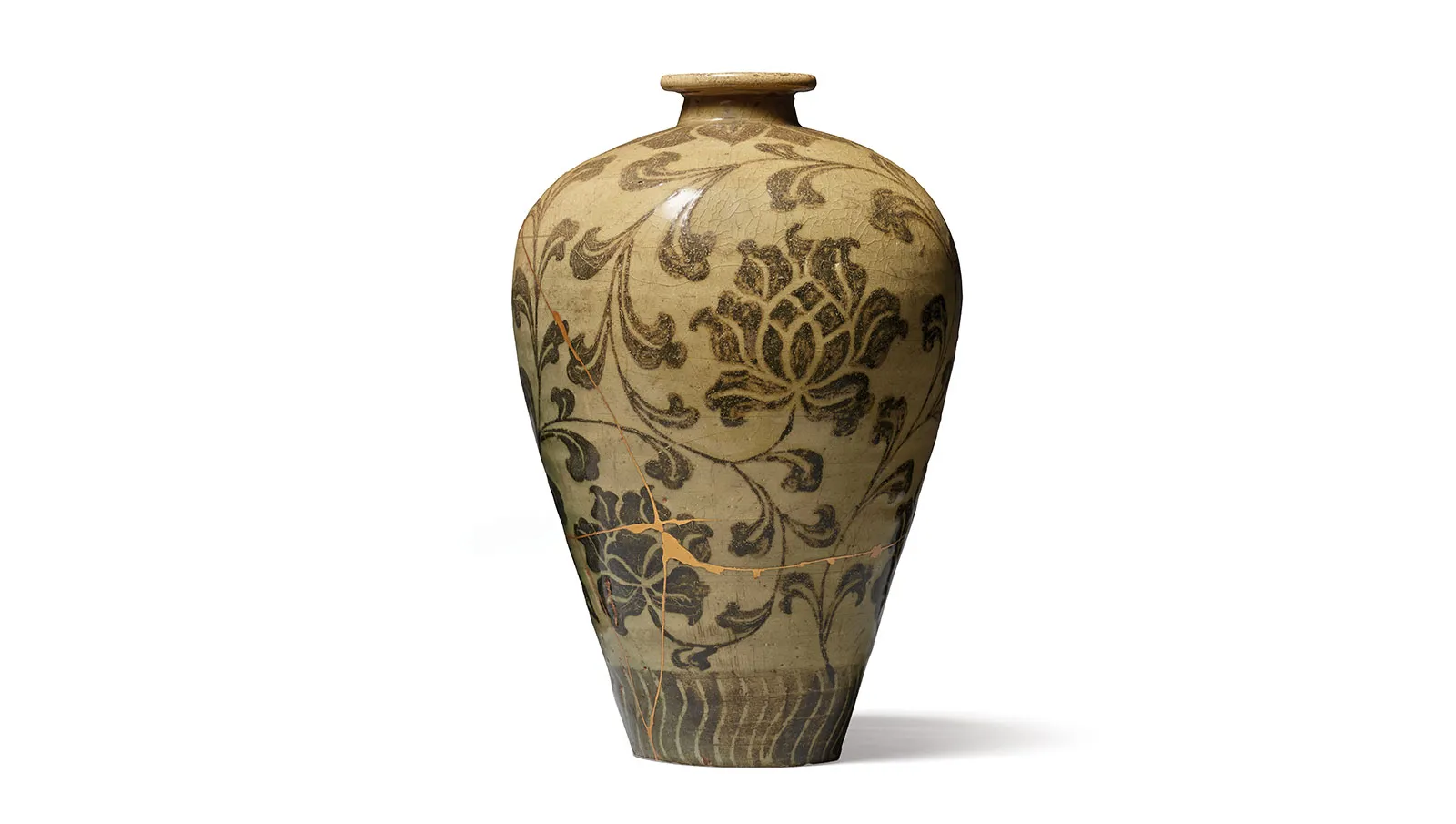
Ceramic, iron oxide decoration under celadon glaze, 12th–13th century (Goryeo Dynasty), 29.8 cm × 20 cm © Musée Guimet, Paris, Dist. GrandPalaisRmn / Michel Urtado.
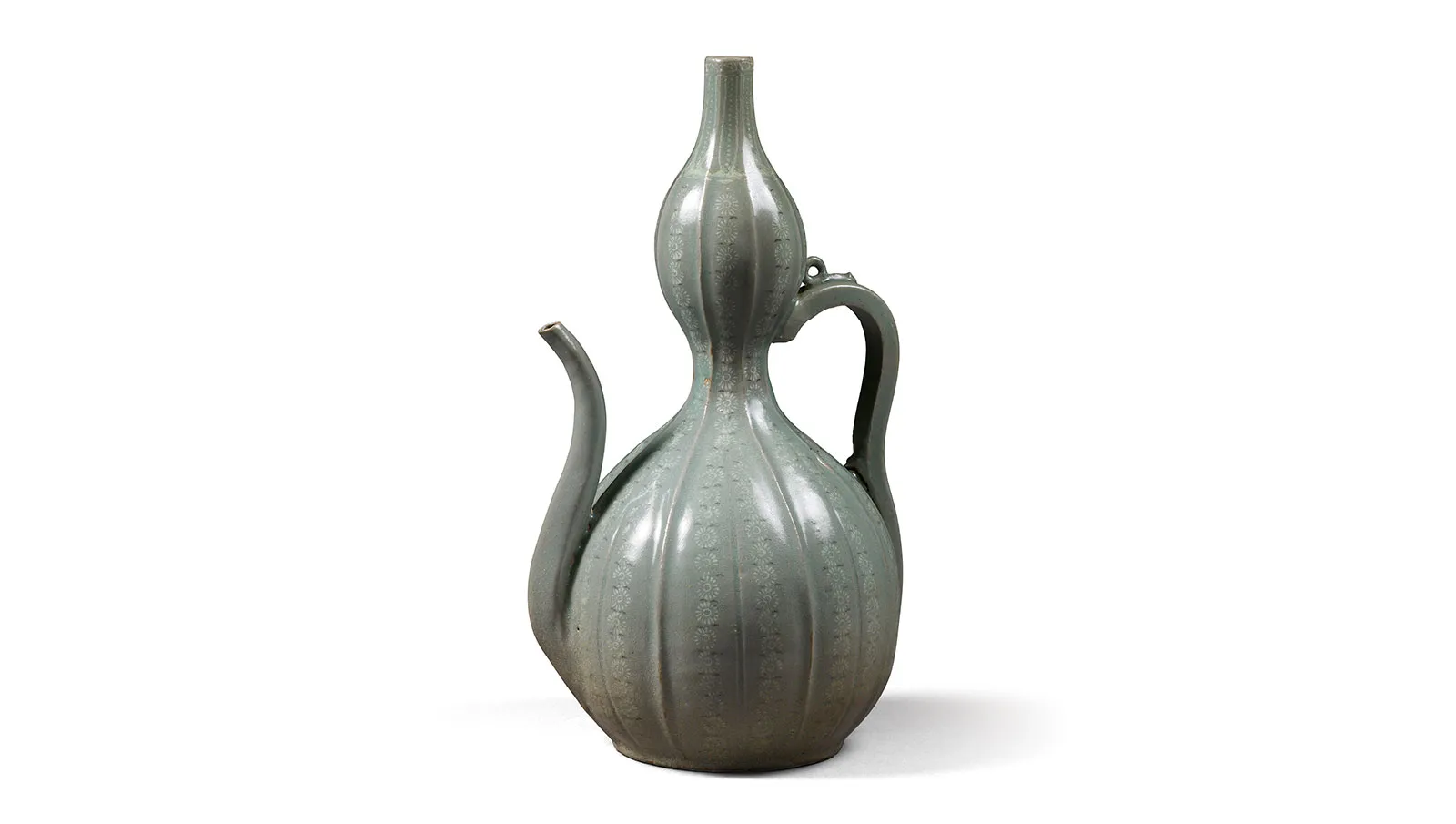
Ceramic, Goryeo Dynasty, 30 × 18 cm © GrandPalaisRmn (musée Guimet, Paris) / Thierry Ollivier.
K-ompletely Korea!
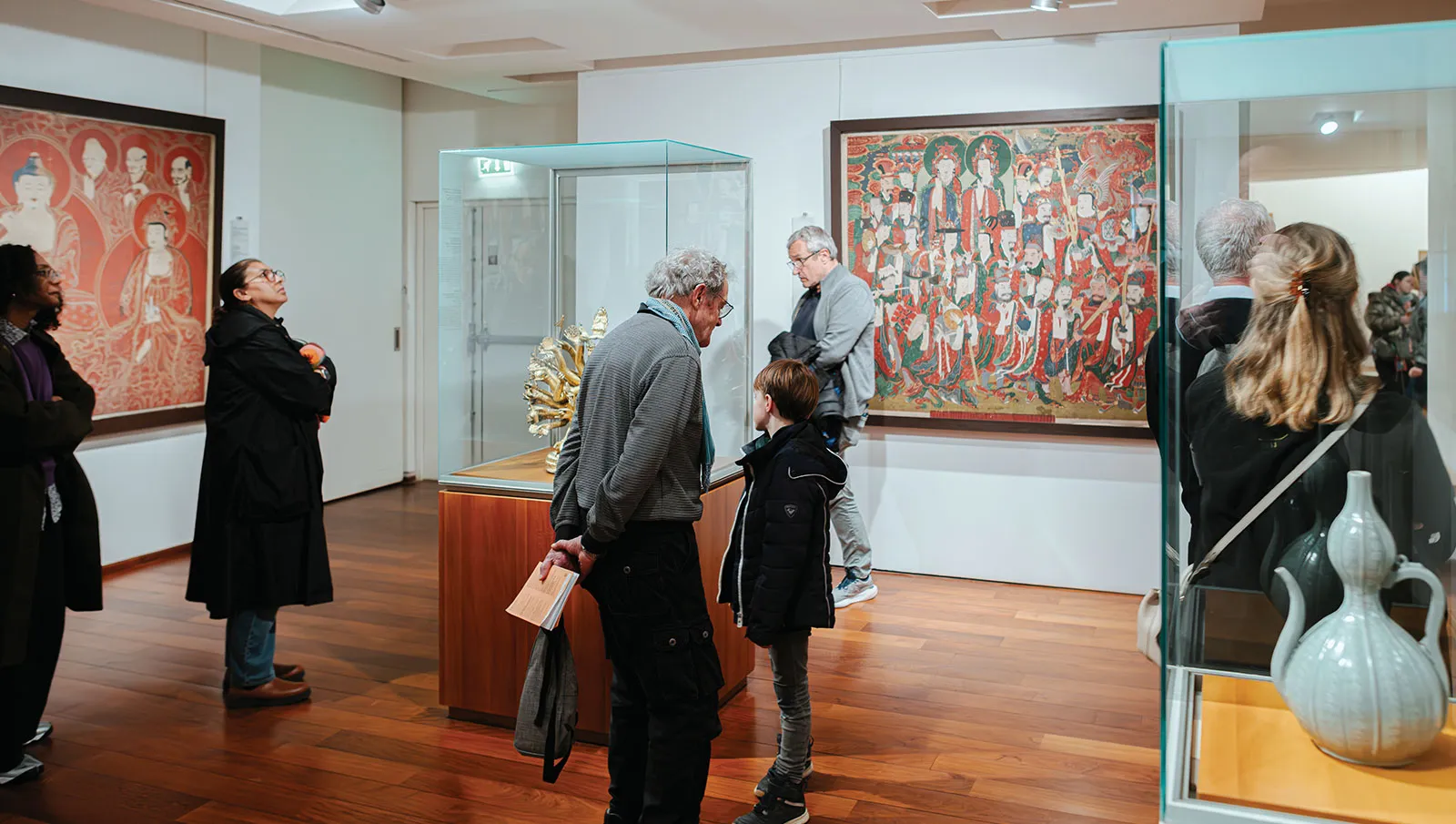
The two statues are powerful presences, but the Korean gallery has much more to offer. From white porcelain and celadon to folk paintings, portraits, Buddhist paintings and furniture, a collection of over 1,500 Korean cultural artifacts gives this space a depth that is entirely its own.
There is another reason to pay attention to the museum this year, however. Marking the 140th anniversary of diplomatic relations between Korea and France, the museum has announced that it will dedicate the entire year to Korean works of art under the slogan “K-ompletely Korea!” In collaboration with institutions in Korea and abroad, a series of special exhibitions and programs will explore how the sensibility of contemporary Korea connects to its deep artistic traditions.
The year opened on Mar. 18 with “K-beauty: Korean Beauty, Story of a Phenomenon,” running through Jul. 6. Spanning painting and contemporary visual culture, the exhibition examines the distinctive aesthetic that has shaped Korean identity and traces the development of K-beauty from the 18th century to the present.
From April through February 2027, “DAL DARI: The Moon and the Legs” presents the work of Lee Seulgi, an artist based in France since 1992. Combining modernist forms with traditional craft techniques across painting, sculpture and installation, the exhibition includes a work installed both inside and outside the building.
From May 20 through Aug. 31, “Silla, Gold and the Sacred: Royal Treasures of Korea” explores the culture of the Silla Kingdom (57 B.C.E.–935 C.E.) and its roughly one-thousand-year history. National treasures making their overseas debut will travel from Korea and elsewhere, examining how the Silla’s legacy has carried forward to the present day.
From Sept. 16 through Jan. 4, 2027, “The Cabinet of Illusions: Trompe-l’oeil Knowledge, Korea (18th–20th Century)” introduces chaekgeori—the still-life painting style beloved by Joseon King Jeongjo, depicting bookshelves, stationery and objects. The exhibition traces how this distinctly Korean genre evolved across the centuries, with the first-ever public display of a chaekgeori painting over five meters in length.
Rounding out the year are children’s performances, animation, film screenings, a K-pop day, a K-horror day and a range of programs for all ages. In the basement, Hanok Restaurant by Misso serves Korean cuisine. From a thousand-year-old Buddhist statue to the 21st century, Korea—to see, hear and taste—is waiting in the heart of Paris.