There are times when you need a moment entirely for yourself. Feeling the need for a change of air, one option is to wander a city as if you were a character in a story. Namwon is exactly the place for that.
There is a clear reason to choose Namwon: layers upon layers of narrative have accumulated here. The most iconic of them is “Chunhyangjeon” (The Tale of Chunhyang), which is a classic tale born during the Joseon Dynasty (1392-1910) and beloved to this day. The tale follows Chunhyang and Mongnyong as they fall instantly in love, only to be separated when Mongnyong leaves to take the civil service exam. While he is away, a corrupt official pressures Chunhyang to submit to him—but she holds firm in her convictions, and Mongnyong returns to deliver justice. It is the kind of story that can sweep away even the most restless afternoon. And Namwon is where all of it unfolds.
It is worth stopping at a Hanbok (Korean traditional clothing) rental shop near the bus terminal before heading to Gwanghallu Pavilion. If you want to properly experience the scene—to feel like the story’s protagonist—this kind of effort is non-negotiable. Even the time spent deliberating among the richly colored robes becomes part of the pleasure.
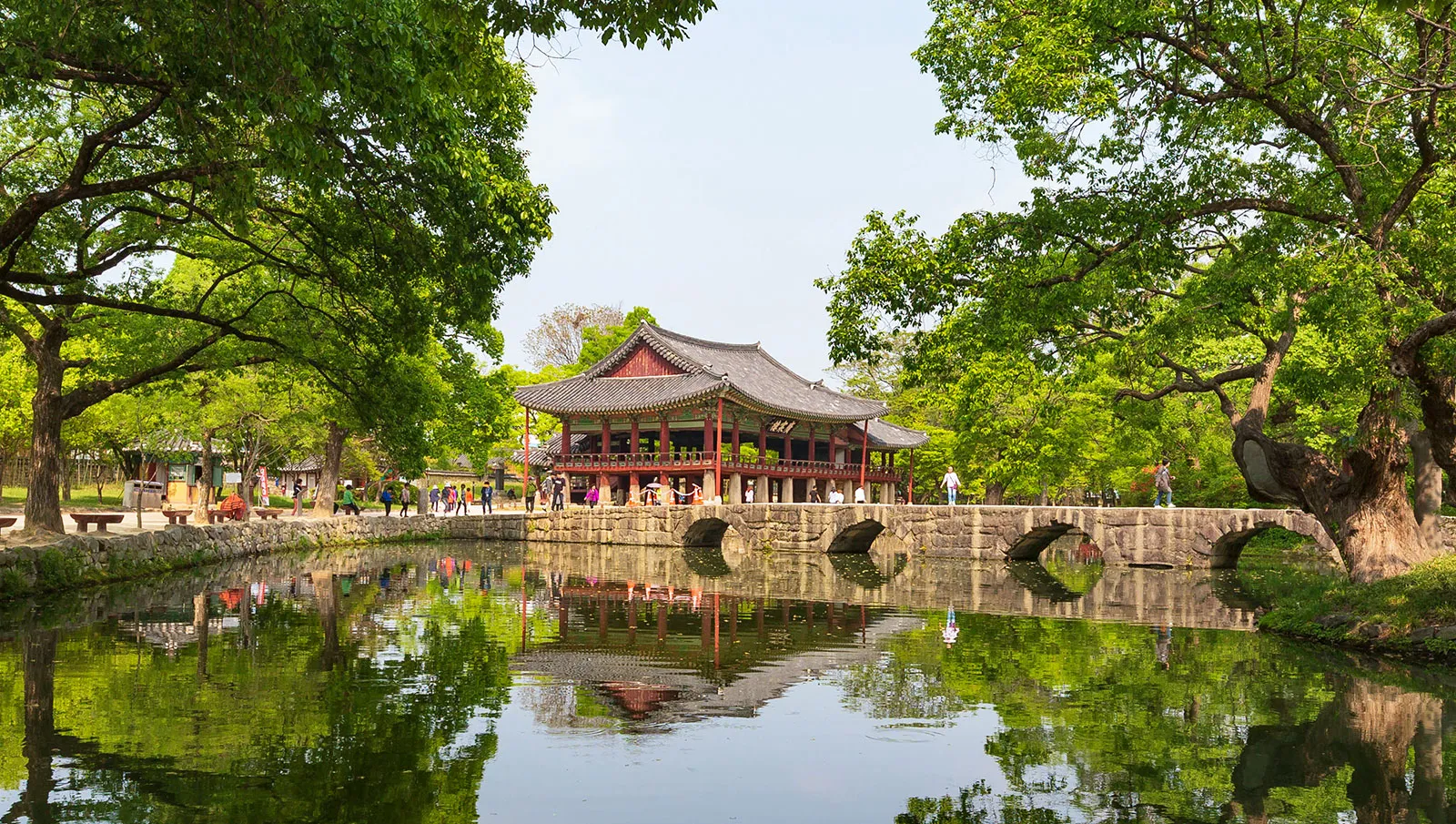
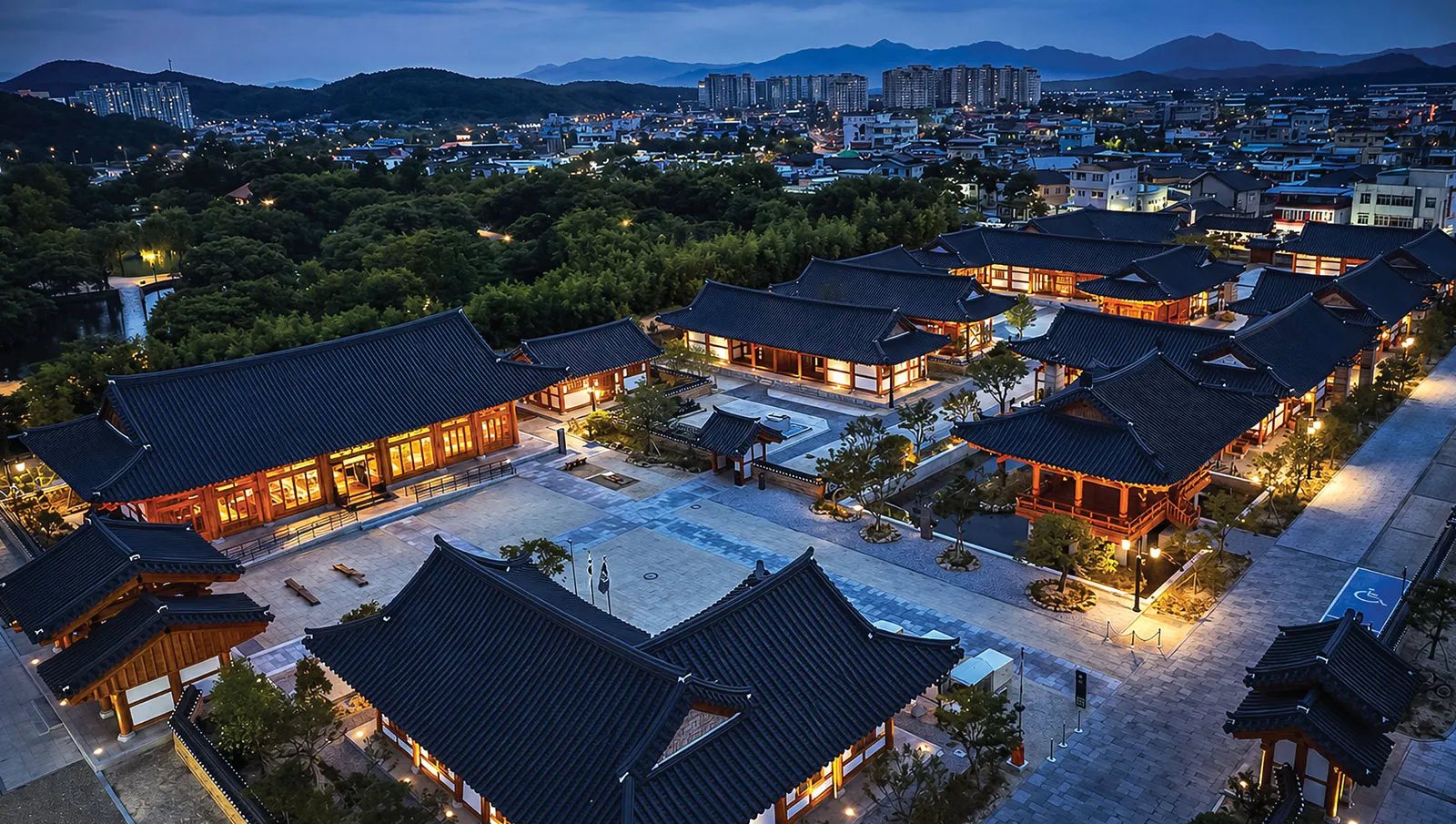
Dressed and ready, it is time to step into Gwanghalluwon Garden, home to the historic Gwanghallu Pavilion. Walking through scenery drenched in green, the boundary between forest and garden seems to dissolve. This is one of Korea’s most celebrated pavilion gardens, distinguished by how little it imposes on nature—the slopes and soil are left as they were, and the natural stones and trees stand untouched, giving the feeling of having wandered into a small mountain.
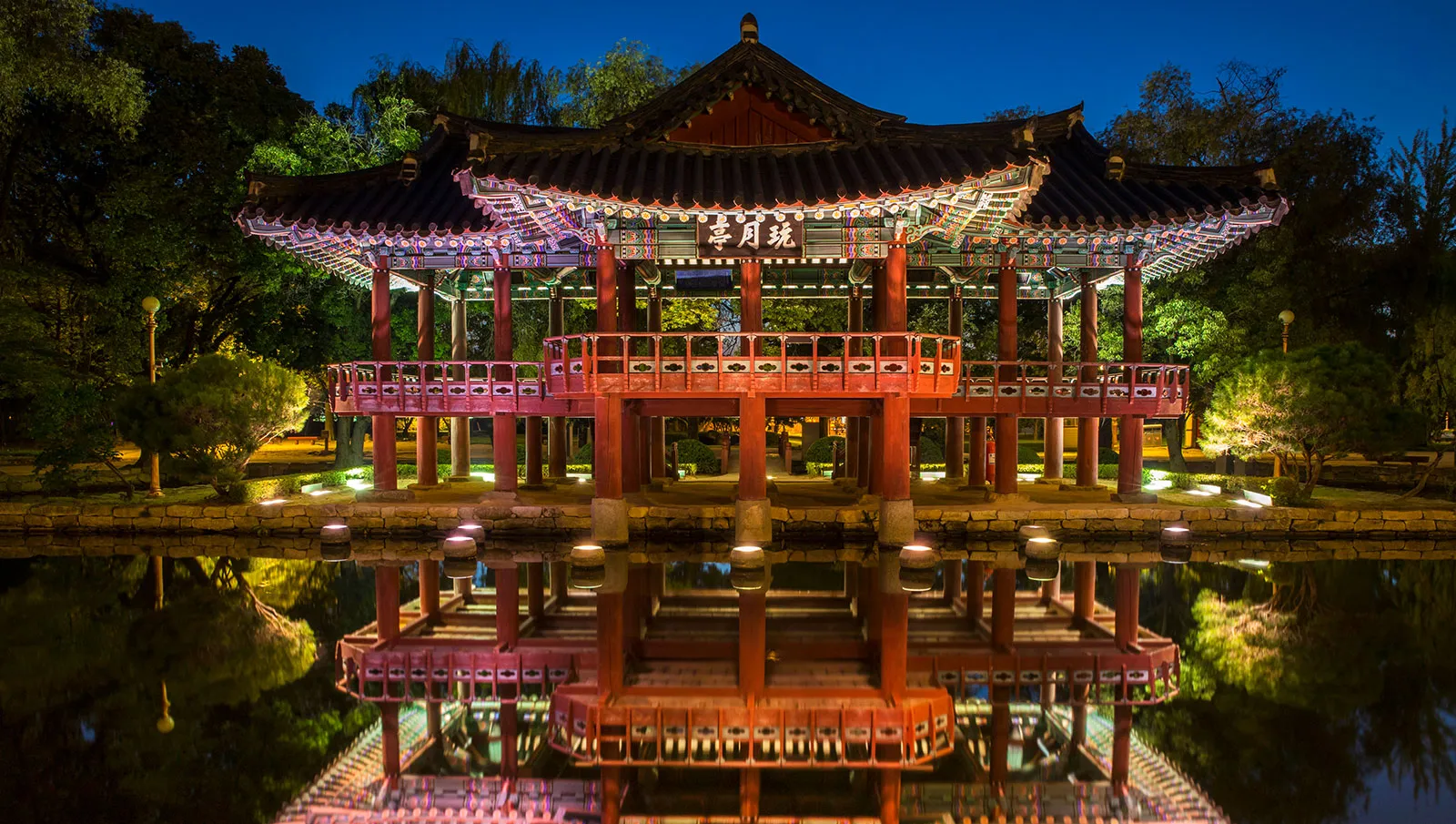
Following the path, one comes upon Wanwoljeong Pavilion, a two-story building featuring a hip-and-gable roof. Its name means “playing with the moon,” worth remembering for a return after dark. Just beside it lies another large rectangular pond.
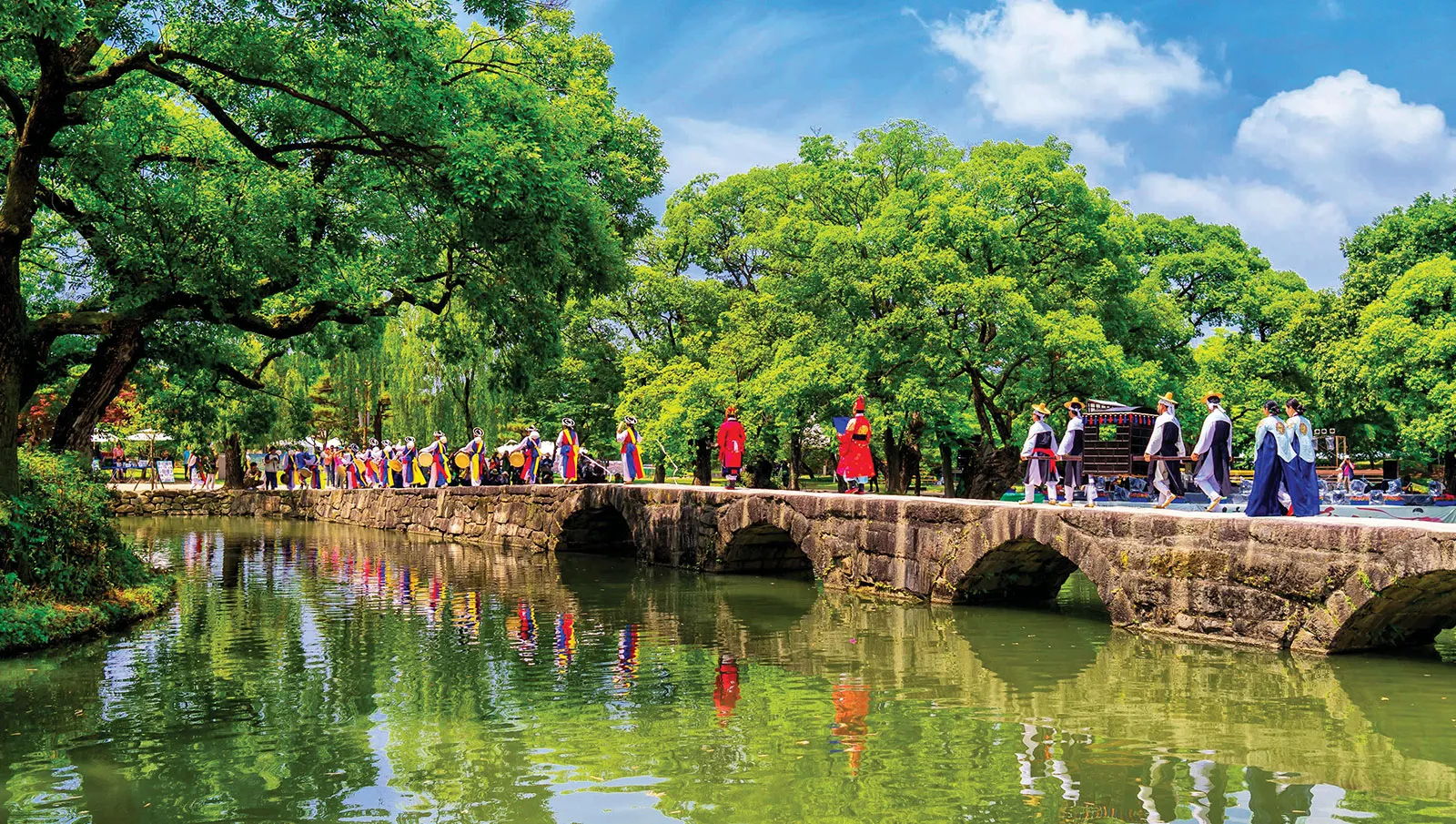
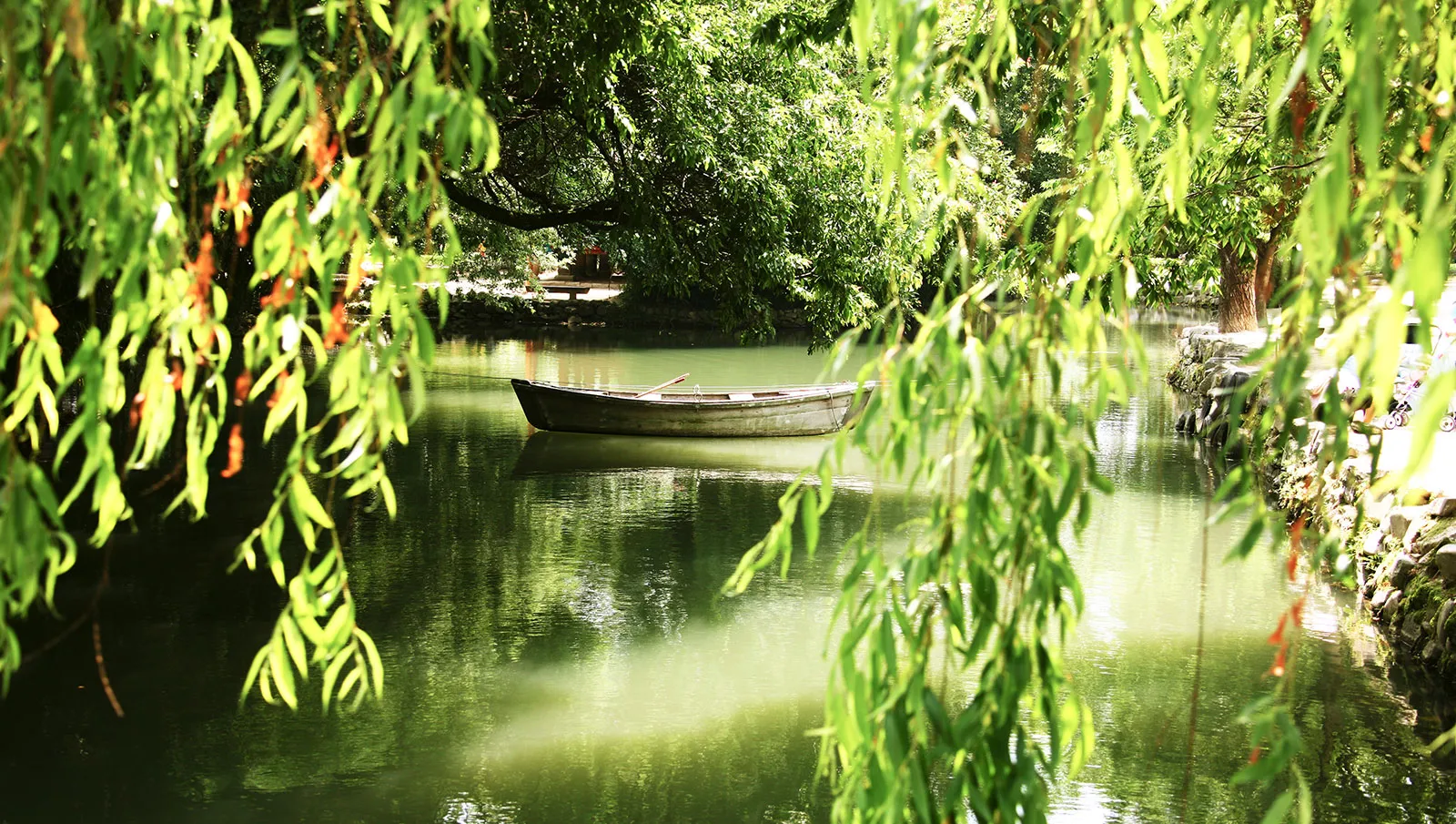
Then: Gwanghallu Pavilion itself. This is said to be the very place where Chunhyang and Mongnyong first met. Three islands appear to float in the pond, connected by gently arching bridges. The central island holds a small garden. Each time the long-leafed willows sway and rustle in the wind, it feels as if a scene from the novel has materialized—the space comes alive. The willow-dyed pond, the people crossing Korea’s oldest surviving arched bridge above it—the whole picture feels dreamlike.
The spell of Gwanghallu Pavilion carries right into what lies across the road: the Chunhyang Theme Park, built around the world of “Chunhyangjeon.” The space is divided into five scenes — “Meeting,” “The Vow,” “Love and Parting,” “Ordeal” and “Celebration”—designed to guide visitors through the story’s arc. Each section shifts in atmosphere: a hilltop overlooking downtown Namwon, a recreation of the punishment scene. Performances and hands-on programs let visitors feel the era in a tangible way.
Walking Through a Love Story
Namwon

The road seeps into stories. Wandering through it, travelers find themselves face to face with moments where they feel like a character inside a scene. This is the sensation that Namwon, in Jeollabuk-do Province, offers.
Becoming the Protagonist
Taste and Character
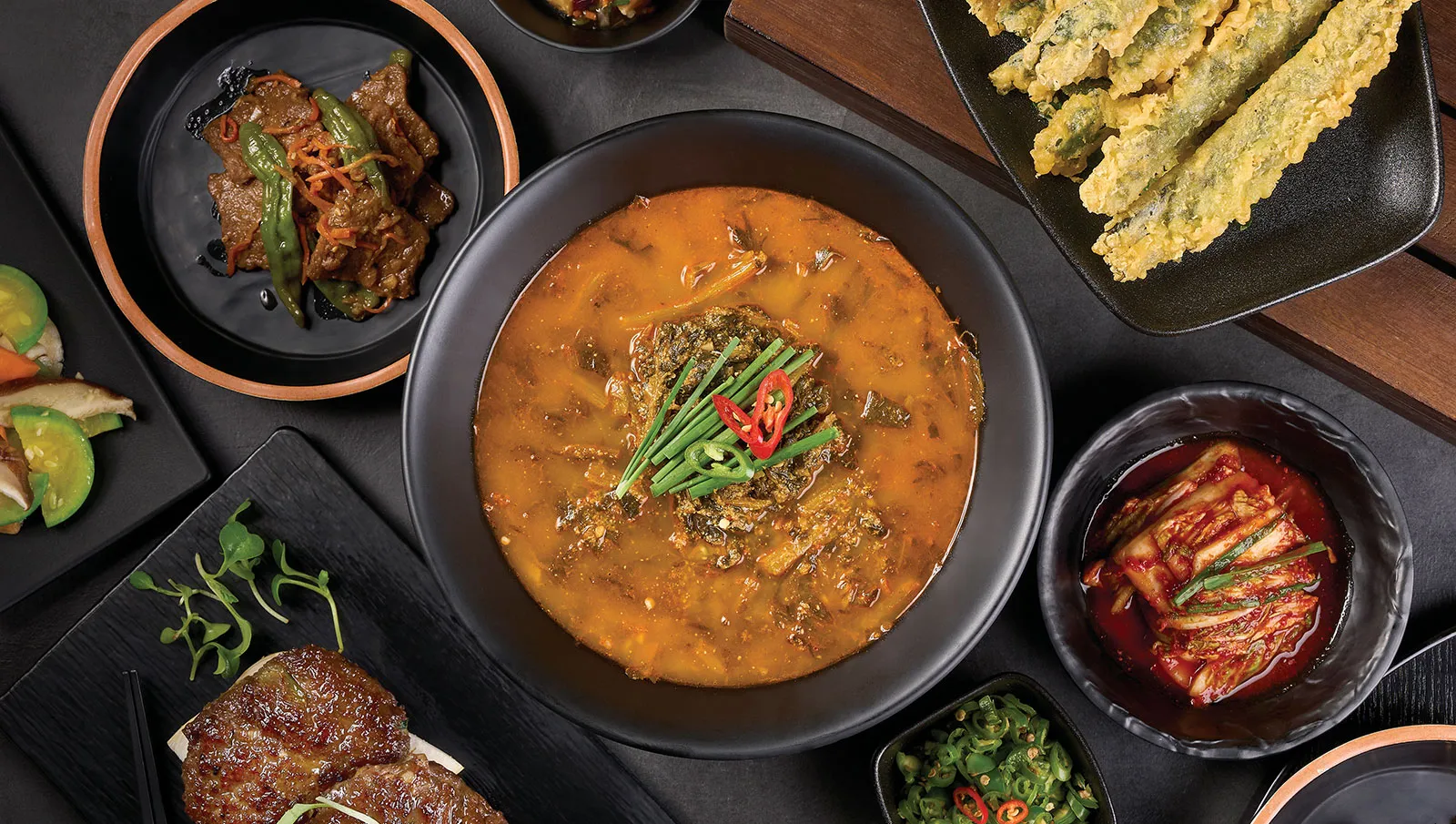
After a full loop of the city, appetite follows naturally. Back near Gwanghalluwon Garden, you will find a street dedicated entirely to the city’s signature dish: Chueotang (loach soup).
Chueotang is a soup made by grinding loach and simmering it with doenjang (soybean paste), dried radish greens and other ingredients. Namwon sits between mountain ranges with tributaries of the Seomjingang River running through it and wide plains spreading out below—ideal conditions for loach to thrive.
A spoonful of the bubbling soup reveals just how thick it is; swallowing, a rich and dense flavor fills the mouth completely. Stirring in rice brings out an earthy depth, followed by the nutty sweetness of perilla powder. Finally, a dash of jenpi (ground prickly ash husks) shifts the aroma entirely. Each spoonful reveals a new layer of flavor within a single bowl.
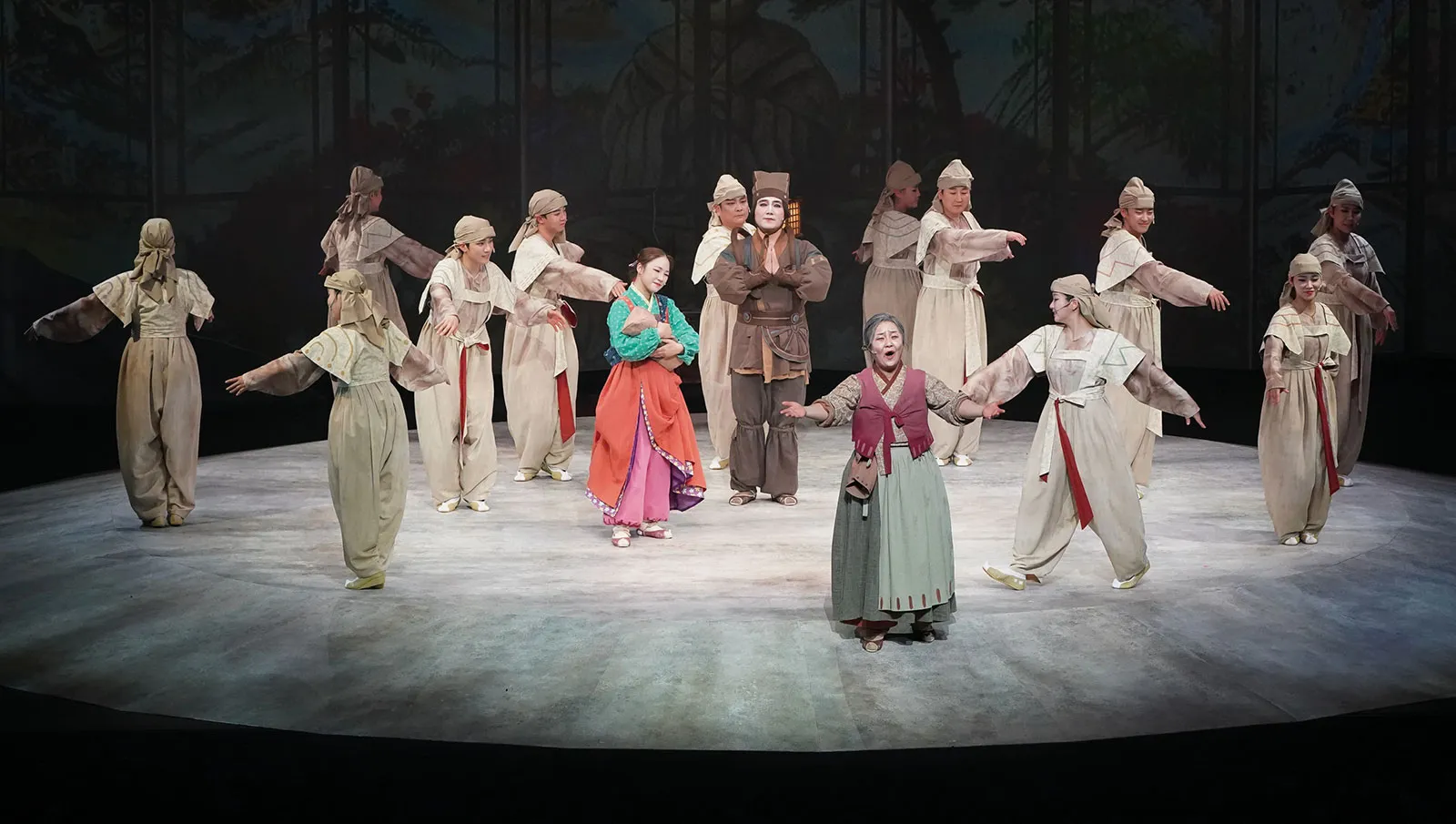
Another defining element of Namwon is gugak (traditional Korean music), specifically pansori (traditional lyrical opera). Pansori is a performance form in which a single vocalist weaves together song, spoken narrative and gesture to the rhythm of a drum. Korean pansori divides broadly into three regional styles—Dongpyeonje, Seopyeonje and Jungpyeonje—and Namwon is the birthplace of Dongpyeonje.
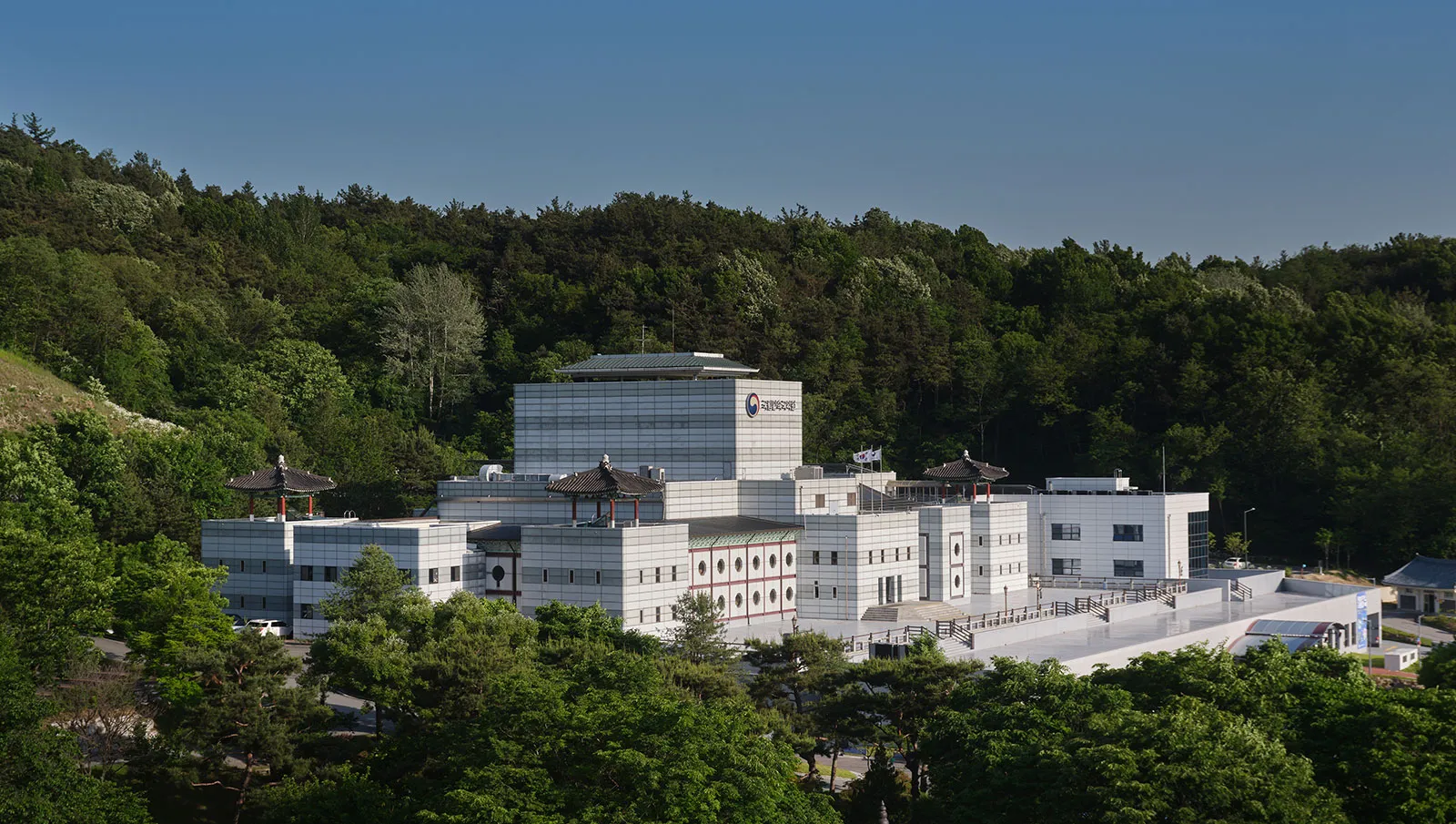
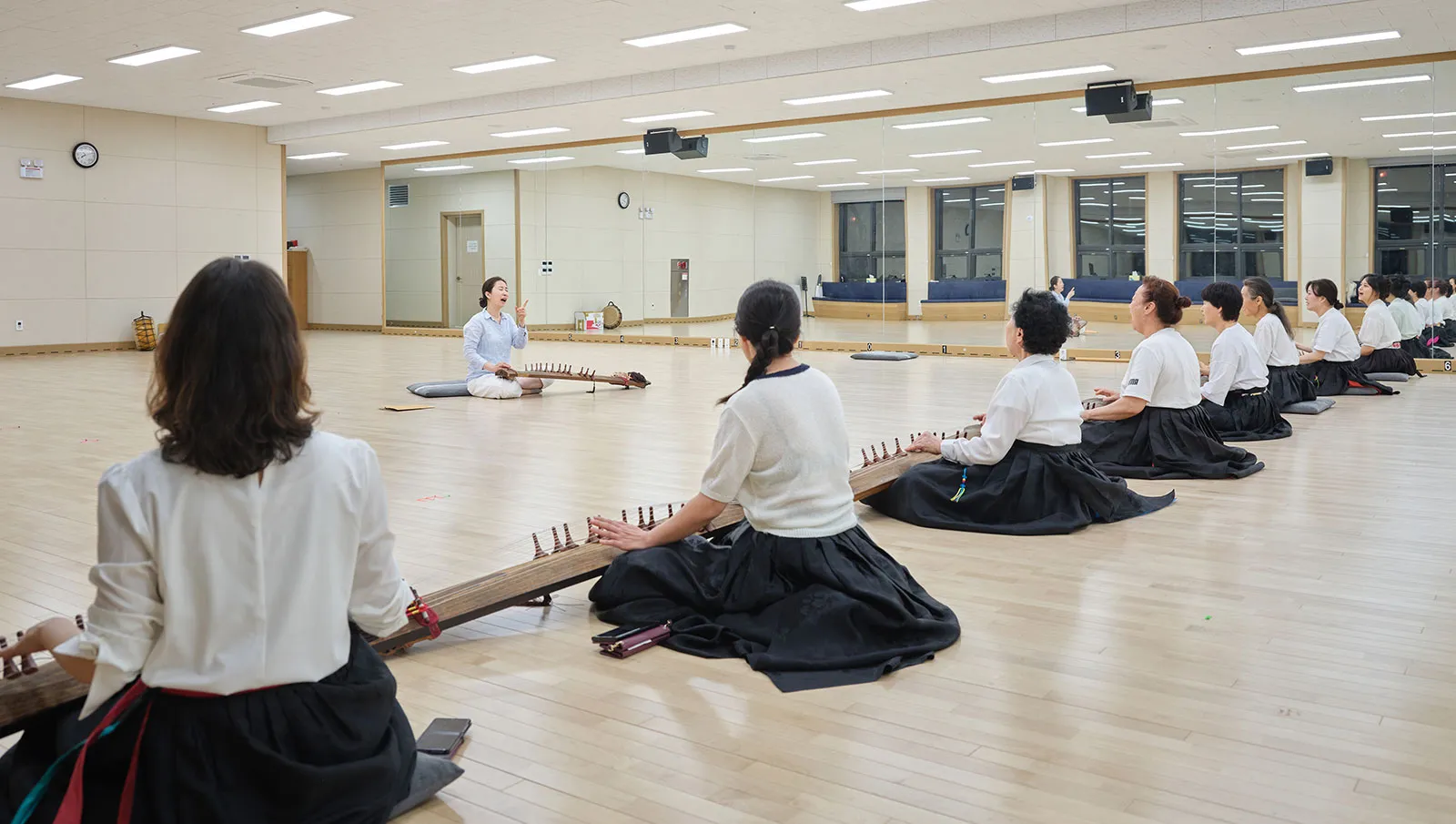
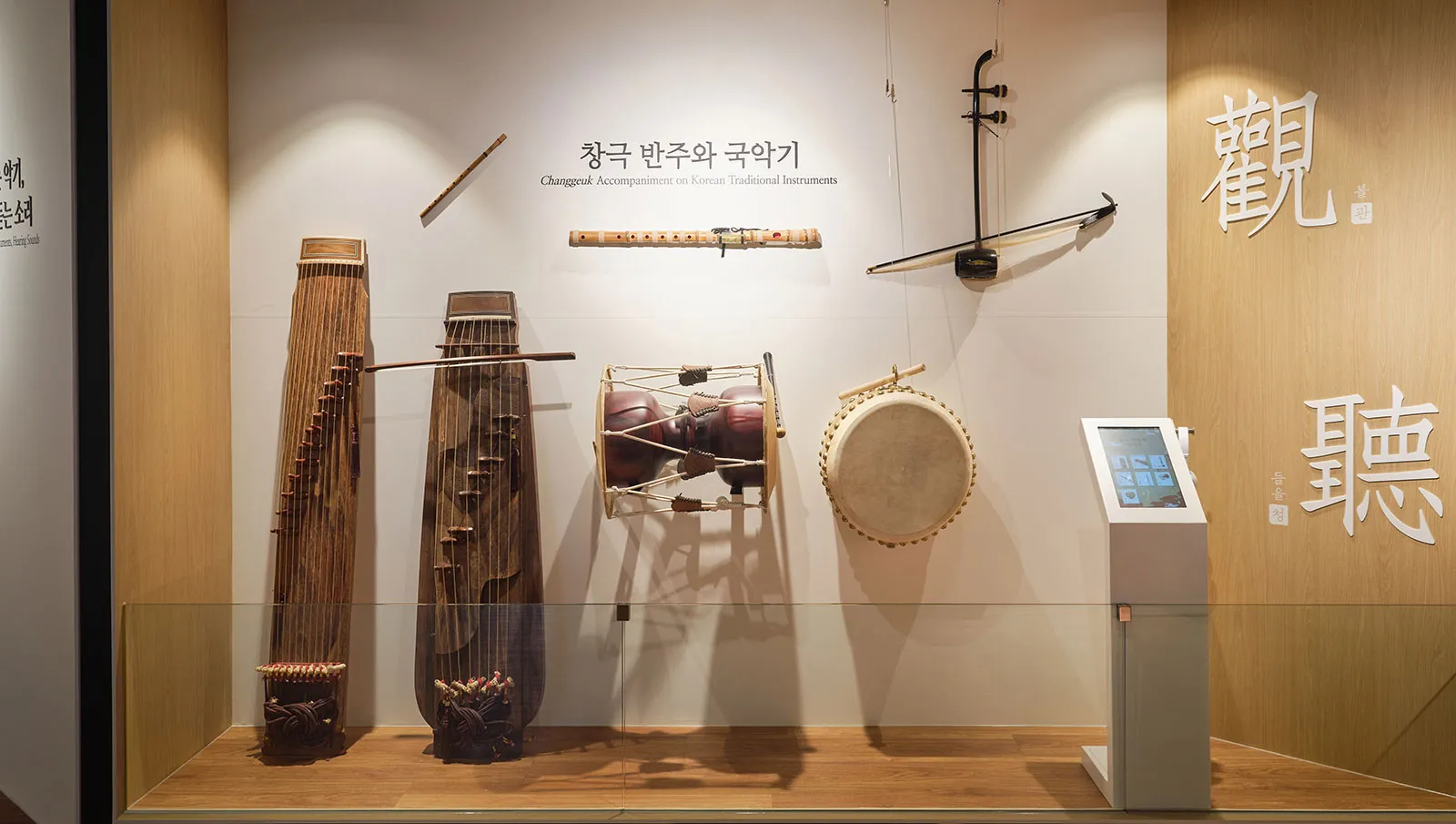
To absorb that atmosphere properly, the Namwon National Gugak Center is the place to go. The institution carries on the tradition of pansori and changgeuk (a traditional Korean opera), offering free high-level performances every Saturday. Alongside pansori there are court dances—their lines elegant and precise—and samdo pungmul (a medley of Korea’s premier regional percussion beats) rhythms that have shoulders rising involuntarily, along with nongak (traditional instrumental farm music), geommu (sword dance) and more. There’s no reason not to go.
Inside the performance hall, a first pansori performance changes the air in the room entirely. It overflows with energy while holding emotion in careful check; it drops into speech—almost conversational—and yet the rhythm never leaves it. Comparisons to grand orchestral works come to mind, but pansori resists them. It’s something distinctly Korean. Strange and yet somehow familiar, it transmits a Korean sensibility with uncommon clarity.
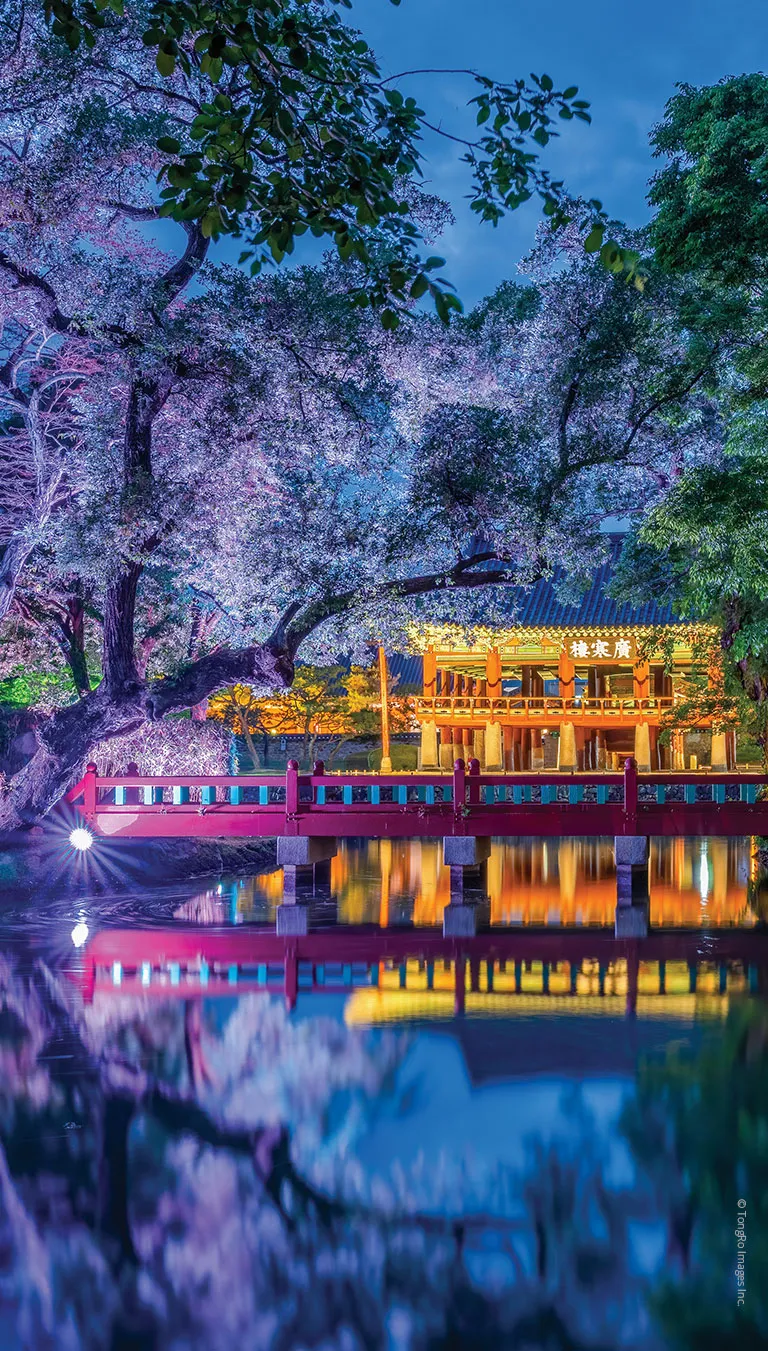
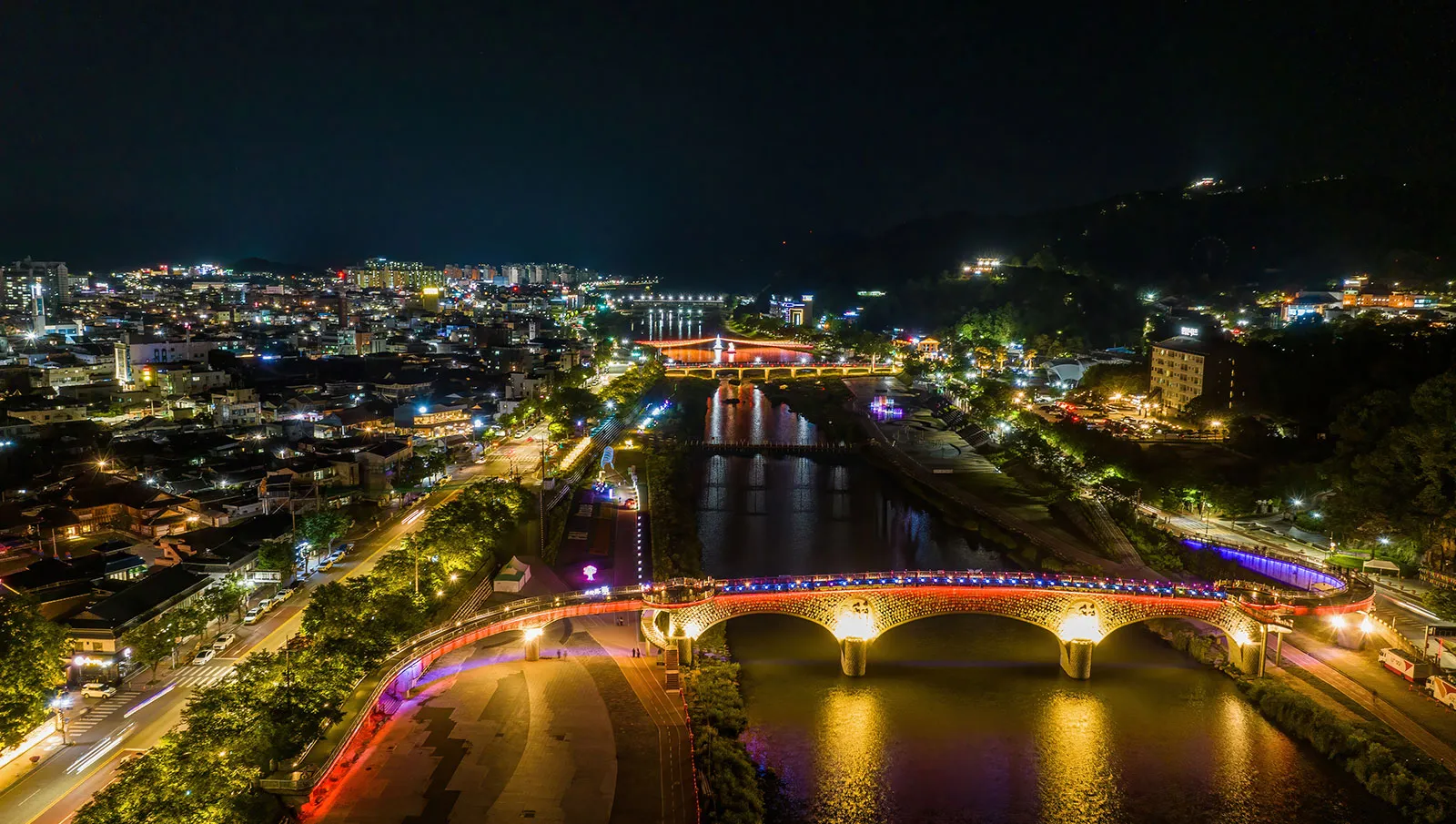
As the sun goes down, Gwanghallu Pavilion rewards another visit. The atmosphere is utterly transformed. Soft lights come up, and the space becomes something like the lunar palace it was named for. The scene reflected on the water is graceful and grand—like a crane with wings spread wide. In that dreamlike setting, the hours in Namwon reveal themselves to have unfolded like scenes from a carefully crafted story. Perhaps everyone who comes here finds their own scene waiting for them.
Festival
Chunhyang Festival
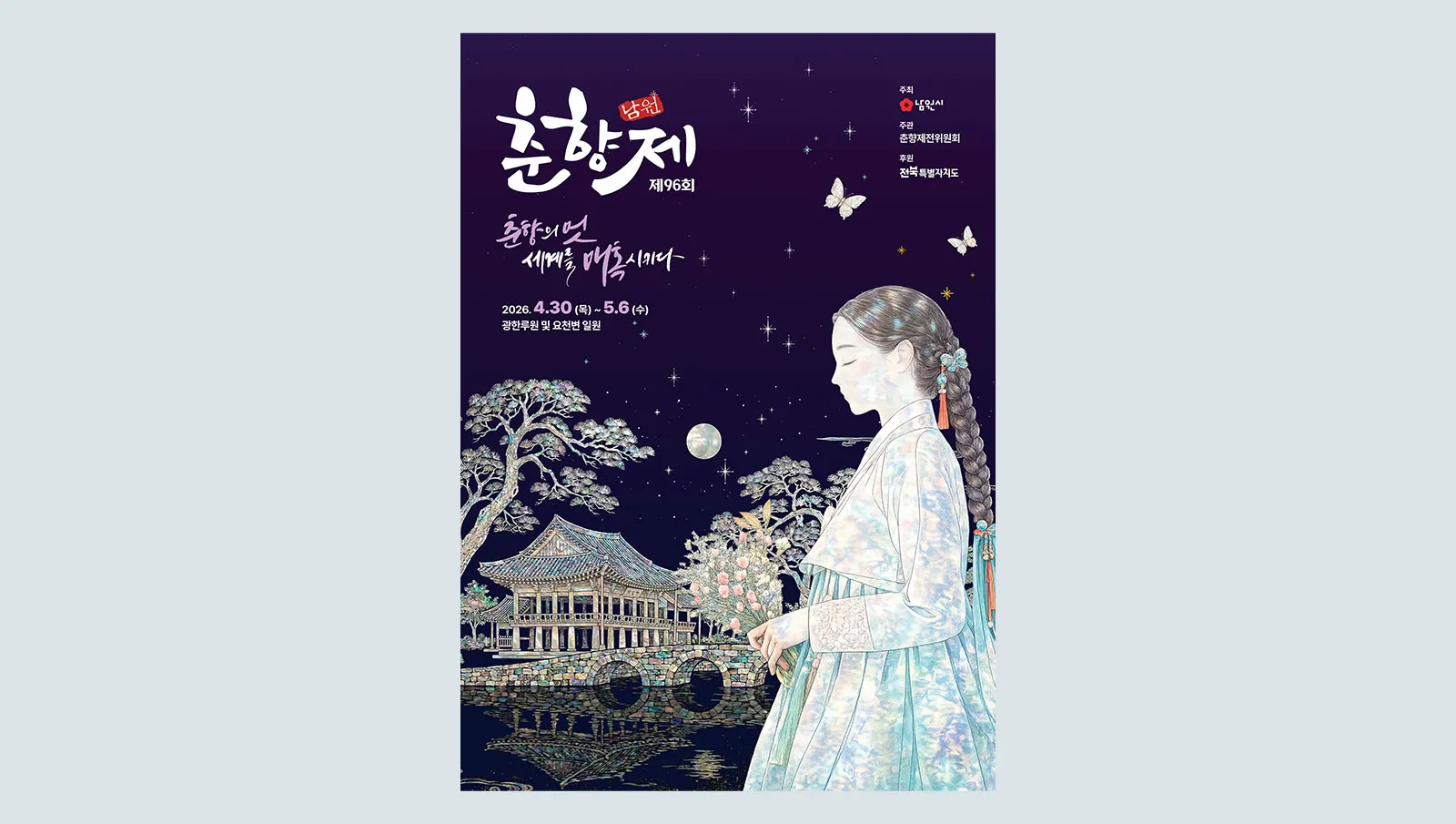
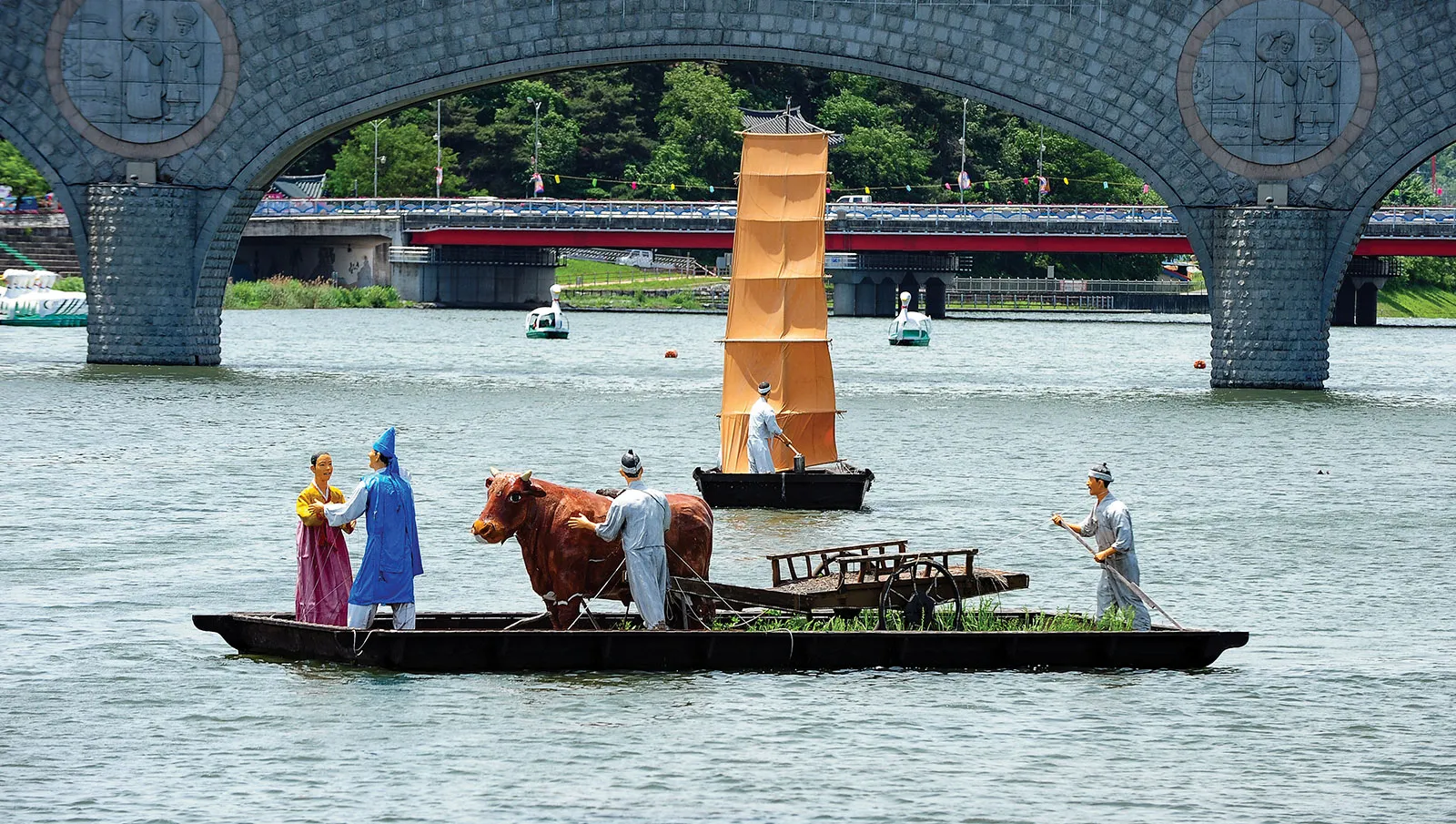
The Chunhyang Festival traces its origins to 1931, when it began as a ritual commemorating Dano, the fifth day of the fifth month of the lunar calendar marking the end of spring, and, in the story, the day Chunhyang and Yi Mongnyong met. Now in its 96th year, the festival was held under the slogan “Chunhyang’s Grace, Captivating the World,” taking place across Gwanghalluwon Garden and the surrounding Yocheon Stream area.
The program was built around the values Chunhyang embodies—beauty, love, tradition and inner strength—expressed through a wide range of cultural experiences. Highlights included the Global Chunhyang Selection Contest, open to international participants, and a beauty and styling zone where visitors could be transformed into Chunhyang herself by professional artists. Renowned Korean illustrator Wooh Nayoung also contributed an exhibition reimagining the classic tale through a contemporary lens.
Gugak performances were a natural centerpiece, given Namwon’s deep ties to this musical tradition. The Chunhyang Gugak Festival showcased a range of traditional vocal genres, while celebrated singers performed against the backdrop of Gwanghallu Pavilion. The program also pushed boundaries with a fusion stage blending pansori and rap, bridging East and West.
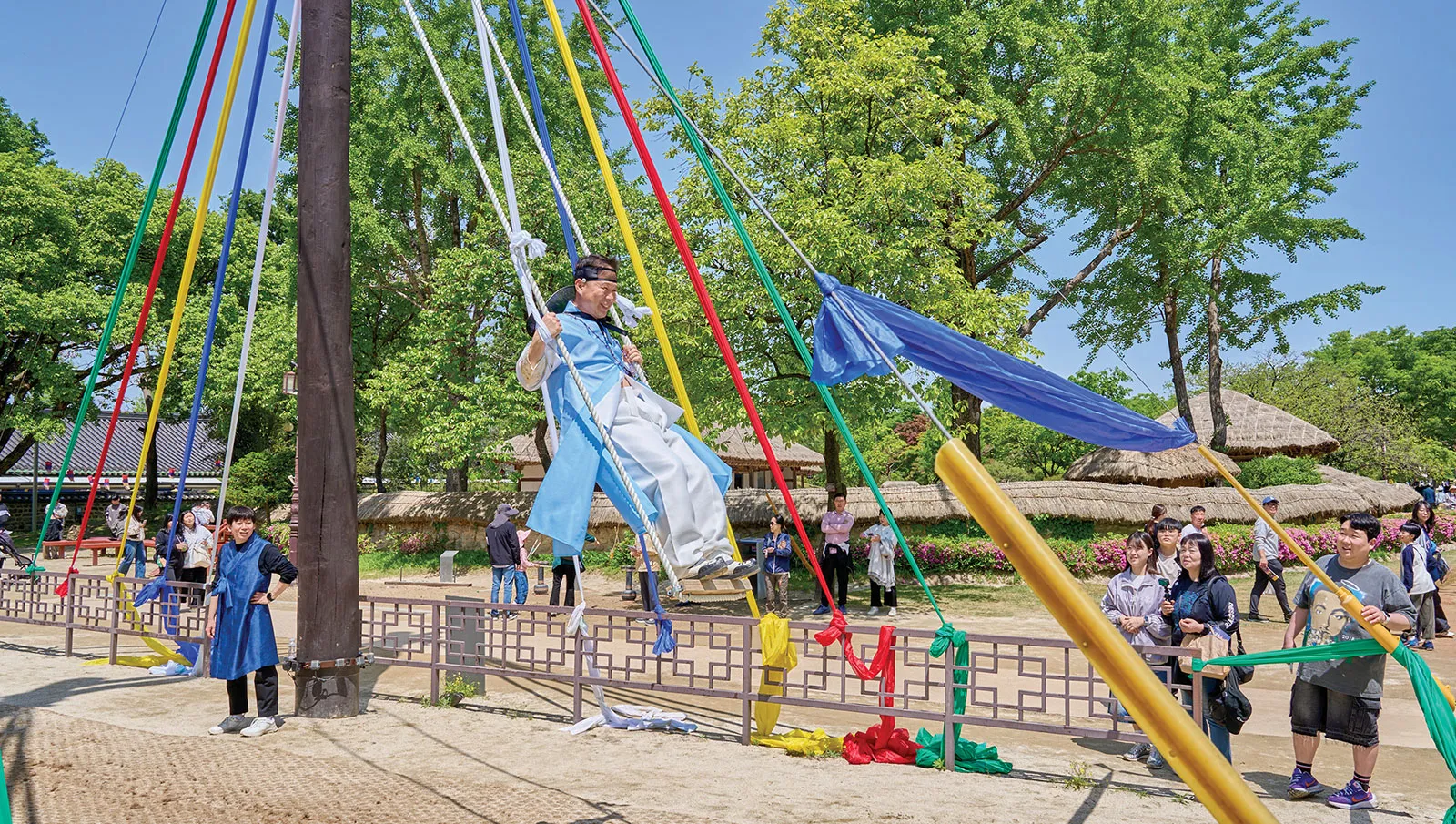
Rounding out the festival were a restored Chunhyang Ritual—a recreation of the original ceremony at the festival’s founding—traditional folk games, a charity marathon, a lantern-making experience open to all and an array of local food. It was, by any measure, a festival with something for everyone.

- April 30 – May 6, 2026
- Gwanghalluwon Garden and the Yocheon Stream area