December 2025


Design permeates every part of our daily lives. However, because we take it for granted, we often forget its value. We shall introduce a few places where we can refresh this sense of the “ordinary.”
우리의 일상 모든 곳에는 디자인이 스며 있다. 다만 너무나 당연하게 존재하기에, 우리는 그 가치를 자주 잊곤 한다. 디자인의 존재를 새롭게 환기해 줄 디자인 경험의 장을 소개한다.
Writer. Sung Ji Yeon
Photos Courtesy of Hyundai Motor Company.
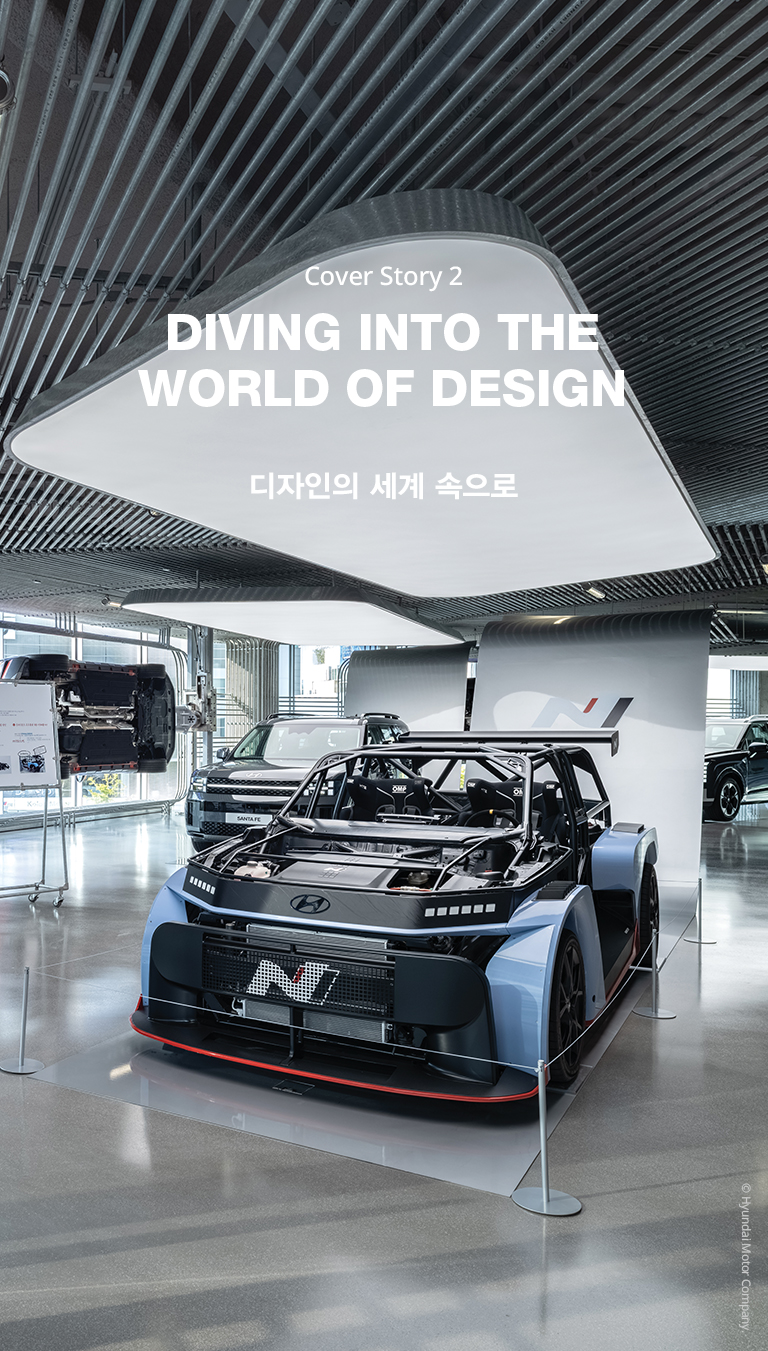
Hyundai Motorstudio Seoul is an urban playground for anyone interested in cars, opened by the long-time leader of Korea’s automotive industry. The space was designed to allow visitors to fully experience the joy, innovation and entertainment that automobiles offer.
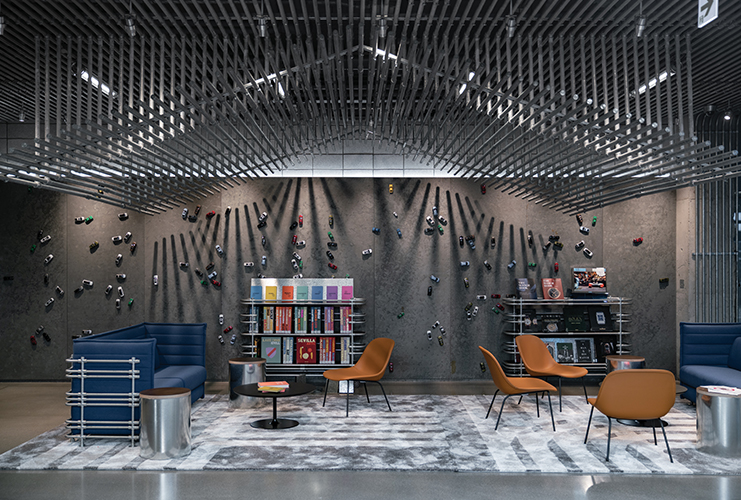
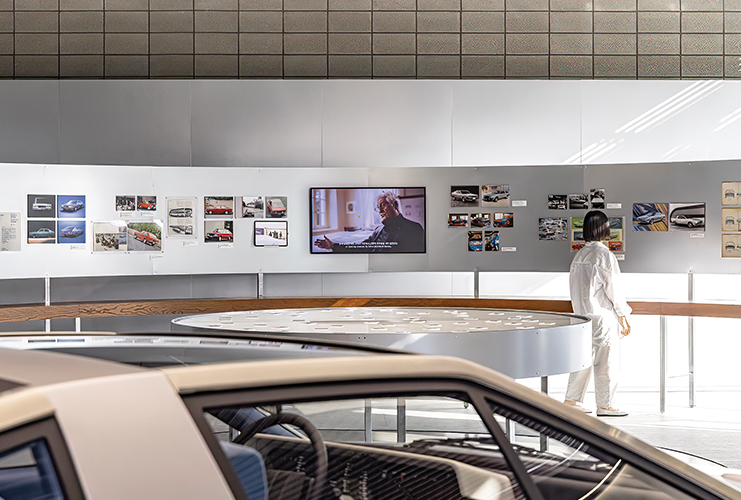
The history of automobiles unfolds on the first and second floors. Visitors are greeted by about 2,500 volumes of publications and about 500 objets under three themes: heritage, lifestyle and innovation. As you stroll through the sections, each district piece of content naturally connects our past and present as it relates to automobiles.
The heritage section exhibits individuals and symbols who have transcended brands to lead the development of mobility. Stimulating items include a racing trophy set—one of only five in the world—and rare collections such as a toy gas station from the 1960s. The lifestyle section demonstrates how cars are woven into various parts of the culture, including film, animation and travel. The innovation section examines how the cars of the past have evolved into the cutting-edge machines of today. As one examines the smart factory diorama or peruses the various design publications, one gets a real feel for how cars are no longer simply means of transportation—they are a form of technological art.
Third and fourth floors are where you can experience Hyundai vehicles. On the third floor, visitors see the performance parts and an EV cutaway that demonstrate the design details of brand products. Cleverly placed structures that reveal the form and function of various auto parts demonstrate the automotive design is about more than exteriors—it’s based on a balance of engineering and aesthetics. Through recent high-performance racing cars, we get a clear sense of the Hyundai brand’s unique design language. At the same time, the exhibit sends a powerful message: that in the liminal space where form, function, sensibility and technology meet, cars are the very incarnation of design.
On the fourth floor, visitors personally become subjects of design. Using the die casts of Hyundai’s IONIQ series, the brand’s leading EV line, visitors can conceptualize cars of their own, mixing their own colors and interior material samples. As you choose colors and materials to complete your vehicle, the exhibit becomes more than just an exhibit—it’s a moment to realize a “design of your very own.” For car aficionados, it’s a fun exploration, while for those new to cars, it’s a new experience.
Hyundai Motorstudio Seoul claims to be an “open space for auto enthusiasts,” but in fact, it’s an open experiential space for everyone. This is because through the medium of automobile design, the studio reflects the changes in our lives, invites us to imagine future possibilities, and allows us to feel—viscerally—the process by which design becomes experience and that experience expands again into inspiration.
Photos Courtesy of Korea Craft and Design Foundation.
Public design is deeply embedded in our daily lives. It appears in many forms: the escalator you used this morning, the library you visited to read or the park where you exercised after work. Public design seeks to improve small inconveniences experienced by the public so that no one is excluded, while also addressing broader social issues.
Recently, public design in Korea has evolved to reflect societal changes such as the rapid increase in single-person households, population aging, climate change and digital transformation. Innovative examples that meet contemporary needs—such as ensuring mobility for the vulnerable, responding to disasters and climate crises, fostering intergenerational coexistence and revitalizing local communities—have emerged across the country.
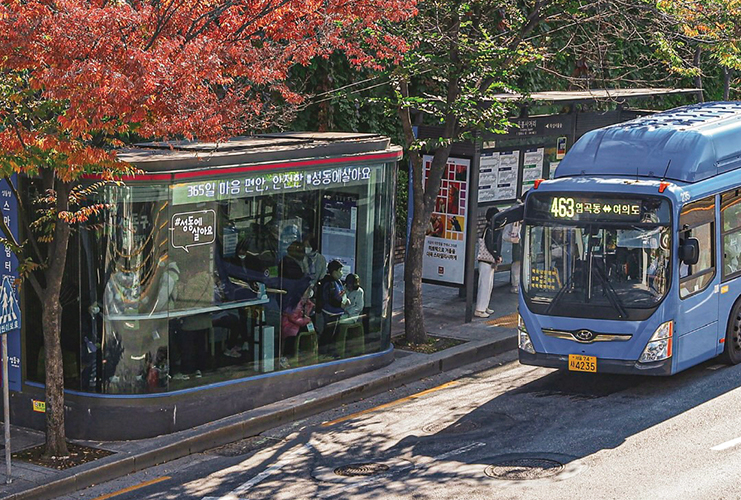 Bus shelter with IoT (Internet of Things) in Seongdong-gu District, Seoul
 Yeoui Roll Park, an inclusive public playground for all, Yeouido-dong, Yeongdeungpo-gu District, Seoul
Public design is deeply embedded in our daily lives. It appears in many forms: the escalator you used this morning, the library you visited to read or the park where you exercised after work. Public design seeks to improve small inconveniences experienced by the public so that no one is excluded, while also addressing broader social issues.
Recently, public design in Korea has evolved to reflect societal changes such as the rapid increase in single-person households, population aging, climate change and digital transformation. Innovative examples that meet contemporary needs—such as ensuring mobility for the vulnerable, responding to disasters and climate crises, fostering intergenerational coexistence and revitalizing local communities—have emerged across the country.
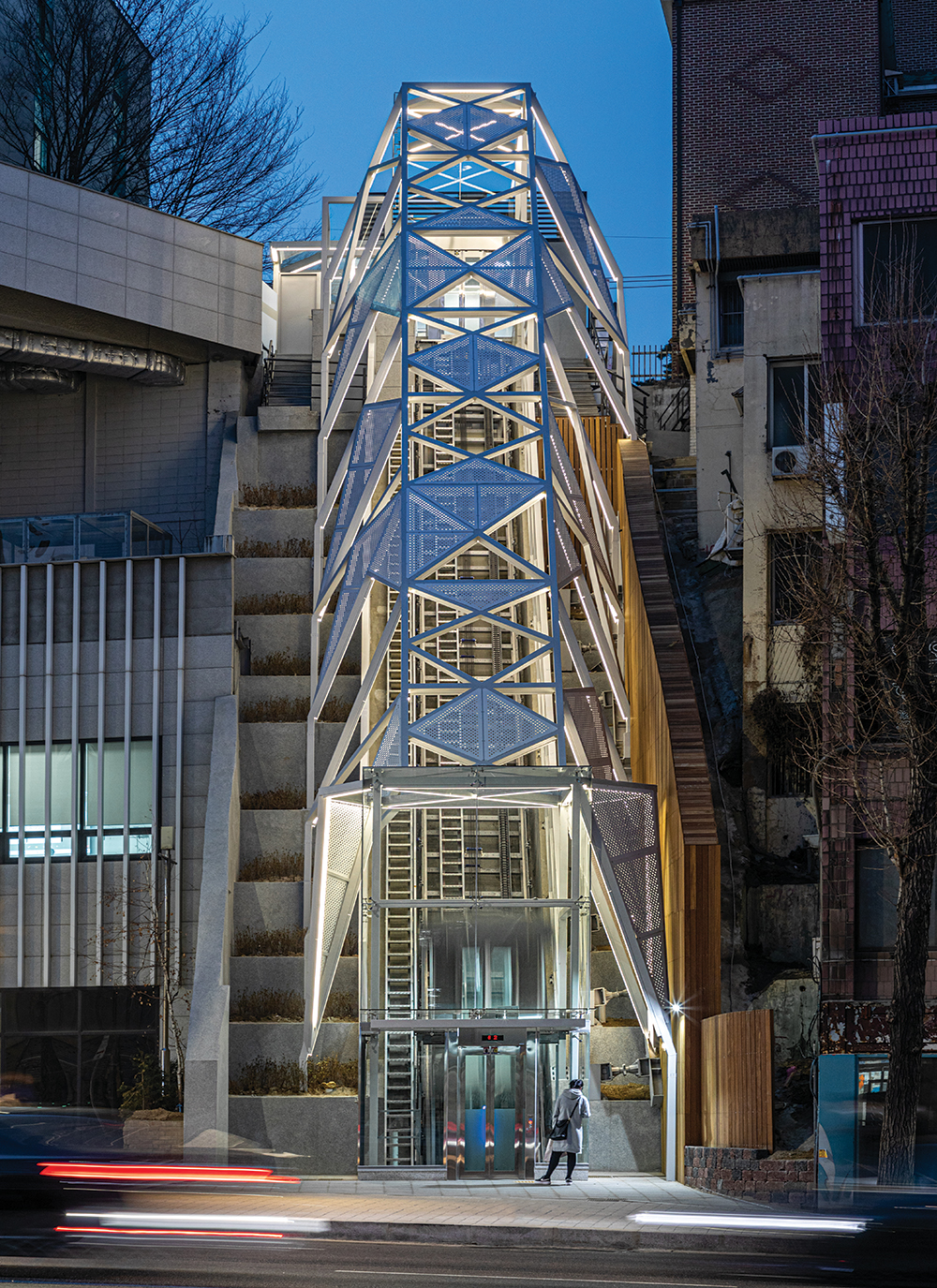 Inclined elevator installation in Bukahyeon-dong, Seodaemun-gu District, Seoul
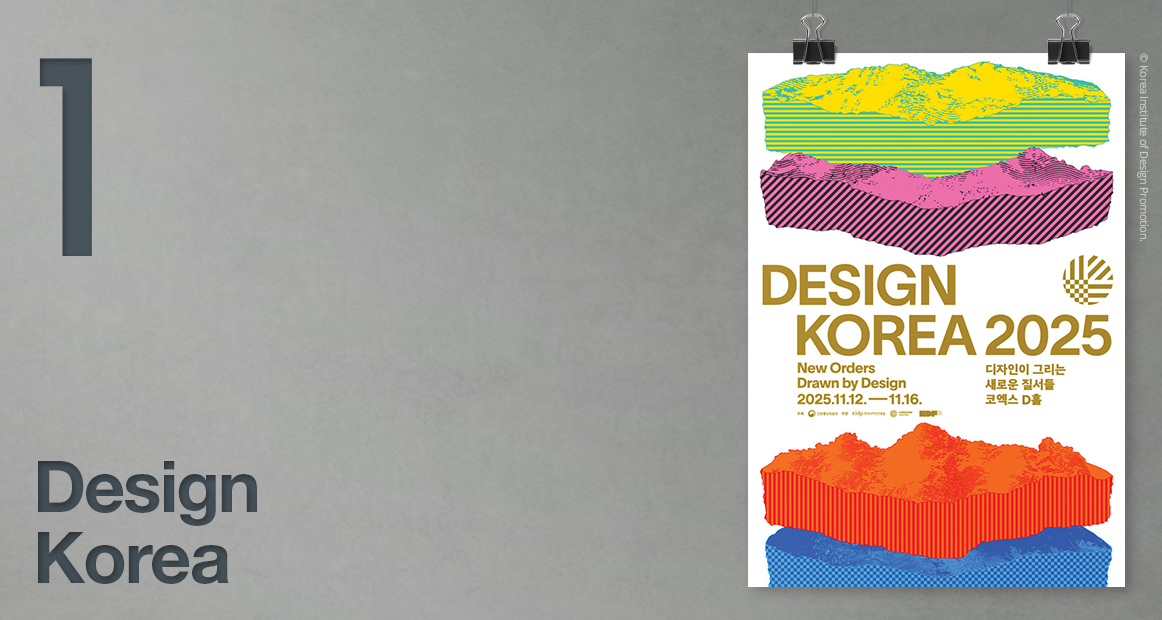
Design Korea, an expo specializing in design business, offers an overview of design trends within a rapidly changing industrial landscape and facilitates convergence and networking across sectors. This year’s theme was “New Orders Drawn by Design,” exploring how designers, through advanced AI technologies, are reconfiguring users’ and consumers’ sensibilities and experiences, and how such changes drive the wider expansion of industry and culture.
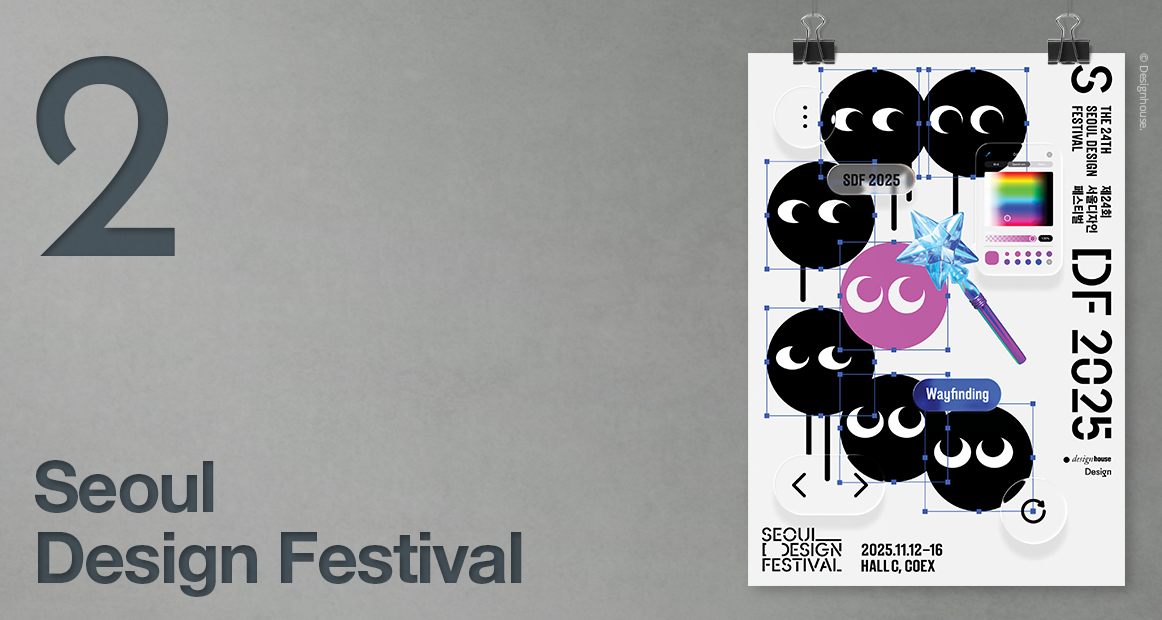
Marking its 24th edition, the Seoul Design Festival concluded on Nov. 16. Since its launch in 2002, it has welcomed 1.41 million visitors, 3,200 brands and 5,600 designers, establishing itself as one of Korea’s leading design exhibitions. This year’s theme was “Wayfinding,” bringing together 973 designers and 330 brands. If you find it difficult to attend the Seoul Design Festival, which returns every November with a new theme, consider the Busan Design Festival, organized by the same host and scheduled for May 2026.
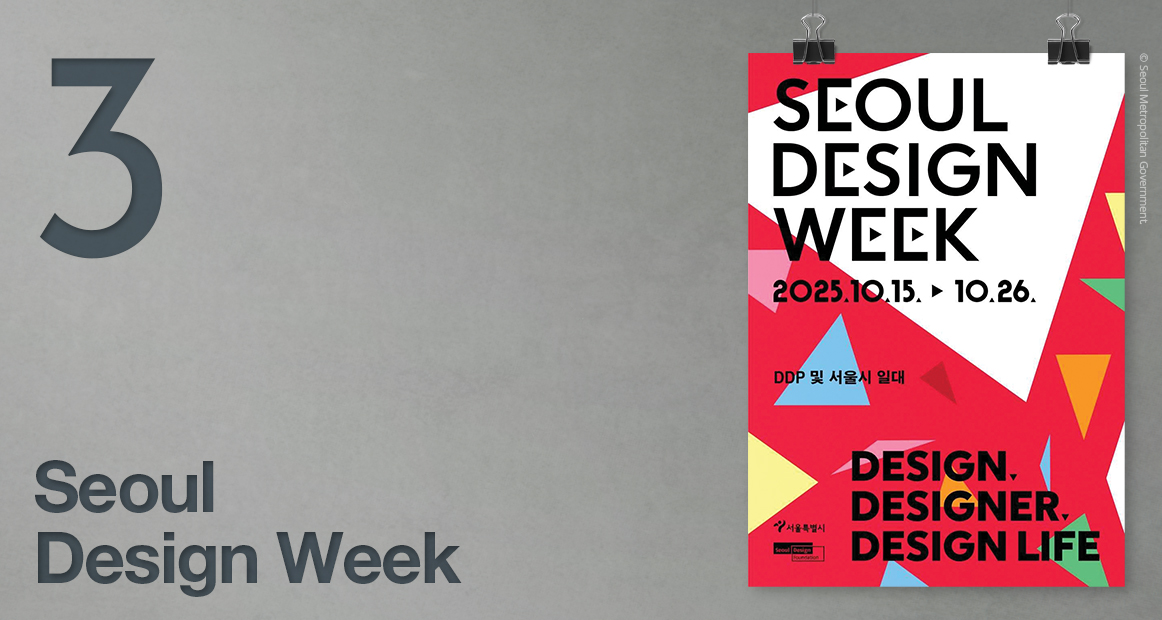
Seoul Design Week is an urban festival combining exhibitions, conferences, markets and citizen-participation programs. This year’s theme, “Design, Designer, Design Life,” highlighted the influence and potential of design across personal life, industry and urban culture. A major attraction was an exhibition of 100 chairs created by 100 designers, offering a glimpse into their philosophies and tastes. Held every autumn at Seoul’s Dongdaemun Design Plaza, it’s worth keeping on your radar if you’re interested.
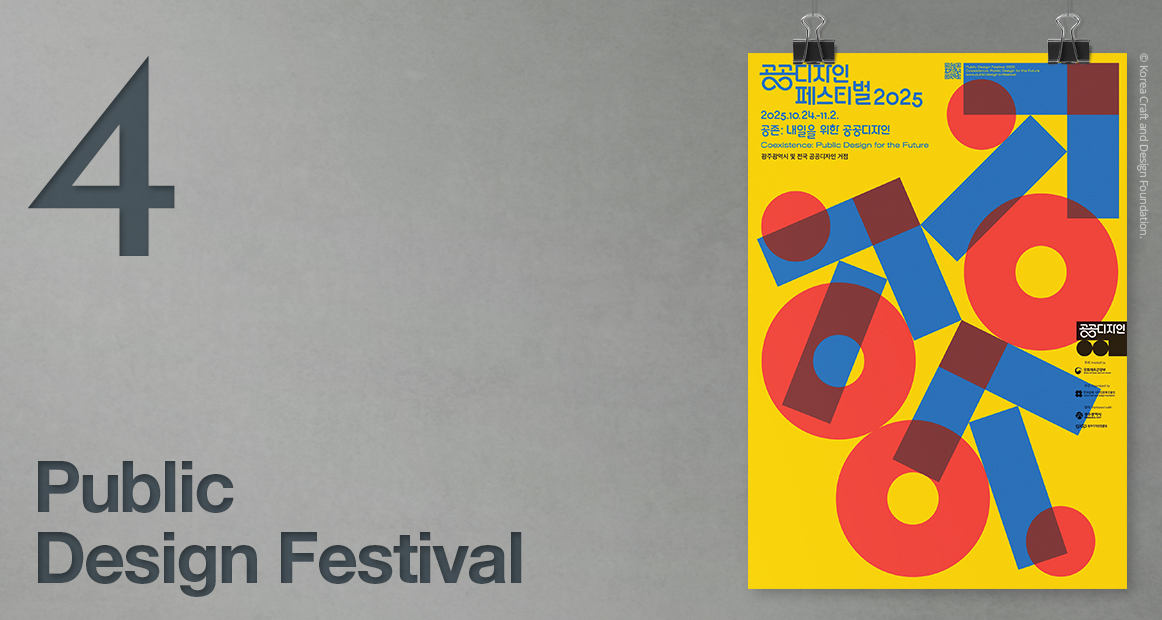
The Public Design Festival introduces diverse examples of design practices that address issues faced by local communities and society. It highlights efforts working toward universal well-being. Institutions, companies and organizations nationwide present public-oriented projects and ideas. Exhibitions, educational programs and hands-on activities engage designers, administrators and the public alike. This year’s festival ran from Oct. 24 to Nov. 2, and award-winning projects are available on the official website.


