December 2025


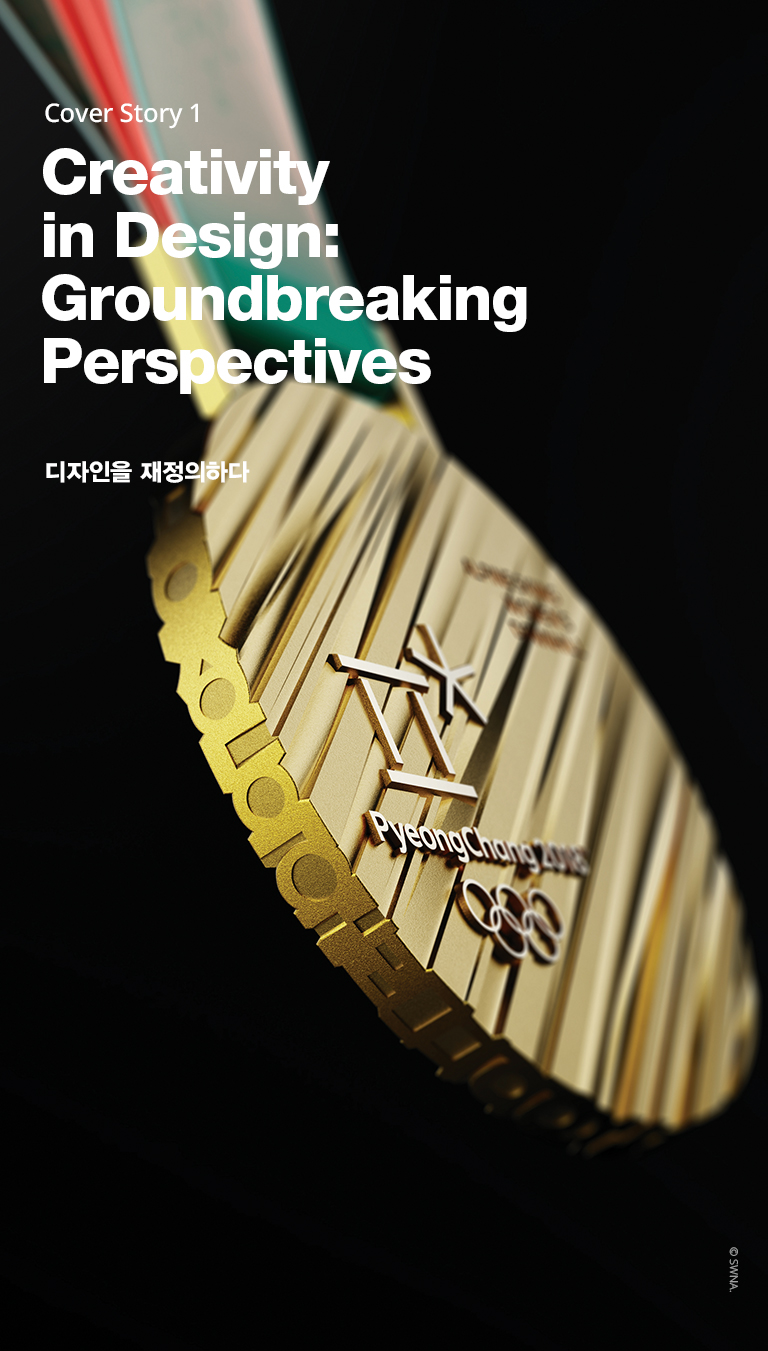
A designer can be so much more than the dictionary definition of someone who specializes in designing works with a functional objective. This article offers a glimpse into the future of Korean design through the eyes of designers who have broadened their professional potential through creative thinking.
‘실용적인 목적을 가진 작품의 설계나 도안을 전문으로 하는 사람’이란 사전적 정의의 디자이너를 넘어선 디자이너들을 소개한다. 21세기 디자이너의 역량과 역할을 탐색하며, 한국 디자인의 가능성을 펼쳐낸 사람들이다.
Writer. Sung Ji Yeon
Photos Courtesy of SWNA
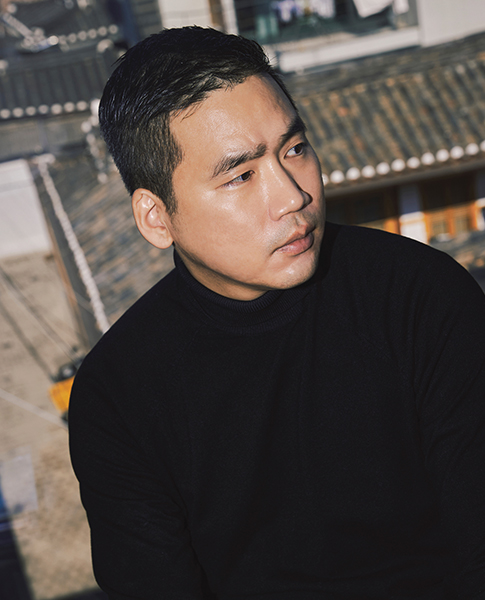
Designers today are expected to play a much greater role than in the past. Even as technology and industry evolve and boundaries blur at a breakneck pace, designers are expected to grasp not only objects but their contexts and make appropriate proposals. One Korean figure who stood at the center of this paradigm shift in the early 2000s was Sukwoo Lee, founder of SWNA.
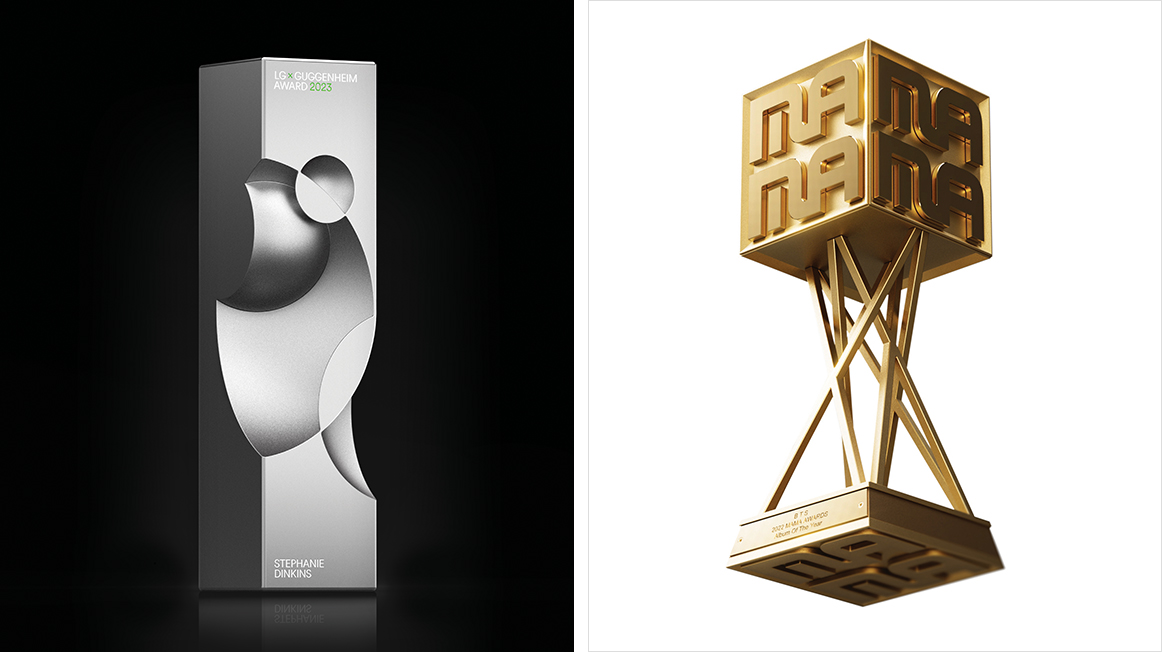 (Left) LG X Guggenheim Award Trophy, 2023
Aluminum trophy expressing the fusion of art and technology through a sculptural motif inspired by the digital “1” and “0”
(Right) Mnet Asian Music Awards (MAMA) Trophy for CJ ENM
The trophy draws inspiration from transmission towers and satellites, symbolizing growth and fan-artist connection.
Lee has worked across a wide range of projects—from electronics and objets d’art to monumental trophies and practical yet decorative furniture. His studio has also worked on mobility design, user interface/user experience for devices and apartment construction and apartment complex design. While most studios specialize, Lee’s work spans an unusually wide terrain. This breadth derives from his holistic view of a design’s intended environment. When a product is created, it is linked in turn to the furniture, the space and the building surrounding it. Since no well-done design could disregard that context, Lee sees no reason to divide design into different areas.
While Lee’s designs cover a broad area, they are characterized by a distinctive precision. His pieces have an obvious function and are intuitive to use. He also takes pains to make them aesthetically polished. As a result, his pieces achieve a balance between function and beauty. Some pieces cleverly encourage viewers to imagine how they might be used. The good vibes evoked by imagining the future use of his products speak to the power of his design.
 © Buy&Believe.
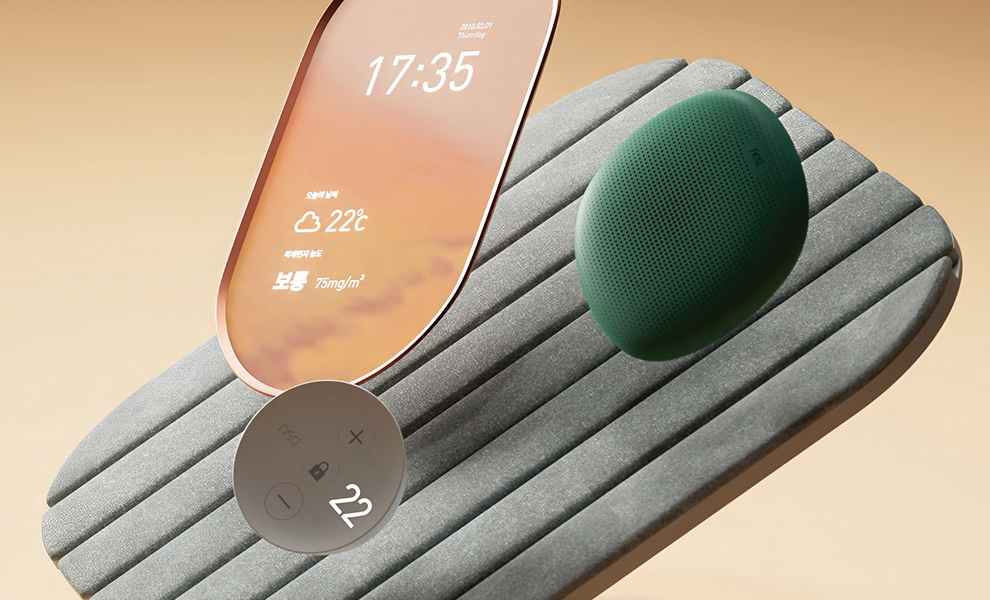 Nest Advanced Design for Google, 2020
 Lee’s work remains largely consistent despite considerable diversity in both form and clientele because he weaves his philosophy into every stage of the process. The chief element of his design philosophy is “getting to the essence.” Since other people are the ultimate beneficiaries of everything Lee makes, the first question he asks is how to improve users’ lives. Toward that end, he drills down to the product’s essence by interviewing people, observing their actions and gaming out use cases. Lee’s conception of essence goes beyond function to cover structure, context, sensibility and relevance. “Gaining a proper understanding of essence can be essential for survival. A designer must be able to craft a narrative about a product and convert that into an image,” he says.
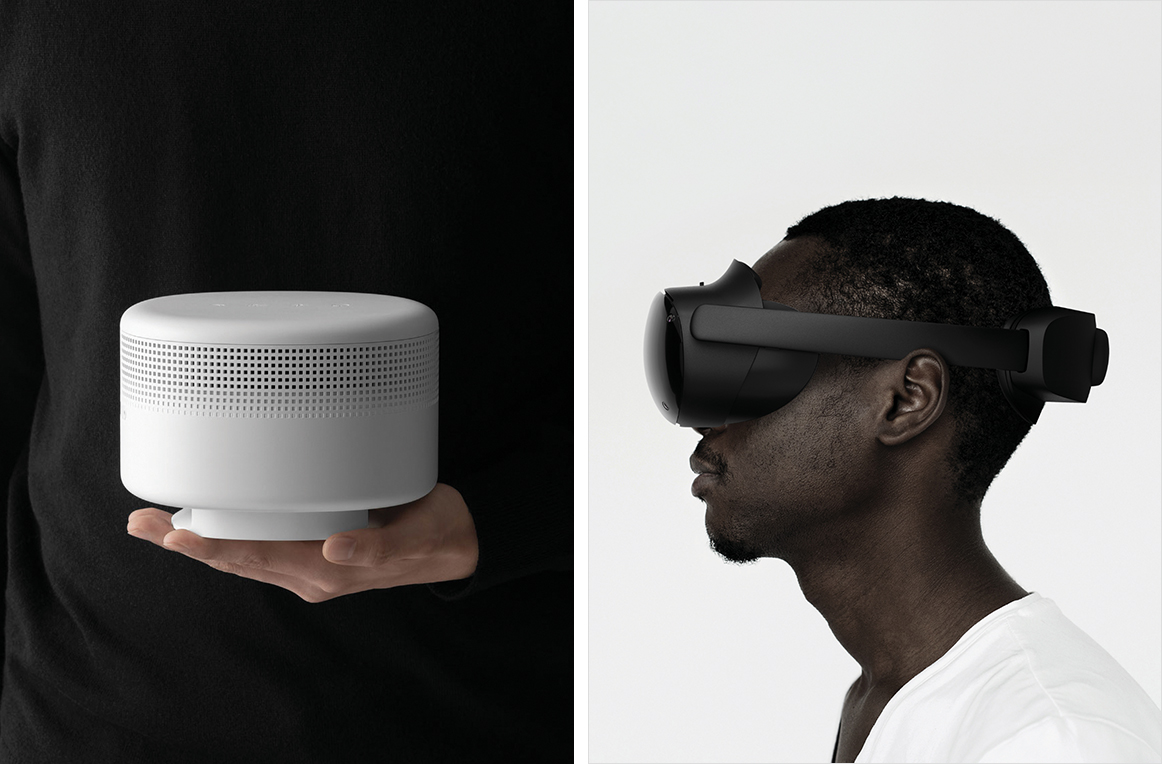 (Left) Air Purifier for Shinsegae JAJU, 2020
A compact, lifestyle-focused air purifier designed for small spaces with a simple form and easy, semi-permanent filtration
(Right) LG VR Glass, 2022
Device design for enjoying high-quality virtual reality content
 Discover the diverse works of Sukwoo Lee and his studio SWNA.
Photos Courtesy of Yoo Hwasung
Yoo Hwasung is the founder of design studio Bymars and the creative director of lighting brand AGO. Yoo’s career can be seen as embodying the nature of design as the act of reinterpreting an object based on one’s unique perception.
Yoo’s work always incorporates surprising perspectives. His best-known work is HAT Lamp, which applies the silhouette of a hat to a lighting fixture. That product resulted from the discovery of functional commonalities between hats and lampshades. Another product, Mopmob, used pine mop handles cheaply produced by manufacturers. These products epitomize Yoo’s skill at turning an object on its head and seeing it through new eyes.
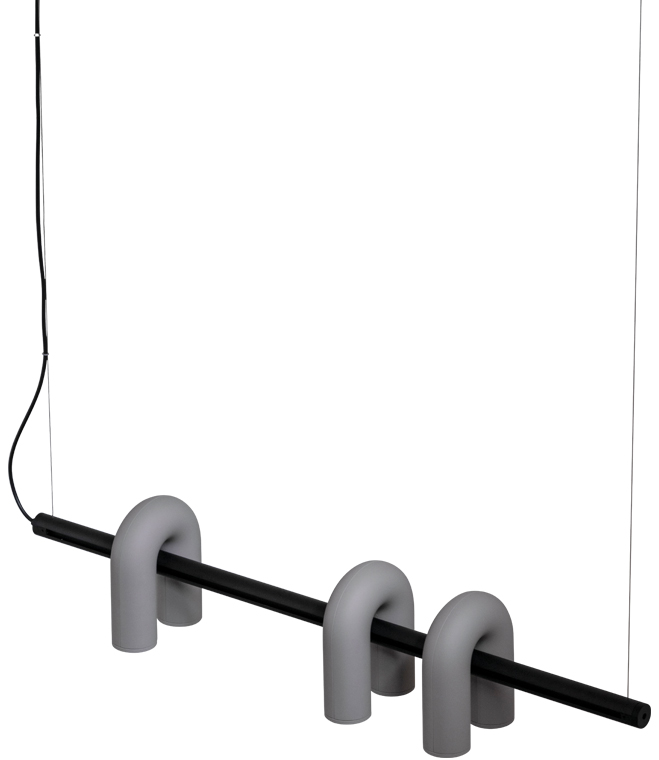 CIRKUS, 2019
Modular lighting collection by AGO, offering playful and customizable configurations
Yoo’s talents have also borne fruit at the AGO lighting brand. At the time, the Korean lighting industry was regarded as backward because of its rundown facilities and lack of originality in its designs. But Yoo sensed potential in the industry’s tight-knit relationships and culture of collaboration. With the goal of turning those values into strengths for the brand, he named the brand “AGO” (meaning “an old friend”) and became its lead designer. He pursued collaborations with well-known global designers. He also revamped the mass-production system by carrying out over ten rounds of adjustments on the injection molds used in the production process.
His products—including light fixtures inspired by sticky rice cakes and U-shaped modules—attracted considerable attention overseas. By proving that Korean firms are capable of producing lighting fixtures that combine functionality with artistry, Yoo brought the Korean lighting industry’s potential to the attention of global consumers.
Yoo’s career to date teaches us that a designer need not be merely a maker, but can be somebody who imbues objects with fresh significance and revives a dying industry.
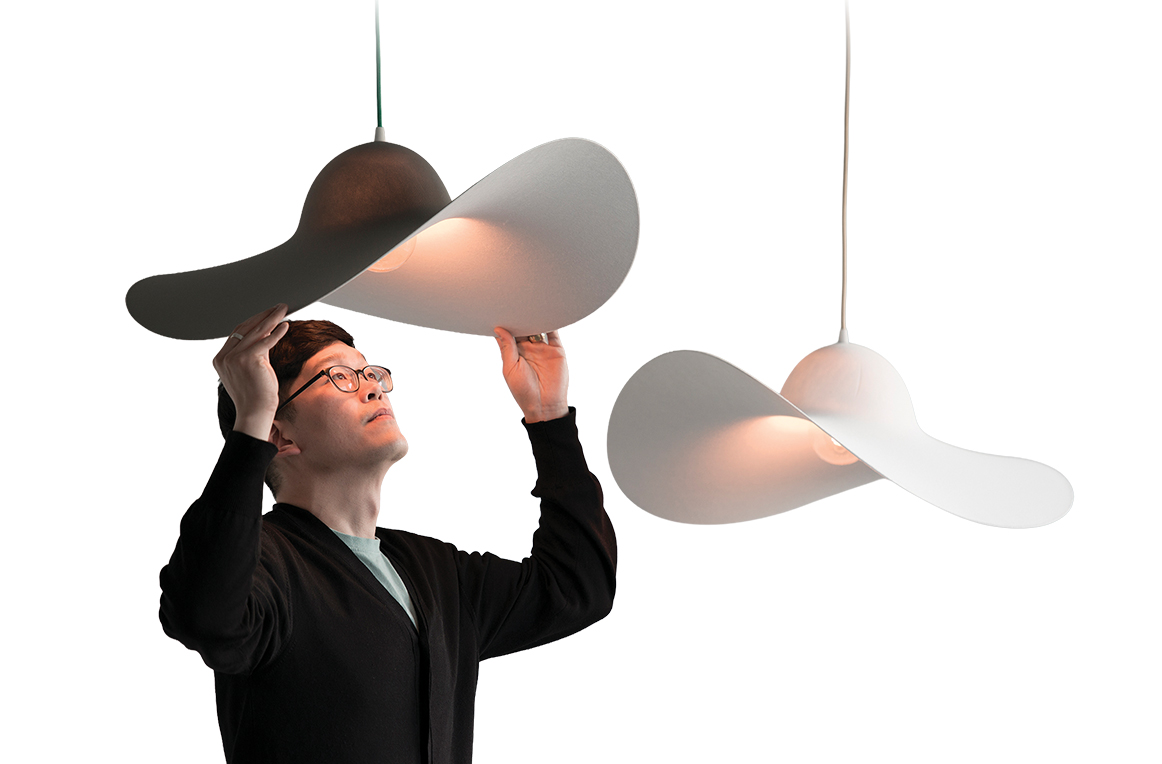 HAT Lamp, 2012
Hat-shaped lamp encouraging imagination beyond conventional lighting
Photos Courtesy of Jiyoun Kim
Surprisingly few items are designed in such a way that their original intention can be divined at first glance. Some products look intriguing without their function being immediately apparent. Others look sharp, but leave the viewer unclear about the brand.
But that’s not true of designer Jiyoun Kim’s work. It conveys a consistent message that can be immediately understood. A prime example is his renewal of Amos Professional. Kim reinterpreted professionalism not as authority or mystique but as skill and authenticity, shaping it into a concept grounded in efficiency. The resulting visual system—applied across packaging, containers and in-store signage—established a clear, cohesive design language. Kim’s intuitive, refined approach elevated Amos Professional into a more luxurious, contemporary brand.
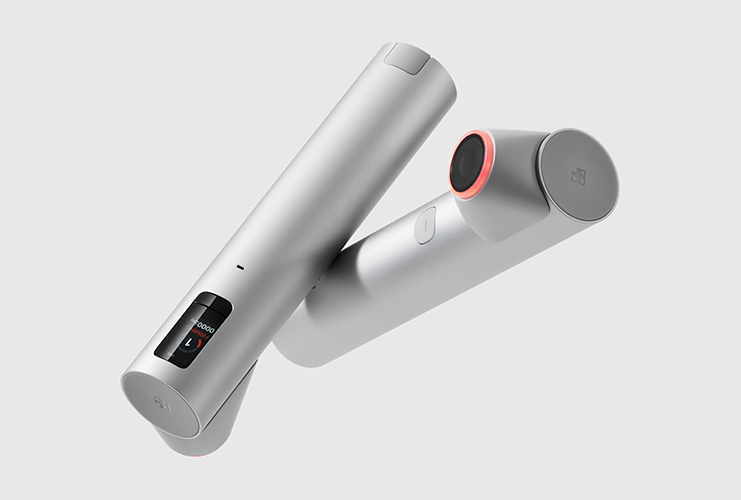 Medicube High Focus Shot, 2024
 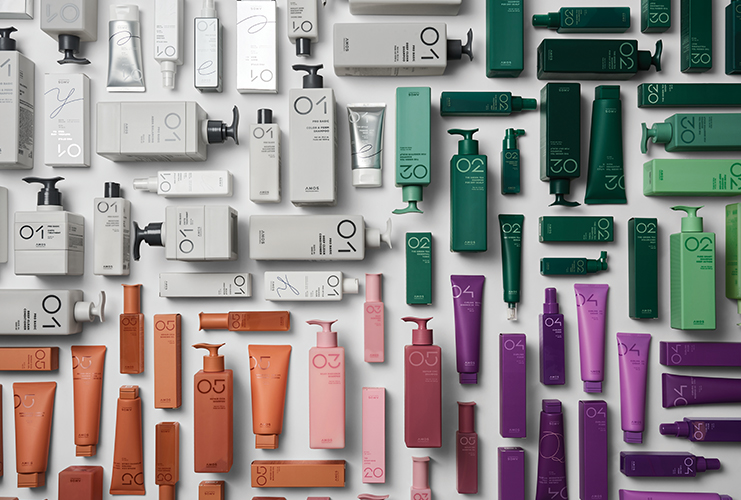 Amos Professional Brand Reinventing, 2023
Another example is Kim’s work on beauty products. He collaborated with Korean beauty brand Medicube’s high-tech skincare devices employing ultrasonic waves. Despite the device’s unusual shape, its use is readily inferred. The texture, lines and angular shape make clear the device is supposed to provide a home-based experience of professional skin care.
These designs derive from his philosophy of “communication-centric contextual design.” A product goes through planning, design, production and marketing, but focusing solely on its exterior can weaken both the product and the brand. That’s why Kim first examines the product’s reason for being—how it connects to society and fits within its context. When every element is grounded in that context, the design can fully express the brand’s intended message.
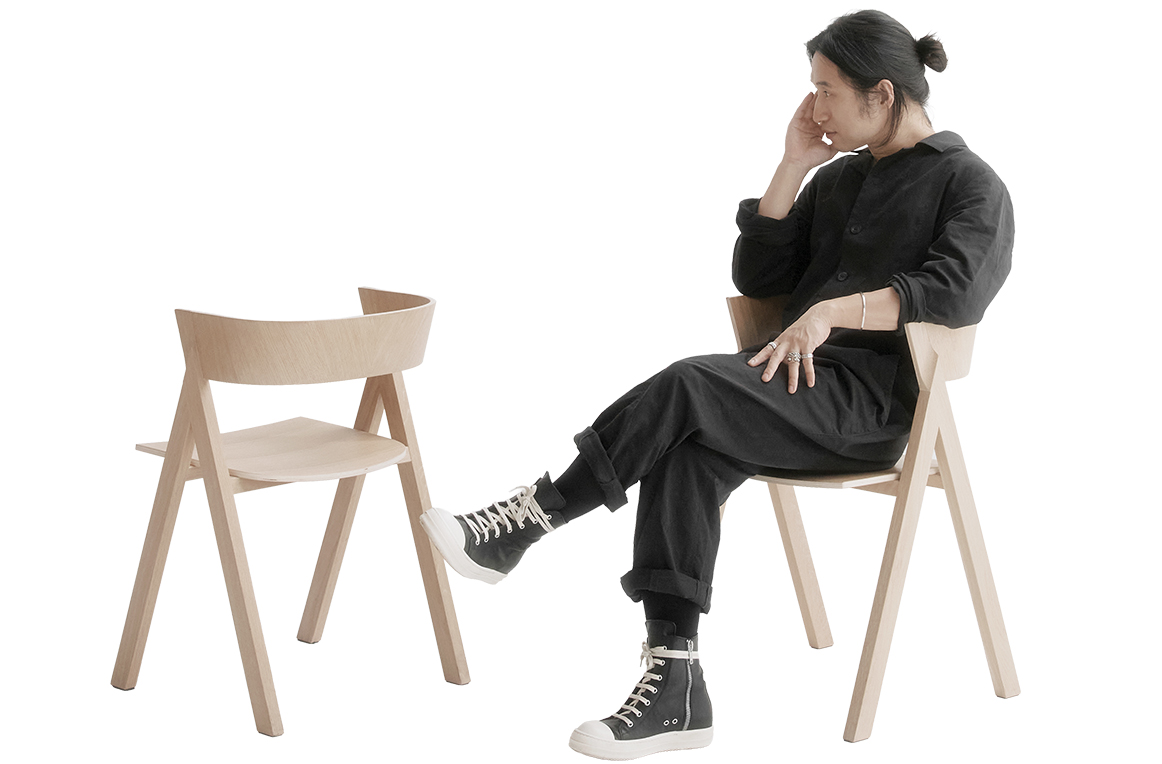 Eave Chair, 2025
Debut product of the Jy Collection by Jiyoun Kim Studio, combining material efficiency with refined craftsmanship